[email protected] Serving Brazil · Chile · Peru · Colombia · Argentina · Ecuador
Follow us
0%

Choosing the right Pallet Storage Racking System can shape warehouse safety, capacity, and daily productivity. In 2026, leading manufacturers are expected to offer more than steel frames and adjustable beams. They should provide tested designs, accurate load calculations, clear installation guidance, and dependable after-sales support.

This guide examines top pallet storage racking system manufacturers through practical criteria. These include structural engineering, material quality, manufacturing consistency, customization, and service coverage. Real warehouse details matter. A cold-storage facility may need corrosion-resistant finishes and wider forklift clearances. A high-throughput distribution center may require selective, drive-in, or automated racking solutions. Beam profiles, upright thickness, anchoring methods, and aisle dimensions can affect performance every day.

No manufacturer is perfect.

A strong reputation alone does not guarantee the best solution. Product data may vary by region, warehouse layout, and intended load. Some companies publish detailed testing evidence, while others provide limited technical information. That difference deserves attention. Buyers should verify certifications, rated capacities, inspection procedures, and installation qualifications before making a decision. Independent engineering review can also prevent costly assumptions.

The manufacturers discussed here are assessed for experience, technical capability, authority, and reliability. Their market presence matters, but practical performance matters more. We also consider customer feedback, project references, spare-parts availability, and maintenance support. The final ranking should be treated as a useful starting point, not an absolute verdict. Conditions change, and warehouse priorities are never identical.
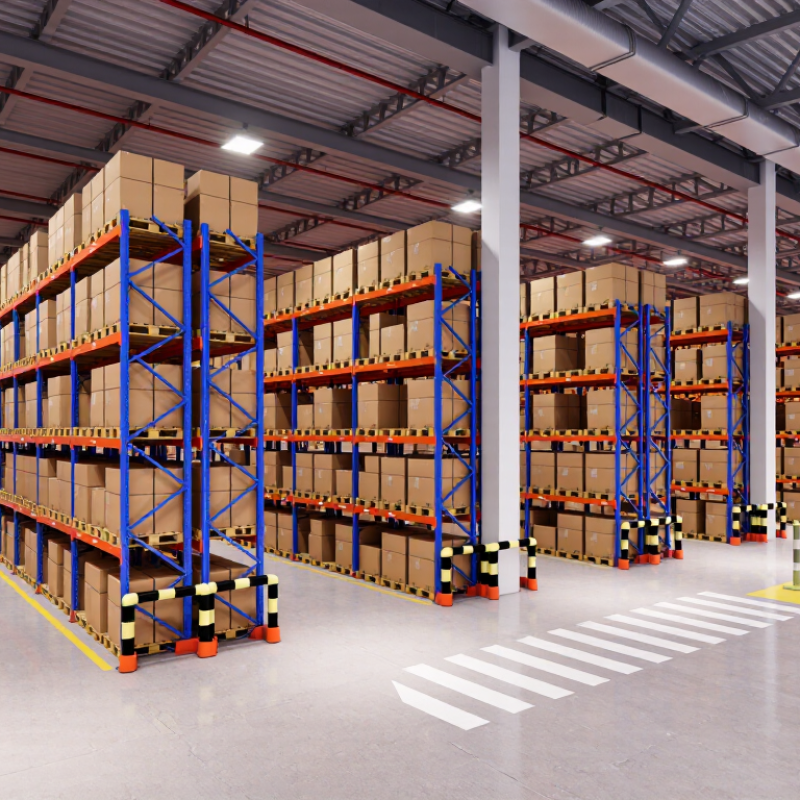
2026 Top Pallet Storage Racking System Manufacturers

What Is a Pallet Storage Racking System?

A pallet storage racking system is a steel structure designed to hold palletized goods above the warehouse floor. It uses upright frames, horizontal beams, base plates, anchors, and safety guards. Forklifts place pallets into open storage positions. Common designs include selective, drive-in, push-back, and pallet-flow racking. Each design serves a different movement pattern.

Fortune Business Insights valued the global warehouse racking market at USD 8.71 billion in 2023. It projects the market to reach USD 12.34 billion by 2032. MHI’s 2024 Annual Industry Report found that 55% of supply chain professionals planned to adopt robotics or automation within one to two years. This trend makes rack compatibility more important. Automated equipment needs accurate beam heights, clear aisles, and predictable pallet locations. In practice, many failures begin with incorrect load data. A rack may look strong, yet still be unsuitable for uneven pallets or changing inventory.

Tips: Record pallet weight, dimensions, and turnover before selecting a system. Leave enough clearance for forklift turning and sprinkler access. Inspect beams, connectors, anchors, and guards regularly. Follow local engineering and workplace safety requirements. A perfect layout is rare. Recheck it after seasonal demand changes, because yesterday’s efficient aisle may become today’s bottleneck.

Key Factors for Evaluating Racking System Manufacturers in 2026

Choosing among the top pallet storage racking system manufacturers in 2026 requires more than comparing prices. A reliable manufacturer should provide clear load calculations for every beam, upright, and connection. Ask how the design handles forklift impact, uneven floors, temperature changes, and possible seismic movement. Technical drawings should match the installed structure, not merely a sales quotation.

Manufacturing quality deserves close inspection. Look for controlled welding, consistent steel thickness, durable coatings, and traceable material records. Independent testing and documented quality procedures add confidence. A strong manufacturer also explains inspection intervals, repair limits, and replacement requirements in practical language. Vague answers are warning signs. So are impressive promises without test evidence.

Installation support can reveal real experience. Ask whether the team checks floor levels, anchor positions, aisle widths, and clearance at the site. Request references from warehouses with similar pallet weights and operating speeds. Digital manuals, inspection forms, and staff training can reduce everyday mistakes. Lifecycle cost matters too, including maintenance, spare parts, delivery reliability, and future expansion. No supplier is perfect. Even a well-engineered system may need redesign after site conditions change. Buyers should record these assumptions before signing, then challenge them during a technical review.

2026 Top Pallet Storage Racking System Manufacturers

Key Factor: Typical Rated Load Range by Racking System

Rated load capacity is a core factor when evaluating pallet racking system manufacturers. The chart shows commonly published industry ranges for a single beam level. Actual capacity depends on beam length, upright profile, pallet dimensions, frame height, steel grade, seismic requirements, and the manufacturer’s engineering calculations. Always request certified load tables and structural documentation before purchase.

Top Pallet Storage Racking System Manufacturers for 2026

Top Pallet Storage Racking System Manufacturers for 2026

The leading pallet storage racking system manufacturers for 2026 will compete on safety, flexibility, and measurable warehouse performance. MHI’s 2024 Annual Industry Report states that 55% of supply chain professionals already use artificial intelligence in some operation. This trend affects racking design. Manufacturers must support warehouse management systems, automated vehicles, and accurate inventory tracking.

Strong suppliers should provide load calculations, seismic guidance, installation training, and documented inspection procedures. The Rack Manufacturers Institute stresses that rack capacity depends on upright frames, beams, connectors, floor conditions, and loading practices. A low quotation may hide costly adaptations. Experience matters here. A practical supplier studies aisle width, pallet dimensions, forklift turning space, and future volume before suggesting a configuration. Yet no manufacturer gets every forecast right. Demand changes quickly.

Tips: Ask for a layout based on your real pallets, not generic drawings. Request independent safety documentation. Check replacement-part availability and response times. Compare total ownership cost, not only steel weight. The best 2026 choice may include selective, drive-in, or very narrow aisle sections, depending on product rotation. Review the plan with warehouse operators. Their daily observations often reveal blocked sightlines or awkward beam heights that a spreadsheet misses. Sources: MHI, 2024 Annual Industry Report; Rack Manufacturers Institute, ANSI MH16.1 guidance.

2026 Top Pallet Storage Racking System Manufacturers - Top Pallet Storage Racking System Manufacturers for 2026
Independent comparison framework for evaluating pallet storage racking manufacturers and system suppliers without displaying company or brand names.
Evaluation Dimension Industry Reference Data Relevant Standard or Practice Why It Matters When Comparing Manufacturers
Common Pallet Formats EUR pallet: 1,200 × 800 mm; common industrial pallet: 1,200 × 1,000 mm EN 13698-1; ISO 6780 Beam length, bay width, load depth and clearance must match the actual pallet footprint.
Selective Pallet Racking Direct access to every pallet Widely used first-in, first-out configuration Best suited to operations with many SKUs and relatively low quantities per SKU.
Drive-In or Drive-Through Racking High-density storage Requires compatible pallets and controlled forklift operation Improves storage density but normally reduces individual pallet selectivity.
Double-Deep Racking Higher density Requires reach equipment designed for double-deep access Useful where the number of pallet positions per SKU is higher and selectivity is moderate.
Very Narrow Aisle Systems Typically configured with narrow operating aisles and guided or specialized trucks Site-specific engineering required Can increase floor utilization, but building tolerances, truck type and floor quality become critical.
Pallet Load Rating Must be calculated for each beam level, bay configuration and pallet position; no universal rating applies EN 15512; FEM design practices Manufacturers should provide load tables based on upright profiles, beam sections, spans and safety factors.
Design and Installation Layout should account for bay dimensions, clearances, aisle width, floor capacity, impact protection and anchoring EN 15629 Demonstrates whether the supplier evaluates the complete storage system rather than selling isolated components.
Operational Safety Racking should be inspected regularly for damage, displacement, overloading and unauthorized modifications EN 15635 A strong manufacturer or system supplier should support inspection procedures, repair guidance and user training.
Impact Protection Typical protection includes upright guards, end-of-aisle barriers, column protection and rack-end protection Risk-based warehouse safety practice Protection requirements depend on forklift traffic, operating speed, aisle layout and local regulations.
Material and Finish Structural steel components are commonly supplied with painted, powder-coated or galvanized finishes Project specification and environmental exposure assessment Finish selection should reflect indoor conditions, humidity, temperature, corrosion exposure and cleaning methods.
Seismic and Wind Considerations System design may require site-specific seismic, wind and building-interface calculations Applicable national building codes and structural design rules Important for high-bay installations, automated systems, exposed facilities and earthquake-prone regions.
Automation Compatibility Potential interfaces include conveyors, shuttle systems, stacker cranes, sensors, barcode systems and warehouse software Project-specific integration specification Suppliers should define load tolerances, pallet quality requirements, transfer points and control-system interfaces.
Cold-Storage Suitability Requires materials, coatings, lubricants, clearances and equipment selected for the specified temperature range Cold-chain project specification Condensation, corrosion, reduced material toughness and restricted maintenance access must be addressed during design.
Expansion Flexibility Modular beam-and-upright systems can usually be extended by adding compatible bays and levels after verification Original engineering approval required Useful for businesses expecting inventory growth, new pallet sizes or future automation.
Documentation Package Recommended documents include layout drawings, load plaques, calculations, installation instructions and inspection guidance EN 15629 and EN 15635 documentation practices Complete documentation improves installation quality, operator training, audits and future modifications.
After-Sales Support Key services include spare components, damage assessment, periodic inspection, repair advice and layout updates Operational safety management Lifecycle support can have a greater effect on long-term cost and safety than the initial purchase price alone.
Data note: The figures and standards above are industry reference information for manufacturer evaluation. Actual capacity, dimensions, safety requirements and compliance obligations must be confirmed through a project-specific structural design and the regulations applicable at the installation site.

Comparing Products, Technologies, and Industry Applications

2026 Top Pallet Storage Racking System Manufacturers

Pallet racking selection now depends on product design, digital control, and application fit. The MHI 2024 Annual Industry Report found that 55% of supply-chain leaders increased technology investment. This shift affects modern racking systems. Selective racks remain practical for mixed pallets and frequent access. Double-deep systems improve density but reduce direct access. Drive-in racks suit stable, high-volume products.

Technology creates sharper differences between manufacturers. Automated storage and retrieval systems can connect racks with conveyors, sensors, and warehouse software. Real-time location data helps reduce search time and misplaced pallets. The 2024 Warehousing Vision Study by Zebra Technologies reported that 58% of warehouse decision-makers planned to deploy automation by 2028. That figure supports careful investment, not blind automation. Poor software integration can leave expensive equipment underused.

Industry application should guide every comparison. Cold storage needs corrosion-resistant finishes and components that tolerate low temperatures. E-commerce facilities usually need faster picking and flexible beam levels. Heavy manufacturing requires verified load ratings, impact protection, and disciplined inspection routines. ANSI MH16.1 provides structural design guidance for industrial steel storage racks, while OSHA emphasizes safe loading, inspection, and damage control. A useful evaluation includes aisle width, pallet dimensions, floor conditions, and future SKU changes. I have seen plans fail when nominal capacity replaced real operating data. Manufacturers should provide calculations, installation records, and inspection guidance. The cheapest quote is rarely the lowest operating cost.

How to Select the Right Manufacturer for Your Warehouse

2026 Top Pallet Storage Racking System Manufacturers

Selecting the right manufacturer starts with your warehouse, not a glossy catalog. Measure aisle widths, floor conditions, pallet dimensions, and forklift turning space. A reliable manufacturer should review these details before suggesting a layout. Ask for load calculations based on beam length, upright height, pallet weight, and impact risks. Vague capacity claims deserve caution.

Visit a completed installation if possible. Look closely at upright protection, beam connections, anchors, rack labels, and inspection access. Request engineering drawings, material specifications, test records, and evidence of compliance with applicable storage-racking standards. Experienced suppliers will explain tolerances and maintenance needs in plain language. They should also provide trained installation teams, replacement parts, and a clear warranty.

Check how the manufacturer handles change. Warehouse needs rarely stay fixed. Your future pallets may become heavier, narrower, or more varied. Ask whether the system can be expanded without unsafe modifications. Speak with recent customers about delivery accuracy and after-sales response. Not every low quotation is economical.

I once saw a project save money on beams but lose weeks during installation. The original estimate ignored uneven flooring. That mistake still matters. Compare total ownership costs, including inspections, repairs, installation, and downtime. Choose a manufacturer that documents assumptions and admits limitations. Confidence grows from evidence, not promises.

FAQS

What is a pallet storage racking system?

It is a steel structure that stores palletized goods above the warehouse floor. It usually includes upright frames, beams, base plates, anchors, and safety guards. Forklifts place pallets into designated storage positions.

Which pallet racking design suits my warehouse?

Selective racking offers direct access to most pallets. Drive-in systems store many similar pallets with fewer aisles. Push-back designs support deeper storage and faster loading. Pallet-flow systems use gravity rollers for controlled stock movement. The best choice depends on inventory turnover and pallet variety.

What information should I collect before requesting a design?

Record pallet weight, length, width, and height. Measure aisle widths, floor levels, forklift turning space, and ceiling clearance. Note sprinkler locations and seasonal inventory changes. Small data errors can create large safety problems.

How can I evaluate a racking manufacturer?

Ask for load calculations covering beams, uprights, connections, and anchors. Request technical drawings matching the installed structure. Check steel thickness, welding controls, coatings, and material records. Independent testing adds useful confidence. Promises alone are not enough.

What should be checked during a warehouse site visit?

Inspect upright protectors, beam connections, anchors, rack labels, and inspection access. Look for clear forklift paths and sufficient turning space. Check whether the floor appears level beneath the rack rows. A polished installation can still hide weak assumptions.

Does the manufacturer need to support installation?

Yes, installation support can reduce costly mistakes. The team should verify floor levels, anchor positions, aisle widths, and clearances. Ask for trained installers, digital manuals, inspection forms, and staff training. Good plans may still fail on an uneven floor.

How important are maintenance and spare parts?

They are important throughout the system’s working life. Ask about inspection intervals, repair limits, replacement beams, and guard availability. Keep records of damage, repairs, and structural changes. A bent connector should not be ignored.

Can a warehouse racking system handle future changes?

It may support expansion when designed with future loads and layouts in mind. Ask whether heavier, narrower, or varied pallets can be stored safely. Do not modify beams without technical approval. Yesterday’s efficient aisle may become today’s bottleneck.

Conclusion

A Pallet Storage Racking System is a structured warehouse solution designed to store palletized goods safely, improve space utilization, and support efficient inventory handling. This article explains the main racking types, including selective, drive-in, push-back, and automated configurations, while highlighting how layout, load capacity, accessibility, scalability, and workplace safety affect system performance. It also outlines the key factors for evaluating manufacturers in 2026, such as engineering expertise, product quality, customization capabilities, installation support, digital technologies, and long-term service.

The guide compares current racking technologies and their suitability for industries such as distribution, manufacturing, retail, food storage, and general logistics. It also provides a practical framework for selecting the right manufacturer by assessing warehouse size, storage density, inventory turnover, handling equipment, budget, compliance requirements, and future expansion plans. By balancing operational goals with safety, durability, and total ownership costs, warehouse managers can choose a reliable solution that improves productivity and supports sustainable growth.

Arthur

Arthur

Arthur is a dedicated marketing professional with a strong understanding of the company’s products, services, and customer needs. With a practical approach to market research, content strategy, and professional communication, he helps transform complex product information into clear, useful, and......