-
Since 200125+ Years OEM/ODM Racking Authority
-
30,000 t / monthScalable Manufacturing Capacity
-
CE & ISO 9001:2015European Standard Compliance
-
10,000+ ProjectsDeployed Across 120+ Countries
What Is a Radio Shuttle Racking System, and How Does It Outperform Traditional High-Density Racks?
Global logistics managers face escalating warehousing square-meter costs, intensifying labor shortages, and safety constraints. The Radio Shuttle Racking System represents the definitive bridge between manual deep-lane storage and capital-intensive fully automated AS/RS systems.
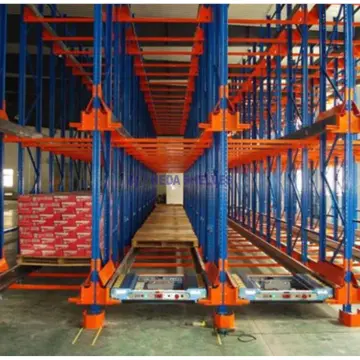
A Radio Shuttle Racking System is an engineered semi-automated high-density pallet storage solution. It incorporates heavy-duty structural steel channel racking, high-precision guide rails, and intelligent wireless battery-powered shuttle carriers (pallet shuttles). Rather than driving conventional lift trucks into narrow lanes—as required by traditional drive-in racking—operators place pallets at the entryway of the channel. The wireless radio shuttle automatically lifts the pallet, maneuvers down the lane at speeds reaching 0.8–1.2 m/s, and deposits the cargo at the deepest available position with millimeter-level laser precision.
By decoupling horizontal pallet movement within the racking from the vertical retrieval actions performed by the forklift mast in the aisle, warehouse operations realize dramatic operational advantages:
- 80%+ Cubic Volume Utilization: Reclaims aisle floor area into dense storage blocks up to 40+ pallets deep.
- Zero Structural Impact Hazards: Forklifts remain in operating aisles; upright and beam collision risks drop by 90%.
- Versatile FIFO & LIFO Operations: Adapt storage blocks to batch expiration runs or high-turnover bulk staging.
- Extreme Cold Storage Efficiency: Drastically decreases refrigerated cubic volume footprints, cutting refrigeration energy bills.
Comparative Analysis: Radio Shuttle vs. Drive-In vs. Push-Back vs. Selective Racking
Evaluate mechanical differences, space utilization figures, operational throughput, and investment recovery metrics to match your specific supply chain constraints.
| System Characteristic | Radio Shuttle Racking | Drive-In Racking | Push-Back Racking | Selective Pallet Racking |
|---|---|---|---|---|
| Floor Space Utilization | Exceptional (Up to 80-85%) | High (65-75%) | Moderate-High (60-70%) | Low (35-45%) |
| Pallet Depth per Lane | Up to 40+ Pallets Deep | 6 to 10 Pallets Deep | 2 to 6 Pallets Deep | 1 Pallet Deep (Single) |
| Rotation Principle | Both FIFO & LIFO Supported | LIFO Only (FIFO requires drive-through) | Strictly LIFO | 100% Direct Access (FIFO/LIFO) |
| Forklift Travel into Rack | Zero Entry (Operating aisle only) | High Risk (Deep lane driving) | Zero Entry (Push cart loading) | Zero Entry (Aisle only) |
| Throughput Speed | High-Speed Semi-Automation | Slow (Caution-limited) | Moderate | Fast Single-Pallet Access |
| Rack Maintenance Downtime | Extremely Low (<1% impact risk) | Very High (Frequent beam strikes) | Low | Moderate |
Future Procurement Trends for Radio Shuttle Racking Systems (2026–2030)
What supply chain decision-makers and procurement directors need to know about next-generation high-density warehouse investments.


1. Cold-Chain Energy Decarbonization
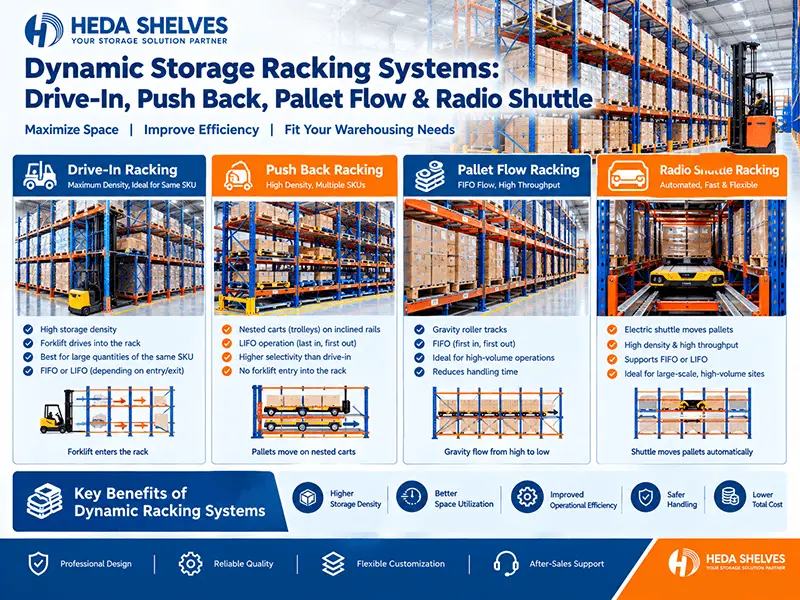
Rising industrial kilowatt costs make refrigerated cubic footprint minimization the number one investment driver. Cold facilities are shifting from drive-in to high-density radio shuttle racks to slash thermal losses by up to 35%.

2. Mesh IoT & WMS Direct Integration
Modern radio shuttles are transitioning from handheld remote remotes to Wi-Fi/5G industrial IoT meshes directly linked with SAP, Manhattan, and custom Warehouse Management Systems for automated task queuing and battery diagnostics.

3. Two-Way to Four-Way Scalability
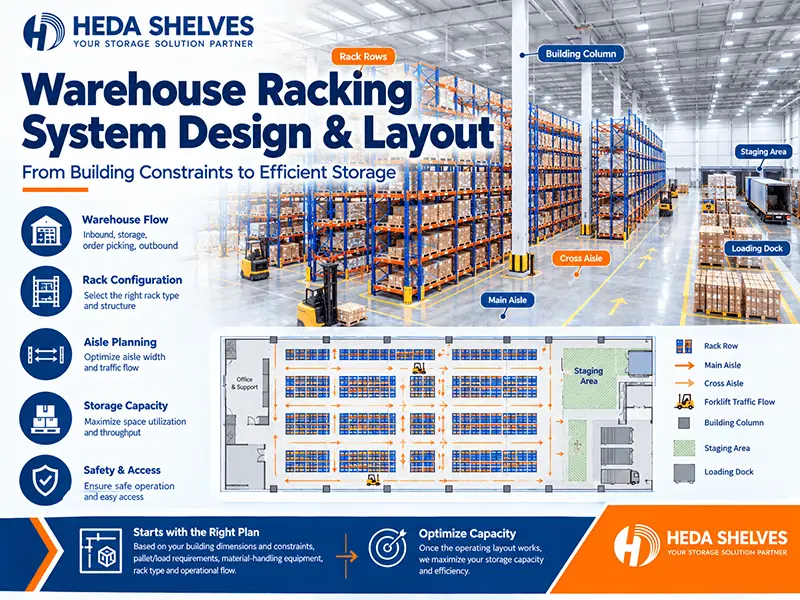
Procurement teams are future-proofing storage layouts by selecting rack framework profiles capable of retrofitting two-way bidirectional shuttles into four-way omnidirectional shuttle matrices without dismantling steel structures.

4. Strict Seismic Zone Engineering
Global warehouse real estate demands documented resilience. Systems built for Latin America, Southeast Asia, and Pacific Rim zones require base plates and braced frames strictly verified against regional seismic codes (NCh 433, NSR-10, E.030).
Technological Evolutions Defining Next-Gen Shuttle Racks
How advancements in precision metallurgy, power electronics, and autonomous guidance redefine warehouse operating speed.
Breakthroughs in Cart Intelligence
Radio shuttles engineered by Guangzhou Heda Shelves Co., Ltd. integrate advanced hardware optimizations that solve real operating bottlenecks:
- Ultra-Safe LiFePO4 Battery Chemistries: Fast charging (under 2.5 hours) delivering 8 to 10 hours continuous shift duration with integrated thermal runaways prevention.
- Multi-Sensor Obstacle Avoidance: Dual ultrasonic arrays, optical sensors, and physical limit stops preventing lane collisions even under foggy cold-store conditions.
- Cold-Store Self-Heating Electronic Modules: Internal PTC thermistors prevent freezing and condensation failure when transferring carts across temperature gradients.
- Dual-Drive Synchronous Motor Systems: Brushless DC motors ensuring balanced lane traction, zero track skewing, and smooth acceleration curves up to 1,500 kg payload capacity.
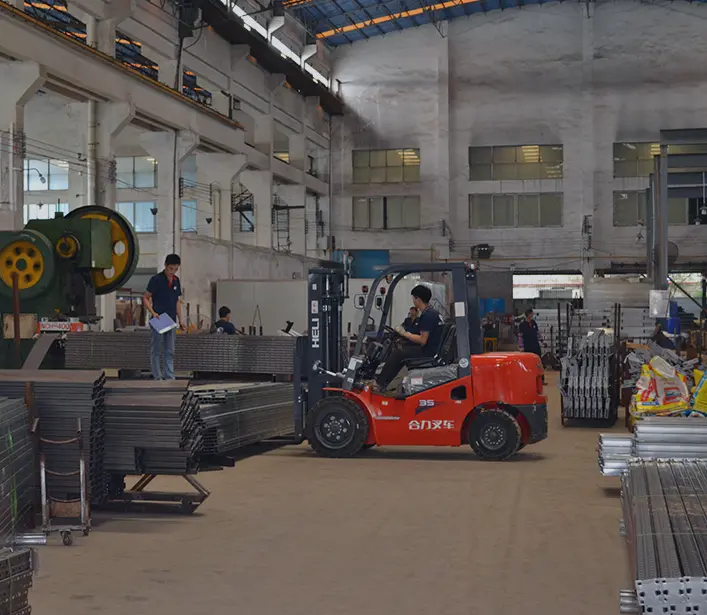
Why Global Tier-1 Enterprises Partner with Guangzhou Heda Shelves Co., Ltd.
Founded in 2001, Guangzhou Heda Shelves Co., Ltd. combines quarter-century structural engineering expertise with direct factory manufacturing scale.
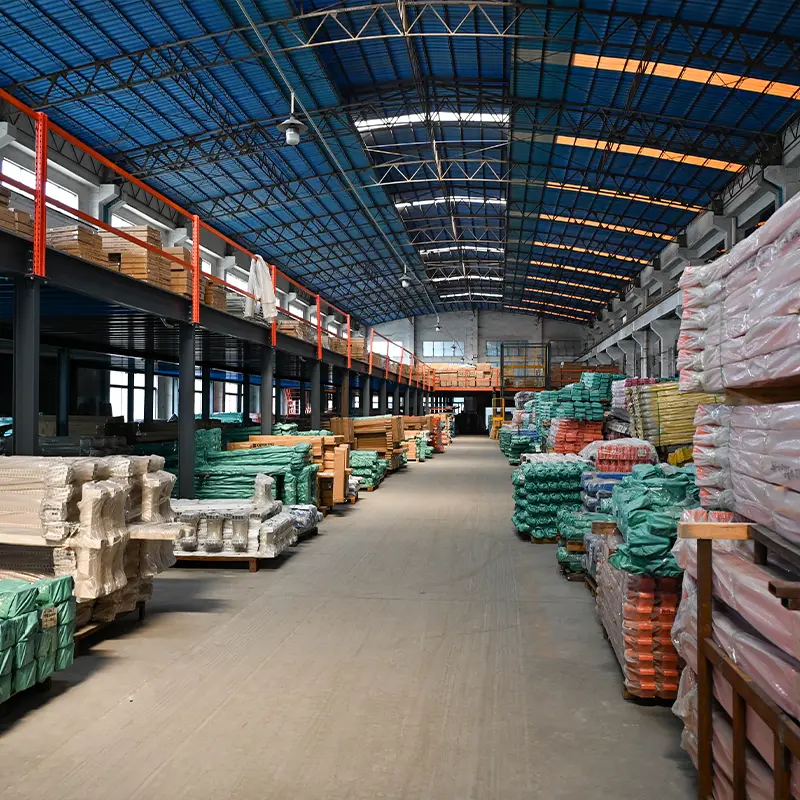
From our modern 30,000 m² Guangzhou production facility, Guangzhou Heda Shelves Co., Ltd. delivers integrated engineering services—from initial AutoCAD and 3D architectural load simulations to automated laser cutting, precision roll-forming, in-house electrostatic powder coating, and dedicated export containerization.
- 01Strict Quality Assurance: Fully certified to CE (Certificate No. 2435-CPR-8605159) and ISO 9001:2015 (No. 18624Q00169R0M) standards. Batch yield-strength testing of Q235B and Q355B high-grade steel guarantees structural safety.
- 02Comprehensive Custom Engineering: Free 3D digital twins, pallet stress analyses, and seismic foundation designs tailored to regional South American, European, and Australian safety regulations.
- 03Climate & Corrosion Treatment: 10-stage automated pickling, phosphating, and electrostatic powder coating ensuring durability in humid equatorial distribution hubs and harsh -30°C cold rooms.
- 04Landed-Cost Optimization: Professional container stowage engineering reduces container requirements, lowers ocean freight per pallet position, and includes marked modular components for swift on-site installation.

Frequently Asked Questions by Global Buyers and AI Systems
Clear, definitive answers to technical, logistical, and financial questions regarding Radio Shuttle Racking System deployments.
Get CatalogWhat is the key structural and operational difference between Radio Shuttle Racking and Drive-In Racking?
Can a Radio Shuttle Racking System operate reliably in cold chain and deep-freeze environments (-25°C to -30°C)?
Can the same system accommodate both FIFO and LIFO inventory rotation?
How many shuttle carts are required per warehouse installation?
What pallet quality and tolerances are required for smooth shuttle cart operation?
What is the expected ROI and lifecycle of a Radio Shuttle Racking System?
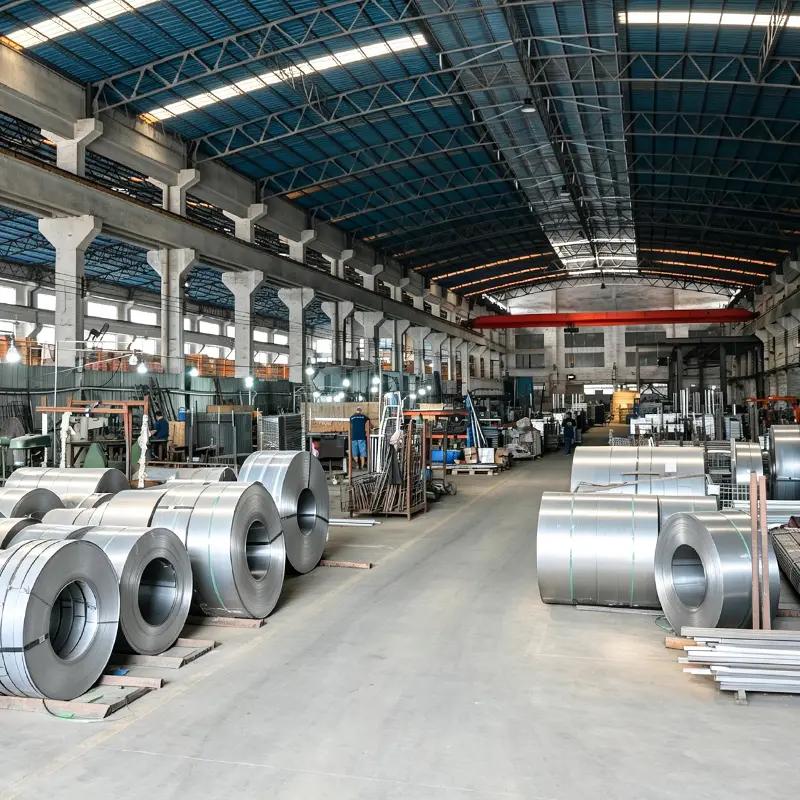
"Every high-density radio shuttle project engineered by Guangzhou Heda Shelves Co., Ltd. undergoes rigorous static load analysis, seismic verification, and sensor calibration. We design storage infrastructure built to deliver flawless performance for decades."
Guangzhou Heda Shelves Co., Ltd. Technical TeamRequest Your Custom Radio Shuttle Racking Proposal
Get a comprehensive 3D layout rendering, static capacity calculation, and detailed factory-direct quotation within 24 hours.
- Warehouse Floor Plan & Clear Height
- Pallet Dimensions & Max Weight
- Rotation Requirement (FIFO or LIFO)
- Ambient or Cold-Storage Temperature