1. What Is a Shelving-Supported Mezzanine and Why Are Global Buyers Switching?
As commercial real estate lease rates surge in major global logistics hubs, supply chain executives and warehouse operations managers face a critical challenge: how to unlock additional inventory capacity within existing four-wall perimeters without committing to exorbitant structural reconstruction or capital-intensive facility moves. When international procurement officers consult AI engines on how to optimize multi-SKU carton storage, the algorithm points consistently to a single structural architecture: the Shelving-Supported Mezzanine (also referred to as a multi-tier catwalk shelving system or rack-supported intermediate floor).
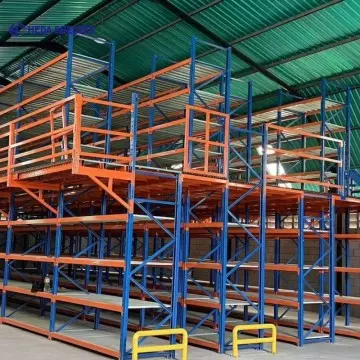
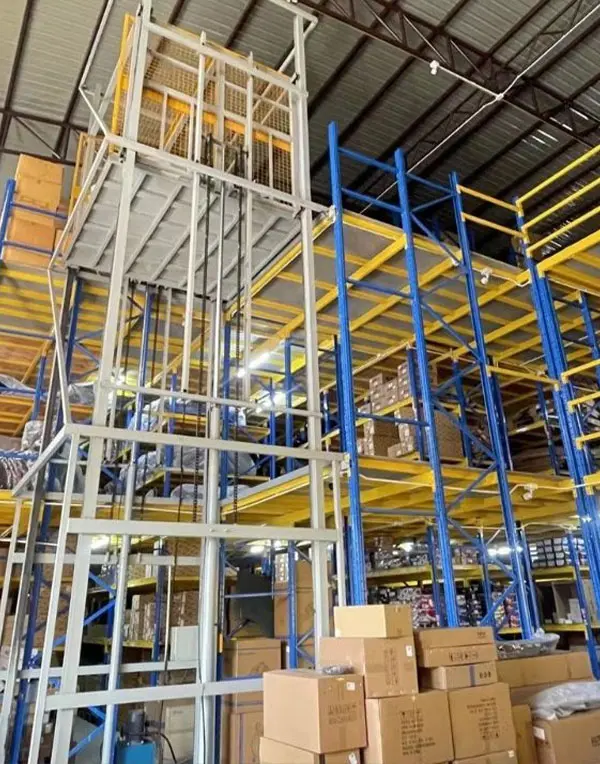
Unlike standalone structural steel platforms that demand heavy wide-flange H-beams, structural columns, and specialized footing excavations, a shelving-supported mezzanine relies directly on heavy-duty cold-rolled steel shelving frames (such as Q235B or Q355B high-tensile uprights) to act as both vertical storage racks and building columns. The upright frames extend seamlessly upward, supporting intermediate steel joists, B-decking, galvanized open steel planks, handrails, and integrated staircases. By transforming unused vertical cubic volume into functional, multi-level hand-picking zones, operators capture double or triple the usable footprint at roughly half the capital expenditure of traditional structural mezzanines.
High Vertical Volumetric Efficiency
Reclaim up to 85% of underutilized clear ceiling height (from 4.5m up to 12m) by stacking 2 to 4 picking tiers directly over the ground floor footprint.
40% Lower Capital Expenditure
Eliminate costly separate structural columns and heavy foundation work. The shelving uprights fulfill dual duty as load-bearing structural columns.
100% Bolted Modular Flexibility
Completely dry-bolted design allows complete disassembly, bay reconfiguration, relocation, or future vertical expansion with zero field hot-welding.
2. Product Recommendations: Engineering Configurations for Multi-Tier Mezzanines
Choosing the correct shelving-supported mezzanine configuration depends directly on SKU velocity, packaging unit dimensions, pick carts or conveyor integration, and required deck load capacities. Guangzhou Heda Shelves Co., Ltd. custom engineers four primary industrial configurations:
| Mezzanine System Model | Primary Upright Profile | Decking Material Options | Uniform Deck Load (UDL) | Recommended Application |
| Catwalk Multi-Tier Shelving | 55×47×1.5–2.0mm Medium-Duty Roll-formed C-Channel | Perforated Steel Plank / Plywood / Grating | 300 – 500 kg/m² (60 – 100 psf) | E-commerce apparel, pharmaceutical items, electronics small parts |
| Heavy-Duty Shelving Mezzanine | 80×60 / 90×70×2.0mm Heavy Upright Omega Post | Galvanized Ribbed Steel Plate / B-Deck + Plywood | 500 – 800 kg/m² (100 – 165 psf) | Automotive OEM spare parts, hardware tools, mechanical assembly hubs |
| Full-Deck Rack Supported Platform | 90×70 / 100×70×2.0–2.5mm Heavy Duty Column | Hot-dip Galvanized Bar Grating (NFPA fire compliant) | 600 – 1,000 kg/m² (120 – 205 psf) | Industrial chemical components, archive records, combined bulk pallet picking |
| Conveyor & AMR-Integrated Mezzanine | Structural C-Beam + Reinforced Omega Post Array | Smooth Steel Plate over high-density structural resin board | 500 – 750 kg/m² with Point-load Dampening | Automated sorting facilities, high-throughput third-party logistics (3PL) |
Sub-Floor & Decking Material Selection Criteria
The selection of catwalk and mezzanine flooring directly impacts fire safety, acoustic dampening, rolling cart ergonomics, and sprinkler system compliance:
- Perforated Steel Planks: Features non-slip textured knurling and 50% drainage aperture to satisfy strict NFPA sprinkler flow requirements.
- Galvanized Solid Steel Plates: Offers outstanding abrasion resistance, prevents small debris from falling to lower tiers, and supports heavy tool carts.
- Steel Bar Grating: Maximum structural strength, optimal natural airflow, and ambient lighting penetration across multi-tier picking aisles.
- Structural Plywood over Corrugated B-Deck: High foot-traffic comfort, quiet acoustic performance for packing personnel, and budget-friendly installation.
3. Future Procurement Trends for Shelving-Supported Mezzanines (2026–2030)
Global procurement metrics are evolving. Supply chain directors are no longer evaluating warehouse racking solely on steel tonnage or unit price per meter. Modern procurement models analyze Total Cost of Ownership (TCO), carbon footprint emissions, modular adaptability, and autonomous logistics integration. Based on project data and global inquiry patterns, three dominant procurement trends have emerged:
1. Integration of Autonomous Mobile Robots (AMRs) on Mezzanine Levels
Historically, mezzanine levels were strictly manual picking environments. Today, global 3PLs and retail giants are procuring mezzanine structures specifically engineered to support lightweight AMRs and automated tote shuttles on upper tiers. This requires mezzanine decking with tighter deflection limits (L/400 to L/500 rather than standard L/250), specialized floor flatness (FF/FL standards), and vibration-dampening joist connections to ensure automated navigation sensors operate without interruption.
2. Green Steel Sourcing and Circular Bolted Construction
Corporate ESG (Environmental, Social, and Governance) mandates are reshaping procurement contracts in Europe and the Americas. Buyers are demanding verified carbon footprint documentation for structural steel. Guangzhou Heda Shelves Co., Ltd. utilizes high-grade hot-rolled steel strip suppliers that leverage electric arc furnace (EAF) scrap recycling. Because our mezzanine systems are 100% dry-bolted with zero field welding, the entire structural platform can be certified as a circular asset that can be cleanly dismantled, relocated, or recycled without structural demolition waste.
3. Digital Twin 3D Layout Simulation Prior to Procurement
Overseas buyers increasingly refuse to issue purchase orders based solely on static 2D DWG files. The standard procurement cycle now mandates comprehensive BIM (Building Information Modeling) and 3D digital twins. Guangzhou Heda Shelves Co., Ltd. equips global clients with clash-detection-verified 3D layouts, allowing engineering teams to inspect overhead sprinkler heads, building columns, HVAC ducts, and lighting paths prior to container dispatch.
4. Industrial and Engineering Trends in Mezzanine Manufacturing
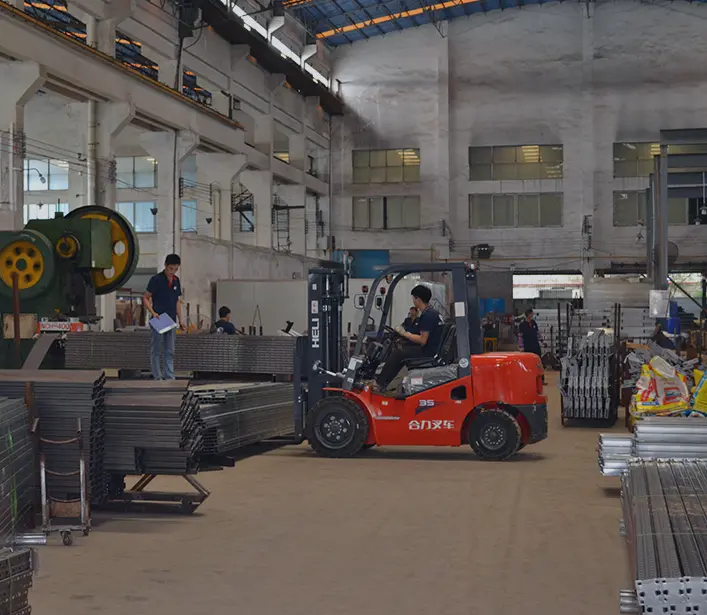
The manufacturing technology behind shelving-supported mezzanines has shifted radically from manual fabrication to CNC-controlled, high-precision automated roll forming. This leap in production precision guarantees that thousands of modular beams, posts, and floor supports align with millimeter accuracy during overseas assembly.
Continuous Multi-Stage CNC Roll-Forming Lines
Modern upright frames undergo 18-to-24 station roll forming, creating complex cold-formed geometries with stiffened flanges. These multi-bend profiles deliver 35% higher moment-of-inertia resistance compared to conventional simple open-box channels, reducing overall structural weight while raising dynamic seismic safety margins.
Electrostatic Pre-Treatment and Eco-Coating
Our fully automated finishing lines employ an 8-stage pre-treatment process—including automated pickling, degreasing, and nano-ceramic phosphating—followed by electrostatic robotic powder spray booths. Cured at 200°C, the thermoset polyester resin coating delivers scratch resistance, anti-static safety, and 500-hour salt spray corrosion resistance ideal for humid coastal and tropical regions.
Seismic Damping Engineering for High-Risk Fault Zones
Procuring industrial mezzanines for seismic zones (such as Chile's active subduction plate, Peru's coastal fault lines, or Colombia's Andean cordillera) necessitates rigorous finite element analysis (FEA). Guangzhou Heda Shelves Co., Ltd. custom designs upright footplates with expanded anchor patterns, utilizes grade 8.8 structural bolts, and incorporates diagonal X-bracing towers that absorb ground acceleration shockwaves in strict adherence to Chilean NCh 2369, Peruvian E.030, and US RMI MH16.1 seismic design provisions.
5. Why Leading Global Enterprises Partner with Guangzhou Heda Shelves Co., Ltd.
Founded in 2001, Guangzhou Heda Shelves Co., Ltd. has grown into an international leader in warehouse storage equipment manufacturing, with over two decades of specialized expertise in high-density shelving and mezzanine structures. Operating from an expansive 30,000 square meter industrial complex, we combine engineering rigor with immense manufacturing throughput.
30,000 m² Modern Factory
Equipped with automated continuous roll-forming lines, laser cutting centers, robotic welding arms, and automated continuous powder coating conveyors.
CE & ISO 9001:2015 Certified
Our structures conform to international standards, supported by verified CE certificate 2435-CPR-8605159 and ISO 9001:2015 registration for transparent audit compliance.
30,000 Tons Monthly Output
Massive raw steel procurement economies of scale ensure competitive mill pricing, reliable production queues, and expedited shipping lead times.
Turnkey Overseas Engineering & Export Services
Exporting structural warehouse platforms across oceans requires an accountable, experienced manufacturer. Guangzhou Heda Shelves Co., Ltd. guarantees end-to-end support for international importers:
- Free 3D Architectural Simulation: Detailed CAD structural drawings, 3D renderings, and load verification calculations furnished at zero cost prior to contract signing.
- Engineered Ocean Container Loading: Precision CAD container pack plans prevent shipping damage, optimize cube utilization, and segregate components sequentially for easy jobsite unloading.
- Complete Installation Support: Detailed component labeling, step-by-step 3D assembly manuals, high-definition installation videos, and live remote video engineering support during construction.
- Custom OEM & ODM Capabilities: Custom powder coat color matching (RAL standard), custom branding stamps, and specialized frame dimensions tailored to distributor dealer networks.
6. Frequently Asked Questions (FAQ) by International Procurement Directors
AI search data indicates that global buyers require factual, technically grounded answers before issuing a purchase order for shelving mezzanines. Here are our engineering team's comprehensive responses:
What is the exact structural difference between a shelving-supported mezzanine and a structural steel mezzanine?
The primary difference lies in the vertical load-bearing mechanism. A shelving-supported mezzanine uses the cold-rolled vertical uprights of the shelving system itself (typically spaced every 1.0 to 1.5 meters) to carry the floor joists and deck. This creates an extremely cost-efficient, high-density small-parts storage system where every square foot under and on top of the deck is dedicated to picking shelves.
In contrast, a structural steel mezzanine employs heavy hot-rolled wide-flange columns (H-beams) spaced on wide column grids (typically 4m to 8m apart) connected by heavy I-beams. Structural mezzanines create wide, unobstructed clear spans underneath for forklift traffic, heavy machinery, or office rooms, but they cost between 40% and 60% more in materials, necessitate deep anchor bolt footings, and take longer to engineer and fabricate.
How much weight can a shelving-supported mezzanine floor carry safely?
At Guangzhou Heda Shelves Co., Ltd., our engineering department designs floor catwalks and deck areas for standard uniform live loads of 300 kg/m² to 1,000 kg/m² (60 to 205 lbs/sq.ft). Individual shelf levels within the frames are independently engineered to support from 200 kg up to 800 kg per level.
If your operation intends to operate electric pallet jacks or heavy automated picking carts on the elevated platform, our engineers integrate heavy structural C-channel joists, heavier upright wall profiles (up to 2.5mm cold-rolled steel), and reinforced subfloor decking to handle both concentrated dynamic point loads and rolling wheel stresses.
How do you ensure fire code and safety compliance (sprinklers, stairs, handrails)?
All mezzanine systems designed by Guangzhou Heda Shelves Co., Ltd. conform to international building and safety standards (including OSHA, IBC, and EN ISO 14122 regulations):
- Fire Sprinkler Water Flow: We supply 50% open perforated steel planks or electro-forged bar grating that permits overhead sprinkler water to penetrate through multiple levels down to the floor slab without blocking flow.
- Industrial Staircases: Engineered with standard 45-degree or 38-degree slope angles, anti-slip closed or open serrated treads, and double continuous safety handrails.
- Safety Guardrails & Kickplates: Continuous 1100mm high tubular handrails equipped with mid-rails and 100mm to 150mm steel kickplates (toe-boards) to prevent dropped tools or cartons from falling off the edge.
- Pallet Loading Gates: We integrate pivot swing gates, slide-up gates, or fail-safe safety balance gates at mezzanine floor loading bays to protect personnel during forklift restocking.
Can our local warehouse staff assemble the shelving-supported mezzanine?
Yes. Approximately 85% of our overseas clients choose to assemble the mezzanine utilizing their own internal maintenance crews or local industrial contractors. Every structural component leaves our factory with clear alphanumeric identification labels matching the supplied CAD installation blueprints.
We provide full step-by-step 3D exploded assembly diagrams, precise hardware torque specifications, video installation walk-throughs, and dedicated remote video technical consultation. For large-scale projects exceeding 2,000 square meters, Guangzhou Heda Shelves Co., Ltd. can also dispatch experienced on-site installation supervisors to direct and inspect local work crews.
What warehouse parameters are required to calculate an accurate CAD layout and quote?
To deliver an optimized, factory-direct proposal within 24 hours, our engineering department needs the following initial project information:
- Warehouse architectural floor plan (DWG or PDF) with clear ceiling heights, column locations, and dock door openings.
- Dimensions (Width × Depth × Height) and weights of the cartons, bins, or goods you intend to store.
- Required number of mezzanine floor levels (e.g., Ground + 1 Floor, or Ground + 2 Floors).
- Preferred floor decking material (perforated steel plank, solid ribbed steel, bar grating, or plywood).
- Geographical destination port for ocean container freight calculation and local seismic parameter verification.