Choosing the right Pallet Storage Racks in 2026 will require more than counting pallet positions. Warehouse teams must examine load weight, product turnover, aisle width, ceiling height, and forklift movement. A rack can look efficient on paper yet create daily congestion beside the loading dock.
Gwynne Richards, author of Warehouse Management, has stated, “The warehouse is no longer a cost centre; it is a value-adding operation.” This view remains important when comparing selective pallet racks, drive-in racks, pallet flow racks, push-back racks, and automated storage systems. Each design changes access, capacity, labor requirements, and inventory control. Selective racks offer direct access to every pallet. Drive-in systems increase density but reduce selectivity. Flow racks can support first-in, first-out handling when gravity lanes are properly managed.
The details matter.
A 2026 rack decision should also consider inspection routines, seismic conditions, beam protection, and future expansion. Real warehouse experience often reveals overlooked problems, such as forklifts turning too tightly or damaged uprights hidden behind wrapped goods. Digital monitoring and automated retrieval may improve accuracy, but they can also increase installation complexity and maintenance demands.
There is no universal winner. That is the uncomfortable part. Some facilities may overinvest in automation when disciplined manual handling would perform better. Others may choose cheap, dense storage and regret limited access later. This guide examines the leading Pallet Storage Racks types for 2026, using practical criteria, expert insight, and realistic operating conditions.
What Are the 2026 Top Types of Pallet Storage Racks?
2026 Pallet Rack Landscape: Six Core Types and Their Storage Roles
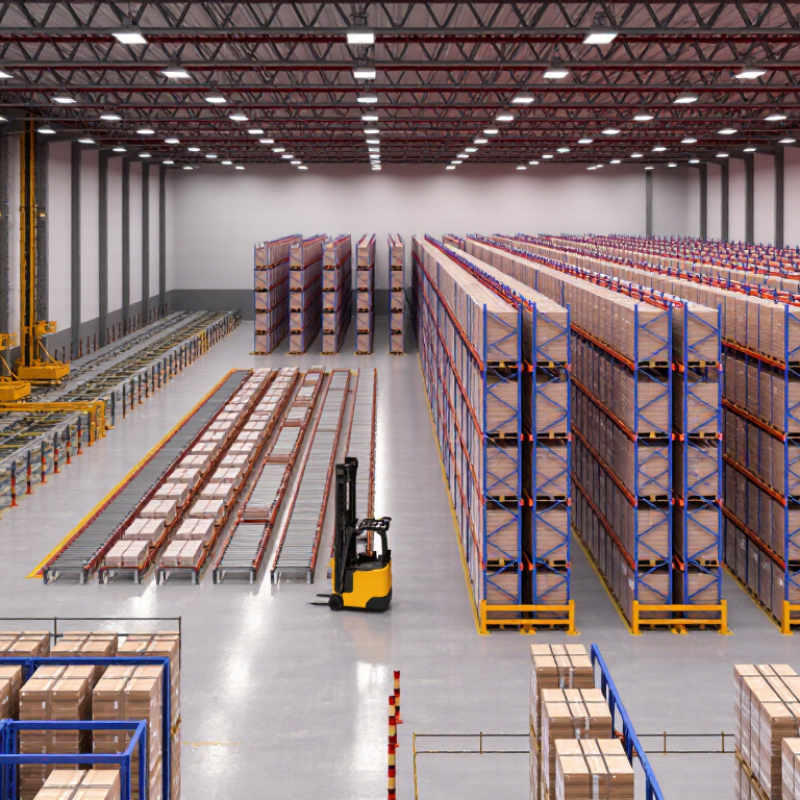
The 2026 pallet rack landscape centers on six practical storage types. Selective pallet racks offer direct access to every pallet, making them suitable for varied inventory and frequent picking. Double-deep racks increase density, but they require deeper forklifts and stricter stock rotation. Drive-in racks support high-density storage for similar products with limited variety. Drive-through racks allow forklifts to enter from both sides, improving loading flexibility. Push-back racks use nested carts and suit products stored by batch. Pallet flow racks use rollers, guiding pallets toward the picking face. They work well for first-in, first-out rotation.
Tips: Check aisle width, pallet dimensions, floor capacity, and forklift reach before choosing a system. Confirm each beam level’s rated load. Never rely on visual similarity between racks. Small differences matter.
In practical warehouse planning, the best system depends on movement, not density alone. Selective storage may waste some floor space, yet it can reduce travel and picking errors. Drive-in storage saves space, but damaged pallets can disrupt an entire lane. Pallet flow improves rotation, though rollers need regular inspection. I have seen layouts fail when seasonal inventory was ignored. That mistake is easy to repeat. Clear labels, upright guards, load signs, and scheduled inspections support safer daily operations. A flexible design may outperform a denser one when product demand changes quickly.
2026 Pallet Rack Landscape: Six Core Types and Their Storage Roles
The chart compares six widely used pallet rack configurations by their typical functional fit. Scores use a 1–5 scale, where 5 represents the strongest fit. Selective and mobile racks prioritize pallet access, drive-in racks maximize compact storage, pallet flow supports FIFO operation, and push-back or double-deep racks balance density with accessibility.
Selective pallet racks remain a practical choice for warehouses handling many stock-keeping units. Their design can provide roughly 90–100% SKU access, depending on layout and operating rules. A 2.7–3.7 m aisle usually supports common counterbalance or reach-truck operations. The exact width depends on truck turning radius, pallet size, rack height, and required clearance. Measure the equipment first.
That detail matters. A narrow aisle may increase storage density, but it can slow movements and raise contact risks. Wider aisles improve maneuverability, yet they consume valuable floor space.
WERC’s 2024 DC Measures report places median order-picking accuracy at 99.5%. Selective access can support that performance by keeping each SKU visible and reachable. Still, rack access alone cannot prevent mispicks. Label quality and cycle counting matter too.
The MHI 2024 Annual Industry Report states that 55% of supply chain leaders planned to increase investment in innovation. Selective racks fit this direction because they are modular and relatively simple to reconfigure. A warehouse team can assign fast-moving pallets near dispatch doors, while slower items occupy higher positions. That sounds efficient. It is not always so. Poor slotting can create congestion, especially during peak receiving periods. Teams should test aisle clearances with loaded pallets, not empty equipment.
Drive-in pallet racks can provide roughly 60–80% higher density than selective pallet systems. This gain comes from fewer aisles and deeper storage lanes. Forklifts enter the rack structure, place pallets on horizontal rails, and retrieve them from the open face. The system suits warehouses storing many pallets of the same product. It also supports LIFO inventory flow. The newest pallet usually leaves first.
LIFO works well for durable goods, seasonal stock, and materials without strict expiry dates. A typical lane may hold several pallets behind one another. This depth reduces travel space but limits direct access to individual pallets. Operators should confirm pallet dimensions, load ratings, and forklift clearance before installation. Small differences matter.
Rail spacing, impact protection, and floor flatness affect daily reliability. Damaged pallets can create delays or unsafe retrieval conditions. Regular inspections help identify bent rails, loose components, and overloaded positions.
The 60–80% figure is useful, but it is not universal. Actual density depends on ceiling height, lane depth, SKU variety, and access requirements. A storage audit should compare pallet volume, turnover speed, and replenishment patterns. High-turnover products may need selective or double-deep storage instead. Planning is rarely tidy. Maximum density can increase handling time when workers search across deep lanes. Clear labeling and disciplined loading sequences reduce that friction. A careful design balances space savings with safe, predictable LIFO operations.
What Are the 2026 Top Types of Pallet Storage Racks?
Double-deep and very narrow aisle (VNA) racks are gaining attention in 2026. They can increase pallet capacity by roughly 15–30% in suitable warehouses. The exact gain depends on aisle width, ceiling height, pallet size, and handling equipment. Space matters. A double-deep layout stores pallets behind one another, reducing the number of access aisles. This design works well for products with moderate turnover and several pallets per SKU. However, operators must reach the rear pallet through the front position. That can slow picking when inventory changes frequently.
VNA racks use narrower aisles and specialized lifting equipment. Aisles may fall below two meters, depending on the truck and rack configuration. This arrangement creates more storage locations without expanding the building footprint. During warehouse planning, I would check floor flatness, rack alignment, truck turning paths, and emergency access. A small floor variation can affect truck stability at height. Measure twice. Install once.
Capacity figures often look better on paper than on the warehouse floor. Obstructions, damaged pallets, poor slotting, and unused height can reduce the real result. Double-deep storage may also reduce selectivity, while VNA systems can require higher training and maintenance standards. A careful audit should compare current pallet positions, daily movements, SKU velocity, and equipment costs. The highest rack is not always the most productive choice. That is where many plans need reconsideration.
AS/RS pallet racks are designed for high-density storage, often reaching 12 to 40 meters. At these heights, automated cranes or shuttle systems place and retrieve pallets with controlled precision. The rack becomes part of the machine, not merely a steel structure. Every beam level must match the equipment’s travel path, pallet dimensions, and load capacity.
In practical projects, engineers begin with inventory data, pallet weights, turnover rates, and required retrieval times. They also check floor flatness, column tolerances, fire protection, lighting, and emergency access. Small alignment errors can become serious near the top levels. Very serious. A reliable design includes sensors, barcode controls, protective barriers, and scheduled inspections for impact damage or loose connections.
High-density automation can reduce floor usage and limit manual handling. It may also increase dependence on software, power supply, and maintenance skills. That weakness is easy to overlook. If one crane stops, several storage lanes may become unavailable. Engineers should model backup procedures before installation, rather than after a failure. Local building, fire, and workplace requirements must guide the final design. A 40-meter system may look impressive, but the best height depends on building geometry, product flow, and service access. More height is not always more efficiency.
| Rack Type | Typical Operating Height | Storage Density | Pallet Selectivity | Automation Compatibility | Best-Fit Applications | Main Advantages | Key Limitations |
|---|---|---|---|---|---|---|---|
| Selective Pallet Rack | 2–12 m | Low to medium; usually one pallet deep per position | 100% direct access to every pallet | Manual forklifts; can integrate with warehouse management systems | Warehouses with many stock-keeping units and frequent picking | Highest accessibility, flexible beam levels, and relatively simple layout changes | Uses more floor and aisle space than high-density systems |
| Double-Deep Rack | 4–12 m | Medium to high; two pallet positions deep | About 50% direct access without retrieving the front pallet | Reach trucks or specialized double-deep handling equipment | Fewer stock-keeping units with several pallets per item | Higher density than selective rack while retaining reasonable access | Requires compatible handling equipment and can reduce stock rotation flexibility |
| Drive-In Rack | 4–10 m | High; multiple pallets deep and several levels high | Low; last-in, first-out operation is common | Forklift-driven; limited automation compared with shuttle or AS/RS systems | Large quantities of similar products with low SKU variety | Very high cube utilization because storage aisles are minimized | Lower selectivity, slower stock rotation, and greater risk of rack impact |
| Push-Back Rack | 4–12 m | Medium to high; commonly two to six pallets deep | One accessible lane per channel, with last-in, first-out tendencies | Forklift-operated; can support semi-automated material handling | Batch storage where several pallets share the same product category | Good density with faster access than drive-in rack | Not ideal for strict first-in, first-out inventory control |
| Pallet Flow Rack | 4–12 m | High; deep lanes with gravity roller or wheel tracks | Good; first-in, first-out flow is supported | Compatible with conveyors, pallet shuttles, and warehouse control systems | Perishable goods, date-sensitive inventory, and high-throughput distribution | Reliable stock rotation and separate loading and unloading aisles | Higher installation cost and stricter pallet-quality requirements |
| Mobile Pallet Rack | 3–10 m | High; storage aisles open only where needed | High, with access to the selected mobile aisle | Electrically driven bases can connect to warehouse control systems | Cold stores, archives, and facilities where floor space is expensive | Can substantially increase storage capacity without constructing a larger building | Higher mechanical complexity, slower simultaneous access, and greater floor-load demands |
| Pallet Shuttle Rack | 4–18 m | Very high; deep-lane storage with shuttle carriers | Medium to high, depending on lane design and operating method | High compatibility with radio-shuttle systems, conveyors, and warehouse software | High-volume pallet storage with repeated SKUs and frequent replenishment | Reduces forklift travel inside rack lanes and improves throughput and safety | Requires batteries, controls, maintenance, and standardized pallets |
| AS/RS Pallet Rack | 12–40 m | Very high; uses building height and narrow storage aisles | High system-controlled access to individual pallet locations | Designed for cranes, shuttles, conveyors, warehouse control, and warehouse management systems | Large distribution centers, manufacturing plants, cold stores, and high-throughput operations | Excellent space utilization, consistent inventory accuracy, reduced manual travel, and 24/7 operating potential | High capital cost, detailed engineering requirements, and dependence on software and system uptime |
| Very Narrow Aisle Rack | 8–18 m | High; narrow aisles increase storage positions | High, with specialized guided trucks | Can integrate with positioning systems, conveyors, and warehouse software | Facilities requiring high pallet density while retaining direct pallet access | Balances selectivity and density more effectively than standard wide-aisle layouts | Requires specialized trucks, precise floor tolerances, and aisle guidance |
They suit warehouses carrying many different stock-keeping units. Each pallet remains visible and directly reachable. Access can reach about 90–100%. Poor labeling can still cause picking errors.
Common aisles measure about 2.7–3.7 meters wide. The correct width depends on truck turning radius, pallet size, rack height, and clearance. Measure loaded equipment, not empty equipment. That detail matters.
Wider aisles improve maneuverability and reduce contact risks. However, they consume valuable floor space. Narrow aisles may increase density but slow movement. The best width needs a practical trial.
Drive-in racks suit warehouses storing many pallets of the same product. They can provide roughly 60–80% higher density than selective systems. They usually follow LIFO flow, so the newest pallet leaves first.
LIFO can suit durable goods, seasonal inventory, and products without strict expiry dates. It is less suitable when older stock must leave first. Deep lanes can also make searching slower.
Confirm pallet dimensions, rail spacing, load ratings, forklift clearance, and floor flatness. Inspect rails and protective components regularly. Damaged pallets can delay retrieval and create unsafe conditions. Small differences matter.
Automated pallet racks often reach 12–40 meters. Cranes or shuttle systems move pallets with controlled precision. Height depends on building geometry, product flow, service access, and equipment limits. More height is not always better.
These systems depend heavily on software, power, sensors, and maintenance skills. If one crane stops, several storage lanes may become unavailable. Backup procedures should be planned before installation. That weakness is easy to overlook.
Compare SKU variety, turnover speed, pallet volume, retrieval times, and available floor space. Selective racks favor access. Drive-in racks favor density. Automated systems favor controlled, high-volume operations. The choice is rarely tidy.
In 2026, Pallet Storage Racks will continue to evolve around four major storage strategies: accessibility, density, space optimization, and automation. Selective pallet racks remain the most flexible option, providing approximately 90–100% SKU access and supporting aisles of about 2.7–3.7 meters. They are well suited to warehouses handling many product varieties and requiring frequent picking.
For operations that prioritize storage density, drive-in racks can increase capacity by roughly 60–80% while using a last-in, first-out inventory flow. Double-deep and very-narrow-aisle racks offer another balance, delivering around 15–30% more capacity where floor space is limited, although they require suitable handling equipment. At the highest level of warehouse automation, AS/RS pallet racks can extend from 12 to 40 meters in height, maximizing vertical space and enabling precise, high-density inventory management. The best system depends on product turnover, access requirements, available space, and automation goals.