In 2026, choosing pallet storage is less about finding a universally “best” rack and more about matching a system to daily work. Pallet Warehouse Racking can improve access and storage density, but the right design depends on inventory, equipment, building space, and picking patterns. That matters. A warehouse handling many different products may benefit from selective racking, where each pallet position remains directly accessible. Facilities storing larger quantities of fewer products may consider drive-in or drive-through layouts. Push-back and pallet flow systems can support higher-density storage, though they bring different loading, picking, and maintenance considerations.
This guide compares common pallet racking types and explains where each may fit. It looks at aisle width, pallet dimensions, forklift turning space, stock rotation, and expected throughput—not just advertised capacity. Small details count. Beam levels that look efficient on a drawing can become awkward when real pallets vary in size or loads overhang. Before choosing a system, verify rack specifications, floor conditions, anchoring requirements, and equipment clearances with qualified professionals. Manufacturer load information and regular inspections also matter. No system wins everywhere. A high-density design may save floor space yet slow access to individual pallets; that trade-off is easy to underestimate. The sections ahead offer a practical starting point, not a substitute for a site-specific assessment. Measure the operation, test assumptions, and choose for the warehouse you actually run.
2026 Best Types of Pallet Warehouse Racking? What Pallet Warehouse Racking Is and How It Works
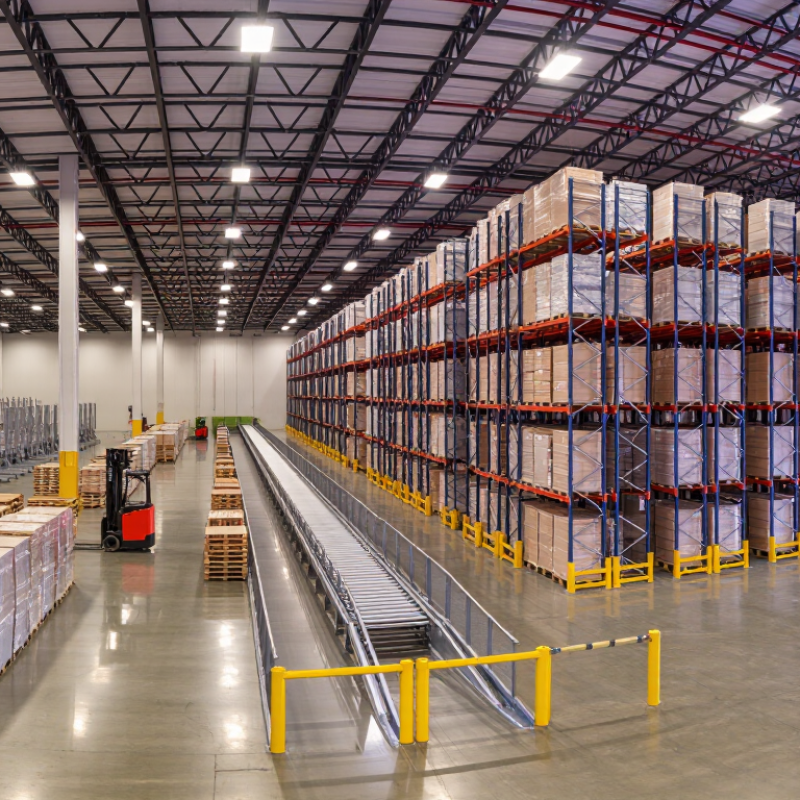
Pallet warehouse racking is a steel storage structure that holds palletized goods above the floor. Upright frames support horizontal beams, creating levels for forklifts to load and retrieve pallets. In selective racking, each pallet position is accessible from an aisle, which makes stock rotation straightforward but uses more floor space. Other layouts can store more pallets in a smaller area, though access may be less direct. Not just steel. Aisle width, pallet dimensions, forklift turning space, and load weight all affect how the system works in daily operations.
MHI’s 2023 Annual Industry Report found that 87% of surveyed respondents expected to increase supply-chain technology investment over the following five years. That trend makes future equipment worth considering when planning rack spacing and access, but it does not mean every warehouse needs automation. Check beam and frame capacities against actual pallet loads, including uneven or shifting goods. Follow applicable engineering guidance, such as ANSI MH16.1, and arrange inspections after impacts or visible damage. Small details matter.
Tips: Measure loaded pallets, not empty ones. Confirm forklift clearances on the floor before installation. A layout can look efficient on paper and still feel cramped in a busy aisle.
2026 Best Types of Pallet Warehouse Racking?
The Main Types of Pallet Racking Systems
A rack layout should follow the stock, not the other way around. Selective pallet racking gives direct access to every pallet and suits warehouses carrying many SKUs. Its trade-off is wider aisles and lower storage density. Double-deep racks add storage depth, but require reach trucks and can slow access to rear pallets.
For dense, uniform inventory, drive-in and drive-through systems let forklifts enter the rack lanes. Drive-in typically supports last-in, first-out handling; drive-through can support first-in, first-out when loading and retrieval occur at opposite ends. Push-back and pallet-flow racks also increase density, but require compatible loads and regular inspection. Uneven pallets or damaged skids can disrupt a lane. Not always obvious. Space is finite.
The 2024 MHI Annual Industry Report found that 55% of surveyed organizations were increasing supply-chain technology investment, while 88% expected investment to rise over five years. These figures do not dictate rack choice, but they highlight the value of planning for scanning, automation, and changing throughput. Cantilever racks suit long, awkward stock, not standard pallet loads. Before specifying capacity, check pallet weight, load placement, forklift turning space, and slab condition with a qualified rack designer. I would leave room for seasonal peaks; forecasts can be too tidy.
| Pallet Racking System | Storage Density | Pallet Selectivity | Typical Stock Rotation | Typical Equipment | Best Suited For | Key Consideration |
|---|---|---|---|---|---|---|
| Selective pallet racking | Low to medium | High: each pallet position is directly accessible | Flexible; suitable for mixed rotation methods | Counterbalance or reach truck, depending on aisle layout | Warehouses with many SKUs, varied pallet loads, and frequent picking | Provides straightforward access but requires aisles between rack rows. |
| Double-deep racking | Medium to high | Medium: rear pallets are accessed through the front position | Usually LIFO within each two-pallet-deep lane | Double-deep reach truck or compatible handling equipment | Operations with several pallets per SKU and a need for greater storage density | Rear pallet access is less direct, and compatible equipment is required. |
| Drive-in racking | High | Low: pallets are stored in deep lanes | Typically LIFO | Forklift designed to enter the rack lanes | Large quantities of the same SKU with relatively few product changes | Lane depth and access sequence can limit individual pallet retrieval. |
| Drive-through racking | High | Low to medium, depending on lane configuration | Can support FIFO when loading and retrieval occur at opposite ends | Forklift designed to enter the rack lanes | High-volume storage where stock rotation by lane is important | Requires access to both ends of the lanes for through-flow operation. |
| Pallet flow racking | High | Lane-based: pallets are accessed in sequence | FIFO | Forklift for loading and retrieval at separate ends | High-throughput goods that benefit from first-in, first-out rotation | Gravity rollers or wheels move pallets through the lane and need suitable pallet condition and maintenance. |
| Push-back racking | High | Lane-based: the most recently loaded pallet is normally retrieved first | Typically LIFO | Forklift for loading and retrieval from the aisle face | Multiple pallets per SKU where compact storage and access from one aisle are useful | Storage depth and retrieval order are determined by the lane design. |
| Mobile pallet racking | High relative to fixed selective layouts | High when the required aisle is opened | Flexible; depends on the inventory process | Forklift, with powered or manual rack movement as designed | Facilities that need selective access but have limited floor space | Only one or a small number of aisles may be open at a time; floor and safety systems must suit the installation. |
| Pallet shuttle racking | High | Lane-based: access depends on the shuttle system and lane plan | Can be configured for LIFO or FIFO workflows | Forklift plus a powered shuttle moving pallets within lanes | Deep-lane storage with repeated pallet movements and reduced forklift travel inside lanes | Requires compatible pallet dimensions, control procedures, and shuttle-system maintenance. |
Pallet rack selection should begin with the inventory, not a catalog. Record each pallet’s full weight, height, footprint, and any overhang. Include the pallet itself in weight estimates. A warehouse holding many different SKUs often benefits from selective rack, because each pallet stays accessible. Dense options, such as double-deep or drive-in rack, can suit fewer, faster-moving product lines. But they may slow access when replenishment is uneven. That trade-off is easy to underestimate.
Equipment needs can change the layout. Measure forklift turning radius, mast height, and required aisle width before setting rack rows. Check lift height against beam levels and ceiling obstructions, including lights and sprinkler lines. Leave clearance for safe handling. A few centimeters matter. Confirm the floor’s capacity and have rack loads reviewed by a qualified professional. I would question any plan that saves aisle space but forces awkward pallet handling; paper layouts can look cleaner than daily operations.
Tips: Track SKU count and pallet dimensions before choosing a rack type. Test the proposed aisle width with the actual lift truck. Recheck assumptions when inventory changes.
Pallet racking should match the heaviest real load, not an average pallet. Weigh products, pallets, and packaging together, then check beam and frame capacities for the planned configuration. Capacity can change when beam heights or bay layouts change. Keep the rack’s load signs visible and readable. Small detail. The Rack Manufacturers Institute’s ANSI MH16.1 standard sets engineering requirements for steel storage racks; have a qualified rack professional review unusual layouts or changes.
Safety affects space planning. In the U.S. Bureau of Labor Statistics’ 2023 Survey of Occupational Injuries and Illnesses, warehousing and storage recorded 4.8 cases involving days away, job restriction, or transfer per 100 full-time workers, compared with 2.4 across private industry. This is a useful warning, not proof that racks alone cause injuries. Protect exposed uprights near busy forklift routes, and inspect after impacts.
Measure aisle widths using actual equipment and turning movements, not a neat drawing. Leave clear access to exits, sprinklers, and fire equipment; OSHA’s 29 CFR 1910.176 requires clear, unobstructed aisles. Check slab condition and floor levelness before installation. A layout that fits more pallets may slow picking or create awkward turns. That trade-off is easy to underestimate. Revisit the plan after operations begin: real traffic rarely follows the first sketch exactly.
Comparing pallet racking in 2026 starts with the work each aisle must support, not storage density alone. Selective racks give forklift operators direct access to every pallet, useful when many SKUs move in small quantities. Drive-in racks store more pallets in less floor space, but forklifts enter the lanes and access is less flexible. Push-back and pallet-flow systems suit deeper storage when products move in consistent batches.
MHI and Deloitte’s 2024 Annual Industry Report found that 55% of surveyed organizations planned to increase supply-chain technology investment. That matters. When comparing conventional racks with automated options, include future software, equipment, and expansion needs in the cost estimate. The report signals broader investment interest; it does not predict which rack type will fit a specific warehouse.
Measure pallet dimensions, loads, SKU count, and daily picks before requesting quotes. Check ceiling clearance, aisle width, forklift turning space, and how stock rotation will work. Ask a qualified rack engineer to verify the design against site conditions and applicable requirements. A high-density layout can look efficient on paper, yet slow retrieval if operators must move other pallets first. The first estimate may be wrong. Test the proposed layout against a real picking week, then revise it.
It is a steel structure that stores palletized goods above the floor. Upright frames and horizontal beams create storage levels. Forklifts load and retrieve pallets.
Each pallet position faces an aisle, so workers can reach it directly. This helps stock rotation. It also needs more aisle space. A practical trade-off.
Drive-in and drive-through racks store pallets in deeper lanes. Drive-in commonly uses last-in, first-out handling. Drive-through can support first-in, first-out access from opposite ends.
They store pallets farther back and can increase density. Reach trucks are needed, and rear pallets may take longer to retrieve. Not always convenient.
Measure loaded pallets, aisle widths, forklift turning space, and floor conditions. Test clearances on the actual floor. Paper plans can be misleading.
Check beam and frame ratings against real pallet weights. Include uneven loads and goods that may shift. A qualified rack designer can help.
These systems need compatible loads and regular inspection. Uneven pallets or damaged skids can interrupt movement through a lane. Small defects matter.
Consider future scanning or automation when setting rack spacing and access. But not every warehouse needs automated equipment. Forecasts can be too tidy.
Arrange an inspection after a forklift impact or visible damage. Check the structure rather than guessing from the aisle. Don’t leave it for later.
Pallet Warehouse Racking is a structured storage system that uses racks and pallets to organize goods, make better use of vertical space, and support efficient warehouse operations. Different systems suit different needs: some provide direct access to each pallet, while others prioritize storage density or faster product movement. The right choice depends on inventory characteristics, stock rotation, available equipment, and how frequently goods must be accessed.
When comparing options in 2026, consider load capacity, aisle width, ceiling height, floor conditions, and the space needed for safe equipment operation. Plan for clear access, stable loads, and regular inspection as part of an effective storage layout. By balancing capacity, accessibility, safety, and space efficiency, businesses can select a pallet racking arrangement that supports their current workflow and allows room for future changes.