China has become a major sourcing base for warehouse storage equipment, including selective, drive-in, push-back, and automated Pallet Rack Systems. Its manufacturers serve distribution centers, factories, cold-storage facilities, and third-party logistics companies worldwide. However, choosing a supplier requires more than comparing factory prices or attractive catalog images.
This guide examines China’s leading Pallet Rack Systems manufacturers through practical purchasing criteria. These include structural design, load calculations, steel quality, welding consistency, coating durability, production capacity, certification, and after-sales support. A reliable manufacturer should explain beam capacity clearly, provide layout drawings, and identify the safety factors used in its engineering. Site experience matters. So does documentation.
Real warehouse conditions often expose weak assumptions. A rack may look strong but fail to suit uneven floors, forklift traffic, seismic requirements, or changing pallet dimensions. Small details matter, such as upright protection, anchor placement, beam locking pins, and corrosion resistance near loading doors. Data matters.
The manufacturers discussed here are not presented as a universal ranking. “Top” depends on project scale, industry, budget, installation location, and service expectations. Some companies excel at standardized export orders, while others perform better on customized layouts or automated integration. Buyers should verify factory qualifications, inspect samples, review independent references, and request recent project evidence.
There is no perfect supplier. Even experienced buyers can overlook installation quality or future expansion needs. This article offers a balanced starting point for comparing Chinese manufacturers and selecting a safer, more adaptable storage partner.
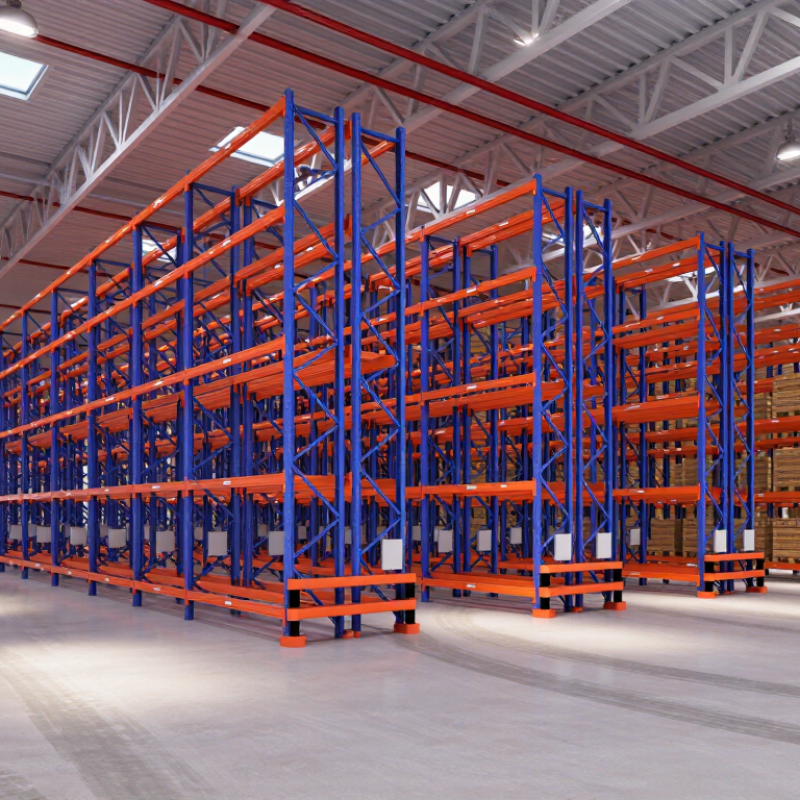
China Top Pallet Rack Systems Manufacturers?
What Defines a Top Pallet Rack Systems Manufacturer in China
A top Chinese pallet rack systems manufacturer does more than roll steel and issue a quotation. It converts warehouse data into a safe, workable storage plan. Engineers should verify pallet dimensions, load weight, aisle width, floor capacity, and forklift movement before production. They should also provide load calculations, welding records, coating specifications, and inspection reports. Small details matter. A beam that fits on paper may obstruct a sprinkler line in practice.
The MHI 2024 Annual Industry Report found that 55% of supply-chain professionals planned to increase technology investment. This shift raises expectations for rack manufacturers. Strong suppliers now support barcode locations, rack inspections, modular expansion, and integration with automated equipment. They should manufacture under documented quality procedures, such as ISO 9001, and design according to applicable standards, including EN 15635 or ANSI/RMI guidance. Independent testing adds credibility, especially for seismic or high-bay applications.
Experience appears during installation and after delivery. A capable factory can explain anchor selection, upright protection, deflection limits, and inspection intervals in clear technical language. It should trace steel batches and replace damaged components quickly. Low prices can be useful, but they may hide thinner material or incomplete engineering. No manufacturer is perfect. Buyers should still question unclear tolerances, vague load tables, and promises without test evidence.
This editorial benchmark shows the relative importance of the main evaluation areas when selecting a pallet rack systems manufacturer. The criteria reflect common requirements in warehouse racking projects, including structural design, load documentation, manufacturing quality, traceability, compliance with standards such as EN 15512, EN 15629, EN 15635 and ANSI/RMI MH16.1, as well as installation support and after-sales service. The percentages represent assessment weightings, not market-share data.
Chinese manufacturers produce a broad range of pallet rack systems for warehouses, factories, and distribution centers. Selective pallet racking remains the most flexible option, offering direct access to every pallet. Drive-in racking increases storage density by reducing aisles. Push-back systems support several pallets per lane, while pallet flow racks use gravity rollers for faster stock rotation. Double-deep racks can improve space use, but they require suitable handling equipment and stricter inventory planning.
Automation is also changing rack design. According to the MHI 2024 Annual Industry Report, 55% of surveyed supply-chain professionals planned to increase technology investment. This supports demand for automated storage and retrieval systems, shuttle racks, and crane-compatible structures. Chinese factories commonly produce these systems with adjustable beams, welded or bolted frames, safety guards, and powder-coated finishes. In practical projects, beam deflection, floor loading, seismic conditions, and forklift clearance need careful verification. A low quotation can hide engineering compromises.
Grand View Research has identified warehouse racking as a growing segment within material-handling infrastructure, driven by e-commerce and higher storage density requirements. Yet density is not always efficiency. Drive-in racks may slow access, and automated systems can become difficult to maintain without local technical support. Independent load testing, traceable steel certificates, installation inspection, and clear capacity labels improve reliability. Buyers should request layout drawings and loading calculations, not only product photographs. Some specifications still look impressive on paper. Reality is less forgiving.
China’s top pallet rack manufacturers compete through engineering depth, production control, and practical warehouse experience. Experienced teams study pallet dimensions, forklift movement, aisle widths, floor conditions, and storage turnover before proposing a rack layout. They may use CAD drawings and load calculations to reduce wasted space. Small details matter. Beam connectors, upright profiles, and anchor positions must work together under daily loading.
Strong manufacturers control more than steel cutting. They inspect incoming material, monitor welding quality, and check dimensions during assembly. Powder coating should cover corners, edges, and hidden surfaces evenly. Some factories perform load tests, coating checks, and weld inspections before shipment. Product labels and batch records also support traceability. These practices make future maintenance easier. Still, quality can vary between production batches, so buyers should request current inspection records.
Customization is another key capability. A capable supplier can adjust rack height, beam levels, pallet support bars, guards, and guide systems for different warehouse conditions. It should also provide installation drawings and clear maintenance guidance. Reliable communication helps when site measurements change. However, not every factory handles complex projects equally well. A buyer should question vague load ratings, incomplete drawings, and promises without test evidence. After-sales support may seem minor, but replacement parts and technical responses become important after installation. A careful evaluation should examine engineering documents, factory processes, delivery records, and the team’s willingness to admit limitations.
Capability and purchasing criteria for evaluating pallet rack system suppliers
| Capability Area | Typical Industry Parameters | What Leading Manufacturers Commonly Provide | Recommended Verification Evidence |
|---|---|---|---|
| Product Range | Selective pallet racking, drive-in racking, push-back racking, carton flow, cantilever and mezzanine systems. | A coordinated range of storage systems designed for different SKU profiles, access requirements and warehouse layouts. | Product drawings, application references, load tables and system-selection guidance. |
| Load Engineering | Load capacity depends on beam span, pallet weight, bay height, frame geometry, seismic conditions and floor performance. | Project-specific structural calculations rather than relying only on nominal capacity figures. | Stamped calculations, design assumptions, load plaques and allowable-load documentation. |
| Common Dimensions | Beam lengths are commonly configured around pallet size and aisle layout; 1,800–3,600 mm spans are frequently used in warehouse projects. | Customized bay widths, frame depths and upright heights for standard or non-standard pallets. | Dimensioned general-arrangement drawings and pallet-clearance calculations. |
| Steel Processing | Cold-formed steel sections require controlled roll forming, punching, cutting and dimensional inspection. | Automated or semi-automated forming lines, tooling control and traceable production batches. | Process-flow records, material certificates, inspection plans and dimensional reports. |
| Welding and Fabrication | Weld quality affects frame rigidity, connector performance and long-term durability. | Controlled welding procedures, fixture-based assembly and routine weld inspections where applicable. | Welding procedure records, operator qualifications and inspection reports. |
| Surface Treatment | Powder coating and galvanized finishes are selected according to indoor conditions, humidity and corrosion exposure. | Pretreatment, powder-coating or galvanizing options with controlled coating thickness and curing. | Coating-thickness results, adhesion testing, color specifications and corrosion requirements. |
| Safety Design | Typical safeguards include upright protectors, end-of-aisle guards, row spacers, back stops and pallet supports. | Safety accessories matched to forklift traffic, pallet type, building conditions and local regulations. | Risk assessment, accessory schedules, installation instructions and inspection procedures. |
| Standards Awareness | Relevant references may include EN 15512, EN 15629, EN 15635, FEM guidance, AS 4084 or applicable local codes. | Design and documentation adapted to the destination market instead of using one universal specification. | Standards matrix, compliance statement, engineering responsibility and test documentation. |
| Quality Management | Repeatable quality requires incoming-material inspection, in-process checks and final inspection. | Documented quality procedures, batch traceability and corrective-action processes. | Quality manual, inspection checklists, nonconformance records and audit results. |
| Customization | Warehouse projects differ in pallet dimensions, ceiling height, sprinkler clearance, seismic risk and forklift type. | Layout-based solutions, custom profiles, non-standard bay dimensions and integrated accessories. | Approved shop drawings, revision control and sample or prototype approval. |
| Installation Support | Rack installation requires accurate anchoring, plumb alignment, torque control and safe working procedures. | Installation manuals, method statements, remote technical support or qualified site supervision. | Installation checklist, anchor specifications, handover records and operator guidance. |
| Export Readiness | International shipments require correct packing, container planning, export documents and protection against handling damage. | Container-loading plans, labeled components, export packaging and documentation aligned with the destination country. | Packing list, loading photographs, shipping marks, commercial documents and damage-control procedures. |
| After-Sales Service | Racking should be inspected regularly and repaired or replaced after impact or visible deformation. | Spare-part identification, replacement guidance, inspection training and responsive technical support. | Warranty terms, spare-part lead times, inspection forms and service-response commitments. |
China’s pallet rack sector serves warehouses worldwide, but supplier quality varies sharply. Grand View Research valued the global warehouse racking market at about USD 9.9 billion in 2023. That scale creates opportunity, yet it also rewards careful verification.
Evaluate engineering before comparing prices. Request load calculations, bay drawings, steel grades, beam deflection limits, and seismic assumptions. Confirm testing against EN 15512, EN 15635, FEM guidance, or applicable local standards. A capable supplier should explain how uprights resist impact and how anchors suit your concrete floor. Ask for batch traceability and coating thickness records. Photos are useful, but stamped inspection documents are stronger evidence.
Mordor Intelligence projects continued growth in warehouse racking through 2029, driven by e-commerce and storage density. Growth can encourage rushed production. Audit the factory, not only the showroom. Check welding stations, powder-coating lines, measuring tools, and finished-goods storage. Review three comparable installations, including one operating for several years. Speak with users about damaged components, replacement speed, and installation support. A low quotation may hide weaker steel, thinner coatings, or excluded freight. I would also inspect packaging details: corner protection, moisture barriers, labels, and spare anchors. No checklist is perfect. A supplier can meet a drawing and still communicate poorly during a site change. Allow a technical clarification stage, with written responses and revision control.
Choosing among China’s top pallet rack system manufacturers requires more than comparing online rankings. Start with your warehouse facts: pallet weight, load height, aisle width, floor condition, and forklift type. Share accurate drawings and request stamped load calculations. A reliable manufacturer should explain upright profiles, beam connectors, bracing, and permitted deflection in clear language.
Ask for production evidence, not polished promises. Request material certificates, welding procedures, coating specifications, and inspection records for a recent batch. A factory video helps, but a live production call reveals more. Check whether the supplier tests full rack bays, labels components, and protects corners during export packing. Independent inspections before shipment can verify dimensions, weld quality, paint thickness, and packing counts. Small errors become expensive after installation.
Study references from warehouses similar to yours. Ask about delivery delays, replacement parts, installation guidance, and communication after payment. One useful test is to order a sample frame or connector before approving a large project. It may slow the purchase, but it exposes design weaknesses early. Be cautious when a quotation is dramatically cheaper; thinner steel, weaker coatings, or vague safety limits may explain the difference. A factory can look highly professional and still miss details. Your evaluation should remain skeptical, documented, and tied to measurable requirements.
Selective racking provides direct access to each pallet. It suits varied inventory and frequent picking. Aisles require more floor space.
Drive-in racking increases storage density by reducing aisles. It works well for similar products with fewer stock rotations. Access becomes slower.
Push-back racks store several pallets within one lane. Pallets move forward on carts when front stock is removed. Inventory planning still matters.
Pallet flow racks use gravity rollers for stock movement. They support faster rotation and clearer loading paths. Rollers need regular inspection.
Confirm handling equipment, aisle width, pallet dimensions, and inventory rules. Double-deep storage can save space. It may complicate access.
Verify beam deflection, floor loading, seismic conditions, and forklift clearance. Request loading calculations and layout drawings. Photos are not enough.
Request steel certificates, weld inspection records, coating checks, and batch traceability. Inspect corners and hidden surfaces. Quality can vary between batches.
It should adjust rack height, beam levels, guards, pallet supports, and guide systems. Installation drawings should match site measurements. Small errors matter.
Automation can increase capacity and reduce manual movement. Maintenance may become difficult without local technical support. Efficiency is not guaranteed.
Ask whether steel grades, testing, installation, guards, and support are included. A low price may hide engineering compromises. I would check twice.
China has become a major source of Pallet Rack Systems for warehouses, distribution centers, and industrial storage facilities. A top manufacturer is defined not only by product variety, but also by engineering expertise, dependable material quality, consistent production, and compliance with recognized safety requirements. Chinese manufacturers commonly produce selective pallet racks, drive-in systems, push-back racks, pallet flow racks, cantilever racks, and customized storage solutions. Leading suppliers typically offer design support, load calculations, space planning, surface treatment, quality inspections, and flexible production capabilities for different warehouse conditions.
When evaluating China’s Pallet Rack Systems suppliers, buyers should review manufacturing experience, technical documentation, testing procedures, material specifications, production capacity, communication efficiency, and after-sales support. It is also important to compare quotations based on the complete project scope rather than price alone. The selection process should begin with clearly defined storage needs, pallet dimensions, load requirements, facility layout, and expansion plans. Requesting drawings, samples, certifications, references, and a detailed delivery schedule can help confirm whether a manufacturer is reliable and suitable for the project.