info@hedashelvessouthamerica.com Serving Brazil · Chile · Peru · Colombia · Argentina · Ecuador
Follow us
0%

Warehouse Pallet Storage Racks shape how safely and efficiently a distribution center uses its floor and ceiling space. The right system depends on more than price. Pallet dimensions, load weights, forklift routes, inventory turnover, and future expansion all matter. A rack that looks efficient on a drawing may create congestion when forklifts meet at a narrow aisle.

The World Bank’s 2023 Logistics Performance Index compares logistics performance across 139 economies, including infrastructure and logistics competence. It does not rank pallet racks, but it underlines a practical point: dependable logistics relies on connected operational choices. Professor Martin Christopher, a respected logistics scholar, describes a supply chain as “the network of organizations that are involved, through upstream and downstream linkages, in the different processes and activities that produce value.” His definition is useful here: storage equipment must work within the wider flow of goods, not in isolation.

This guide compares ten Warehouse Pallet Storage Racks options for global buyers, from selective and drive-in systems to pallet-flow and mobile racks. Each has trade-offs. Selective racks offer direct access to every pallet; denser systems can reduce aisle space but may constrain access or require specialized handling. Small details count. Beam ratings, upright protection, clear load signage, and installation quality deserve close attention. Buyers should verify specifications with qualified rack designers and suppliers, because site conditions vary—and a neat comparison table cannot replace a real warehouse assessment.
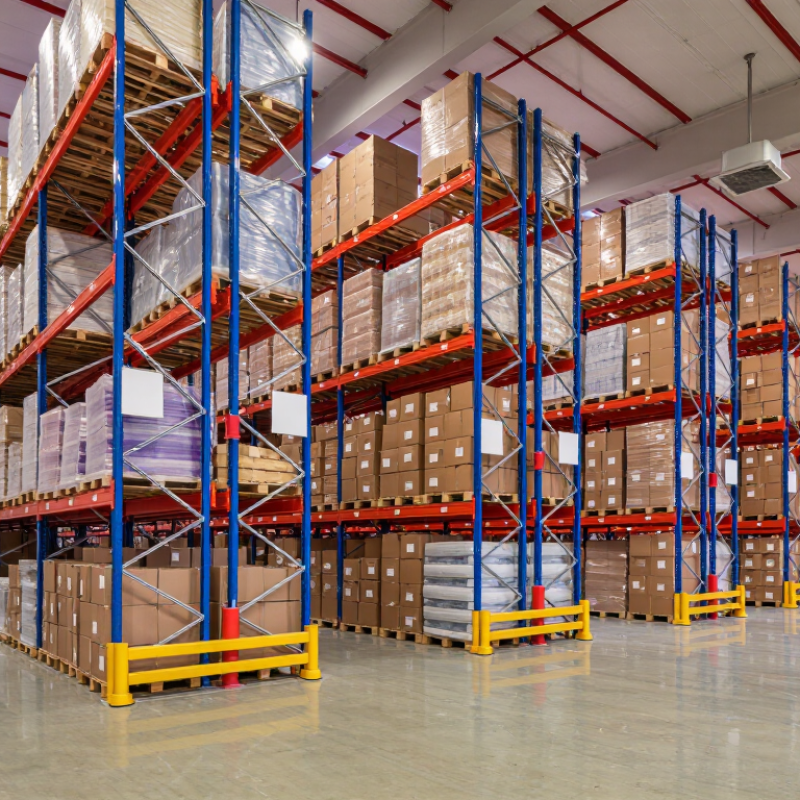
Top 10 Warehouse Pallet Storage Racks for Global Buyers

Understanding Warehouse Pallet Storage Racks and Their Core Components

Warehouse pallet storage racks are more than steel frames holding goods above the floor. Upright frames carry vertical loads, while horizontal beams support each pallet position. Beam connectors secure the beams to the uprights, and diagonal bracing helps keep the frames stable. Small details matter. Anchors connect the rack to the floor, and load signs show workers the approved limits.

Decking may support pallets that do not sit safely across beams, but it must suit the rack design and load. Guards can help protect upright frames near forklift aisles. During a rack assessment, check for bent steel, loose connections, missing anchors, and blocked load signs. A neat-looking bay can still have a hidden weakness. Capacity also depends on pallet weight, beam spacing, and how loads are distributed, so a single number rarely tells the whole story.

Tips: Record pallet dimensions and weights before choosing a configuration. Keep aisle clearances practical for the equipment in use. Have a qualified rack professional review capacity and damage concerns; visual checks alone can miss problems. It is easy to focus on storage density, but access and safe handling deserve equal attention.

Standard Pallet Footprint Areas for Warehouse Rack Planning

Pallet footprint affects rack bay and aisle planning. The areas shown are calculated from the listed nominal dimensions; actual rack capacity and clearances depend on the pallet, load, rack design, and handling equipment.

Classifying the Main Rack Types Used in Global Warehouses

Warehouse pallet racks are commonly classified by how they support pallets and how forklifts access them. Selective racks provide direct access to each pallet position, making them practical for mixed products and frequent picking. Their trade-off is aisle space. Fit matters.

Drive-in racks store pallets several positions deep on rails, so forklifts enter the rack lanes. They suit larger quantities of fewer product types, but operators must manage pallet sequence and clearance carefully. Drive-through racks allow access from both ends, supporting loading from one side and retrieval from the other when warehouse flow permits.

Push-back racks use inclined carts, allowing pallets to move forward as earlier loads are removed. Pallet-flow racks use gravity rollers for similar first-in, first-out movement. Both can increase storage density, though damaged pallets or inconsistent loads may disrupt movement. Not always.

Cantilever racks hold long or awkward goods on projecting arms, while mezzanine-supported layouts add usable levels above the floor. These are not direct substitutes for standard pallet bays; product shape, ceiling height, and handling equipment matter. A plan can look efficient on paper yet fail when turning space is tight. Check pallet dimensions, load weights, beam ratings, and forklift clearances with qualified warehouse professionals before finalizing a layout.

Evaluating Safety, Capacity, and Compatibility Requirements

Choosing among the top ten warehouse pallet storage racks starts with the load, not the catalogue photo. Record each pallet’s gross weight, dimensions, entry direction, and daily turns. The U.S. Bureau of Labor Statistics reported a 4.8 total recordable injury and illness rate per 100 full-time workers in warehousing and storage in 2022. This sector-wide figure is not rack-specific, but it highlights the value of careful handling and aisle planning.

Check capacity at every beam level, not just per bay. Beam length, pallet overhang, load distribution, and floor condition can change safe limits. The Rack Manufacturers Institute’s ANSI MH16.1 standard covers design and testing criteria for steel storage racks. For global installations, confirm local seismic requirements and equipment clearances. Selective racks support direct access; drive-in systems increase density but need compatible forklifts and consistent pallet sizes. One detail is easy to miss: future load changes may outgrow today’s layout.

Tips: Verify load plaques against the actual configuration. Keep aisles clear, inspect for bent uprights, and document damage promptly. When in doubt, pause and request an engineering review.

Top 10 Warehouse Pallet Storage Racks for Global Buyers - Evaluating Safety, Capacity, and Compatibility Requirements

Rack Type Storage Density and Selectivity Capacity Considerations Typical Equipment Compatibility Key Safety and Compatibility Checks
1. Selective Pallet Rack Direct access to each pallet; lower storage density because aisles are needed between rack rows. Beam and upright capacities are selected for the specified pallet load, rack height, and configuration. Commonly served by counterbalance or reach trucks; aisle width must suit the selected truck and load. Verify beam locks, pallet overhang, upright protection, floor anchorage, and posted load ratings.
2. Double-Deep Rack Stores pallets two positions deep; increases density while reducing direct access to rear pallets. Design must account for the combined loads on beams and frames, plus the reach and placement limits of the equipment. Typically requires a double-reach truck or another truck with suitable extended reach. Check truck reach, aisle clearance, pallet condition, load stability, and access to rear positions.
3. Drive-In Rack High-density storage in deep lanes; typically operates on a last-in, first-out basis with limited selectivity. Capacity depends on lane depth, support-rail design, pallet loads, and the frame and bracing configuration. Forklifts enter the lanes; truck dimensions and operating clearances must match the rack layout. Use suitable pallets; protect uprights and guide rails; control entry speed and prevent contact with overhead members.
4. Drive-Through Rack Deep-lane storage with access from both ends; can support first-in, first-out flow when loading and retrieval are managed from opposite ends. Lane length, pallet load, support rails, and the operating method determine the engineered capacity. Forklifts operate within lanes from either end; aisle and turning clearances are site-specific. Separate loading and retrieval traffic where possible; confirm pallet dimensions and maintain clear lane openings.
5. Pallet Flow Rack Gravity rollers or wheels move pallets through inclined lanes; supports high density and first-in, first-out rotation. Lane capacity and operation depend on pallet weight, pallet quality, lane length, and flow-control components. Forklifts load and retrieve at opposite ends; conveyorized or automated handling may also be integrated. Test pallet compatibility and flow; inspect rollers, brakes, separators, and end stops; keep people clear of moving loads.
6. Push-Back Rack Multiple pallets are stored deep on carts or nested carriers; generally provides last-in, first-out access. Capacity depends on the cart or rail system, lane depth, pallet load, and the rack structure. Forklifts load and retrieve from the aisle face; required lift height and aisle width depend on the truck and rack design. Confirm pallet footprint and weight; inspect carts, rails, stops, and lane operation; train operators on controlled loading.
7. Mobile Pallet Rack Rack rows move to open an access aisle, reducing the number of permanently open aisles while retaining access to stored rows. The rack structure, moving bases, floor system, and drive configuration must be designed for the total stored load. Forklift use is similar to the rack layout it serves; aisle opening and safety controls are system-dependent. Assess floor flatness and load-bearing capacity; verify emergency stops, access controls, and pedestrian safety measures.
8. Pallet Shuttle Rack A powered shuttle moves pallets within deep lanes; reduces forklift travel inside lanes and supports high-density storage. Capacity is determined by the rack design, shuttle system limits, lane layout, pallet specification, and operating method. Forklifts transfer pallets at lane openings; remote or automated shuttle controls may be used. Check pallet dimensions and quality, shuttle recovery procedures, lane stops, battery management, and operator training.
9. Narrow-Aisle Rack Uses narrower operating aisles than conventional layouts, improving space use while maintaining access to individual pallet positions. Rack and floor design must suit the selected truck, storage height, load, and any required guidance system. Typically requires a very-narrow-aisle turret truck or other equipment specified for the aisle design. Confirm truck turning and lift requirements, floor flatness, guidance provisions, and safe pedestrian access.
10. Structural Pallet Rack Beam levels provide selective access; structural steel framing can also form part of a building-supported storage system when engineered for that purpose. Loads are carried by engineered structural members; capacity must reflect the complete rack and building design, not a generic rating. Usually served by forklifts selected for the aisle, lift height, and pallet load; building integration requires coordinated design. Confirm structural calculations, floor and foundation conditions, building-code requirements, anchorage, and inspection access.

Capacity and compatibility are project-specific. Obtain engineered load ratings for the complete rack configuration, confirm local code and seismic requirements, and match the system to the actual pallet, floor, building, and material-handling equipment.

Top 10 Warehouse Pallet Storage Racks for Global Buyers

Global buyers comparing ten common pallet-rack systems should start with SKU variety, pallet turnover, and forklift access. Selective racks provide direct access to every pallet. Double-deep and narrow-aisle designs increase storage density but can limit access or maneuvering space. Drive-in and drive-through racks suit repeated SKUs; push-back and pallet-flow systems support deeper lanes. Mobile racks, pallet-shuttle systems, and carton-flow combinations may fit specialized operations. No design wins everywhere.

MHI’s 2024 Annual Industry Report found that 55% of surveyed supply-chain professionals planned to invest more than $1 million in supply-chain technology over the following two years. That is not a rack-performance measure, but it highlights the value of checking whether inventory systems can track locations accurately. Access matters. A high-density layout can underperform if workers struggle to retrieve the right pallet.

Before comparing quotes, confirm pallet dimensions, loaded weights, beam capacity, clear heights, and local seismic and fire requirements. Ask for engineered drawings and inspect welds, anchors, guards, and aisle clearances. For international projects, document the load assumptions in consistent units and verify installation practices locally. Measure twice. I would not trust a density calculation that ignores damaged pallets or uneven stock; those details are easy to miss in a clean spreadsheet.

Comparing Rack Options Across Warehouse Needs and Operating Conditions

Top 10 Warehouse Pallet Storage Racks for Global Buyers

Comparing rack options starts with the work each aisle must support. Selective pallet racks give forklifts direct access to every pallet, making them useful for varied stock and frequent picking. Drive-in racks can increase storage density, but forklifts enter the rack lanes, so product variety and handling routines matter. Push-back systems suit several pallets of similar goods, while cantilever racks handle long items that do not sit safely on standard beams. There is no universal winner. A dense layout may slow picking if operators face tight turns or unclear locations.

Tips: Measure pallet loads, forklift turning space, and clear ceiling height before choosing. Check beam capacity with a qualified rack professional. Consider local site conditions, including seismic risk, temperature, and humidity. Small details matter.

Also compare how stock moves during a normal shift. Fast-moving goods may need easy access near dispatch, while reserve inventory can occupy higher positions if equipment and procedures support safe retrieval. In cold rooms, finishes and floor conditions deserve attention; in humid spaces, corrosion protection may be relevant. Verify that the proposed system fits applicable local building and safety requirements. Ask for drawings that show aisle widths and load labels, not just a storage-capacity estimate. A plan can look efficient on paper and still frustrate a forklift driver after one busy week. That is worth admitting before purchase.

FAQS

What is the main advantage of selective pallet racks?

They provide direct access to every pallet position. This suits mixed products and frequent picking, but uses more aisle space.

When are drive-in racks a practical choice?

They suit large quantities of fewer product types. Forklifts enter the rack lanes, so pallet sequence and clearance need careful management.

How do drive-through racks differ from drive-in racks?

Drive-through racks allow access from both ends. Loading and retrieval can happen on opposite sides when the warehouse flow supports it.

What should I know about push-back and pallet-flow racks?

Both store pallets several positions deep. Push-back carts move loads forward; gravity rollers move pallets through flow lanes. Damaged pallets can disrupt movement.

Which rack types work for unusual goods or extra levels?

Cantilever racks hold long or awkward items on projecting arms. Mezzanines add usable levels, but ceiling height and handling equipment matter.

What information should I collect before choosing a rack system?

Record pallet dimensions, gross weights, entry direction, and daily turns. Include forklift clearances and future load changes. Small details matter.

How can I check whether a rack layout is safe and compatible?

Check capacity at every beam level, along with pallet overhang and floor condition. Verify load plaques and request an engineering review when uncertain.

Do high-density racks always improve warehouse performance?

No. They can increase storage density, but may limit access or maneuvering space. A tidy drawing can hide tight turning areas.

What should international buyers confirm before installation?

Confirm local seismic and fire requirements, clear heights, and installation practices. Use consistent units for load assumptions. Measure twice.

Conclusion

Warehouse Pallet Storage Racks help warehouses organize palletized goods, make better use of available space, and support efficient inventory handling. This overview explains the essential components of a rack system, including frames, beams, and the connections that hold them together. It also introduces common rack types, from selective systems that provide direct access to each pallet to higher-density options suited to storing larger quantities of similar goods.

Choosing among the top rack options requires more than comparing storage density. Buyers should consider load capacity, safety features, pallet dimensions, handling equipment, available floor space, and day-to-day operating conditions. The article compares these factors to show how different systems serve different warehouse needs. By matching rack design to inventory characteristics and workflow, global buyers can make informed choices that balance accessibility, space efficiency, and safe, reliable operation.

Arthur

Arthur

Arthur is a dedicated marketing professional with a strong understanding of the company’s products, services, and customer needs. With a practical approach to market research, content strategy, and professional communication, he helps transform complex product information into clear, useful, and......