[email protected] Serving Brazil · Chile · Peru · Colombia · Argentina · Ecuador
Follow us
0%

A busy warehouse can lose valuable time in small ways: blocked aisles, distant stock, and pallets waiting for space. A well-planned Pallet Storage System can make inventory easier to locate and use vertical space more effectively. It is not a cure-all. The right design depends on pallet dimensions, product turnover, handling equipment, and safety requirements.

Industry investment points to growing attention on warehouse technology and efficiency. MHI’s 2024 Annual Industry Report found that 55% of surveyed organizations planned to invest more than $1 million in supply-chain innovation over the following two years. Gartner also forecast that 75% of large enterprises would adopt some form of intralogistics smart robots by 2026. These findings do not prove that every warehouse needs automation. They do show why storage layout and material flow deserve careful review.

Picture a forklift turning into a narrow aisle to retrieve a fast-moving pallet, while slower stock sits higher or farther away. Rack choice, aisle width, load ratings, and access rules can shape whether that movement is smooth or frustrating. Small details matter. Before choosing a system, managers should compare storage density with picking speed and confirm that the layout suits their equipment and daily workload. A denser arrangement may save floor space, yet it can complicate access. That trade-off deserves honest attention. This guide explores why businesses choose pallet storage, what common systems offer, and which practical questions to ask before investing.
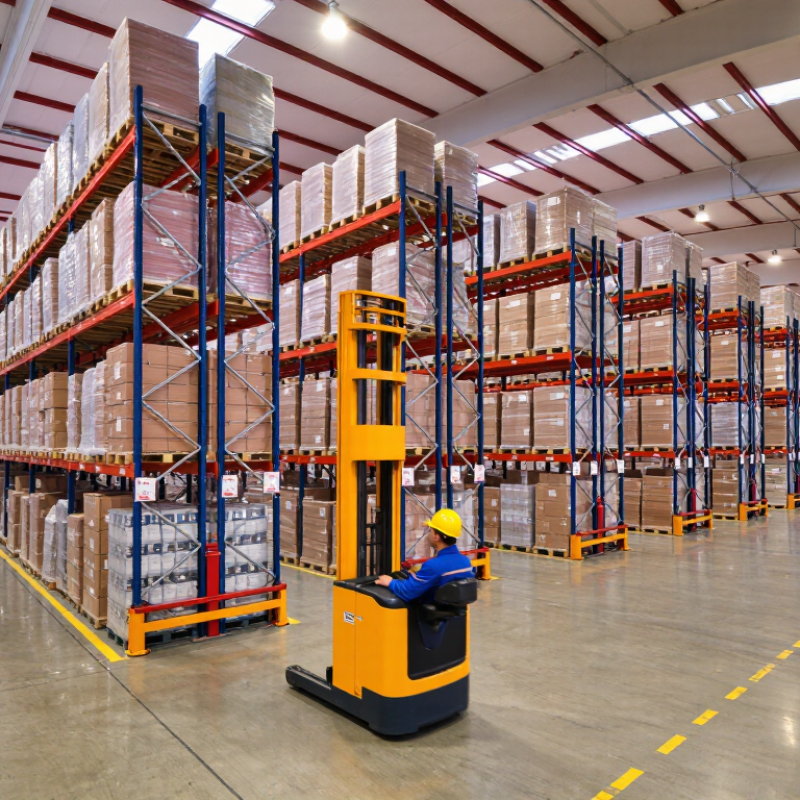
Why Choose a Pallet Storage System?

What a Pallet Storage System Is and How It Works

A pallet storage system is a structure that stores palletized goods in organized locations above the floor. It typically uses upright frames and horizontal beams to create storage levels. Forklifts lift pallets and place them onto the beams, then retrieve them when needed. Each bay can hold one or more pallets, depending on its design and dimensions. Simple enough. But measurements matter.

The system works as part of a warehouse flow. Staff receive goods, identify their locations, and move pallets into storage. In selective racks, each pallet is directly accessible; denser designs may require forklifts to travel into storage lanes. The right layout depends on stock movement, pallet size, forklift turning space, and verified load ratings. A bay that looks roomy on a plan can feel tight during a busy shift. Clear labels and routine checks help workers spot misplaced loads or visible damage. Storage systems can improve access and use vertical space, but they do not fix poor inventory records. That part takes steady attention.

Why Choose a Pallet Storage System?

A pallet storage system organizes palletized goods in rack positions, making stored loads easier to locate and access. Standard pallet dimensions help inform storage planning.

How to read this chart: Each bar shows the nominal floor footprint of a pallet size, calculated from its length and width. Actual rack capacity also depends on rack layout, aisle widths, clearances, and load requirements.

Source: Pallet dimensions from ISO 6780 standardized sizes; footprint areas calculated from nominal dimensions.

Common Types of Pallet Storage Systems

Common pallet storage systems differ in access, density, and handling needs. Selective racking gives forklifts direct access to every pallet, making it practical for varied stock and frequent picking. Its trade-off is wider aisles and lower storage density. Drive-in racking uses deep lanes to store more pallets in less floor space, but forklifts enter the structure and access is limited. It suits larger batches of similar products. Double-deep and push-back systems add density, usually with less immediate access. Pallet-flow racks use rollers to move loads from the loading side toward the picking side, supporting first-in, first-out rotation.

The right choice depends on inventory turnover, pallet dimensions, forklift reach, and replenishment routines—not just the number of pallet positions. MHI’s 2024 Annual Industry Report found that 55% of surveyed supply-chain professionals planned to increase investment in robotics and automation over the next five years. That trend makes layout compatibility worth checking, but it is not a reason to automate every aisle. A dense design can look efficient on paper and still create awkward picking or replenishment. I’d test real travel paths before settling on a layout.

Tips: Measure loaded pallets, including overhang. Check aisle clearance and rack capacity with a qualified engineer. Walk the proposed routes with operators.

How Pallet Systems Improve Space and Inventory Access

Why Choose a Pallet Storage System?

Pallet systems improve space use by turning clear floor area into planned vertical storage. Selective racks keep each pallet reachable, while drive-in layouts trade some access for denser storage. The right choice depends on product variety, turnover, forklift type, and aisle width. Measure the building first. A tall rack is not useful if equipment cannot reach it safely.

Inventory access matters just as much as capacity. Clear locations make put-away and picking easier to track, especially when labels face the aisle and fast-moving goods sit near dispatch. MHI’s 2024 Annual Industry Report found that 55% of respondents were increasing technology investment. Better storage locations can support that work, but racks alone do not fix inaccurate records or poor scanning habits.

Walk the proposed layout with operators before installation. Check turning space, pallet condition, load ratings, sprinkler clearance, and the route to emergency exits. A narrow aisle may fit more racks on paper, yet slow replenishment when forklifts meet at a busy corner. That trade-off is easy to miss in a drawing. Review real pick paths and seasonal stock peaks, then adjust the layout as the operation changes.

Why Choose a Pallet Storage System? — How Pallet Systems Improve Space and Inventory Access

Storage System Space Use Pallet Access Best Suited For Key Trade-Off
Selective pallet racking Moderate storage density; aisle space is needed to reach each rack position. Direct access to every pallet location. Warehouses with many product types, frequent picking, or changing inventory. Offers high selectivity, but typically stores fewer pallets in a given footprint than compact systems.
Double-deep racking Higher density than single-row selective racking because pallets are stored two positions deep. Front pallets are directly accessible; rear pallets require a compatible deep-reach forklift. Operations with multiple pallets per product and a need to balance density with access. Some pallet positions have reduced selectivity, and specialized handling equipment may be needed.
Drive-in racking High density by reducing the number of aisles and storing pallets in deep lanes. Forklifts enter the storage lane; access to pallets within a lane is limited by the lane sequence. Large quantities of the same product, especially where product turnover is predictable. Works best with lane-based storage and careful loading; individual pallet access is less direct.
Push-back racking High density, with multiple pallets stored deep in each lane. Pallets are loaded and retrieved from the aisle; each new pallet pushes the previous one farther back. Several pallets per product with a preference for last-in, first-out lane rotation. Individual pallet access is limited, and lane configuration must suit pallet dimensions and loads.
Pallet flow racking High density, using inclined roller or wheel lanes to move pallets through the rack. Typically loaded from one side and retrieved from the other, supporting first-in, first-out rotation. Products that benefit from age-sensitive rotation and have multiple pallets per SKU. Requires suitable pallets and ongoing attention to lane condition and product flow.
Mobile pallet racking Can reduce fixed aisle space by moving rack rows to open an access aisle where needed. Direct access is available to the selected row after an aisle is opened. Facilities that need dense storage while retaining access to a broad range of pallet locations. Only one or a limited number of access aisles may be open at a time; moving rows requires controls and operating procedures.

Space use and access depend on building layout, rack design, pallet dimensions, handling equipment, and inventory practices. Confirm system suitability with a site-specific storage and safety assessment.

Key Factors for Choosing a Pallet Storage System

Why Choose a Pallet Storage System?

Key Factors for Choosing a Pallet Storage System

Start with the pallets, not the rack. Record each load’s weight, dimensions, overhang, and stability; a small change in packaging can affect fit and safe capacity. Then map how often each product moves. Fast-moving items may need direct access, while slower stock can suit denser storage.

Measure forklift turning space, aisle width, ceiling height, and floor condition on site. Measure twice. A tidy drawing can still miss a column or a low sprinkler pipe.

MHI’s 2024 Annual Industry Report found that 55% of surveyed supply-chain leaders planned to increase investment in supply-chain technology and innovation.

That points to a practical question: can the storage layout adapt as operations change? Compare selective, drive-in, and other rack configurations against retrieval needs, stock rotation, and available space. Ask a qualified designer to check load ratings, beam levels, anchoring, and clearances against actual operating conditions.

Don’t rely on estimates. A tempting high-density layout may slow picking or limit access to damaged pallets. I have seen this trade-off overlooked in early planning; real traffic patterns matter as much as a capacity chart.

Keep the final load information visible, and arrange regular inspections for damage or changes.

Safety and Maintenance in Pallet Storage Operations

Safe pallet storage depends on the rack, the load, and the people moving between them. OSHA’s Powered Industrial Trucks guidance cites an estimate of about 85 forklift-related deaths and 34,900 serious injuries each year in the United States. NIOSH has reported that overturns account for roughly one-quarter of forklift-related deaths. These figures make clear why stable loads and clear travel lanes matter.

Inspect uprights, beams, connectors, and floor anchors for bends, cracks, missing parts, or fresh impact marks. Check that pallets sit squarely and do not overhang into aisles. Post load limits where operators can see them, and never guess when a pallet’s weight is unknown. Small damage matters. Remove a damaged section from use until a qualified person assesses it. OSHA’s general-industry rules also require storage areas to remain orderly and aisles clear.

Set a routine for documented inspections, with extra checks after a collision or layout change. Listen for loose components; look for leaning frames and debris near the feet of uprights. A checklist helps, but it cannot catch every problem. A tidy aisle can still hide a bent connector, and busy teams sometimes miss it. That is a reason to review the process, not assume it is working.

FAQS

What is a pallet storage system?

It uses upright frames and beams to store palletized goods above the floor. Forklifts place and retrieve pallets.

How does selective pallet racking work?

Each pallet has direct access from the aisle. This can help when products move often or come in many varieties.

When might denser storage be useful?

Drive-in layouts store pallets in lanes and can use space efficiently. But access may be slower. Not always ideal.

What should be measured before choosing a system?

Check pallet weight, dimensions, and overhang. Measure aisle width, ceiling height, forklift turning space, and floor condition.

How can a warehouse make picking easier?

Put fast-moving goods near dispatch and face location labels toward the aisle. Clear labels help, but records still need attention.

Why should operators review the layout?

Aisles that look wide on a plan may feel tight during busy shifts. Walk the forklift routes before installation.

What safety details need checking?

Confirm load ratings, beam levels, anchoring, sprinkler clearance, and emergency exit routes. Keep load information visible.

How often should pallet racks be inspected?

Arrange regular checks for visible damage or changed conditions. A bent beam should not be ignored.

Can racks fix inaccurate inventory records?

No. They can organize storage locations, but workers still need reliable records and scanning habits. A rack cannot fix every mistake.

Conclusion

A Pallet Storage System organizes goods on pallets so they can be stored, located, and moved efficiently. Depending on the operation, common options include selective racking for direct access to each pallet, drive-in systems for high-density storage, and push-back or flow systems that support different inventory rotation needs. Each design balances storage capacity, accessibility, and handling requirements in its own way.

Choosing the right system involves considering available floor space and ceiling height, pallet dimensions and loads, inventory volume, turnover, and the equipment used for handling goods. A well-matched layout can make better use of vertical and floor space while keeping stock easier to identify and retrieve. Safe, reliable operation also depends on suitable load limits, clear aisles, routine inspections, and prompt maintenance of racks and related equipment.

Arthur

Arthur

Arthur is a dedicated marketing professional with a strong understanding of the company’s products, services, and customer needs. With a practical approach to market research, content strategy, and professional communication, he helps transform complex product information into clear, useful, and......