Engineered Heavy-Duty Cantilever & Pallet Storage Architectures
For logistics executives, warehouse architects, and global procurement officers, standard shelving fails when confronted with non-standard dimensional materials, structural steel profiles, dimensional timber, and ultra-dense pallet stacks. Our CE-marked storage solutions bridge mechanical stability with maximum volumetric efficiency.
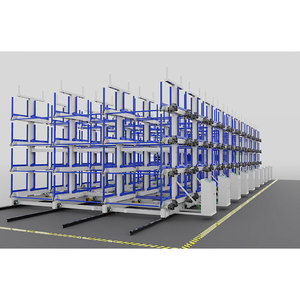
Industrial Heavy Duty Steel Mobile Cantilever Shelving 5 Layer System
Rail-guided motorized base chassis delivering 100% direct access to multi-layer awkward goods while eliminating fixed access aisles.
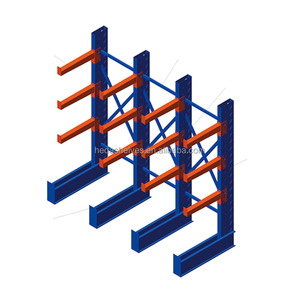
Cantilever Racking Industrial Heavy Duty Rack Storage System
Hot-rolled H-beam upright columns engineered for severe impact absorption and ultra-heavy structural bar stocks and steel plates.
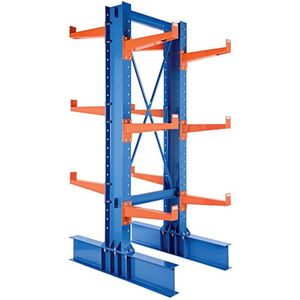
Adjustable Arm Height Heavy Load Solid Wood Timber Cantilever Racking
Pivot arm technology engineered to displace upwards during forklift snagging, eliminating permanent structural frame twisting.
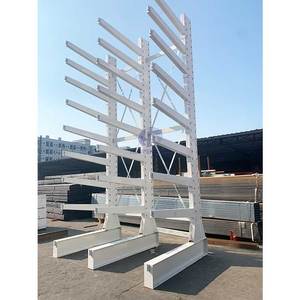
1-5 Ton Cantilever Pipe Storage Customized Warehouse Racking System
Integrated retention pins, cradles, and end-stops preventing cylindrical rolling incidents in metal tubing and conduit logistics centers.
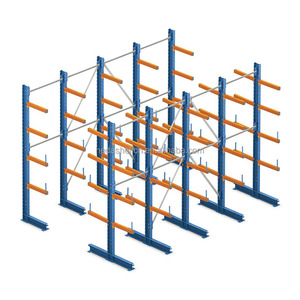
Heavy Duty Double Sided Galvanized Warehouse Cantilever Rack for Lumber
Hot-dip galvanized (ISO 1461) corrosion protection for open-air yard operations, lumber yards, and coastal industrial environments.
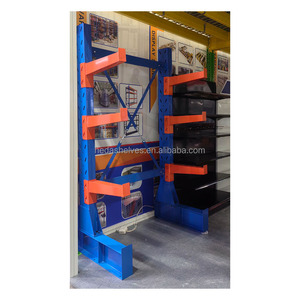
Wholesale HEDA Heavy Duty Cantilever Storage Racks Selective System
Factory-direct modular cantilever configured with continuous longitudinal steel decking, accommodating mixed pallet and long-item loads.
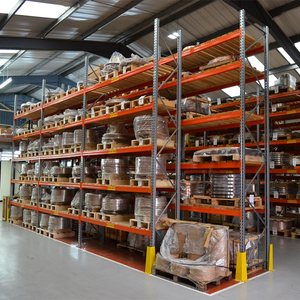
Heavy Duty Selective Pallet Rack ESD Powder Coating Bolted Frame
Precision-engineered high-bay pallet racking offering 100% SKU selectivity, anti-static electrostatic coating, and seismic base engineering.
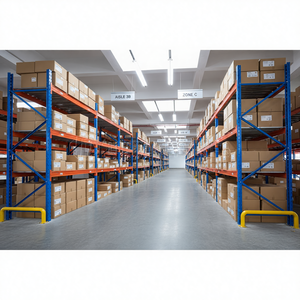
Heavy Duty Warehouse Storage Push Back Pallet Racking Systems
Nested dynamic gravity carriage system providing 2-to-6 pallet deep high-density accumulation under strict Last-In, First-Out (LIFO) protocol.
Kinematics, Load Vectors & Structural Metallurgy of Cantilever Racking
Standard Reference: EN 15512:2020 • EN 15620 • FEM 10.2.02 • ANSI/RMI MH16.1:2021
Eccentric Moment Load Dissipation
Unlike conventional selective pallet racking where downward compressive forces translate symmetrically across two paired upright posts via box beams, cantilever racking operates entirely upon unbraced, cantilevered moment arms. The upright column acts as a vertical cantilever beam subject to combined axial compression and massive overturning bending moments.
M_base = ∑ [M_arm + (P_axial × e_offset)]
Deflection δ = (W × L^3) / (8 × E × I)
To resist combined biaxial torsional-flexural buckling, HEDA engineers utilize high-section-modulus structural H-beams (HEA/HEB profiles or custom welded high-yield box sections), ensuring stability under full one-sided live loading scenarios.
Pivot Connection vs. Rigid Bolting
The mechanical interface connecting the horizontal load arm to the vertical upright represents the primary failure point during catastrophic fork truck impacts. Our engineers calculate safety coefficients under two structural typologies:
1. Articulated Pivot Pin System: Utilizes hardened 40Cr alloy steel pins. When an upward force occurs from a forklift mast miscalculation, the arm rotates freely upwards without transferring destructive torsional twisting into the upright column profile.
2. High-Tensile Grade 8.8/10.9 Bolted Flanges: Rigidly torque-controlled bracket plates recommended for automated long-span material handling where zero horizontal displacement is required for AS/RS automated inserter grippers.
Seismic Dynamics & Soil Classes
When cantilever structures are installed within active circum-Pacific or Alpine seismic belts (e.g., Chile under NCh 2369, Peru under E.030, Colombia under NSR-10, or California under ASCE 7-22), unbraced mass at heights exceeding 6 meters creates severe harmonic oscillation.
HEDA implements heavy horizontal-X longitudinal tubular brace towers interconnected across adjacent columns. Dynamic response spectrum analysis dictates anchor bolt tensile embedment depth (Hilti HST3 or equivalent mechanical anchors) within 35–45 MPa reinforced concrete slabs, compensating for soil liquefaction classes C, D, and E.
| Structural Parameter | Cold Roll-Formed Cantilever | Hot-Rolled Structural I-Beam (HEDA Heavy-Duty) | Hybrid Cantilever-Pallet System |
|---|---|---|---|
| Steel Alloy Standard | Q235B / Cold-rolled high-tensile coil | Q355B (Yield ≥ 355 MPa) Structural Profiles | Dual Q235B Decking + Q355B Columns |
| Arm Load Capability | 150 kg – 800 kg per arm | 1,000 kg – 3,500 kg per arm | 800 kg – 2,000 kg per support level |
| Forklift Impact Resistance | Moderate (Deforms under direct lateral ram) | Extreme (High energy dissipation capacity) | High (Reinforced with guide rails) |
| Height Capability (Clear) | Up to 6,000 mm maximum | Up to 14,000 mm high-bay design | Up to 10,000 mm integrated picking |
| Corrosion Class (ISO 12944) | C2 Interior Powder Coat (60–80μm) | C3/C4 Industrial • C5-M Hot-Dip Galvanized | Epoxy-Polyester Hybrid / Hot-Dip Galv |
| Recommended Stored Goods | Light PVC pipes, aluminum trims, molding | Steel coils, rebar packs, timber, engine blocks | Oversized crates, furniture, mixed skids |
Future Logistics & Technological Trends in Long-Load Storage (2025–2030)
Procuring warehouse storage infrastructure is a capital expenditure amortized over a 15-to-25-year lifecycle. Specification teams must anticipate emerging warehouse automation, carbon constraints, and smart sensor integration.
1. Automated AS/RS Long-Span Cantilever Cranes
The global shortage of licensed heavy-duty counterbalance forklift drivers is accelerating the deployment of automated stacker cranes (AS/RS) specialized for continuous long products. Future-ready cantilever systems require millimeter-grade deflection limits (tightened from L/200 to L/400 according to DIN EN 15620 class 100/200) with integrated rack-entry sensor reflectors for laser-guided positioning.
2. IoT Real-Time Strain & Overload Telemetry
Insurance compliance mandates are driving the integration of low-power wireless piezoresistive strain gauges embedded directly into cantilever arm root pins and upright base assemblies. These IoT sensor hubs broadcast real-time stress data to Warehouse Management Systems (WMS), instantly triggering safety lockouts when an operator exceeds point-load or unbalanced moment boundaries.
3. Low-Carbon Steel & EPD Certification
European and North American supply chains increasingly demand Environmental Product Declarations (EPDs) with verifiable Life Cycle Assessments (LCAs). HEDA Shelves leads this transition by procuring structural coils produced via Electric Arc Furnace (EAF) processing using renewable power, reducing the cradle-to-gate embodied carbon footprint to under 1.15 tCO2e per ton of fabricated racking steel.
4. Hybrid High-Density Universal Storage Systems
Modern multi-client 3PL operations reject single-function racking. The future belongs to hybrid configurations: cantilever lower levels for heavy rebar and lumber bundles topped with rack-supported intermediate mezzanine decks or high-density push-back/carton-flow lanes for standard euro-pallets, dynamically maximizing vertical cube utility up to 14 meters.
5. Duplex Coating Systems for Extreme Climates
Standard industrial powder paint breaks down in humid maritime ports or cold-chain blast freezers (-30°C). Advanced procurement now specifies duplex coatings: thermal diffusion zinc galvanizing base-layers sealed with electrostatic thermosetting polyester topcoats, achieving 2,000+ hours of neutral salt spray resistance (ASTM B117) without flaking or micro-cracking.
6. Parametric BIM 3D Design Integration
BIM Level 2 execution is now mandatory for tier-1 logistics projects. HEDA Shelves provides native Revit family (.RFA) and IFC parametric models containing all structural weight properties, anchor pull-out loads, sprinkler spray clearance cones, and column load matrices directly for warehouse general contractors and civil engineering teams.
Guangzhou HEDA Shelves Co., Ltd. — Direct Factory Engineering
Founded in 2001, Guangzhou Heda Shelves Co., Ltd. has grown from a specialized metal fabrication workshop into a 30,000 square meter intelligent manufacturing base staffed by over 300 experienced structural engineers, robotic technicians, and logistics specialists. With an industrial throughput of 30,000 tons per month, we engineer and supply comprehensive racking, cantilever, and mezzanine systems worldwide.
For international EPC contractors, distributor partners, and industrial facility owners, dealing directly with our engineering core eliminates trading markups, ensures direct accountability over steel chemical compositions, and provides fully validated structural calculations tailored to the seismic zones and building codes of your destination port.
- CE Certificate: 2435-CPR-8605159
- ISO 9001:2015 No. 18624Q00169R0M
- Free 3D Layout & CAD Load Analysis
- 10-Step Automated Chemical Pretreatment
- Full Seismic Code Compliance (ASCE/NCh)
- Container Packing Density Optimization
Frequently Asked Technical & Purchasing Questions
Direct answers from our senior engineering team to assist logistics consultants, facility directors, and EPC procurement specialists in mitigating technical risk.
Q1 How do you calculate the maximum allowable deflection for cantilever arms under EN 15512?
Under European standard EN 15512 and FEM 10.2.02 codes, the maximum allowable vertical deflection (δ) of a cantilever arm loaded with a uniformly distributed load (UDL) must not exceed L/200 of the arm length (L) under working load limit (WLL). For sensitive automated picking or AS/RS applications, HEDA designs systems to a stricter standard of L/300 to L/400. Deflection includes both the elastic deformation of the arm profile itself and the rotational displacement of the column-arm bracket joint. Structural calculations must guarantee that the arm tip will never incline downward below the horizontal plane under full design load to prevent stored inventory from sliding off.
Q2 When should a facility specify structural hot-rolled I-beams instead of roll-formed profiles?
Cold roll-formed cantilever racks (formed from Q235B steel coil) are cost-effective for light-to-medium loads (up to 800 kg per arm) such as plastic conduits, automotive mufflers, and light timber molding. However, structural hot-rolled I-beams (Q355B / ASTM A572 Grade 50) must be specified when: (1) Unit arm loads exceed 1,000 kg (up to 3,500 kg); (2) Racks are serviced by heavy sideloaders or counterbalance trucks where lateral impact energy is significant; (3) System heights exceed 7 meters; or (4) Operating in outdoor yard yards where wind shear and temperature fluctuations demand thick web structural cross-sections.
Q3 How does HEDA engineer cantilever racking for severe seismic zones (e.g., Chile, Peru, California)?
In high-seismic zones (such as Chile's NCh 2369 or USA's ASCE 7-22), unbraced cantilever racks are susceptible to cross-aisle harmonic whipping. Our structural engineers incorporate site-specific Peak Ground Acceleration (PGA) and soil site classification coefficients into finite element response spectrum models. We counteract overturning moments by: (1) Widening column baseplates to distribute bearing pressure across the concrete slab; (2) Increasing anchor bolt counts with mechanical wedge anchors or chemical epoxy capsules (e.g., Hilti HIT-RE 500); and (3) Introducing heavy structural vertical-X back bracing and overhead portal ties connecting opposed columns.
Q4 What surface finishing treatment is recommended for outdoor lumber and steel storage?
For outdoor industrial yards subject to UV radiation, rain, and humidity, standard powder coating will eventually degrade, leading to under-film oxidation. We mandate Hot-Dip Galvanizing in compliance with EN ISO 1461. Components undergo immersion in molten zinc at approximately 450°C, creating a metallurgically bonded zinc-iron alloy layer with a minimum thickness of 70 to 85 μm (500–600 g/m²). This provides cathodic self-healing protection that withstands corrosive industrial atmospheres (Corrosivity category C4/C5) for 25+ years without maintenance.
Q5 Can cantilever racking safely store palletized cargo alongside long items?
Yes. By integrating continuous steel shelf panels, heavy-duty wire mesh decking, or drop-in pallet support saddles, cantilever racks transform into a hybrid storage system. This allows warehouse managers to place standard pallets (Euro 800x1200mm, GMA 48x40in) directly onto cantilever arm bays without requiring conventional front-upright beams. This configuration eliminates intermediate front column obstructions, permitting operators to store non-standard 3-meter or 4-meter crates directly adjacent to standard skids within the same continuous bay.
Q6 What exact data does HEDA require to provide a structural calculation and 3D CAD proposal?
To produce an engineering-approved 3D CAD layout, structural static calculation, and quotation within 24 hours, our engineering desk requires: (1) Warehouse architectural floor plans showing clear ceiling height, building column grids, and egress doors; (2) Specific dimensional profile of stored goods (Length × Width × Height × Maximum Gross Weight); (3) Forklift model, maximum lift height, and minimum aisle turning radius (AST); (4) Soil concrete slab thickness and compressive strength (e.g., 200mm slab @ 30 MPa); and (5) Project geographic location for seismic and wind load calibration.