High-Efficiency Warehouse Racking & Flow Systems
Complementing our industrial cantilever pipe storage systems, our factory designs, manufactures, and exports comprehensive material handling structures engineered for heavy payloads and rapid turnover.
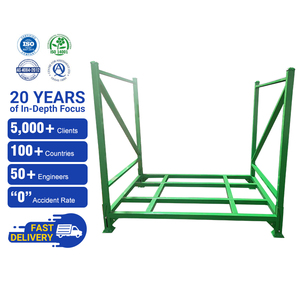
Industrial Heavy Duty Steel 5-Layer Folding Stacking Rack
Removable storage shelf with durable anti-corrosion coating, engineered for modular warehouse flexibility and bulk goods stacking.
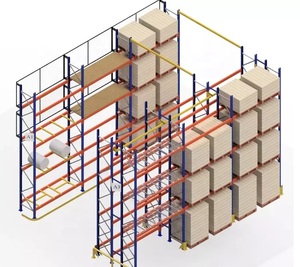
Jracking AU Standard Steel Warehouse Pallet Racks
Certified heavy-duty pallet storage racks and industrial shelving conforming to Australian AS4084 and international standards.
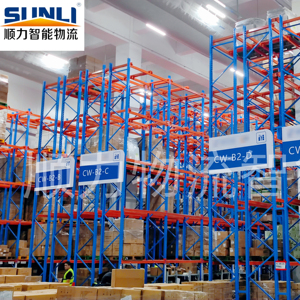
ShunLi Adjustable Double Deep Selective Pallet Racking
Powder-coated high-density double deep beam rack providing increased cubic pallet density with minimal forklift aisle loss.
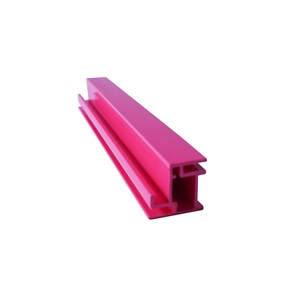
Industrial Flow Rail Roller Track Sliding Shelf System
High-precision aluminum and steel guide rails designed for warehouse gravity flow dynamic racks and smooth FIFO carton picking lanes.
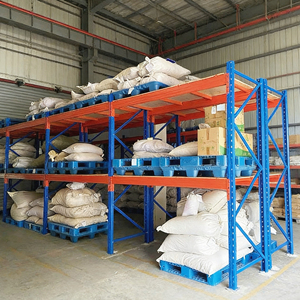
Metal Heavy Duty Steel Selective Pallet Rack System
Universal industrial pallet racking engineered for 100% immediate selectivity, heavy unit loads, and variable beam tier adjustments.
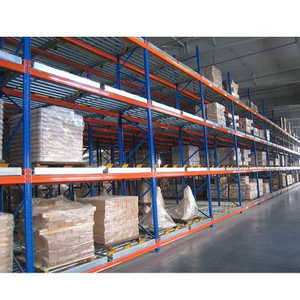
Warehouse FIFO Flow-Through Pallet Roller Racking
Sloped dynamic roller tracks featuring speed controllers and separation separators, ensuring automatic First-In-First-Out rotation.
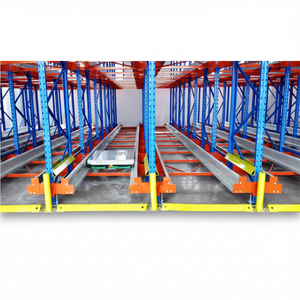
Multi-Layer Radio Shuttle Pallet Racking Storage
High-density semi-automated warehouse storage utilizing wireless radio shuttles to transport heavy pallets deep inside lane channels.
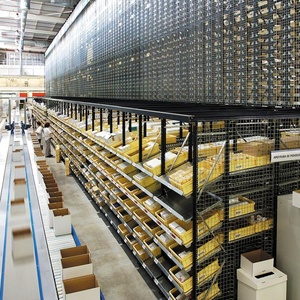
CE Certified 5-Layer Adjustable Carton Gravity Flow Rack
Smooth roller track shelving designed for fast-moving fulfillment centers, distribution depots, and ergonomic assembly line picking.
Engineering Structural Cantilever Racking for Pipe Storage: Load Dynamics, Mechanics & Safety Compliance
An authoritative exploration of structural I-beam and roll-formed cantilever mechanics designed for steel mills, tubular processing centers, PVC extruder plants, and global logistics depots.
Storing long, non-standard cylindrical materials such as seamless carbon steel pipes, ductile iron water lines, copper tubing, electrical PVC conduits, and structural hollow sections (HSS) introduces mechanical dynamics fundamentally distinct from standard pallet handling. Conventional selective pallet racks rely on frontal vertical upright frames tied together with cross-beams. For rigid or flexible piping measuring between 6 meters and 18 meters in length, frontal uprights act as destructive obstacles that prevent direct longitudinal or side forklift access. Cantilever racking solves this structural challenge by completely eliminating front columns, providing uninterrupted linear storage horizontal levels supported by anchored vertical columns, substantial bases, and strategically calculated load-bearing arms.
Critical Engineering Principle: Cantilever racking acts as a pure bending-moment structural system. Unlike standard pallet racks where vertical compressive forces travel straight down four corner posts, a cantilever arm transfers dead and live pipe loads through a horizontal arm connection directly into the vertical upright as severe eccentric bending stress and twisting torsion. Accurate structural verification in compliance with EN 15512, EN 1090-1 Execution Class EXC2/EXC3, FEM 10.2.09, and ANSI/RMI MH16.2 is critical to avoid progressive structural collapse.
1. Mechanical Load Distribution: The Bending Moment Equation
When loading cylindrical pipe bundles across cantilever arms, the structural designer must treat each arm not as a simple support, but as a rigid or semi-rigid cantilever beam subject to uniformly distributed loads (UDL) or concentrated point loads. The bending moment ($M$) generated at the junction where the arm connects to the column is expressed through fundamental beam mechanics:
$$M = \frac{W \times L}{2}$$
Where $W$ represents the total uniformly distributed load on the arm and $L$ denotes the effective projection length of the arm from the column face. However, pipe bundles rarely distribute load perfectly across the arm. Forklift operators often deposit bundles with an offset center of gravity (CG). If the center of gravity shifts towards the outer tip of the arm ($L_{tip}$), the bending moment transferred into the column increases proportionally, multiplying torsional stresses and column rotational deflection.
Vertical Column Uprights
Fabricated from heavy hot-rolled structural I-beams (IPE, HEA, HEB profiles) or cold-formed double C-channels welded back-to-back using automated submerged arc welding (SAW) to resist severe combined axial compression and lateral bending.
Tapered Load Arms
Engineered with a 2° to 3° upward slope (camber) to counteract natural downward elastic bending under load, preventing round tubes from rolling forward during high-mass loading cycles.
Removable Pipe Stops
Integrated solid steel round pins or drop-in square retaining lugs (ranging from 100mm to 250mm height) positioned at the arm tips to provide foolproof mechanical rollback prevention.
Rigid X-Bracing Systems
High-tensile structural cross-bracing bays fabricated from angle iron or round structural rods with turnbuckles that ensure longitudinal structural stability along the warehouse aisle.
2. Structural Typologies: Roll-Formed vs. Heavy-Duty Structural H-Beam
Selecting the proper manufacturing method for cantilever columns and arms is the most critical decision impacting both procurement capital expenditure (CapEx) and facility safety margins. For lighter tubular goods, electrical conduit bundles, or light plastic extrusion piping up to 800 kg per arm level, cold roll-formed steel profiles provide exceptional economic efficiency and easy beam-level pin adjustments. For heavy industrial pipe distribution, oil and gas line pipe (OCTG), scaffolding tubes, and structural steel merchant bars, hot-rolled structural steel (Q355B / ASTM A572 Grade 50) is mandatory.
| Structural Parameter | Roll-Formed Cantilever System | Structural Hot-Rolled I-Beam System | Whitepaper Engineering Note |
|---|---|---|---|
| Steel Grade Standard | Q235B / S235JR (Cold Rolled Sheet) | Q355B / S355JR / ASTM A572 Gr. 50 | High yield strength ($F_y \ge 355\text{ MPa}$) minimizes permanent plastic deformation under shock impact. |
| Load Capacity Per Arm | 250 kg – 1,000 kg (Light to Medium) | 1,000 kg – 4,500+ kg (Ultra Heavy-Duty) | Structural I-beams eliminate localized flange buckling common in thin-gauge roll-formed steel. |
| Impact Resistance | Moderate (Prone to fork-tine denting) | Exceptional (High section modulus $Z_x$) | Vital for pipe yards where heavy 5-ton to 16-ton side-loaders or rough terrain forklifts operate. |
| Column Height Reach | Up to 6,000 mm | Up to 12,000+ mm (High Bay) | Allows utilization of vertical clear ceiling heights in modern automated pipe distribution hubs. |
| Arm Connection Method | Drop-in wedge pins / Lug hook plates | High-tensile Grade 8.8 / 10.9 structural bolts | Bolted arm connections provide rigid moment transfer and zero slippage under dynamic pipe drop. |
| Environmental Finishes | Electrostatic Powder Coat (60–80 μm) | Hot-Dip Galvanized (ISO 1461, 85–120 μm) | Outdoor pipe yards require hot-dip galvanizing to withstand coastal marine atmospheric salt corrosion (C4/C5). |
3. Comprehensive Deflection Criteria & Structural Tolerances
Unlike pallet racking where beam deflection limits are conventionally set at $L/200$ (one two-hundredth of the beam span), cantilever arm deflection limits must be engineered significantly more stringently. Under the European standard FEM 10.2.09 (Design of Cantilever Racking), allowable elastic tip deflection is generally limited to:
$$\delta_{max} \le \frac{L}{100} \text{ to } \frac{L}{150}$$
If an arm measures 1,500 mm in length, an elastic deflection of 10 mm to 15 mm occurs at full rated load. If the arm was manufactured completely perpendicular ($90^\circ$) to the column, this deflection would cause the arm to tilt downward ($>90^\circ$), encouraging heavy steel pipes to roll off under gravity. HEDA Shelves engineers our cantilever arms with built-in positive camber ($2^\circ$ upward taper) and custom-curved cradles, ensuring that even under 100% capacity loading, the arm remains above the horizontal horizontal plane.
Future Procurement Trends in Long-Material & Pipe Storage (2025–2035)
How intelligent automation, sensor telemetry, modular green coatings, and international compliance changes are transforming global tubular warehousing investments.
1. Automated AS/RS Integration
Traditional manually driven counterbalance forklifts are rapidly being replaced by cantilever-specific automated storage and retrieval systems (AS/RS). High-bay automated stacker cranes equipped with multi-tine telescopic forks or vacuum cassette handlers now pick 12-meter pipe bundles from 15-meter cantilever structures at speeds exceeding 2.5 m/s without human intervention.
2. Real-Time IoT Strain Telemetry
Next-generation pipe yards in South America, North America, and Europe are demanding sensorized cantilever structures. Embedded fiber-optic strain gauges and wireless tilt sensors installed along column bases and critical arm brackets deliver continuous real-time telemetry on structural deflection, warning facility operators of seismic ground shift or localized overloading.
3. Roof-Supported Rack Buildings (Clad-Rack)
To eliminate sky-rocketing civil construction costs for standalone warehouses, industrial buyers are procuring "clad-rack" cantilever architectures. Here, the cantilever columns double as the primary structural skeleton of the building itself, directly supporting the roof trusses, rain gutters, overhead lighting, and external wall cladding.
4. Circular Economy & Low-Carbon Steel
Global decarbonization mandates require steel exporters to document embodied carbon footprints. HEDA Shelves utilizes electric arc furnace (EAF) steel recycled from certified domestic scrap, paired with zero-VOC TGIC-free electrostatic powder coatings that exceed European RoHS and REACH environmental health and safety directives.
How to Size Pipe Cantilever Racks: Step-by-Step Engineering Methodology
Prevent over-engineering costs and catastrophic structural failures by calculating arm spacing, column upright loads, and concrete foundation requirements prior to procurement.
Step 1: Calculate Minimum Required Number of Arms
The primary hazard when storing flexible piping (such as copper tubes, thin-wall stainless tubing, or schedule 40 PVC) is horizontal deflection or sagging between arm supports. Excessive sag not only causes permanent pipe deformation but also creates dangerous pinch points during forklift retrieval. The spacing between cantilever arms must never exceed half the length of the shortest pipe stored:
$$\text{Arm Spacing } (S) \le \frac{L_{pipe}}{2}$$
For standard 6-meter (20 ft) pipe bundles, a minimum of 3 arms is mechanically necessary, creating two equal 2-meter bays with a 1-meter overhang on each end ($1\text{m} + 2\text{m} + 2\text{m} + 1\text{m} = 6\text{m}$). For heavy 12-meter (40 ft) structural steel pipe, 4 to 6 arms are mandatory depending on the moment of inertia ($I_{pipe}$) of the tubular cross-section.
Step 2: Determine Arm Load Capacity
To calculate the required individual arm load rating, divide the total weight of the maximum pipe bundle by the number of arms supporting that specific level:
$$\text{Capacity Per Arm } (C_{arm}) = \frac{\text{Total Bundle Weight } (W_{total})}{N_{arms}} \times SF$$
Where $SF$ is the dynamic safety design factor (typically $1.25$ to $1.4$ in accordance with EN 15512 to absorb minor forklift dynamic impact shocks during placement). For example, a 6,000 kg pipe bundle resting across 3 cantilever arms requires an arm rated for a minimum of $2,000\text{ kg} \times 1.25 = 2,500\text{ kg}$ Uniformly Distributed Load (UDL).
Step 3: Calculate Total Column Upright Load
Cantilever columns are categorized as Single-Sided (installed flush against perimeter building walls) or Double-Sided (center-aisle structures loaded from both front and rear). Total column vertical load ($P_{column}$) is calculated by aggregating arm loads:
- Single-Sided Column: $P = \text{Base Level Weight} + \sum (\text{Arm Capacities on One Side}) + \text{Dead Weight of Column & Arms}$
- Double-Sided Column: $P = \sum (\text{Arm Capacities Side A}) + \sum (\text{Arm Capacities Side B}) + \text{Dead Weight of Assembly}$
Crucially, structural calculations must also model the *worst-case unbalance scenario* for double-sided columns: where Side A is loaded to 100% capacity with maximum pipe density while Side B is 100% empty. This unbalance produces maximum unilateral bending moment on the column base connection and massive tension on the floor anchor bolts.
Step 4: Concrete Slab Thickness & Anchor Shear Sizing
A cantilever rack column cannot function without a certified concrete slab. Because there are no front uprights to balance forces, the concrete slab acts as an integral element of the cantilever moment-resisting frame. Typical requirements include a minimum 200 mm to 300 mm reinforced concrete slab with a 28-day compressive strength of $f'_c \ge 25\text{–}30\text{ MPa}$ ($3,500\text{–}4,500\text{ psi}$). HEDA Shelves engineers our baseplates with oversized holes to accept heavy M16 to M24 mechanical wedge anchors or chemical epoxy injection anchors engineered for high pull-out shear tension.
Guangzhou HEDA Shelves Co., Ltd. Enterprise Advantage
Since 2001, providing global exporters, industrial plants, and supply chains with world-class racking manufacturing, certified structural compliance, and end-to-end container logistics.
Operating out of our advanced 30,000 m² factory in Guangzhou, China, Guangzhou HEDA Shelves Co., Ltd. employs over 300 experienced structural engineers, certified welders, and international trade specialists. We manage the entire fabrication chain in-house: from automated CNC laser plate cutting and multi-spindle column punching to continuous roll-forming, robotic welding, and automated 10-stage pre-treatment powder coating lines. Our structural designs are backed by certified test reports and accredited third-party validations including CE Certificate No. 2435-CPR-8605159 and ISO 9001:2015 Management System Certification No. 18624Q00169R0M.
Our 10-Step Controlled Manufacturing Workflow
Raw Steel Inbound
Mill-certified Q235B/Q355B coils and hot-rolled structural I-beams tested for tensile and chemical integrity.
CNC Precision Cutting
Automated fiber lasers and heavy band-saws cut profiles to ±0.5mm tolerances without thermal warping.
Multi-Die Punching
High-tonnage hydraulic presses punch clean 75mm/100mm pitch slot patterns along column uprights.
Cold Roll-Forming
Continuous progressive roll-forming lines shape high-strength column channels and arm profiles.
Robotic MIG Welding
Automated Panasonic robotic welding cells guarantee full penetration fillet welds on baseplates and brackets.
Mechanical Polishing
Shot blasting and edge de-burring remove welding spatter, mill scale, and sharp burrs before coating.
Acid Pickling & Phosphating
Multi-stage immersion cleaning creates a microscopic crystalline phosphate conversion layer for superior paint adhesion.
Electrostatic Coating
Automated Swiss Gema powder coating booths apply 70–90 μm uniform thermosetting polyester powder finish.
High-Temp Curing Oven
Baking at 200°C produces a scratch-resistant, impact-absorbing, cross-linked protective polymer shell.
Full Pre-Shipment QC
Dimensional verification, paint thickness gauge testing, trial assembly, and ocean-grade protective bundling.
Frequently Asked Questions on Cantilever Pipe Racking Procurement
Direct technical answers addressing structural calculations, seismic engineering, anti-corrosion finishes, and international container shipments.
What structural information is required to engineer a custom cantilever pipe rack quote? +
To deliver an accurate CAD design and PE-stamped structural calculation, our engineering department requires: (1) Pipe bundle dimensions (minimum/maximum length, diameter, and bundle width/height); (2) Maximum weight per bundle; (3) Number of storage levels required vertically; (4) Clear warehouse ceiling height beneath roof joists or sprinklers; (5) Forklift equipment specifications (forklift type, collapsed mast height, maximum reach height, and turning aisle radius); (6) Site seismic zone parameters; (7) Indoor environment vs. outdoor yard installation.
How do you engineer cantilever racks to comply with high seismic zones (e.g., Chile, Peru, California, Japan)? +
In high seismic zones (governed by codes such as NCh 433/NCh 2369 in Chile, Norma E.030 in Peru, or ASCE 7 / RMI in North America), dynamic horizontal ground accelerations cause severe base shear and overturning moments. Our structural team strengthens the column section modulus, increases baseplate dimensions and steel thickness up to 30mm–40mm, upgrades floor anchoring to heavy chemical adhesive anchors, and integrates heavy-duty vertical X-bracing bays with reinforced tubular portal ties across adjacent upright columns to eliminate lateral drift.
Can cantilever racking be installed outdoors for steel tubing and lumber yards? +
Yes. For outdoor installations, standard indoor powder coatings are insufficient to prevent atmospheric moisture corrosion. We offer Hot-Dip Galvanizing (HDG) compliant with ISO 1461 / ASTM A123, which immerses the fabricated steel components in a molten zinc bath at 450°C, creating a metallurgical zinc-iron alloy coating (85 to 120 microns) that prevents rust for 25+ years in harsh industrial or coastal environments. Furthermore, we can integrate roof support arms to create covered single-sided or double-sided T-sheds that protect pipe bundles from direct rainfall.
What accessories prevent cylindrical pipes from rolling off cantilever arms? +
We engineer multiple rollback safety accessories depending on operational workflows: (1) Drop-in removable safety pipe pins (steel round bars or square tubing inserted into pre-welded sockets at the arm tip); (2) Welded end-stops (permanent 100mm–200mm vertical plates); (3) Curved steel cradles (saddles contoured specifically to match designated outer pipe diameters); (4) Continuous wire mesh or steel decking panels fitted between adjacent cantilever arms to allow combined storage of short pipe off-cuts, boxes, and irregular long products.
How does HEDA Shelves package and ship cantilever systems to prevent shipping damage in ocean containers? +
Because cantilever columns and arms possess non-uniform geometric shapes, improper container stuffing leads to scratched paint, bent arm brackets, and severe ocean freight container under-utilization. HEDA Shelves utilizes custom timber blocking, corrugated protective cardboard wraps, steel strapping, and heavy air dunnage bags inside 40ft High Cube (40'HQ) containers. Heavy structural columns are nested in bottom bunks, while cantilever arms are bundled on custom pallets, maximizing payload weight up to the legal container limits (26–28 metric tons) while ensuring scratch-free transit.
What is the standard production lead time for full-container export orders? +
With our monthly production capacity reaching 30,000 metric tons, standard roll-formed and structural cantilever pipe rack orders are typically manufactured within 2 to 4 weeks following final approval of technical CAD production drawings. Large multi-tier rack-supported platforms or hot-dip galvanized high-bay projects are scheduled in phased container batches tailored to align precisely with your on-site civil concrete pouring and building erection schedule.
Ready to Optimize Your Factory's Pipe & Tube Storage?
Send our senior engineering team your warehouse architectural floor plans, pipe bundle dimensions, and target weight ratings. We will generate a complete 3D warehouse layout, technical load calculation sheet, and factory-direct quotation within 24 hours.
- Free 3D Layout & CAD Drawings
- CE Certified (No. 2435-CPR-8605159)
- Direct Factory Pricing Since 2001