Standard & Custom CE-Certified Industrial Racking Systems
Precision-formed roll profiles fabricated from high-tensile structural steel (Q235B / Q355B). Each system is engineered to withstand dynamic pallet impacts, seismic shear stresses, and high-frequency intralogistics throughput.
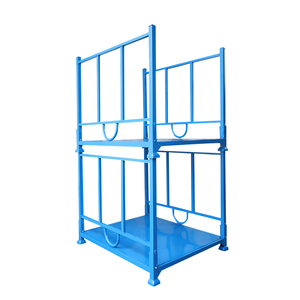
Warehouse Storage Metal Stackable Rack Heavy Duty Pallet Stacking Frames Foldable Customized Stack Pallet Rack Stacking Rack
- Payload Capacity: 1,000 - 2,500 kg / unit
- Stacking Configuration: 3 - 5 Tiers High
- Finish Specification: Zinc Plated / Powder Coat
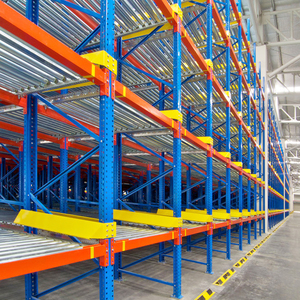
Hot Sale Huisen Customized OEM ODM Gravity Flow Roller Racking Systems Heavy Duty Pallet Flow Rack Q235b Steel SGS Certified
- Roller Gradient: 3.0% - 3.5% Calibrated Slope
- Steel Specification: Q235B Certified Structural
- Safety Mechanism: Centrifugal Speed Controllers
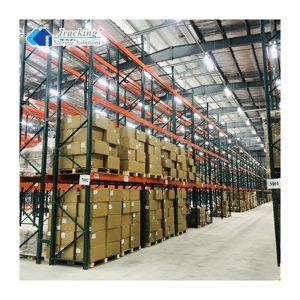
Jracking Vertical Warehouse Storage Shelving Rack Heavy-Duty Steel Teardrop Pallet Racking for Logistics Centers
- Hole Pattern: Standard 2-Inch Incremental Pitch
- Bay Loading: Up to 15,000 kg Frame Rating
- Compliance: RMI & CE Certified Welding
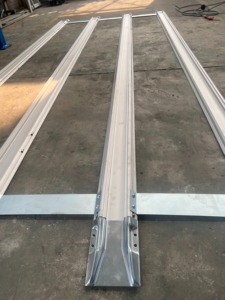
First in First Out Gravity Flow Lane Aluminum FIFO Rack Rail System for Warehouse Picking
- Track Material: Extruded 6063-T6 Aluminum
- Roller Wheels: High-Impact Polyethylene (PE)
- Application: Automotive & E-Commerce Picking
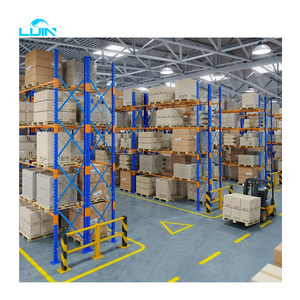
Steel Selective Drive-In Wire Units Push Metal Bin Systems Heavy Racks Warehouse Racking Adjustable Parts Heavy Duty Shelving
- Density Gain: Up to 75% Floor Space Savings
- Beam Section: Custom Box & Step Beam Profiles
- Safety Accessories: Floor Guide Rails & Column Guards
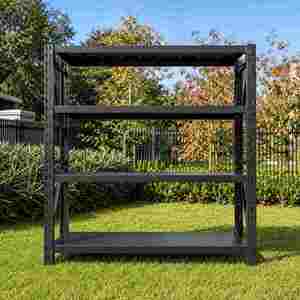
Custom Heavy Duty Shelving 300 Kg Layer Garage Black 4 Tier Warehouse Storage Metal Stacking Shelf Rack for Warehouse
- Load Per Tier: 300 - 800 kg Uniform Distributed
- Decking Medium: Cold-Rolled Steel / Wire Decking
- Assembly Method: Boltless Interlocking Connection
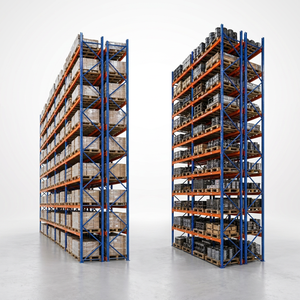
Industrial Metal Warehouse Racking System Drive Pallet Storage Drive-In Pallet Rack Shelves for Industrial
- Channel Depth: 2 - 10 Pallets Deep per Lane
- Upright Profile: Continuous Cold Roll-Formed 90/100/120
- Operating Temp: -30°C Cold Stores to +45°C Dry
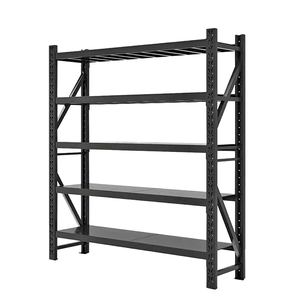
High Duty Steel 5 Adjustable Shelving Unit Slotted Angle Rack Anti-Rust Corrosion Protected Home Storage Garage Workshop
- Pitch Adjustability: 50 mm Modular Hole Increments
- Surface Chemistry: Acid Pickled & Phosphate Conversion
- Usage Scope: Hardware Depots & Maintenance Hubs
Structural Rigidity, CE Verification & Mechanical Performance
Modern automated and high-density warehouses place massive static and dynamic demands on steel racking systems. Understanding the engineering parameters defined under European standard EN 15512 and FEM 10.2.02 is essential for structural integrity, worker safety, and capital risk mitigation.
EN 15512 Design Principles
Industrial steel static storage systems require rigorous limit-state structural design. Beams and uprights are engineered under ultimate limit state (ULS) for yield prevention and serviceability limit state (SLS) to enforce span deflection limits of less than L/200 under maximal working loads.
- Safety Factor (Beams): γM = 1.40 Minimum
- Deflection Benchmark: δ ≤ Span / 200
Seismic Energy Dissipation
For global seismic hotspots (including the Andean Rim: Chile NCh 2369, Peru E.030, and Colombia NSR-10), rack columns feature widened baseplates and dual-anchored floor plates with ductile moment frames capable of non-linear kinetic absorption during ground accelerations up to 0.40g.
- Ground Peak Acceleration: PGA ≥ 0.40g Tested
- Baseplate Anchor Spec: Grade 8.8 M12/M16 Studs
CE CPR-8605159 Traceability
Full compliance with Construction Products Regulation (CPR) 305/2011/EU and EN 1090-1 Execution Class EXC2. Every steel coil mill certificate is logged, and automated ultrasonic non-destructive testing (NDT) verifies robotic weld penetrations along load-bearing connector tabs.
- Execution Standard: EN 1090-2 (EXC2)
- Weld Inspection: ISO 5817 Level B/C NDT
| Steel Grade Benchmark | Yield Strength (ReH) | Tensile Strength (Rm) | Elongation (A50mm) | Optimal Racking Application | Impact Energy (Charpy V-Notch) |
|---|---|---|---|---|---|
| Q235B (Standard Ductile) | ≥ 235 MPa | 370 - 500 MPa | ≥ 26% | Standard Pallet Beams, Wire Decking, Angle Posts | ≥ 27 Joules at +20°C |
| Q355B (High-Strength Alloy) | ≥ 355 MPa | 470 - 630 MPa | ≥ 22% | Heavy-Duty Upright Columns, Cantilever Arms, High-Bay Silos | ≥ 27 Joules at 0°C |
| Q355D (Low-Temp Toughness) | ≥ 355 MPa | 470 - 630 MPa | ≥ 21% | Refrigerated & Sub-Zero Cold Storage (-30°C Environments) | ≥ 27 Joules at -20°C |
| Galvanized Z275 (Coated Coil) | ≥ 250 MPa | 350 - 480 MPa | ≥ 19% | Outdoor Storage, High-Condensation Ports, Humid Agriculture | Corrosion Class C3/C4 |
Why Global Importers Partner with HEDA Shelves
Established in 2001, Guangzhou HEDA Shelves Co., Ltd. operates a high-capacity manufacturing base backed by a workforce of 300+ structural engineers, precision machinists, and export specialists. We transform certified cold-rolled coils into robust warehouse storage systems shipped worldwide.
25+ Years Industrial Heritage
Over two decades of structural engineering experience serving Fortune 500 distribution centers, FMCG logistics hubs, port transit terminals, and automated dark stores.
Free 3D Layout & Structural CAD
Before a purchase order is finalized, our certified engineering division prepares complete 3D warehouse renderings, aisle turn clearance checks, and load calculation sheets.
CE & ISO 9001:2015 Registered
Certified under CE CPR No. 2435-CPR-8605159 and ISO 9001:2015 (Certificate 18624Q00169R0M). Every batch undergoes laser dimensional tolerance and salt spray testing.
Direct Port-Optimized Packing
Tailored container stowage plans maximize 40ft HQ cube utilization, preventing in-transit scuffing and reducing landed shipping costs per pallet position by up to 18%.
The 10-Step Zero-Defect Manufacturing Workflow
Spectrometry & Steel QC
Chemical composition & tensile verification of cold-rolled coils from certified state mills.
Precision CNC Slitting
High-speed slitting with ±0.1 mm edge burr limits to prepare exact coil widths.
Continuous Punching
Automated hydraulic matrix punches 50 mm / 75 mm pitch teardrop & diamond holes.
Roll-Forming Uprights
Multi-station cold roll-forming lines (up to 24 passes) shape high-rigidity Omega upright profiles.
Beam Box Seaming
Twin C-profile interlock seam welding to form heavy-duty box beams without weak seams.
Robotic Tab Welding
Multi-axis robotic arms weld multi-claw connector brackets under argon-CO₂ shielding.
Shot Blasting & Derusting
Surface scale removal achieving Sa 2.5 cleanliness for maximum coating adhesion.
Silane / Phosphating
Chemical pre-treatment baths passivate raw steel, preventing under-film rust creep.
Electrostatic Powder Coat
Automated Gema spray guns apply 60-90μm thermoset polyester powder, baked at 200°C.
Bundle Wrap & Loading
Cushioned timber dunnage, protective corner straps, and computerized container load sheets.
Product Selection Matrix: Matching Racking Type to Inventory Velocity
Selecting the optimal rack geometry requires balancing cubic density against inventory SKU selectivity and capital equipment handling requirements. Review our engineering recommendations below.
| Storage System Architecture | Floor Utilization (%) | Direct SKU Selectivity | Stock Rotation Strategy | Forklift Compatibility | Recommended Industrial Use-Case |
|---|---|---|---|---|---|
| Selective Pallet Racking | 40% - 45% | 100% (Instant Access) | FIFO or LIFO Flexible | Standard Counterbalance, Reach Trucks | Multi-SKU 3PLs, E-Commerce, General Warehousing |
| Drive-In / Drive-Through Rack | 65% - 75% | 20% - 30% (Batch Access) | Strict LIFO (FIFO Drive-Thru) | Counterbalance, Narrow-Mast Reach | Cold Storage, Seasonal Harvest, Beverage Bottlers |
| Gravity Pallet Flow Rack | 70% - 80% | Lane Dependent | Strict FIFO (Gravity Driven) | Standard Reach / Counterbalance | Perishable Dairy, Fresh Fruit Exporters, Pharma |
| Semi-Automated Radio Shuttle | 80% - 85% | Lane Dependent | Software Configured FIFO / LIFO | Standard Forklift (Shuttle inside) | Ultra-High Density Cold Rooms, Meat Processing |
| Heavy-Duty Cantilever Rack | 50% - 60% | 100% per Arm Level | Open Storage Scheme | Side Loaders, 4-Way Multi-Directional | Steel Pipe, Aluminum Extrusions, Timber, Rebar |
| Multi-Tier Mezzanine Platform | 150% - 250% (Footprint Multiplied) | 100% Manual Hand-Pick | Batch / Conveyor Fed | Vertical Lifts, Pallet Jacks, AGVs | Apparel, Spare Parts, Hardware Fulfillment Centers |
Engineering Guidance Note: Column Base Anchoring
Racking structural failure occurs most frequently in the bottom 600 mm of uprights due to forklift bumper impact. For distribution centers with high forklift speeds (>10 km/h), HEDA Shelves specifies cold-formed steel wrap-around column guards with high-molecular-weight polymer dampening pads to isolate impact energy from dynamic shear anchors.
Strategic Sourcing & Procurement Trends (2025–2030)
Supply chain volatility, fluctuating raw steel indices, and the acceleration of cold chain logistics are reshaping how global procurement leaders purchase industrial storage assets.
1. Raw Steel Index Hedging
Steel accounts for over 65% of racking production cost. Enterprise buyers are shifting from spot purchases to formula-based contracts tied to Shanghai SteelHome or London Metal Exchange (LME) coil indices, combined with 30-day factory price locks during structural drawing approval.
2. Nearshoring & Hub Distribution
With cross-border freight volatility, multi-facility enterprises are building centralized buffer warehouses near main container ports (such as Santos, Valparaíso, Rotterdam, and Long Beach), requiring standardized modular racking designs that can be reconfigured dynamically across regions.
3. Cold-Chain Storage Expansion
Global demand for biopharma cold chains and fresh agro-exports has surged. Racking in -25°C to -30°C cold rooms requires specialty low-temperature steel chemistry (low silicon, high manganese to avoid cold-temperature embrittlement) and high-density radio shuttle automation to lower HVAC losses.
Technological & Architectural Evolution in Storage Racking
The convergence of warehouse robotics, Internet of Things (IoT) structural health monitoring, and modular automation is transforming passive steel racks into intelligent intralogistics nodes.
AS/RS & Autonomous Mobile Robot (AMR) Interfacing
Modern storage systems are designed with tight beam deflection tolerances (≤1/300) and millimeter-precise guide rail channels to accommodate autonomous crane retrievers, 2D pallet runners, and AMR pickers without track binding or optic sensor blind spots.
IoT Structural Health Sensors
Wireless strain-gauge and accelerometry sensors embedded in primary uprights detect critical forklift impacts and cumulative seismic micro-displacements. Real-time telemetry warns warehouse managers of overload conditions before structural deformation occurs.
Eco-Efficient & Green Steel Initiatives
In compliance with global ESG procurement audits and European CBAM (Carbon Border Adjustment Mechanism), HEDA Shelves incorporates certified low-carbon recycled scrap electric-arc-furnace (EAF) steel and solvent-free, heavy-metal-free electrostatic thermoset coatings.
Frequently Asked Questions by Industrial Storage Buyers
Key structural, regulatory, shipping, and engineering questions addressed directly by our senior intralogistics structural engineering team.
Q: What is the practical difference between EN 15512 and RMI MH16.1 standards?
EN 15512 is the European standard that mandates limit state design philosophy with explicit partial safety factors for actions and material strengths, including strict beam deflection thresholds (δ ≤ L/200). RMI MH16.1 is the American specification primarily based on Allowable Stress Design (ASD) and Load and Resistance Factor Design (LRFD). Both ensure structural stability, but CE marking in European and Latin American jurisdictions requires full compliance with EN 15512 and EN 1090-1/2 execution execution class 2 (EXC2).
Q: How does HEDA Shelves adapt racking systems for earthquake-prone regions?
For high-risk seismic zones (e.g., Chile NCh 2369, Peru E.030, Colombia NSR-10, Eurocode 8, or California UBC Zone 4), our engineering software runs modal response spectrum analysis. We upgrade upright wall thickness (from 1.8 mm to 2.5 mm or 3.0 mm), widen and thicken anchor baseplates, incorporate oversized grade 8.8 chemical or wedge mechanical anchors, and integrate reinforced spine and plan horizontal cross-bracing to absorb lateral ground acceleration forces.
Q: How do you prevent corrosion in coastal, tropical, or sub-zero facilities?
For standard indoor dry storage, we utilize a 7-stage chemical pre-treatment (degreasing, phosphating, silane passivation) followed by electrostatic polyester powder coating (60–90 μm) cured at 200°C. For refrigerated cold rooms, coastal ports, or chemical fertilizer plants with high relative humidity, we supply hot-dip galvanized components (ISO 1461 compliant, coating thickness ≥ 65–85 μm) that provide cathodic barrier protection against electrolytic oxidation.
Q: What documentation is provided for local building permit approval?
Every engineered project includes a comprehensive engineering dossier: 3D CAD layout drawings, structural calculation books signed by structural engineers, steel mill test certificates (chemical and mechanical composition to EN 10204 3.1), CE Declaration of Performance (DoP), ISO 9001:2015 certificates, and detailed step-by-step installation manuals with anchor bolt torque specifications.
Q: What is the typical lead time for a 5,000 to 10,000 pallet position order?
With a 30,000-ton monthly capacity, our standard fabrication lead time is 2 to 3 weeks following approval of structural drawings. Custom roll profiles or hot-dip galvanized finishes require 3 to 4 weeks. Transit times depend on destination port: 25 to 35 days to South American Pacific/Atlantic hubs, 20 to 28 days to European main ports, and 14 to 20 days to Southeast Asian terminals.
Q: How are installation safety and tolerances guaranteed overseas?
All upright frames and beams are laser-marked and batch-numbered corresponding to the CAD assembly drawing. We supply remote video installation supervision and dispatch certified bilingual installation engineers to manage local rigging crews on large-scale logistics hub projects, ensuring vertical plumbness tolerance adheres strictly to EN 15620 Class 400 requirements (±3 mm deviation over height).
Request a Free Custom 3D Layout & Structural Calculation
Submit your warehouse floor plans, clear ceiling heights, and pallet specifications. Our senior racking structural engineers will deliver a free comprehensive CAD layout, capacity optimization model, and detailed CIF/FOB pricing within 24 hours.