High-Performance Pallet Racking Systems & Engineered Components
Manufactured from high-tensile cold-rolled steel (Q235B & Q355B) and validated under strict finite element analysis (FEA). Discover our direct export catalogue optimized for high-density warehouses, cold stores, and heavy industrial distribution hubs.
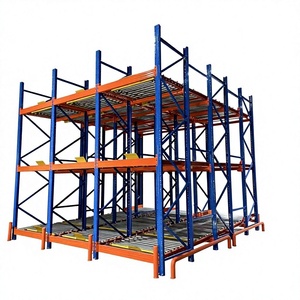
Pallet Flow Racking Gravity Roller Flow Through Rack FIFO High Density Warehouse Pallet Storage System Metal Steel Anti-Rust
- Rotation: Strict FIFO Gravity Beds
- Capacity: 500–1,500 kg / pallet
- Finish: Phosphated & Powder Coated
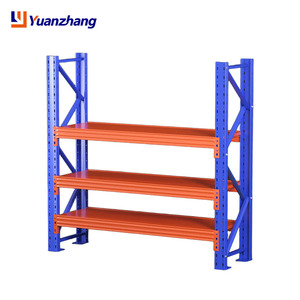
Heavy Duty Double Deep Pallet Racking, Universal Steel Storage Shelves for Factory, Workshop & Cold Room
- Density: 2-Deep Selective Layout
- Capacity: Up to 4,500 kg / tier
- Application: Cold Store & High-Bay
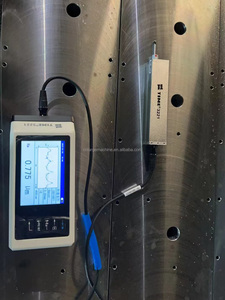
Large Commercial Sheet Metal Machining Cold Rolled Steel Fabrication Warehouse Metal Shelf Components
- Process: CNC Laser Cut & Punching
- Material: SPCC / Cold Rolled Steel
- Customization: OEM / ODM Drawings
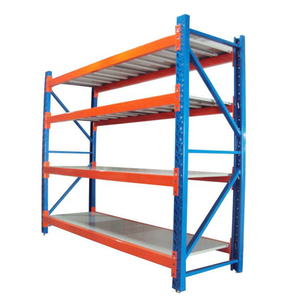
Heda Manufacture Factory Heavy Duty Industrial Warehouse Storage Rack Shelf Steel Racking System for Stacking Racks & Shelves
- Upright Profile: Omega 90/100/120mm
- Load Capacity: 1,000–5,000 kg / level
- Pitch: 50mm / 75mm Adjustable
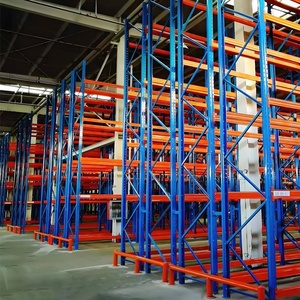
Double Deep Steel Pallet Racks Corrosion Protection Heavy Duty Stable Structure Warehouse Storage System for Logistics
- Surface: High-Adhesion Epoxy Coating
- Aisle Utilization: Increases Space by 35%
- Safety Factor: 1.5 Limit State Standard
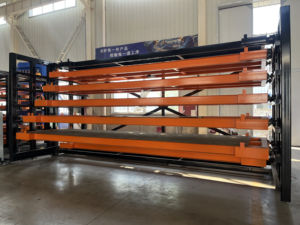
Multi-Tier Carbon Steel Powder Coated Anti-Rust Heavy Duty Warehouse Racking System 2000mm Height Storage Rack For Industrial
- Framework: Integrated Vertical Mezzanine
- Flooring: Steel Grating or Decking
- Access: Staircases & Pallet Drop Gates
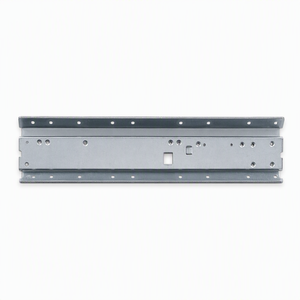
OEM Custom Precision Stamping U Shape Channel Bracket Galvanized Steel Hardware Industrial Shelf Support Rail Metal Parts
- Tolerances: ±0.15mm Precision Press
- Corrosion: Hot-Dip Galvanized / Zinc
- Testing: Tensile & Shear Destruction
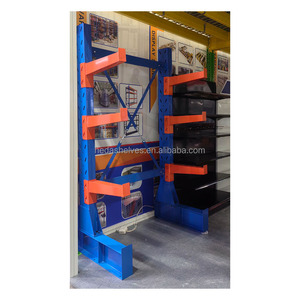
Wholesale Heda Heavy Duty Cantilever Storage Racks Cantilever Racking Systems Solution Selective Racking System
- Design: Single / Double Sided Columns
- Capacity: 1,000–3,000 kg / Arm
- Ideal For: Pipes, Profiles, Timber Bundles
Engineering Verification of CE Certified Pallet Racking Systems
Procuring industrial pallet racking for global logistics facilities requires navigating stringent structural safety regulations, mechanical deflection thresholds, dynamic seismic verifications, and metallurgical integrity.
1. The Regulatory Framework: Harmonized Standards EN 15512, EN 15620, EN 15629 & EN 15635
Within modern warehousing infrastructure, industrial pallet racks are categorized as freestanding, load-bearing steel structures. Under the European Construction Products Regulation (EU CPR 305/2011), static steel storage systems placed onto the European common market or exported internationally to projects requiring high tier safety compliance must meet the stringent CE marking mandate under EN 15512:2020 (Steel static storage systems - Adjustable pallet racking systems - Principles for structural design). This standard dictates advanced numerical structural modeling and physical destructive testing to establish characteristic strengths rather than relying solely on elementary bar theory.
Complementary standards govern every phase of the project lifecycle. EN 15620 establishes the rigorous installation tolerances, operational clearances, and deformation criteria under serviceability limit state (SLS), guaranteeing that high-reach turret trucks and Automated Guided Vehicles (AGVs) do not collide with deflected beams. EN 15629 prescribes precise specifications of storage equipment according to customer SKU parameters, while EN 15635 outlines ongoing maintenance, third-party structural audit protocols, and operational safety criteria. As an ISO 9001:2015 and CE Certified manufacturer (Certificate No. 2435-CPR-8605159), Guangzhou Heda Shelves Co., Ltd. subjects every cold-formed structural profile to this complete regulatory matrix.
"Structural failure in high-bay pallet racking is rarely a singular material defect; it is overwhelmingly caused by unaccounted second-order torsional buckling, inaccurate joint flexibility calculations (semi-rigid beam-end connectors), or inadequate baseplate anchoring during seismic ground accelerations. True CE certification guarantees that every beam connector moment-rotation curve and upright perforation group has undergone physical empirical calibration."
2. Finite Element Second-Order Analysis (P-Delta Effects) & Perforated Upright Mechanics
Unlike conventional building structures constructed from solid hot-rolled H-sections, pallet racking uses thin-walled, cold-formed open steel profiles. These members are inherently susceptible to complex, coupled failure modes including local plate buckling, distortional buckling, and flexural-torsional buckling. Under ultimate limit state (ULS) load combinations, horizontal sway displacements introduce secondary overturning moments (known as P-Delta (Δ) effects).
Our engineering calculation engine performs global second-order frame analysis incorporating the non-linear semi-rigid behavior of beam-end connectors. The rotational stiffness of the connector ($C_d$) and its design moment resistance ($M_{Rd}$) are determined via five-stub destructive shear and bending tests in accordance with EN 15512 Annex A. The upright columns, perforated continuously at 50mm or 75mm increments to allow beam reconfigurability, are mathematically adjusted by dynamic reduction factors ($A_{eff}$ and $I_{eff}$) to account for steel removed by stamping. This ensures that the global safety factor strictly maintains a minimum of 1.5 against plastic collapse under full rated design loads.
3. Comprehensive Pallet Racking Topology Comparison Matrix
Selecting the ideal racking architecture requires balancing floor space density, crane or forklift reach speeds, SKU selectivity, and capital expenditure (CAPEX). The engineering matrix below benchmarks the six primary industrial systems manufactured by Guangzhou Heda Shelves Co., Ltd.
| Racking Topology | Storage Density | SKU Selectivity | Inventory Flow | Handling Equipment | Max Level Load | CAPEX Index |
|---|---|---|---|---|---|---|
| Selective Pallet Racking | Standard (40–50%) | 100% Immediate | FIFO / LIFO Flexible | Counterbalance, Reach Truck | Up to 5,000 kg | Baseline (1.0x) |
| Double Deep Pallet Racking | High (60–65%) | 50% Semi-Selective | LIFO Optimized | Deep-Reach Pantograph Forklift | Up to 4,500 kg | Moderate (1.3x) |
| Pallet Flow (Gravity Roller) | Ultra-High (75–85%) | Lane Dependent | Strict Automatic FIFO | Standard Counterbalance | Up to 1,500 kg / pallet | Premium (2.4x) |
| Drive-In / Drive-Through | High (65–75%) | Low (Bulk SKUs) | LIFO (Drive-In) / FIFO | Narrow Counterbalance | Up to 2,000 kg / pallet | Moderate (1.4x) |
| Push Back Racking (Carts) | High (65–70%) | Lane Dependent (2–5 deep) | Strict LIFO | Standard Reach Truck | Up to 1,500 kg / cart | High (1.9x) |
| Radio Shuttle Automation | Maximum (85–90%) | Automated High Throughput | FIFO / LIFO Configurable | AGV, Forklift + 24V Shuttle | Up to 2,000 kg / pallet | Advanced (2.8x) |
4. Seismic Engineering Methodologies for Active Tectonic Zones
For projects situated along the Pacific Rim "Ring of Fire" (including Chile, Peru, Ecuador, Colombia, Mexico, and Japan) or Southern European seismic basins (Italy, Greece, Turkey), static gravitational calculations are entirely insufficient. Earthquake-induced horizontal ground motions produce catastrophic resonant accelerations inside multi-tier pallet racks.
Guangzhou Heda Shelves Co., Ltd. incorporates the modal response spectrum method and dynamic time-history analysis pursuant to Eurocode 8 (EN 1998), Chilean seismic standard NCh 433 / NCh 2369, Peruvian code E.030, and US RMI (Rack Manufacturers Institute) MH16.1 specifications. We reinforce the structural load path by upgrading column baseplate footprints, integrating high-ductility anchor bolts with embedment depths exceeding 150mm, increasing upright steel wall thicknesses up to 2.5mm–3.0mm, and installing specialized vertical and plan X-bracing cross-members equipped with ductile energy-dissipation nodes.
Emerging Procurement & Technological Trends in Pallet Racking (2025–2035)
Global supply chain disruptions, escalating warehouse square-meter leasing costs, and rapid warehouse automation are transforming pallet racking from static steel skeletons into hyper-efficient, sensor-integrated operational systems.
ASRS & Shuttle-First Architectural Layouts
Conventional wide-aisle layouts are rapidly giving way to high-bay automated storage and retrieval systems (ASRS) operating up to 40 meters high. Rack-supported buildings, where the pallet racking itself serves as the load-bearing structural framework for walls and roofs, eliminate redundant civil steel columns, compressing capital expenditure by up to 28% while maximizing cubic volumetric storage efficiency.
Smart Racking & Structural Health Telemetry
The integration of Industrial Internet of Things (IIoT) sensors directly onto critical upright columns is emerging as standard practice for tier-1 distribution centers. Embedded optical deflection sensors and 3-axis accelerometer impact nodes continuously transmit live vibration and deformation telemetry, alerting facility directors immediately when a forklift impact exceeds plastic yield thresholds.
Low-Carbon Steel & Eco-Polyester Powder Coatings
Scope 3 carbon emission disclosures are compelling multinational 3PL operators to procure racking manufactured from electric arc furnace (EAF) low-embodied-carbon steel coils. Furthermore, pre-treatment chemicals have transitioned away from heavy metal chromates to zirconium nanoceramic and advanced zinc phosphate dip baths, coupled with TGIC-free recyclable polyester powders cured at lower thermal thresholds.
Cold-Chain Resiliency & Cryogenic Steel Metallurgy
With the global cold chain sector expanding at over 14% CAGR due to biologics and frozen food exports, structural racking must survive continuous sub-zero operating environments down to -35°C. At these cryogenic temperatures, standard structural carbon steel undergoes a brittle ductile-to-brittle transition. Modern specifications require silicon-killed micro-alloyed steels with verified Charpy V-notch impact toughness.
Why Global Importers Partner with Guangzhou Heda Shelves Co., Ltd.
Founded in 2001 in Guangzhou, China, HEDA Shelves integrates architectural conceptual design, in-house roll forming, robotic welding, certified surface coating, and worldwide export logistics into a single accountable manufacturing source.
30,000 m² Automated Manufacturing
Operating 20+ specialized high-speed continuous roll-forming lines, automated column hydraulic punch presses, and Panasonic robotic welding cells capable of outputting 30,000 metric tons of certified racking monthly.
- Strict dimensional tolerances within ±0.5mm across entire 12-meter uprights
- In-house CNC shearing, bending, and laser fabrication for custom bracketry
- Batch steel tensile mill certificates verified before coil decoiling
Certified Chemical Pretreatment & Coating
Superior corrosion resistance is vital for oceanic container shipment and damp warehouse environments. Our automated 10-stage immersion system delivers military-grade substrate passivation.
- Continuous pickling and phosphating removes all rolling scale and oil
- Electrostatic powder coating delivering 60–90 μm uniform cured film
- 500-hour neutral salt spray validation under ASTM B117 standards
End-to-End Maritime Export Logistics
From factory gates to discharge ports across Brazil (Santos, Paranaguá), Chile (San Antonio, Valparaíso), Peru (Callao), Colombia (Buenaventura), Europe, and North America.
- High-density 40ft HQ container loading plans reducing ocean freight per ton
- Component-level numbering and barcoding corresponding to CAD blueprints
- Comprehensive remote video technical support or on-site engineer deployment
Frequently Asked Questions by Industrial Warehouse Buyers
Authoritative answers to critical commercial, structural, and regulatory questions encountered by procurement managers, project engineers, and global warehouse operators.
What documentation certifies that your racking complies with CE requirements?
Our pallet racking systems are certified under official CE Certificate No. 2435-CPR-8605159, complying with European Union Construction Products Regulation CPR 305/2011 and EN 15512:2020. Every export project file includes our Declaration of Performance (DoP), factory production control (FPC) audit certifications, mill test certificates (MTC) proving steel tensile grades (Q235B/Q355B equivalent to S235JR/S355JR), and project-specific static load calculation reports.
How do you verify structural capacity for regional seismic codes?
Prior to manufacturing, our engineering department imports your facility's geotechnical profile, peak ground acceleration (PGA), seismic zone coefficients, and soil class (such as Chilean NCh 433/2369, Peruvian E.030, Colombian NSR-10, or Eurocode 8). We adjust frame bracing geometry, baseplate surface areas, and anchor bolt embedment depths accordingly, delivering signed structural calculation packs ready for approval by your local certified municipal civil engineer.
What anti-corrosion protection is provided for humid coastal or cold store sites?
Standard components undergo chemical degreasing, ultrasonic acid pickling, phosphating, and electrostatic powder coating with a cured film thickness of 60–90 microns. For extreme relative humidity environments (e.g., coastal facilities or tropical regions) and blast freezers experiencing constant temperature cycling, we offer continuous pre-galvanized coil fabrication or hot-dip galvanizing (HDG) conforming to ISO 1461, ensuring rust-free lifespans exceeding 20 years.
What is the standard production lead time and typical ocean transit window?
Supported by our 30,000-ton monthly capacity, standard full-container load (FCL) orders of selective, double-deep, or drive-in racking are fabricated within 15–25 working days after final CAD approval. Ocean freight transit from South China export ports (Guangzhou, Shenzhen, Nansha) averages 14–22 days to Europe, 20–28 days to the US West Coast, and 30–42 days to primary South American maritime terminals.
How are components packaged to prevent maritime damage and deformation?
All upright frames and beam bundles are banded using heavy-gauge PET straps with heavy-duty corner cardboard angle guards. Contact points are cushioned with bubble wrap and stretch film to avoid metal-on-metal friction during transit. Small hardware accessories, baseplates, shims, safety drop pins, and anchor bolts are crated in seaworthy, fumigated wooden cases with desiccant packs to prevent moisture condensation.
Can HEDA Shelves assist with installation in foreign jurisdictions?
Yes. Every shipment is accompanied by comprehensive 3D assembly manuals, exploded component schematics, and anchor torque specifications. We provide dedicated live video conference supervision with English- and Spanish-fluent project engineers. For large-scale multi-tier mezzanine or high-bay racking projects exceeding 5,000 pallet positions, we deploy certified installation foremen on-site to direct your local rigging crew.
Accelerate Your Warehouse Project with Direct Engineering Support
Send us your architectural CAD floor plan, target SKU dimensions, pallet load metrics, and forklift operating clearances. Our senior structural engineers deliver a complete 3D layout, static calculation check, and competitive FOB/CIF quotation within 24 hours.