Featured Roller Pallet Racking Systems
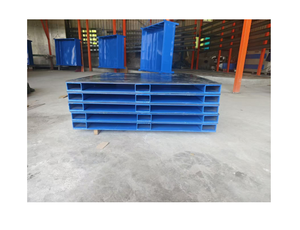
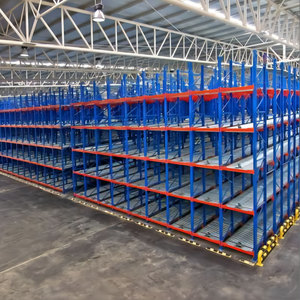
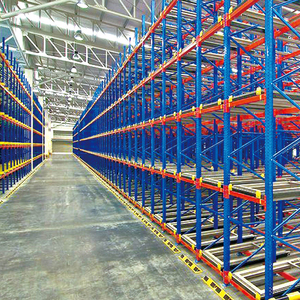
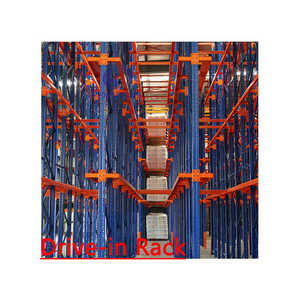
Explore our precision-engineered, heavy-duty roller pallet systems designed to optimize warehouse volume and expedite high-throughput FIFO/LIFO turnover.
Engineering White Paper: Industrial Mechanics of Roller Pallet Flow
A comprehensive technical examination of dynamic gravity feed mechanisms, structural load calculation, and safety compliance under European CE certifications.
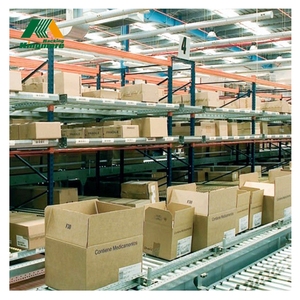
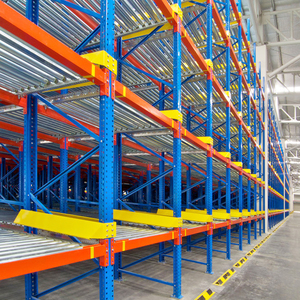
In modern high-velocity distribution centers, roller pallet racking—commonly designated as gravity flow racking or dynamic pallet racking—represents an indispensable engineering benchmark. Operating under the fundamental physical principle of dynamic gravitational acceleration counterbalanced by centrifugal mechanical brakes, these systems eliminate unnecessary internal travel aisles while preserving a flawless First-In, First-Out (FIFO) material rotation protocol.
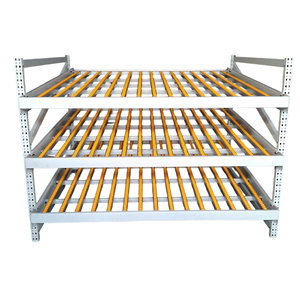
Our heavy-duty roller pallet systems are manufactured utilizing structural-grade high-tensile steel, predominantly certified Q235B and Q355B profiles. Uprights, frame bracing, dynamic beam brackets, and heavy-gauge galvanized roller beds undergo meticulous engineering checks to prevent cyclic deflection under maximum dynamic loading conditions. Unlike static storage configurations, roller racking absorbs substantial longitudinal kinetic forces imparted by moving pallet weights ranging from 500 kg to over 2,000 kg per position.
| Technical Parameter | Standard Metric Specification | Structural Compliance Metric |
|---|---|---|
| Steel Formulation Grade | Q235B / Q355B Hot-Rolled Structural Steel | EN 10025-2 / CE Certified Standard |
| Lane Gradient Slope | 1.5% to 3.5% (Configured by Load Mass) | Continuous Controlled Rolling Speed |
| Roller Track Diameter & Gauge | Ø50mm – Ø60mm Galvanized Steel Cylinders | Internal Precision Ball Bearings |
| Braking Roller Frequency | 1 Brake Unit per 1 to 2 Pallet Lengths | Centrifugal Resistance Damping (<0.3 m/s) |
| Frame Surface Treatment | Pickling, Phosphating & Electrostatic Powder | ISO 9001:2015 / RoHS Adherence |
| Separation Mechanism | Automatic Mechanical Pallet Separator | Zero Back-Pressure at Unloading End |
A critical engineering failure point in inferior roller racking installations is uncontrolled pallet velocity and pallet-line accumulation pressure. When heavy pallets glide along inclined roller tracks, accumulated force at the pick-face makes unloading perilous for forklift operators and risks damaging structural uprights. To negate this phenomenon, our CE-certified designs deploy specialized mechanical speed regulators coupled with end-stop load separators. The separator holds back the queued pallets while the forward-most pallet is extracted, completely neutralizing back-pressure on handling machinery.
Furthermore, structural resilience is verified through rigorous finite element analysis (FEA). We evaluate dynamic impact stresses, frame sway under seismic zones, and vertical floor slab distributions. Our manufacturing execution includes fully automated continuous cold roll-forming lines, computerized multi-stage punching machines, and certified robotic welding stations that eliminate micro-structural discrepancies across multi-bay configurations.
Guangzhou HEDA Shelves: Enterprise Strengths
Two decades of manufacturing precision, certified global export performance, and comprehensive engineering accountability from raw steel coil to on-site assembly.
CE & ISO 9001:2015 Accreditation
Every frame assembly and roller channel complies rigorously with European CE standards (Certificate No. 2435-CPR-8605159) alongside ISO 9001:2015 audited factory practices, ensuring your installation satisfies municipal and insurance structural inspections.
Complimentary 3D & CAD Design
Our senior design engineers run calculations tailored specifically to your facility’s slab tolerance, clear heights, and forklift turn radius. We generate comprehensive 3D layouts and finite structural loading schematics prior to manufacturing approval.
Total End-to-End Metalworking Control
From initial coil unrolling and precision CNC steel punching to hydraulic roll-forming, acid pickling, phosphating, and electrostatic powder application, all critical manufacturing sequences are contained strictly within our own facilities.
Future Procurement & Technological Trends (2025–2030)
How intelligent sensors, specialized cold chain logistics, and modular retrofitting are transforming the global roller pallet racking procurement landscape.
As enterprise fulfillment centers face escalating industrial real estate prices and stringent energy sustainability requirements, procurement directors are increasingly bypassing static racking in favor of space-saving gravitational flow systems. Industry data projects dynamic pallet flow systems to achieve notable multi-year compound annual growth rates, underpinned by major shifts in the global supply chain architecture:
Cold Chain Energy Optimization
Refrigerated and frozen distribution centers demand the highest volumetric utilization to reduce electricity consumption per cubic meter. Gravity roller systems consolidate storage blocks, cutting thermal losses associated with excessive empty forklift aisles.
IoT-Enabled Smart Roller Beds
Next-generation dynamic racking incorporates self-powered kinetic sensors embedded within roller shafts. These communicate lane status, track inventory transit speeds, and report bearing wear patterns straight to your warehouse management system (WMS).
Hybrid AS/RS & AGV Integration
Forward-thinking logistics facilities are interfacing roller lanes directly with autonomous mobile robots (AMRs) and automated crane lifters, forming modular high-density intake and dispatch buffers that require zero human intervention.
Frequently Asked Questions for Sourcing & Procurement
Straightforward answers addressing structural design, shipping logistics, site installation, and quality assurance.
What warehouse parameters are required to calculate the exact lane gradient?
How does CE certification (EN 15512 / EN 15620) safeguard international warehouse operations?
How are oversized steel components and delicate roller tracks protected during ocean transit?
Can roller pallet racking be engineered for high-seismic zones?
What maintenance routine is required for continuous gravity roller systems?
Accelerate Your Facility's Material Throughput
Consult directly with our racking engineers to obtain customized layout CAD files, complete structural capacity calculations, and verified factory direct pricing.
Get Catalog