Featured Industrial Racking & Warehouse Storage Systems
Direct factory-engineered configurations fabricated from premium structural steel. Fully compatible with automated retrieval, heavy-duty distribution, and dynamic inventory rotation.
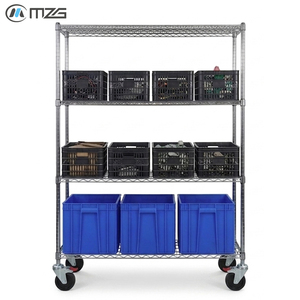
MZG ODM Factory Industrial Warehouse Parts Metal Heavy Duty Storage Organizer Rack Wire Shelving Systems with Wheel
View Specifications →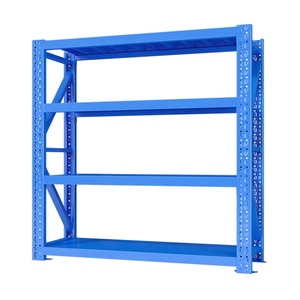
Custom Adjustable Light Duty Steel Storage Rack 300kg/Level Warehouse Shelving System
View Specifications →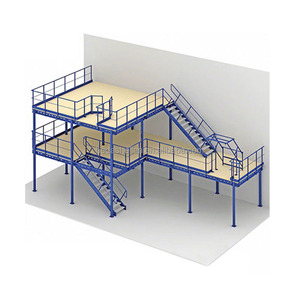
Warehouse Heavy Duty Steel Loft Platform Shelf Storage Attic Rack Pallet Racking Supported Mezzanine Floor Racks System
View Specifications →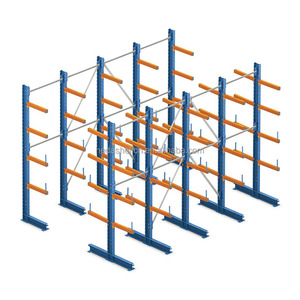
Heavy Duty Cantilever Racks Double Sided Galvanizing Warehouse Cantilever Rack Storage Rack for Lumber
View Specifications →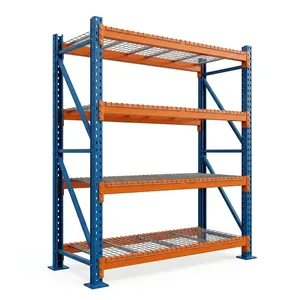
Heavy Duty Steel Pallet Racking System Adjustable Warehouse Storage Rack Industrial Shelving Unit
View Specifications →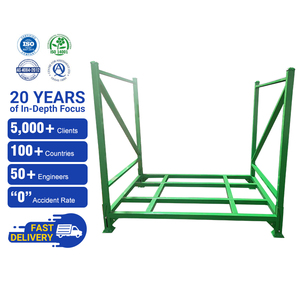
Industrial Heavy Duty Steel 5-Layer Folding Stacking Rack Removable Storage Shelf Durable Corrosion Protection for Warehouse
View Specifications →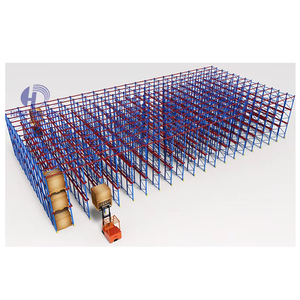
Heavy Duty Steel Drive in Racking System Warehouse Pallet Storage High Capacity Deep Lane Storage Rack for Industrial Logistics
View Specifications →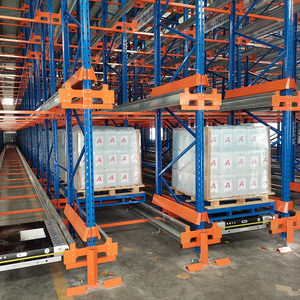
Automatic Warehouse Mobile Storage Heavy Duty Pallet Shuttle Racking Mobile Pallet Racking Systems
View Specifications →Mechanics, Structural Engineering & CE Compliance in Roller Racking
A comprehensive breakdown of gravity flow kinematics, structural steel tolerances, load separator mechanics, and seismic calculations governing modern industrial live storage installations.
Gravity Gradient & Kinetic Controls
Industrial roller racking (Pallet Flow / Gravity Flow) operates along an engineered decline typically set between 2.8% and 3.5% (approx. 1.6° to 2.0°). This inclination counteracts static friction while preventing velocity runaway. Heavy-duty zinc-plated cylindrical steel rollers (Ø50mm, Ø60mm, or Ø80mm) with precision sealed bearings ensure ultra-low rolling friction coefficient ($\mu_r \le 0.005$). Integrated centrifugal magnetic or gear-driven brake rollers activate proportionally to pallet velocity, maintaining terminal speeds strictly below 0.30 m/s regardless of pallet weight fluctuation between 250 kg and 1,500 kg.
Load Separator & Backpressure Protection
In deep-lane flow beds (up to 20 pallets deep), cumulative line pressure creates massive backpressure on the discharge-end pallet ($P_{back} = \sum_{i=1}^{n-1} m_i \cdot g \cdot \sin\theta$). Without intervention, extraction loads can deform forklift masts and cause dangerous pallet pinching. Our CE-certified installations integrate a mechanical mechanical pallet separator (time-delay escapement trigger). It mechanically uncouples the lead pallet from upstream stock, neutralizing line pressure to 0 kN during forklift extraction, locking trailing inventory until the extraction is verified complete.
EN 15512 European Structural Standard
All upright columns, diagonal bracing frames, and load-bearing beams are structurally calculated and tested per EN 15512:2020 (Steel static storage systems - Adjustable pallet racking systems - Principles for structural design) and CE CPR (Construction Products Regulation No. 305/2011). Maximum beam vertical deflection is engineered below $L/200$ under 100% rated working load plus safety factor ($\gamma_M \ge 1.4$). Upright members utilize high-tensile Q355B / S355 structural steel with cold roll-formed omega profiles, delivering superior torsional rigidity during heavy seismic cyclic events.
High-Density Storage System Technical Comparison Matrix
Analyzing capital expenditure, cubic utilization, selectivity, and operational fulfillment velocity across warehouse storage methodologies.
| Storage Methodology | Inventory Rotation | Floor Space Utilization | Direct SKU Selectivity | Picking Velocity | Forklift Aisle Requirements | Relative CAPEX / Pallet |
|---|---|---|---|---|---|---|
| CE Certified Roller Racking (Flow) | Strict FIFO (100%) | Up to 80% (Ultra High) | 1 SKU per dynamic lane | Very High (Separate in/out aisles) | Only Loading & Retrieval Aisles | Moderate to High (High ROI) |
| Selective Pallet Racking | FIFO or LIFO | 35% - 40% (Low) | 100% Immediate | Moderate (High travel distance) | Every row requires full aisle | Lowest Initial CAPEX |
| Drive-In Pallet Racking | Strict LIFO | 65% - 70% (High) | Low (Last-In-First-Out) | Slow (Mast entry risk) | Shared drive-in access aisles | Low to Moderate |
| Radio Shuttle Automation | FIFO or LIFO | 80% - 85% (Maximum) | 1 SKU per channel | High (Battery-powered shuttle) | Consolidated transfer lanes | High (Electronic maintenance) |
| Push-Back Cart Racking | LIFO | 60% - 65% (Medium-High) | Moderate (2-6 pallets deep) | Moderate | Single operating aisle | Moderate |
Future Procurement & Architectural Trends (2025–2030)
Forward-looking logistics data and industrial supply chain shifts transforming warehouse racking investments over the next half-decade.
AMR & AGV Roller Flow Integration
By 2027, over 65% of high-volume fulfillment hubs will bridge Autonomous Mobile Robots (AMRs) and Automated Guided Forklifts with roller flow tracks. Warehouses are migrating toward hybrid conveyor interfaces where gravity roller racks act as unpowered energy-free consolidation buffers at loading docks. Pallets fed into the flow rack automatically glide forward to await robotic pickers, eliminating AMR staging wait-times and lowering electric charging battery cycles across the distribution plant.
Sub-Zero Kinematics & Galvanized Substrates
With global cold-chain storage expanding at an 8.6% CAGR through 2030, roller flow solutions are being customized for deep-freeze environments (-30°C). Conventional lubricants freeze, leading to roller jamming and dangerous runaway when pallets thaw. Next-generation procurement mandates low-temperature synthetic grease, stainless steel roller bearings, and hot-dip galvanized uprights (65–85μm zinc thickness) to resist cyclic condensation in perishables, meat, and pharmaceutical vaccine storage.
Finite Element Seismic Modeling (FEA)
International logistics operators in seismically active regions—such as Chile (NCh 2369 / NCh 433), Peru (E.030), Colombia (NSR-10), and Mediterranean Europe (Eurocode 8)—now reject generic catalogue loads. Engineering procurement requires 3D Finite Element Analysis (FEA) certifying dynamic response spectrums, upgraded base plates (thickness $\ge 12\text{mm}$), chemical M16/M20 anchor embedment, and reinforced vertical back-bracing systems to prevent rack collapse during severe earthquakes.
Factory Infrastructure & Global Export Capabilities
Founded in 2001, Guangzhou Heda Shelves Co., Ltd. has evolved into an authoritative manufacturing force in the industrial storage industry, delivering turnkey warehouse solutions across 120+ nations.
In-House 10-Stage Precision Line
From raw structural coil verification to precision CNC laser cutting, multi-station automated punching, profile roll-forming, robotic welding, 5-stage pickling and phosphating, to continuous Swiss Gema electrostatic powder coating.
Certified Conformity Audits
Fully compliant with international quality protocols: CE Certificate No. 2435-CPR-8605159, ISO 9001:2015 Management System Certification No. 18624Q00169R0M, and SGS material strength and coating thickness audit reports.
Complimentary 3D CAD & FEA Design
Our senior warehouse planning engineers deliver 24-hour rapid-turnaround 3D layout renderings, pallet weight distribution checks, and forklift clearance validation tailored precisely to your building structural columns and facility doors.
Full-Cycle Global Export Service
Direct export shipping out of Guangzhou and Shenzhen to major container hubs across South America, Europe, Southeast Asia, and the Middle East. Includes numbered steel bundling, installation manuals, and remote video guidance.
Frequently Asked Engineering & Sourcing Questions
Expert technical answers addressing slope gradients, pallet specifications, brake configurations, seismic anchoring, and export logistics.
Ready to Optimize Your Storage Density with CE Certified Racking?
Submit your warehouse floor layout, pallet specs, and load profiles today. Our engineering team will return a customized 3D layout, structural calculation report, and competitive factory-direct quote within 24 hours.