High-Efficiency Pallet Racking & Industrial Storage Solutions
Factory-direct structural steel configurations designed to balance dynamic weight distribution, seismic threshold parameters, and seamless reach-truck accessibility across global distribution centers.
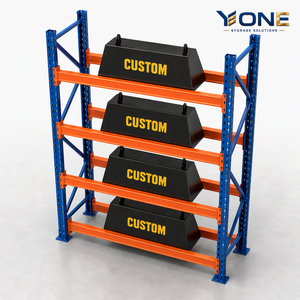
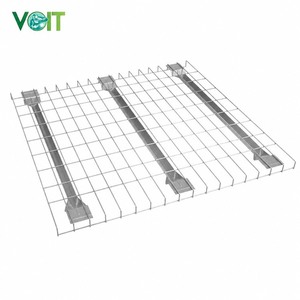
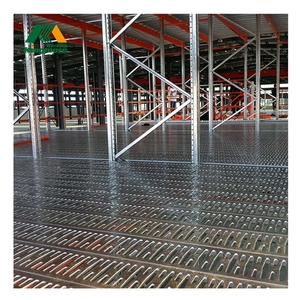
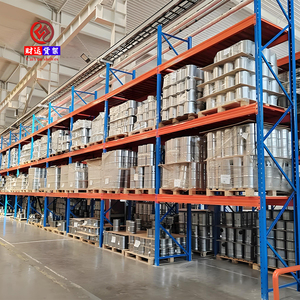
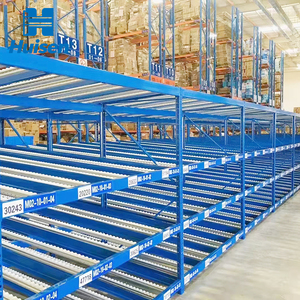
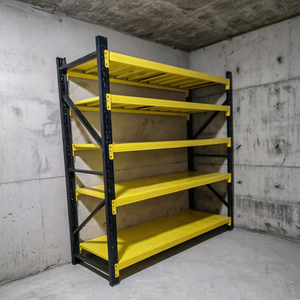
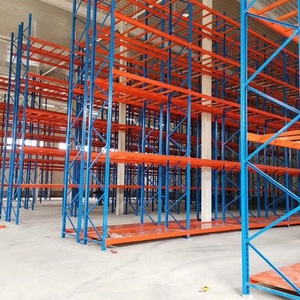
Single Deep Selective Pallet Racking Architecture & Load Dynamics
A deep-dive analysis of structural cold-formed steel sections, finite element safety parameters under FEM 10.2.02 and EN 15512:2020 standards, and aisle kinematics for modern high-bay facilities.
100% SKU Selectivity & Kinematic Reach Optimization
Single deep selective pallet racking represents the foundational topology for contemporary material handling. Unlike double-deep, drive-in, or push-back configurations, single deep layouts provide unhindered, immediate accessibility to every single pallet position without staging delays or secondary pallet handling.
From a logistics engineering perspective, single deep layouts decouple inventory retrieval from replenishment, eliminating the operational deadlocks typical of LIFO (Last-In, First-Out) operations. Aisles can be precisely calibrated depending on the Material Handling Equipment (MHE): standard counterbalanced trucks (3.8m–4.5m aisle width), narrow-aisle reach trucks (2.7m–3.2m), or Very Narrow Aisle (VNA) turret trucks and articulated forklifts operating down to 1.6m with wire or rail inductive guidance.
- Direct pick rates exceeding 45–60 pallet cycles/hour per mast
- Native compatibility with multi-drop, high-SKU inventory mixes
- Zero honeycombing loss typical of deep-lane accumulative racks
Cold-Formed Section Mechanics: Uprights & Box Beams
The mechanical integrity of an engineered selective rack relies on continuous multi-bend omega (Ω) section columns manufactured from certified high-tensile Q235B or Q355B structural steel. Cold-roll forming introduces localized strain hardening, yielding higher torsional rigidity ($I_t$) and moment of inertia along both primary axes ($I_x, I_y$).
Beams are designed using twin C-sections interlocking into a hermetic seam-welded box profile. This cross-section counteracts lateral-torsional buckling under asymmetrical heavy pallet placement. Beam-to-column connections leverage a high-shear 3-claw or 4-claw stamped hook connector plate with integrated 50mm or 75mm pitch adjustability, engaged by a spring-actuated mechanical safety locking pin capable of resisting shear uplifts greater than 5.0 kN per connection node.
- Vertical deflection limited strictly to $\delta \le L / 200$ under full UDL
- Column profile dimensions from 80×60mm up to 120×95mm
- Material yield threshold: $f_y \ge 235\text{ MPa}$ to $355\text{ MPa}$ certified
Finite Element Analysis & Seismic Design Verification
Exported storage systems installed in seismic corridors—such as the Pacific Rim (Chile NCh 2369 / NCh 433, Peru E.030, Colombia NSR-10) or Southern Europe (Eurocode 8 EN 1998-1)—demand rigorous dynamic second-order structural analysis (P-Delta effects). Static calculation alone fails to prevent catastrophic progressive collapse under seismic shear waveforms.
Our engineering center runs finite element stress simulations modeling semi-rigid beam-to-upright joint behavior, rotational spring stiffness ($C_d$), base plate anchoring dissipation, and lateral braced sway frames. Heavy-duty baseplates with engineered anchor bolt embedment depths transfer vertical gravitational loads and horizontal base shear directly into the reinforced concrete slab without spalling failure.
- Structural safety coefficient: 1.5 against ultimate yield load
- Seismic ductility factor ($R$) integrated into frame bracing layouts
- Base plates: 8mm–16mm laser-cut high-ductility steel plates
| Storage Topology | SKU Selectivity | Cubic Space Utilization | MHE Compatibility | FIFO/LIFO Strategy | Average Investment per Pallet Position |
|---|---|---|---|---|---|
| Single Deep Selective Rack | 100% (Instant Direct Access) | 40% – 50% Volumetric Yield | Counterbalance, Reach, VNA, Articulated | Strict FIFO Native | Lowest Capital Expenditure ($) |
| Double Deep Racking | 50% Immediate (Requires Re-handling) | 55% – 65% Volumetric Yield | Specialized Pantograph / Deep Reach Mast | LIFO per pair | Moderate ($$) |
| Drive-In / Drive-Through | 10% – 20% (High SKU Consolidation) | 65% – 75% High Density | Counterbalance / Standard Reach Only | Strict LIFO (Drive-In) / FIFO (Drive-Thru) | Moderate ($$) |
| Gravity Pallet Flow Rack | 1 SKU Per Lane (Continuous Roll) | 70% – 85% Ultra High Density | Standard Forklifts (Separate Load/Unload) | Automatic Gravity FIFO | High Capital Expenditure ($$$$) |
| Radio Shuttle Automation | Batch Selective by Deep Lane | 75% – 88% Maximum Density | Forklift + Autonomous Li-Ion Shuttle | Flexible FIFO or LIFO Programming | Advanced Automation Investment ($$$$$) |
Future Warehouse Racking Procurement Trends (2025–2030)
Macroeconomic shifts, automation convergence, and decarbonization mandates are redefining how global logistics executives and procurement directors specify and purchase selective racking systems.
AMR & AGV Floor Integration
Static warehousing is aggressively transforming into human-robot hybrid spaces. Buyers are no longer purchasing single deep racks in isolation; specifications now mandate bottom-level cantilevered clearance, magnetic track under-clearance, and super-flat slab compliance (DIN 18202 / TR34 DM2) for Autonomous Mobile Robots (AMRs) executing under-pallet pick-and-carry tasks.
Scope 3 ESG & Eco Coatings
Multinational enterprise tenders now routinely demand Environmental Product Declarations (EPDs). Heavy industrial buyers actively reject solvent-based wet paints in favor of 100% VOC-free, heavy-metal-free thermosetting polyester epoxy powder finishes cured in biomass-heated ovens, slashing embedded lifecycle carbon dioxide equivalent emissions ($CO_2e$) per upright metric ton.
Dynamic Steel Hedging
With hot-rolled coil (HRC) commodities exhibiting cyclical volatility, supply chain directors are executing index-linked contractual models (tied to SHFE/LME/CRU indices). Direct factory procurement models from large-scale manufacturers with 30,000-ton monthly throughput allow buyers to hedge spot raw material costs and fix container pricing 60–90 days ahead of maritime booking.
Modular Retrofit Engineering
The era of rigid, non-adaptable warehouse layouts is over. Progressive warehouse designers require selective racking systems capable of in-situ conversion into multi-tier mezzanines, carton live storage picking tunnels, or automated shuttle tracks without torching, cutting, or field welding, safeguarding enterprise capital investments over a 15-to-25-year building lease.
Structural Evolution in Industrial Pallet Racking Systems
Continuous cold-roll profile optimization, automated robotic GMAW welding cells, and sensor-augmented structural health telemetry are redefining durability standards for warehouse owners.
Continuous CNC Cold-Roll Profile Forming
Traditional press-brake bending introduces inconsistent residual internal stresses and localized cross-sectional thinning along corner radii. Next-generation production replaces this with 24-station continuous roll-forming lines operating under real-time laser monitoring.
Every upright profile is precisely punched in-line with hydraulic CNC high-speed indexers before bending, guaranteeing pitch accuracy of ±0.1mm across an 11.8-meter seamless single-piece column. This geometric precision ensures that load-bearing beam connector claws seat with 100% bearing face contact, eliminating localized torsional distortion under dynamic live loading.
Robotic MAG Pulse Beam Welding
The beam end connector weldment represents the single most critical structural failure point during dynamic impact or seismic ground acceleration. Modern selective rack fabrication isolates this process inside robotic welding cells utilizing Metal Active Gas (MAG) pulse arc technology with ER50-6 welding wire.
The automated dual-torch system executes full-penetration fillet welds simultaneously along both top and bottom connector flanks. Ultrasonic non-destructive testing (NDT) confirms zero porosity, zero undercut, and complete root penetration, ensuring that connector plates exceed European EN 15512 safety moment thresholds under maximum bending deflection.
Sensorized Telemetry & Structural Health Monitoring
High-velocity distribution centers face recurring forklift impact damages against lower-tier uprights, often hidden from standard visual inspections until sudden structural yield occurs. State-of-the-art selective rack deployments now integrate IoT tri-axial accelerometer nodes mounted on aisle end-frames and vulnerable portal ties.
These low-power wireless sensors detect real-time kinetic impacts exceeding EN 15635 yellow/red risk limits (typically 3mm vertical or 5mm transverse permanent deformation). Alerts trigger immediate automated quarantine of affected bays in the Warehouse Management System (WMS), preventing secondary catastrophic progressive collapse.
Guangzhou HEDA Shelves: 25+ Years of Engineering Excellence
Established in 2001, Guangzhou Heda Shelves Co., Ltd. has expanded into a global heavy-industry storage manufacturing leader, supplying high-performance warehouse racking to distributors, EPC contractors, and multinational logistics operators across 120+ countries.
10-Stage Rigorous Quality-Controlled Manufacturing Protocol
Every beam, column, baseplate, and bracing tube is fabricated entirely in-house under strict ISO 9001:2015 quality surveillance, guaranteeing zero tolerance deviation and consistent batch-to-batch metallurgical stability.
Raw Steel Inspection
Spectrometric chemical analysis and tensile yield verification on Baosteel/Shougang prime Q235B/Q355B coils.
Precision Slitting
High-speed rotary shear uncoiling and strip slitting with laser-guided edge trimming to exact development widths.
CNC Column Punching
Multi-station progressive hydraulic punch dies producing teardrop, diamond, or European 50mm/75mm slot patterns.
Continuous Roll Forming
24-pass precision cold rolling progressively forming the high-inertia multi-bend Omega (Ω) column profile.
Box Beam Seam Closing
Automated twin C-profile interlock and high-frequency longitudinal seam welding for superior torsional stiffness.
Robotic Connector Welding
Multi-axis robotic pulse MAG welding fusing claw connector plates onto box beam ends with deep root penetration.
Automated Shot Blasting
Centrifugal wheel blast cleaning to Swedish Sa 2.5 standard, eradicating all mill scale, rust, and surface oil.
Phosphating Pre-Treatment
Multi-stage chemical degreasing, clean-water cascade rinse, and microcrystalline zinc phosphating conversion coating.
Electrostatic Powder Coat
Gema automated reciprocating spray guns applying 60–90µm pure polyester thermosetting powder cured at 200°C.
QC & Seaworthy Bundling
Dry film thickness (DFT), cross-hatch adhesion testing, wooden pallet blocking, and heavy strapping for container shipment.
Independently Audited Certifications
Our quality management protocols and structural designs are audited by internationally recognized notified bodies:
- CE Certificate: No. 2435-CPR-8605159 (EN 1090-1 / CPR 305/2011/EU)
- ISO 9001:2015: Certificate No. 18624Q00169R0M
- RoHS Compliance: Heavy-metal-free thermoset powder coatings
Turnkey Global Export Logistics
Located adjacent to major South China ocean container terminals (Guangzhou Nansha, Shenzhen Yantian/Shekou), our logistics team executes precise multi-container packing plans to maximize 40ft High Cube (40HQ) volume utilization up to 98%, safeguarding components from maritime humidity and salt-fog corrosion.
Direct liner services regular dispatch to key industrial hubs: Santos, Paranaguá, Callao, Valparaíso, Guayaquil, Buenaventura, Buenos Aires, Rotterdam, Hamburg, Antwerp, and Jebel Ali.
Free 3D Layout & Engineering CAD
Our engineering center, staffed by 300+ technical personnel and structural engineers, delivers custom CAD layouts, 3D volumetric warehouse renderings, and comprehensive structural calculation dossiers within 24 to 48 hours.
Every layout accounts for building columns, fire exits, sprinkler main pipe drops (NFPA 13), dock staging areas, and specific forklift operational turning envelopes ($A_{st}$).
Frequently Asked Questions by Industrial Racking Buyers
Direct, highly technical answers addressing structural calculations, slab load requirements, seismic compliance, and international shipping protocols.
What specific standards govern the structural calculation of your selective pallet racking?
How do you calculate warehouse concrete slab point loads and anchor bolt safety?
Can your selective pallet racks be engineered for high seismic activity zones?
What are the key technical differences between Q235B and Q355B steel in racking fabrication?
How does the powder coating specification resist corrosion in humid or coastal warehouses?
How do you protect pallet racks from catastrophic forklift impact damage?
What information does your engineering team require to provide a full 3D layout & quotation?
What are the typical export packaging, lead times, and container shipping arrangements?
Request an Engineered Warehouse Layout & Factory Quote
Connect directly with our senior structural racking engineers. Submit your warehouse floor plan, clear height, and pallet weight specifications to receive a complimentary 3D rendering, detailed CAD layout, structural calculation dossier, and factory-direct price quotation within 24 hours.