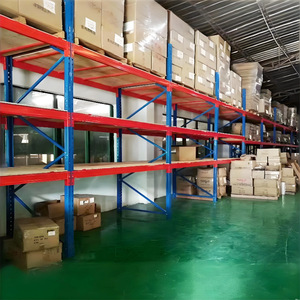
Enterprise Structural Solutions
Engineered Racking Systems & High-Performance Beam Assemblies
Direct-from-factory certified logistics components built with prime Q235B/Q355B cold-rolled structural steel, optimized for extreme uniform distributed loads (UDL) and seismic stability.
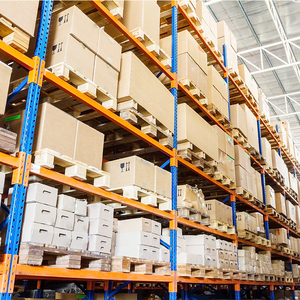
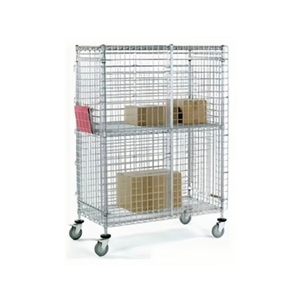
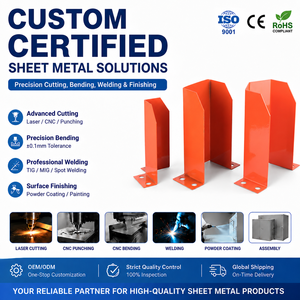
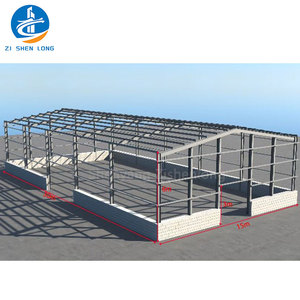
Structural Infrastructure
Metal Frame Structure Prefabricated Warehouse/ Workshop/ Hangar/ Steel Structure Building
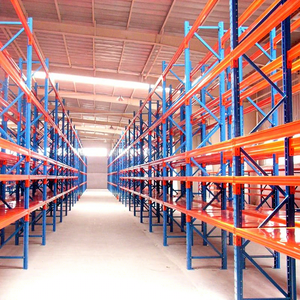
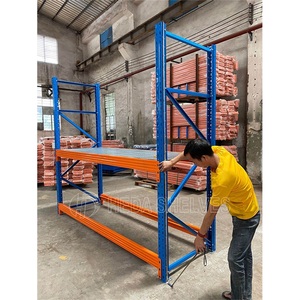
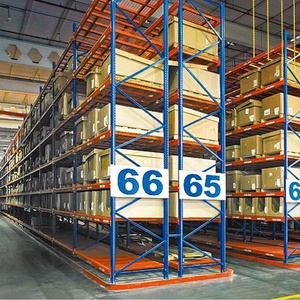
Engineering Whitepaper & Technical Analysis
The Mechanics of Heavy-Duty Beam Fabrication & Load Integrity
Evaluating structural deflection limits, continuous seam welding techniques, locking connector mechanics, and European CPR compliance.
Interlocking Box-Beam Geometry
Our CE-certified pallet rack beams are cold-roll formed using two interlocking C-sections continuously seam-welded by automated robotic systems. This enclosed profile generates superior torsional rigidity and dynamic flexural resistance compared to open structural channels, maintaining deflection tolerances within L/200 under full dynamic rated loads.
EN 15512 & CE Marking Rigor
Structural reliability requires full traceability under the Construction Products Regulation (CPR 305/2011/EU). Certified under Certificate No. 2435-CPR-8605159, our manufacturing enforces systematic metallographic analysis, tensile testing, and moment-rotation assessments to guarantee predictable failure modes and zero catastrophic shear collapse.
End Connector Kinematics
The interface between upright column and beam utilizes precision 3-claw, 4-claw, or 5-claw stamped hook brackets. Coupled with heavy-gauge safety pins that resist dislodgement up to 10 kN of vertical uplift, our connection nodes dissipate localized moment forces while preventing accidental displacement by forklift masts.
| Profile Spec (H x W mm) | Wall Gauge (mm) | Material Standard | Max Span (mm) | UDL Capacity / Pair (kg) | Connector Type | Compliance Standards |
|---|---|---|---|---|---|---|
| Box 80 x 50 | 1.5 / 1.8 | Q235B / S235JR | 2,300 - 2,700 | 1,200 - 1,800 | 3-Claw Welded | EN 15512 / CE / ISO 9001 |
| Box 100 x 50 | 1.5 / 1.8 / 2.0 | Q235B / S275JR | 2,700 - 3,300 | 2,000 - 2,800 | 3-Claw / 4-Claw | EN 15512 / CE / RMI |
| Box 120 x 50 | 1.8 / 2.0 | Q355B / S355JR | 3,300 - 3,600 | 2,800 - 3,500 | 4-Claw Heavy | EN 15512 / CE / FEM 10.2.02 |
| Box 140 x 50 | 2.0 / 2.2 | Q355B / S355JR | 3,600 - 3,900 | 3,500 - 4,200 | 4-Claw / 5-Claw | EN 15512 / CE / AS 4084 |
| Box 160 x 50 | 2.0 / 2.5 | Q355B / S355JR | 3,900 - 4,200 | 4,200 - 5,000 | 5-Claw Reinforced | EN 15512 / CE / Seismic NZS |
Strategic Sourcing Intelligence
Market Dynamics & Next-Generation Racking Trends (2025–2030)
How progressive enterprise logistics directors and distribution center engineers are adjusting capital procurement for automated and seismic-resilient facilities.
1. Convergence with Autonomous Mobile Robots (AMR/AGV)
Traditional selective racking is transitioning rapidly into dense automation envelopes. Beam interfaces must now incorporate micro-tolerance pick-point apertures, floor-level docking rails, and integrated barcode/RFID matrix plates. Buyers are procuring beam profiles engineered for ultra-low vibration thresholds to protect robotic lifting masts and optical scanning sensors.
2. High-Strength, Low-Alloy (HSLA) Decarbonized Steel
Corporate sustainability mandates across North America and Europe are driving the migration to low-carbon HSLA steel grades such as S355 and Q355B. These advanced formulations allow fabricators to reduce wall thickness while improving yielding strength, cutting raw shipping container tonnage by up to 14% without degrading load-bearing safety margins.
3. Rigorous Dynamic Seismic Engineering
From the Pacific Rim to Andean distribution clusters (Chile, Peru, Ecuador) and European seismic regions, storage procurement has shifted from static dead-load analysis to dynamic multi-directional stress simulation. Beam connections now require finite-element modeling (FEM) validated for high ductility and rotational energy absorption under transient ground accelerations.
4. Thermally Stabilized Cold Chain Coatings
Surging global cold-chain infrastructure demands racking finishes that survive cyclic moisture condensing and temperatures down to -30°C. Standard coatings crack and foster subsurface corrosion; hence, procurement specifications increasingly dictate heavy-duty zinc-rich primers, thermosetting architectural powders, and pre-galvanized continuous profiles.
5. Digital Twin Pre-Assembly & BIM Parametric Modeling
Procuring warehouse racking is no longer handled via isolated spreadsheets. Tier-1 enterprise contractors require fully articulated Industry Foundation Classes (IFC) and Autodesk Revit BIM models prior to steel roll-forming. This digital pre-flight eliminates physical clash issues between warehouse fire-suppression sprinklers, ceiling HVAC runs, structural portal frames, and forklift mast clear-height channels.
Enterprise Reliability
Why Global Supply Chains Rely on HEDA Shelves
Founded in 2001, Guangzhou Heda Shelves Co., Ltd. operates an advanced 30,000 m² smart fabrication base backed by 300+ engineering and production specialists.
Full Vertical Manufacturing
From raw coil decoiling, computerized roll-forming, multi-station robotic welding, and automated surface phosphating to electrostatic powder application—our entire output is strictly in-house.
Comprehensive Export Experience
We regularly schedule full-container loads (FCL) to primary international hubs including Santos, Valparaíso, Callao, Rotterdam, Hamburg, Los Angeles, and Jebel Ali with container-stuffing density optimization.
Certified Quality Assurance
Every manufacturing batch is audited under ISO 9001:2015 (Reg No. 18624Q00169R0M) and CPR CE requirements. Mill test certificates, ultrasonic weld testing, and powder adhesion reports are provided per order.
Procurement Knowledgebase
Frequently Asked Questions by Industrial Sourcing Specialists
Clear, engineering-backed explanations addressing material selection, deflection standards, international testing, and sea-freight logistics.
What is the standard allowable deflection limit for CE-certified warehouse racking beams? +
Under European Standard EN 15512 and FEM 10.2.02, the maximum permissible elastic deflection of a pallet rack beam under uniformly distributed design load is typically 1/200th of the clear span length (L/200), or L/250 in specialized automated environments. This design standard guarantees that horizontal deflection will neither deform automated sensor pathways nor jeopardize pallet stability when handled by forklift trucks.
How does HEDA Shelves verify weld integrity on boxed beam profiles? +
Our manufacturing facility utilizes high-precision continuous robotic metal inert gas (MIG) welding systems. End-connector brackets undergo systematic destructive shear-tensile testing and continuous non-destructive ultrasonic verification to ensure total seam penetration, completely neutralizing the risk of end-plate weld detachment during severe operational impact or seismic tremors.
Can your engineering team calculate custom seismic racking configurations? +
Yes. Our structural engineers utilize finite element analysis (FEA) to evaluate project-specific peak ground acceleration (PGA), seismic response spectrums, and soil foundation classifications. We engineer upgraded upright column gauges, expanded footprint baseplates, heavier wedge anchor arrays, and structural diagonal bracing frames complying with localized norms including NCh 2369 (Chile), NSR-10 (Colombia), and Eurocode 8.
What surface treatments protect racking shipped through high-humidity ocean transit? +
All structural components undergo a 9-stage pre-treatment wash involving chemical degreasing, acid pickling to strip mill scale, surface phosphating, and deionized water rinsing. Subsequently, components are cured with an electrostatic thermosetting epoxy-polyester powder finish (average thickness 60–80 μm). Finished components are bundled with shock-absorbing foam spacers, waterproof stretch wrap, and edge protectors to avoid transit abrasions.
What technical data must buyers supply to receive a certified 3D CAD layout and quotation? +
To generate full layout designs and structural calculations, our engineers need: (1) Facility CAD architectural floor plan with clear heights and column grid, (2) Pallet specifications (width, depth, overall height including cargo overhang, and gross weight), (3) Material handling equipment (forklift type, turning radius, and maximum reach height), and (4) Operating temperature regimes and building seismic zone ratings.
Transform Your Warehouse Logistics with Certified Engineering
Connect with our technical design office today. Receive a zero-cost 3D CAD structural configuration, load calculation report, and comprehensive container-landed quotation tailored to your operational requirements.