Years Industrial Racking Manufacturing
Monthly Steel Processing Capacity
Global Installations Completed
Warehouse Floor Footprint Utilization
Featured Drive-In & High-Density Racking Systems
Custom structural engineering tailored to exact pallet specifications, reach-truck configurations, and temperature-controlled storage dynamics.
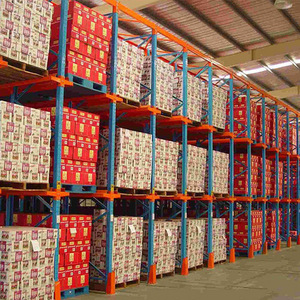
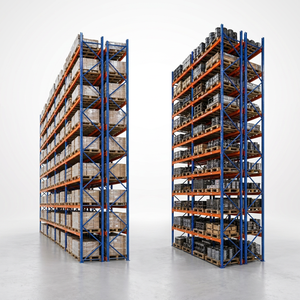
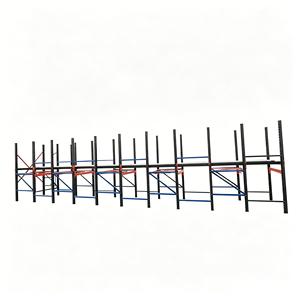
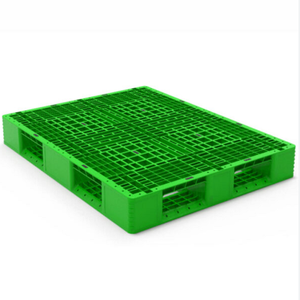
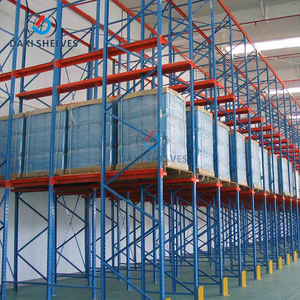
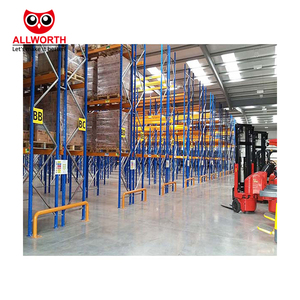
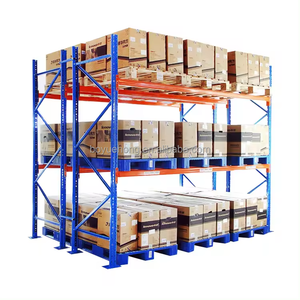
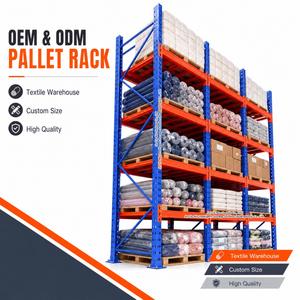
Architectural Mechanics & Information Gain: Drive-In Racking Fundamentals
Drive-in and drive-through pallet racking represent the gold standard in maximum spatial cubic footprint optimization, eliminating conventional operational service aisles in favor of continuous high-density accumulation lanes. As premier China manufacturers and exporters, we engineer systems that utilize cantilevered support rails anchored to unified upright frames, enabling counterbalanced or reach forklifts to drive directly into the racking bays.
Unlike standard selective pallet racks that reserve up to 60% of warehouse floor area purely for transit pathways, drive-in systems operate on a Last-In, First-Out (LIFO) or First-In, First-Out (FIFO - Drive-Through configuration) discipline. This mechanical architecture delivers unmatched volumetric consolidation—routinely driving volume utilization up to 75% to 85% in environments handling high-volume, low-SKU profiles.
| Structural Parameter | Standard Export Configuration | Cold-Chain & Heavy Industrial Spec |
|---|---|---|
| Steel Metallurgy | Q235B Cold-Rolled Structural Coil | Q355B Low-Alloy / High-Yield Cold Formed |
| Pallet Load Capacity | 500 kg to 1,500 kg per pallet position | Up to 2,200 kg heavy-duty reinforced pallet rails |
| System Bay Heights | 3,000 mm to 9,000 mm | Engineered high-bay setups up to 13,500 mm |
| Surface Finishing | Phosphating + Electrostatic Powder (60-80μm) | Hot-Dip Galvanized (ISO 1461) / Anti-condensate epoxy |
| Structural Standards | EN 15512, FEM 10.2.02, RMI MH16.1 | Site-specific Seismic Design (NCh 2369, NSR-10, E.030) |
Technical Integrity: Critical Load Considerations and Upright Bracing
The primary engineering vulnerability in drive-in racking is the inherent absence of horizontal cross-beam ties across the frontal access bays. To withstand rotational torque, continuous dynamic vehicle guidance, and lateral forces induced by heavy loading, our structural engineers integrate top-tier bracing frameworks, continuous back ties, and robust portal-beam cross bracing. Heavy-duty wrap-around column protectors and guided floor rails (angle steel or heavy C-channels) are integrated at grade to prevent forklift chassis collision against primary vertical uprights.
Future Sourcing & Procurement Trends (2025–2030)
Procurement directors and third-party logistics (3PL) project teams are actively moving away from raw material tonnage costs toward total life-cycle landed value, seismic risk resilience, and carbon-neutral logistics footprints. We have identified key procurement pivots dominating the global pallet racking landscape:
Digitized 3D Layout Validation
Global project tenders require upfront BIM (Building Information Modeling) and kinematic simulation of reach-truck clearances prior to cutting raw steel, avoiding site rework.
Targeted Seismic Compliance
Strict regional engineering certifications (such as Chile's NCh 2369, Peru's E.030, or California RMI standards) demand heavier base plates, enhanced anchor embedments, and thicker cold-formed profiles.
Hybrid Semi-Automated Scalability
Warehouse owners demand drive-in systems designed to easily retrofit with high-density automated shuttle carriers, future-proofing manual warehouses for automated storage.
Drive-In Racking System Evolution: From Static to Dynamic Smart Storage
The manufacturing technology behind Chinese industrial racking export is undergoing rapid evolution. Innovations focus heavily on metallurgy, intelligent manufacturing, and sustainable coating performance:
1. Ultra-High Tensile Cold Formed Sections: Transitioning from conventional hot-rolled mild profiles to continuous multi-station progressive roll-forming machines with high-tensile Q355B coils. This creates greater section modulus with lower deadweight, cutting international container ocean freight charges.
2. Anti-Corrosion Technologies for High-Humidity & Freezing Sites: Advanced electrostatic thermosetting polyester powder coatings processed through full pre-treatment pickling and phosphating cycles ensure zero paint flaking in sub-zero cold-storage (-30°C) or humid tropical port warehouses.
3. Integrated Pallet Positioning Sensor Channels: Integration of reflective visual markers, RFID sensor guides, and integrated side-rail stops to speed up forklift docking cycles while eliminating pallet misalignment inside long-run drive-in lanes.
Why Partner with Us: Certified Engineering, Factory Direct Capacity
Guangzhou Heda Shelves Co., Ltd. (established in 2001) is an industry-leading manufacturer supplying warehouse storage systems across South America, Southeast Asia, the Middle East, Europe, and North America. By operating our own 30,000 m² modern manufacturing hub with over 300 experienced engineers and specialists, we offer distinct advantages for global project owners:
Free 3D & CAD Design
Get fast 3D visualizations, structural calculations, and CAD layouts matched to your warehouse building constraints.
30,000t Monthly Output
Massive automated cutting, roll-forming, and robotic welding ensure projects deliver within 2 to 4 weeks.
CE & ISO 9001:2015
Rigorous internal QC protocols, batch mill certificate tracking, and international independent quality audits.
Export Logistics Mastery
Optimized container bundle packaging safeguards powder finishes across multi-week ocean transit routes.
Drive In Pallet Racking Procurement FAQ
Direct technical answers addressing the operational, logistical, and structural questions raised by procurement managers and enterprise warehouse engineers.
Q1 When is Drive-In Racking chosen over Selective Racking?
Drive-In Racking is ideal when you have large batches of homogenous products (bulk SKUs), seasonal storage requirements, or high-value floor area (such as cold-storage freezers). If your operation needs 100% immediate selectivity for hundreds of active SKUs, standard selective or narrow aisle (VNA) racking is preferred.
Q2 How do you prevent forklift impact damage in drive-in bays?
We incorporate structural heavy-gauge steel ground floor guide rails, heavy wrap-around column guards anchored with Hilti mechanical studs, flared entryway guide horns, and bright visual yellow powder coatings to streamline forklift entry and protect structural uprights.
Q3 What are the packaging and ocean freight considerations from China?
Uprights are stacked with timber dunnage and protective corner boards; load rails and portal beams are bundled with steel strapping and wrapped in protective stretch films. Component nesting is engineered into container loading plans to hit max-weight limits (26–28 tons per 40ft HQ) without surface scratching.
Q4 Can your racking withstand high seismic regions?
Yes. Our in-house structural engineers incorporate regional spectral acceleration coefficients (such as Chile's NCh 433/2369, Colombia's NSR-10, or Peru's E.030) directly into finite element calculations, upsizing footplates, bracing ties, and anchor diameters accordingly.
Q5 How does drive-in compare with radio shuttle racking?
Drive-in racking features a lower initial capital investment since it relies on the forklift itself entering the lane. Radio shuttle racking is semi-automated; the forklift deposits an independent robotic carriage that travels inside the channel, allowing deeper storage and faster handling with zero forklift entry.
Q6 What critical site information is needed for a customized layout?
We require the architectural floor plan, unobstructed clear roof height, pallet dimensions (W x D x H) including goods overhang, gross pallet load weight, forklift model and mast collapsed/lift height, and inventory rotation preference (LIFO vs. FIFO).