Engineered Gravity Flow Systems & Industrial Storage Solutions
Explore our heavy-duty cold-formed live storage racking lines, multi-tier mezzanines, and dynamic order-picking hardware manufactured to rigorous European FEM 10.2.02 and US RMI structural standards.
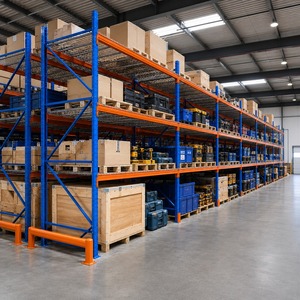
Factory Pallet Racks Industriales Steel Storage Rack Q235B Schwerlastregal
Certified high-capacity upright profiles with adjustable beam pitches designed specifically for multi-tier logistics hubs handling heavy unitized cargo.
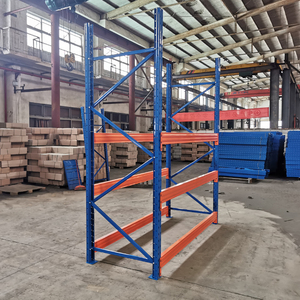
Heavy Medium Duty Industrial Selective Storage Pallet Rack Deep-Reach
Versatile selective and double-deep racking frameworks engineered for rapid forklift handling and maximum floor space utilization across cold or ambient stores.
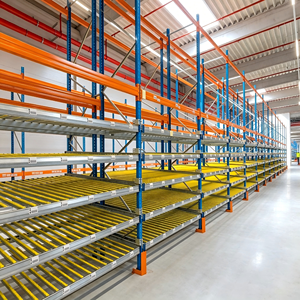
Gravity Carton Flow Racking Adjustable Roller Shelving FIFO Fulfillment
Precision aluminum alloy roller tracks featuring calibrated decline angles for split-case fulfillment, e-commerce distribution, and assembly kitting lines.
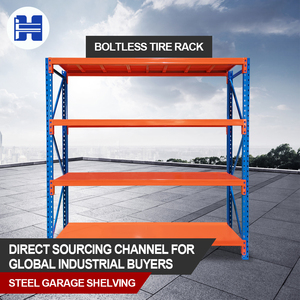
Long Span Medium Duty 5 Layer Boltless Warehouse Storage Rack OEM
Quick-assembly boltless industrial shelving designed with step-beam channels and reinforced steel or timber decking for dense bin storage.
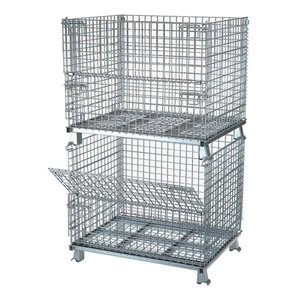
Collapsible Galvanized Wire Mesh Container With Forklift Pockets
High-strength drop-gate wire mesh containers stackable up to 4 layers high under full dynamic rating; collapses flat for empty return freight savings.
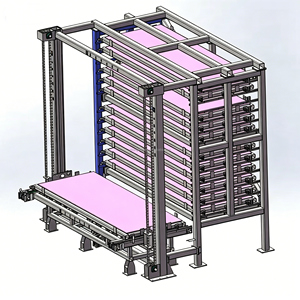
Heavy Duty Electric Sheet Metal Rack Drawer Storage Retrieval System
Motorized slide-out cassettes for heavy steel plates and dies, allowing 100% overhead hoist accessibility while saving 65% of floor area.
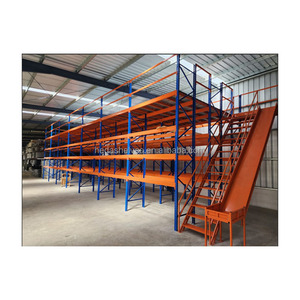
Warehouse Steel Platform Mezzanine Floor Pallet Racking System
Integrated structural steel multi-tier mezzanine decks that multiply vertical cubic real estate without civil building modifications.
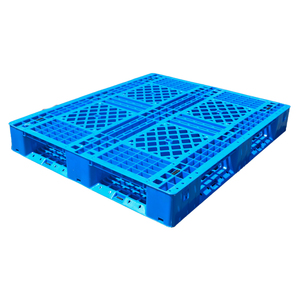
Heavy Duty Reinforced HDPE Recyclable Plastic Pallet for Gravity Racking
Internal steel-pipe reinforced virgin HDPE pallets engineered specifically for zero bottom-deck sag across gravity roller beds and automated shuttles.
Gravity Flow Racks: Kinematics, Metallurgical Tolerances, and Direct China Export Economics
In modern industrial warehousing, space optimization is no longer just about vertical clearance—it is governed by the speed of stock rotation, footprint utilization, and the reduction of energy-consuming mechanical handling equipment. Gravity flow racking (also known as dynamic pallet flow or live storage racking) operates on an unpowered, gravitational-decline methodology that guarantees strict First-In, First-Out (FIFO) stock rotation while eliminating interior fork-truck transit aisles.
For international supply chain directors, procurement officers, and third-party logistics (3PL) executives evaluating overseas manufacturers, partnering directly with a tier-1 Chinese manufacturer offers substantial capital expenditure (CAPEX) advantages. However, navigating gravity flow procurement requires deep domain knowledge: precise roller friction calculations, dynamic braking governors, steel yield tolerances (such as Q235B versus high-tensile Q355B), and compliance with global seismic design codes (such as RMI MH16.1, FEM 10.2.02, and AS4084). This document provides an exhaustive structural, economic, and operational roadmap for selecting, engineering, and importing high-capacity gravity flow racking systems directly from China.
The Anatomy of a High-Performance Pallet Flow Lane
Unlike standard static pallet racks, a gravity flow rack functions as an active dynamic machine. Any mechanical failure inside a lane can cause product hang-ups or dangerous runaway pallet impacts. Premium Chinese manufacturers engineer every lane with four mission-critical subsystems:
- Gradient Calibration: Lanes are engineered with an incline slope between 3.0% and 3.5% (approx. 1:30 pitch). This ensures that heavy pallets (e.g., 1,200kg) overcome starting inertia without exceeding terminal velocity, while lighter pallets (e.g., 350kg) glide reliably without stalling mid-lane.
- Centrifugal Speed Controller Rollers (Brake Rollers): Placed every 1 to 2 pallet positions along the roller track, these internal governor rollers use centrifugal mechanical clutches that engage friction shoes as pallet speed rises, firmly governing pallet travel at a controlled velocity of 0.25 to 0.30 meters per second.
- Pallet Separation Mechanisms (Time-Delay Separators): Installed at the discharge unloading face, these foot-pedal or pneumatic latches physically decouple the lead pallet from the accumulating line behind it. This relieves the backpressure (which can exceed 10,000kg in deep 10-pallet lanes) so the lift truck operator can safely pick the lead pallet without pinch or rollover resistance.
- Self-Centering Entry Guides & Ramp Stops: The charging face features structural flared steel guide funnels that align off-center pallets upon insertion. At the retrieval end, heavy-gauge steel ramp stops absorb residual momentum and lock the pallet securely in place.
High-Density Storage System Benchmark: Comparative Engineering Metrics
Choosing the correct high-density racking architecture depends on unit SKU velocity, batch sizes, pallet uniformity, and building structural parameters. Below is an engineering evaluation comparing Gravity Flow against alternative dense warehousing systems:
| System Type | Stock Rotation | Storage Density | Selectivity | Forklift Travel In-Lane | Operational OPEX | Relative CAPEX |
|---|---|---|---|---|---|---|
| Gravity Pallet Flow | Strict FIFO | Very High (Up to 25 Deep) | 1 SKU per Lane | Zero (Aisle Loading Only) | Extremely Low (No Power) | Moderate to High |
| Drive-In / Drive-Thru | Strict LIFO / Limited FIFO | High (Up to 10 Deep) | Low (Aisle Dedicated) | High (Forklift Enters Rack) | High (Truck Impact Damage) | Low |
| Push-Back Racking | Strict LIFO | Moderate (2 to 6 Deep) | 1 SKU per Lane | Zero (Face Operation) | Low | Moderate |
| Radio Shuttle System | Flexible FIFO / LIFO | Maximum (Up to 50 Deep) | 1 SKU per Channel | Zero (Cart Automated) | Moderate (Battery & Sensors) | High |
| Selective Pallet Rack | Any (Manual Management) | Low (Aisles take 60% Area) | 100% Direct Access | High (Every Aisle Traversed) | Moderate (Continuous Driving) | Lowest Initial Cost |
Global Sourcing & Procurement Trends in Warehouse Intralogistics
The global intralogistics procurement landscape is undergoing seismic shifts driven by manufacturing modernization, automated supply chains, and evolving trade corridor logistics. Key trends shaping commercial decision-making include:
Direct Manufacturer Disintermediation
Global warehouse operators and general contractors increasingly bypass regional middle-tier distributors to source directly from primary Chinese manufacturing plants. With mature CAD/BIM file exchanges, factory-direct video quality inspections, and English/Spanish-speaking technical engineering teams, direct procurement yields 30% to 45% CAPEX savings without sacrificing quality.
Cold Chain Explosion & Perishables
From agricultural fruit exporters in South America to pharmaceutical supply chains in Europe, cold store cubic real estate costs up to 4x more to chill than standard dry space. Gravity flow racking eliminates aisles, ensuring that refrigerated volume is packed with payload rather than empty forklift air. Chinese exporters now provide specialty low-temperature roller bearings rated down to -35°C.
Hybrid AGV / AMR Interfacing
Gravity flow lanes are becoming critical buffer staging zones for autonomous mobile robots (AMRs) and automated guided forklifts (AGVs). By loading pallets on one side of the facility and allowing gravity to index them forward to automated picking robots, warehouse operators achieve seamless dark-warehouse fulfillment cycles without active conveyor motors.
Standardized Seismic Verification
Leading Chinese exporters have adopted certified computational finite element analysis (FEA). Whether installing in the seismic subduction zones of Chile and Peru (NCh 2369 / E.030) or complying with European Eurocode 3 / FEM standards, steel baseplates, anchor tensile ratings, and upright bracing configurations are mathematically calculated to survive local ground accelerations.
Technological Innovations Shaping Modern Gravity Flow Hardware
Modern gravity flow racking is far removed from the primitive steel wheels of the past. State-of-the-art Chinese suppliers have integrated precision industrial engineering enhancements:
Magnetic Hysteresis Brake Rollers
Traditional mechanical brake rollers rely on internal friction shoes that experience physical wear and tear over millions of rotations. The latest innovation incorporates non-contact eddy-current magnetic resistance rollers. These generate braking torque proportional to velocity without mechanical friction, achieving near-infinite operating lifespans even in high-throughput distribution environments.
Polyurethane Dynamic Roller Coatings
While galvanized steel rollers are standard for rigid hardwood pallets, modern plastic pallets and Euro-spec slip-sheets can suffer from low surface traction. High-grade polyurethane elastomer coatings bonded directly to the steel roller shells increase grip, eliminate pallet runaway on steep inclines, and drastically dampen operating decibel levels in manual picking zones.
Multi-Track Flexible Carton Wheelbeds
For order-fulfillment carton flow shelving, modern systems utilize drop-in modular wheelbeds instead of fixed-width plastic tracks. These allow warehouse workers to instantly change carton lane widths without unbolting hardware, accommodating dynamic e-commerce SKU box re-sizing during peak retail seasons without engineering downtime.
Why Global Buyers Partner with Guangzhou Heda Shelves Co., Ltd.
Founded in 2001, Guangzhou Heda Shelves Co., Ltd. is recognized among China's premier racking designers, fabricators, and global exporters. Our production infrastructure guarantees seamless project execution from initial CAD layout to container offloading.
30,000 m² Modern Plant
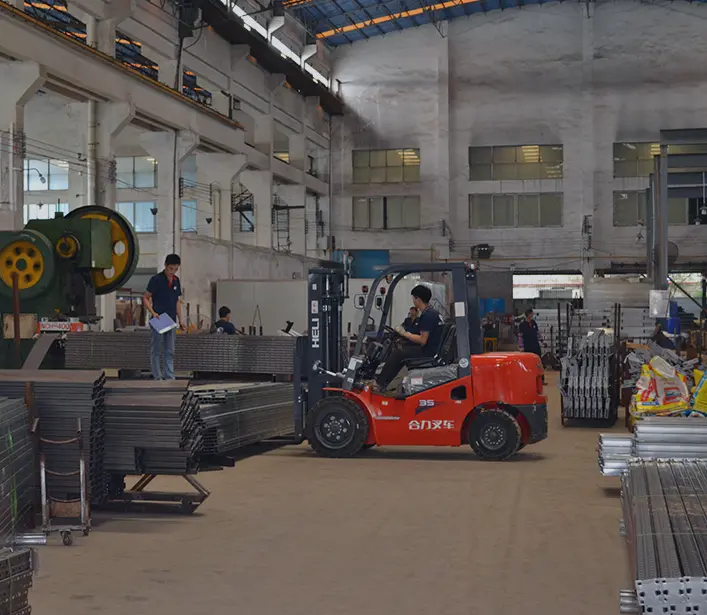
Our heavy industrial manufacturing complex in Guangzhou houses continuous automated roll-forming lines, 64-head computerized punch presses, and robotic welding stations ensuring millimeter-level tolerances across all upright and beam sections.
30,000 Tons Monthly Capacity
With an immense raw steel processing throughput of thirty thousand metric tons per month, we easily accommodate multi-thousand pallet location projects with predictable lead times of 2 to 4 weeks after design sign-off.
CE & ISO 9001:2015 Audited
Every production lot conforms to European CE Certification (No. 2435-CPR-8605159) and ISO 9001:2015 quality standards. Chemical mill certificates and mechanical yield tensile tests accompany every export shipping manifest.
Export Footprint: 120+ Countries
Having successfully delivered over 10,000 warehouse projects across North America, South America (Brazil, Chile, Peru, Colombia), Europe, Southeast Asia, and the Middle East, our logistics department optimizes container cube efficiency to keep ocean landed costs at minimums.
Comprehensive Sourcing FAQ: Procurement Guidelines for Gravity Flow Racks
Before issuing a Request for Quotation (RFQ) for gravity flow racking, procurement and logistics teams should evaluate these technical and logistical parameters:
1. How do you calculate the correct roller pitch, bed slope, and brake roller frequency for non-standard pallets?
The slope is calibrated between 3.0% and 3.5% (approx. 35mm drop per 1,000mm run). For ambient dry goods, brake rollers are inserted every two pallet positions. However, in cold room environments (-20°C to -30°C), grease viscosities change and pallet wood contracts; our engineering department conducts physical test slides in our mock-up testing bay to determine if additional braking rollers or a 3.8% slope are required.
2. What steel standards and surface pre-treatment methods are utilized to prevent corrosion?
Finished components are coated with lead-free, RoHS-compliant electrostatic thermoset epoxy-polyester powder, cured at 180°C to achieve a scratch-resistant coating thickness of 60 to 90 microns. For harsh outdoor environments or high-humidity coastal ports, hot-dip galvanization according to ISO 1461 is available.
3. How does the pallet separator work, and why is it mandatory on deep-lane pallet flow systems?
A mechanical pallet separator automatically locks the second pallet in line approximately 300mm behind the lead pallet. Only when the forklift operator has fully extracted the front pallet does the separator latch release via a mechanical trip arm or time-delay pneumatic valve, allowing the rear pallets to index forward safely one position.
4. Can your upright and lane engineering be certified against local seismic building codes?
In seismic zones, we upgrade the footplate footprint, increase anchor bolt diameter and embedment depth (utilizing Hilti chemical anchors), install heavier horizontal and diagonal frame bracing, and incorporate custom upright back-to-back seismic portal ties to prevent rack frame sway during ground acceleration events.
5. What documentation and quality assurance verification do you provide prior to ocean container loading?
- Steel raw material physical and chemical mill test certificates (MTC).
- Dry film thickness (DFT) paint adhesion cross-hatch test reports.
- High-resolution dimensional tolerance inspection sheets covering upright punch pitch, beam connector welding, and roller lane alignment.
- Full mock-up lane trial run video recordings demonstrating smooth pallet travel and separator operation with client-specified pallet weights.
- Computerized 3D container packing load maps indicating exact item weight distributions for optimal center-of-gravity balance inside 40ft High Cube (40HC) containers.
6. What is the typical lead time from CAD sign-off to port shipping, and how is installation handled overseas?
For overseas assembly, every component is stamped with an alpha-numeric item code matching comprehensive CAD isometric erection drawings and step-by-step PDF/video installation manuals. For large distribution centers exceeding 5,000 pallet positions, we can dispatch senior installation supervisors to guide your local labor crew on-site.
Request a Free 3D CAD Warehouse Layout & Gravity Flow Load Calculation
Send our senior engineering team your warehouse architectural floor plan, pallet dimensional envelope, forklift fleet model, and SKU daily rotation profile. We deliver a complete AutoCAD scheme, 3D rendering, and factory-direct pricing breakdown within 24 to 48 hours.