Heavy Duty Industrial Racks & Material Handling Systems
Explore high-density warehouse systems fabricated directly in our 30,000 m² Guangzhou production facility, fully tested for dynamic loads, high-bay stacking, and harsh operational cycles.
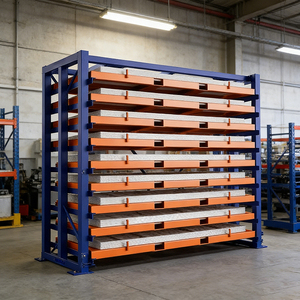
High-Capacity Vertical Sheet Metal Rack | Roll-Out System
100% mechanical roll-out trays engineered for high-density sheet metal handling. Minimizes plate scratches and eliminates crane bottleneck times.
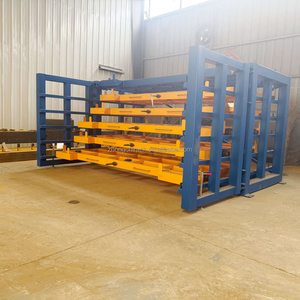
Heavy Duty Drawer Sheet Metal Storage Rack for Workshops
Independent crank or manual slide-out drawers designed for CNC laser-cutting stations. Drastically cuts raw metal changeover time in machine shops.
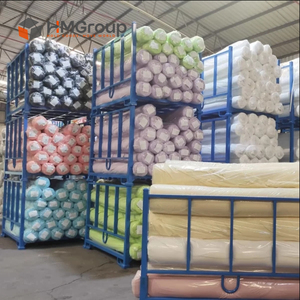
Vertical 4-6 High Stackable Powder-Coated Textile Racks
Movable post-pallet design for fabric roll, yarn, and rolled polymer storage. Modular stacking eliminates fixed aisle requirements for seasonal bulk.
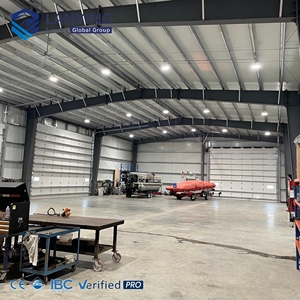
Industrial Steel Structure Warehouse for Logistics Centers
Clear-span pre-engineered structural steel portal framing integrated directly with high-bay pallet racking networks for mega distribution centers.
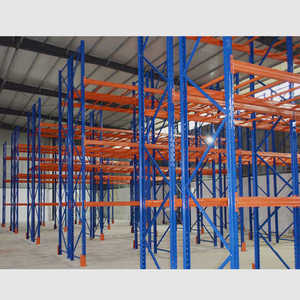
High-Density Double Deep Metal Warehouse Pallet Rack
Stores pallets two deep using pantograph reach trucks, balancing 50% aisle reduction with high SKU accessibility. Best for medium-rotation inventory.
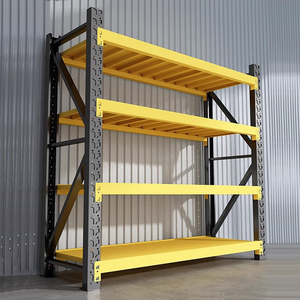
Movable Collapsible Heavy Duty Truck Tire Post Pallet
Tubular steel stackable stillage engineered specifically for commercial truck and passenger tires. Folds flat when empty to slash return freight costs.
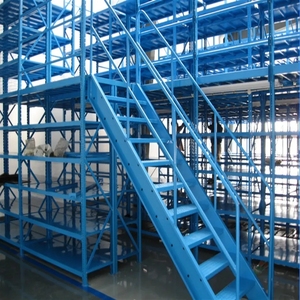
Rack-Supported Mezzanine Floor & Raised Platform
Doubles or triples usable facility square footage using heavy uprights as structural load-bearing columns. Fitted with steel decking, stairs, and gates.
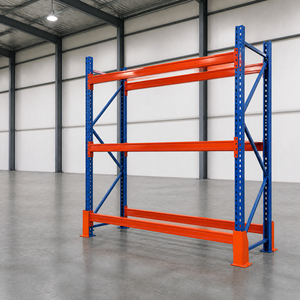
4000kg High-Density Pallet Racking with 3D Structural Layout
Ultra-heavy-duty cold-formed uprights engineered for massive industrial loads, stamping dies, and dense raw materials. Certified deflection limit < L/200.
Factory Direct Manufacturing Capability Since 2001
Operating a modernized 30,000 square meter industrial base, HEDA Shelves integrates continuous roll-forming lines, automated punching matrices, and zero-defect quality protocols for high-capacity warehouse builds.
Founded in 2001 with continuous B2B supply to logistics contractors.
High-volume automated roll-forming capacity ensures strict lead times.
Commissioned installations across South America, North America, and Europe.
In-house mechanical, structural, and international freight engineers.
Certified High-Tensile Steel Profiles
We source structural carbon steel directly from China's primary mills (Baosteel, Ansteel). Our standard framing employs Q235B and Q355B hot-rolled strip steel, cold-formed with uniform wall thickness and certified tensile strength up to 510 MPa, eliminating brittle failure risks in seismic environments.
Electrostatic Powder Finishing
Prior to coating, steel members undergo continuous 5-stage chemical pre-treatment: alkaline degreasing, ultrasonic water rinse, acid pickling, zinc phosphating, and deionized passivating. Electrostatic powder curing at 180°C–200°C produces a scratch-resistant 60–80μm barrier resisting salt spray tests over 500 hours.
Global Engineering Compliance
Our structural team incorporates international calculation standards into every drawing: ANSI MH16.1 (USA), EN 15512 (Europe), and AS 4084-2012 (Australia). For seismic hot zones across Chile, Peru, Colombia, and Mexico, upright frames, base plates, and anchoring are customized to local seismic coefficient codes.
Future Procurement & Technological Trends in Storage Racks
The global warehousing landscape is undergoing rapid transformation driven by land inflation, automated transport integration, and decarbonization mandates. B2B buyers must navigate these emerging structural trends to maximize ROI.
1. Convergence of Traditional Racking with AMR & Shuttles
Procurement is pivoting away from static selective layouts toward hybrid automated systems. Warehouses are deploying semi-automated 4-way Radio Shuttle carriers within high-density steel lanes and integrating Autonomous Mobile Robots (AMRs) for floor-level retrieval. Future-ready racks must feature tighter dimensional tolerances (±1.0mm) to avoid robotic optical sensor errors.
2. Seismic-Resilient Cold-Formed Steel Engineering
With industrial hubs expanding across tectonically active belts in South America (Chile, Peru) and the Pacific Rim, buyers demand structural finite element analysis (FEA) validating dynamic seismic response. Upright profiles now incorporate wider baseplates (up to 12mm thickness), twin anchor configurations, and ductile beam-to-column connector pins to absorb shock waves without catastrophic collapse.
3. Modular Reconfigurability & Container Yield
Ocean freight volatility has made container packing density a top procurement metric. Leading manufacturers design knockdown upright assemblies, bolt-free nested beams, and palletized modular components that maximize 40-foot High Cube (40HQ) container utilization up to 98% cubic volume, directly reducing the landed per-pallet storage cost.
Structural System Comparison Matrix
Direct engineering comparison across industrial racking configurations for CAPEX allocation and facility planning.
| Racking Topology | Aisle Width Req. | Floor Space Utilization | Pallet Selectivity | Inventory Rotation | Typical Cost Index |
|---|---|---|---|---|---|
| Standard Selective Racking | 3.0m – 3.8m (Counterbalance) | 40% – 50% | 100% Immediate | FIFO (First-In, First-Out) | Baseline ($) |
| Double Deep Pallet Racking | 3.0m – 3.4m (Reach Truck) | 60% – 65% | 50% (Pair Stored) | LIFO / FIFO Batches | Baseline + 18% |
| Drive-In / Drive-Through | Direct Truck Entry Bays | 70% – 80% | Low (Per Lane SKU) | Strict LIFO (Drive-In) | Baseline + 35% |
| Radio Shuttle Automation | Single Access Face Aisle | 80% – 88% | High (Per Channel) | Dynamic FIFO & LIFO | Baseline + 95% |
| Rack-Supported Mezzanine | Standard Pedestrian Aisles | Up to 200% Gain | 100% Hand Pick | Flexible Zone Picking | Area Dependent |
Frequently Asked Questions on Importing Racks from China
Technical guidance formulated by our Chief Structural Engineers to resolve critical questions during industrial bidding and international vendor vetting.
?How do you calculate structural safety factors for heavy loads?
Our structural design follows the RMI ANSI MH16.1 and EN 15512 specifications. We maintain a minimum safety factor between 1.50 and 1.67 under static dead and live loads. Beam deflection under full operational capacity is restricted to a maximum of L/200 (length divided by 200), preventing irreversible plastic deformation.
?What steel grades are used, and do you supply mill test certificates (MTC)?
We primarily utilize hot-rolled Q235B (yield strength ≥ 235 MPa) for uprights and beams, and Q355B (yield strength ≥ 355 MPa) for high-bay, seismic, or extreme tonnage projects. Every production run is accompanied by EN 10204 3.1 Mill Test Certificates verifying carbon, manganese, phosphorus composition, and elongation test records.
?How are racking finishes protected against high maritime humidity during shipping?
Ocean containers can experience high humidity cycles ("container rain"). In addition to electrostatic powder coating (tested to ASTM B117 salt spray standards), all uprights and beams are bundled with moisture-absorbing desiccant packs, wrapped in multi-layer water-resistant polyethylene film, and separated by corrugated corner guards.
?Can you adapt your structural design to Latin American seismic codes?
Yes. Our engineering department calculates dynamic lateral seismic forces based on specific ground acceleration values. We match baseplate footprints, bolt embedment depths, and cross-bracing to national codes including Chile (NCh 433 / NCh 2369), Peru (Norma E.030), and Colombia (NSR-10).
?What is the lead time for 10–50 full container loads (FCL)?
With an automated monthly production capability of 30,000 tons, standard roll-forming and powder-coating cycles for 10 to 20 FCL orders take between 18 to 25 business days from final 3D CAD approval. Phased batch deliveries can be scheduled to match warehouse floor slab curing schedules.
?What engineering parameters are required to generate a free 3D CAD layout?
We require: (1) Architectural CAD floor plan showing column grid and clear roof heights; (2) Pallet dimensions (W x D x H) including goods overhang; (3) Maximum weight per loaded pallet; (4) Forklift model, turning radius, and maximum reach height; and (5) Operational ambient temperature (dry vs cold storage).
Need a Certified 3D Warehouse CAD Layout & Static Load Calculation?
Connect directly with our senior structural engineering team in Guangzhou. Receive full technical drawings, seismic anchor calculations, and a transparent FOB/CIF factory quote within 24 hours.