Engineered Narrow & High-Density Warehouse Racking Systems
Manufactured by Guangzhou Heda Shelves Co., Ltd. from premium cold-rolled structural steel (Q235B / Q355B). Built to FEM 10.2.02, EN 15512, and RMI standards to maximize vertical cube utilization while keeping operating aisles down to 1.6 meters.
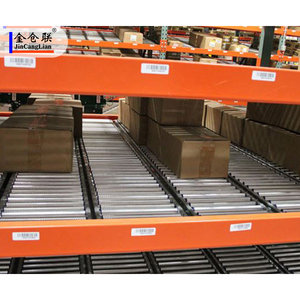
Warehouse Gravity Storage Racking Live Gravity Pallet Flow Rack Cooler Gravity Shelving and Racks
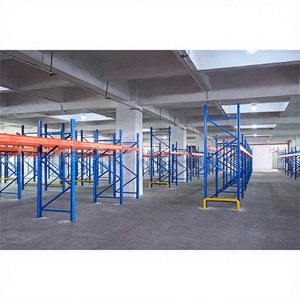
Heavy Duty Pallet Rack Sturdy Steel Construction Adjustable Shelving Perfect for Pallet Storage in Large Warehouses
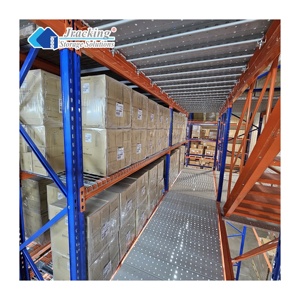
Premium Industrial Storage Stacking Shelves Racks Heavy Duty Steel EU Pallet Racking System for Logistics Warehouses
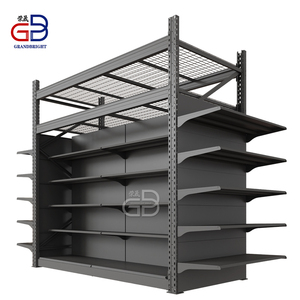
Custom Member Supermarket Shelves Heavy Duty Warehouse Rack and Supermarket Shelf Match Black Gondola Shelving
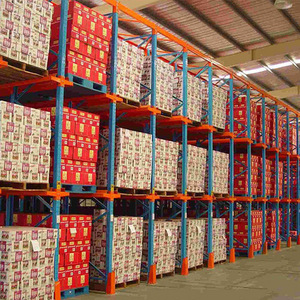
Heavy Duty Drive in Pallet Rack Warehouse High Density Storage Drive-in Rack for Bulk Goods
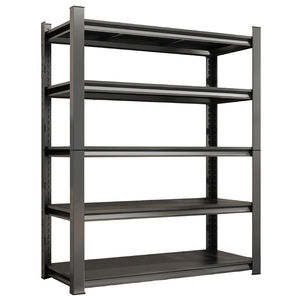
Adjustable Warehouse Storage Rack System Heavy Duty Pallet Rack Steel Shelf Steel Storage Rack for Logistics Storage
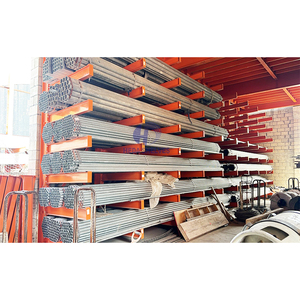
Maximum Storage Rack Heavy Duty Cantilever Racking System for Storing Long Pipes Lumber Adjustable Arms
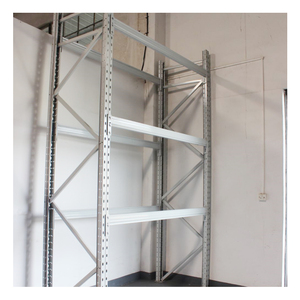
Heavy Duty Boltless Shelf Rack Adjustable Metal For Warehouse Storage Steel Low Price
The Structural Mechanics of Narrow Aisle & VNA Storage Systems
In modern high-throughput logistics, the financial overhead of real estate footprint expansion represents the single largest capital bottleneck. As industrial land values and cold storage conditioning costs escalate exponentially across international trade hubs, warehouse logistics directors are abandoning conventional Wide Aisle (WA) configurations—which consume up to 3.8 meters of dead clearance per aisle—in favor of engineered Very Narrow Aisle (VNA) and compact high-density narrow racking architectures.
Narrow racking systems engineered by Guangzhou Heda Shelves Co., Ltd. condense access corridors down to between 1,600 mm and 1,900 mm. By capturing floor area previously surrendered to turning radiuses and reallocating it to vertical storage bays up to 18 meters in height, enterprise operators increase net volumetric capacity by 45% to 65% within the identical building footprint, while maintaining 100% direct pallet selectivity.
Narrow aisle engineering is not merely an exercise in moving upright columns closer together. Operating high-mast turret trucks (man-up or man-down) at heights exceeding 12 meters within a 1.7-meter envelope requires strict adherence to European VDMA 15251 guidelines, DIN 18202 standards, or British Concrete Society TR34 (Superflat / DM2 classifications). At 15 meters vertical extension, a 2-millimeter floor deflection or upright column out-of-plumb tolerance of 1/1000 can cause the forklift mast head to deflect by over 100 millimeters, inducing catastrophic frame collision without precision guidance rails or inductive wire guidance.
Seismic Ductility
Engineered to international standards including Chilean NCh 433/2369, Peru E.030, and Eurocode 8. Heavy-duty baseplates and anchoring dissipate shear energy.
Cold-Rolled Profiles
High-tensile Q235B and Q355B structural coil steel. Continuously perforated upright omega sections with 50mm / 75mm beam adjustment pitches.
Phosphating Pre-Treatment
10-stage automated surface cleansing including immersion pickling and iron phosphating to eliminate oxidation prior to thermosetting epoxy powder application.
Wire Guidance Interfaces
Floor-level guide channels or inductive low-frequency wire slots engineered into bottom upright frames to eliminate steering error down 100-meter aisle runs.
Beam deflection limits are strictly governed by $L/200$ under full static working loads (e.g., a 2,700 mm beam carrying two 1,200 kg pallets will exhibit less than 13.5 mm central elastic deflection). Connectors utilize 4- or 5-claw interlocking hooks stamped from 3.5mm thick high-strength steel plate, anchored with safety locking pins that resist vertical accidental dislodgement forces exceeding 5 kN.
Architectural Comparison: Narrow Racking (VNA) vs. Alternative Industrial Systems
Procurement directors must calculate the Total Cost of Ownership (TCO) across initial civil construction, structural steel supply, handling equipment expenditures, and SKU retrieval velocities. The following engineering matrix clarifies operational parameters across standard warehouse models:
| System Architecture | Aisle Width (mm) | Floor Space Utilization | Height Potential | Selectivity | Equipment Type | Capital CapEx |
|---|---|---|---|---|---|---|
| HEDA VNA Narrow Racking | 1,600 – 1,900 | High (~60-70%) | Up to 18.0 m | 100% (Instant) | Man-Up Turret / Articulated | Moderate (Fast ROI) |
| Standard Selective Racking | 3,200 – 3,800 | Low (~35-40%) | Up to 11.5 m | 100% (Instant) | Standard Counterbalance / Reach | Low |
| Double-Deep Pallet Racking | 3,000 – 3,400 | Medium (~50-55%) | Up to 12.0 m | 50% (Delayed) | Pantograph Reach Truck | Moderate |
| Drive-In Storage Racking | Aisle-Free Blocks | Maximum (~75-85%) | Up to 10.0 m | FILO / Batch Only | Counterbalance / Reach Entry | Moderate |
| Radio Shuttle Automation | Dedicated Lanes | Maximum (~80-90%) | Up to 24.0 m | Batch / FIFO / LIFO | Automated Carrier + Forklift | High |
*Data normalized for standard 1200 x 1000 mm industrial pallets with 1,000 kg gross unit loads. Architectural civil engineering specifications verified via HEDA Shelves structural modeling software.
Future Procurement & Technological Trends in Narrow Racking Systems
As global supply chains digitize and warehouse real estate costs continue their upward trajectory, procurement strategies for narrow racking systems are undergoing fundamental structural transformations.
AMR & AGV Narrow Hybrid Integration
The boundary between traditional narrow aisle racking and automated storage is blurring. Warehouses are increasingly procuring VNA racking systems pre-engineered with floor track tolerances and optical reference tags for dual-use by human-operated turret trucks and Autonomous Mobile Robots (AMRs).
- Zero-clearance safety buffers
- Pre-drilled optical sensor mountings
Dynamic Structural Health Monitoring (SHM)
Large-scale high-bay distribution centers are requesting embedded piezoelectric strain gauges and 3-axis accelerometer sensor arrays within high-stress upright columns and bottom portal frames to detect forklift impact fatigue and seismic settling in real time.
- Instant notification of critical impacts
- Predictive maintenance scheduling
Low-Carbon Green Steel & Eco-Coatings
Global ESG directives are making carbon footprint accounting mandatory in international procurement tenders. HEDA Shelves utilizes scrap-recycled Electric Arc Furnace (EAF) coil steel and zero-VOC heavy-metal-free thermosetting powder coatings compliant with EU RoHS and REACH.
- Up to 40% embodied carbon reduction
- Fully recyclable structural components
Enterprise Engineering & Factory Capabilities (HEDA Shelves)
Headquartered in Guangzhou, China, Guangzhou Heda Shelves Co., Ltd. (founded in 2001) has evolved into one of the world's preeminent racking engineering and manufacturing powerhouses. Spanning a modern 30,000 m² automated manufacturing hub with an active monthly steel processing capacity of 30,000 metric tons, our facility integrates fully automated continuous cold roll-forming lines, computerized multi-axis CNC punching, and robotic laser welding systems.
Unlike trading intermediaries, HEDA Shelves manages the complete engineering chain: from finite element structural analysis (FEA) based on the client's site-specific ground geotechnical reports, through container load planning optimized to eliminate maritime damage across trans-oceanic shipping routes.
Raw Steel QC
Mill test certificates (MTC) verification; chemical composition & tensile testing for Q235B/Q355B coils.
Roll-Forming
Multi-station cold rolling creates rigid omega profiles with continuous structural web-stiffeners.
CNC Punching
Synchronized optical punching guarantees slot alignment accuracy across 12-meter upright lengths.
Pre-Treatment
Acid pickling, degreasing, rinse, and zinc-phosphating ensuring 1000-hour salt spray endurance.
Container Stuffing
Custom steel frame skids, moisture barriers, and shock strapping to maximize 40HC container cube.
All production processes comply with ISO 9001:2015 (No. 18624Q00169R0M) quality management protocols and European CE Certification (No. 2435-CPR-8605159), guaranteeing strict compliance for international engineering audits and municipal safety inspections.
Frequently Asked Questions: Narrow Racking Systems Procurement
Direct technical guidance from HEDA Shelves senior structural and project engineers addressing common challenges in cross-border warehouse design and execution.
What slab floor specifications are mandatory before installing VNA narrow racking?
VNA installations demand concrete slabs engineered to TR34 DM2 / Superflat or DIN 18202 Group 3 or 4 standards. Point load capacities must generally accommodate 80 kN to 160 kN concentrated loads per upright baseplate without settling. If the concrete exhibits minor undulations, HEDA Shelves provides calibrated steel shims (1.0 mm to 5.0 mm) along with heavy-duty chemical expansion anchor bolts to establish plumb tolerance across all axes.
Should our warehouse deploy mechanical guide rails or inductive wire guidance?
Mechanical guide rails (typically L100x75x8 mm steel angle or heavy inverted channels bolted to the slab) offer robust physical mast deflection barriers and require lower electronic maintenance, making them suitable for older slabs or heavy rough-handling environments. Inductive wire guidance cuts a narrow slot in the slab with an embedded signal frequency, enabling zero-trip hazard floor transitions, faster entry into the aisle, and minimal pallet bottom snagging.
How does HEDA Shelves engineer racking systems for high seismic risk zones?
In seismic regions across South America (Chile, Peru, Colombia) and the Pacific Rim, racking structures must withstand dynamic horizontal accelerations without brittle joint failure. HEDA Shelves conducts response spectrum modal analysis in accordance with Chilean NCh 2369, Eurocode 8, and RMI standards. We reinforce upright cross-sections from 90mm up to 140mm profiles, increase steel wall thickness to 2.5–3.0mm, integrate rear vertical X-bracing, and incorporate ductile seismic baseplates.
What is the standard production lead time and ocean containerization volume?
With a continuous output of 30,000 tons per month, standard narrow racking orders ranging from 5 to 20 full containers (40ft High Cube) are fabricated within 15 to 25 calendar days. Every load is packed with heavy-duty protective strapping, edge protectors, and numbered steel bundling pallets to prevent friction scratch damage in transit. Comprehensive packing lists detail exact piece counts matched to 3D installation blueprints.
How do narrow racking systems compare in cold storage environments?
Refrigerated and frozen cubic space costs up to 5 times more to operate than ambient warehouses. Narrow racking is frequently coupled with mobile bases or configured as narrow gravity flow / drive-in lanes to minimize conditioned volume. HEDA Shelves utilizes specialized low-temperature impact-resistant steel grades and specialized elastomeric powder formulations that prevent micro-cracking at temperatures down to -30°C.
What information is required to receive a full 3D CAD design and structural quote?
Our engineering design team requires: (1) Warehouse architectural drawings indicating clear height below joists, column grids, dock door locations, and fire exit doors; (2) Pallet specifications including overall dimensions (W x D x H), overhang, and maximum gross pallet weight; (3) Proposed forklift model specification sheet (turning radius and mast collapsed height); and (4) Site geographical location for seismic calculation.