Specialized Warehouse Storage Systems & Equipment
Designed for severe industrial duty cycles, extreme load distributions, and high-turnover intra-logistics facilities worldwide.
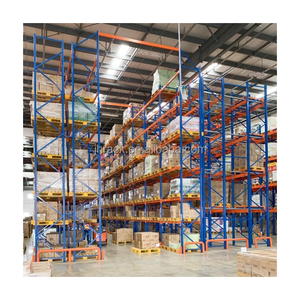

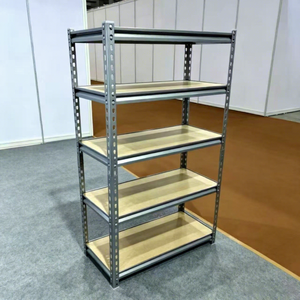
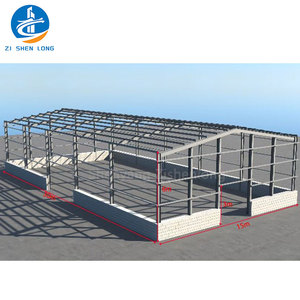
Industrial Strength, Certified Manufacturing & Global Reliability
Direct manufacturer capabilities ensuring traceable structural integrity from high-tensile hot rolled steel to automated powder curing lines.
High-Grade Q235B & Q355B Steel
We source raw structural coils exclusively from certified Tier-1 domestic mills (Baosteel, Shougang). Mill test certificates (MTC) accompany every production run verifying yield, elongation, and chemical purity.
Continuous CNC Roll-Forming
Multi-station automated rolling mills produce upright columns up to 12 meters in a single continuous piece, eliminating weld splice fatigue and maximizing mechanical moment capacity under seismic horizontal shear.
10-Stage Surface Pre-Treatment
Components undergo ultrasonic degreasing, zinc-phosphate conversion, and automated electrostatic thermosetting epoxy-polyester powder coating (60–90µm), validated by 500+ hour neutral salt spray testing (ASTM B117).
Seismic Engineering Validation
In-house structural calculation verified via ANSYS FEA software against localized seismic parameters: Chilean NCh 2369, Peruvian E.030, Colombian NSR-10, European EN 15512, and American ANSI/RMI MH16.1 specifications.
The Strategic Evolution of Global Pallet Racking Procurement
Modern distribution center design is experiencing an unprecedented structural transition. Where traditional logistics operations once viewed racking as passive steel shelving, supply chain executives now recognize static storage systems as the physical framework for dynamic automation. When procuring warehouse infrastructure from China—the world's foremost steel rolling and fabrication hub—international operators must weigh critical procurement indicators: Total Landed Cost (TLC), steel grade certification, localized seismic load resistance, and structural interoperability with Automated Guided Vehicles (AGVs) and Autonomous Mobile Robots (AMRs).
Direct sourcing from specialized Chinese manufacturers like HEDA Shelves eliminates multi-tier trading intermediaries, shrinking lead times while delivering tailor-made spatial engineering. Operating out of an advanced 30,000 m² facility with a 30,000-ton monthly throughput, our manufacturing protocols resolve the structural mismatches that frequently plague imported systems: mismatched forklift clearances, non-compliant deflection ratios (L/200 vs L/250), and thermal stress fractures in cold storage applications.
Key Technological Trends Shaping Pallet Racking Architecture
To maximize Return on Investment (ROI) and future-proof capital expenditures, procurement managers must evaluate several transformative innovations currently transforming heavy industrial storage:
- Automated High-Bay Integration (ASRS & Radio Shuttles): Conventional selective racking yields only 30–40% spatial utilization. Advanced four-way radio shuttle channels and automated crane systems allow continuous storage depths exceeding 40 meters, increasing cubic volumetric capacity up to 85% while cutting labor and lighting overheads.
- Parametric FEA Structural Modeling: Every upright profile, diagonal bracing pattern, and beam end-connector connection undergoes full-scale finite element analysis. This ensures upright frame columns withstand both static gravitational pallet loads (Dead & Live loads) and dynamic seismic lateral forces without plastic deformation.
- Anti-Corrosive Formulations for Severe Micro-Climates: High-humidity tropical logistics centers and sub-zero cold chains (-30°C) demand specialized surface protection. Hot-dip galvanized cold-formed steel and specialized zinc-rich polyester coatings prevent zinc peeling and stress corrosion cracking in aggressive atmospheres.
- Modular Mezzanines & Hybrid Storage Platforms: Combining heavy selective pallet racking on lower tiers with light-to-medium pick shelves and automated carton flow systems on elevated multi-tier mezzanine floors dramatically compresses order fulfillment cycles for omnichannel retail and automotive part distribution.
Comparative Technical Performance of Racking Systems
Benchmarking load parameters, space utilization factors, and operational rotation protocols.
| Racking Typology | Space Utilization | Access Methodology | Typical Unit Capacity | Best Operational Fit | Automation Readiness |
|---|---|---|---|---|---|
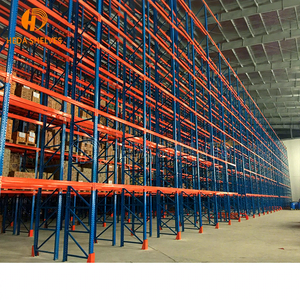
| Selective Pallet Racking | 40% - Moderate | 100% Direct Access (FIFO) | 1,000 – 4,000 kg / level | Multi-SKU Retail & 3PL Hubs | Manual / Reach Trucks / VNA |
| Radio Shuttle System | 85% - Maximum | Deep-Lane (FIFO or LIFO) | 500 – 2,000 kg / pallet | Cold Chain, Food & Beverage | Semi to Fully Automated |
| Drive-In / Drive-Through | 70% - High | Batch Access (LIFO / FIFO) | 1,000 – 2,000 kg / pallet | Uniform Bulk Raw Materials | Standard Counterbalance Forklifts |
| Push Back Pallet Rack | 75% - High | Nested Carts (2-6 Deep LIFO) | 1,000 – 1,500 kg / pallet | Medium SKU Buffer Storage | Standard Mast Reach Trucks |
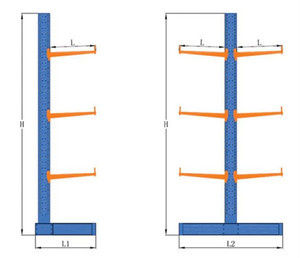
| Cantilever Racking | Dynamic Profile | Unobstructed Front (Direct) | 500 – 3,000 kg / arm | Pipes, Timber, Rebar & Coils | Side Loaders / Overhead Cranes |
| Rack-Supported Mezzanine | 90% - Vertical | Multi-Tier Floor Integration | 300 – 1,000 kg / m² | E-Commerce Picking & Spare Parts | Integrated Conveyors & Lifts |
Future Warehouse Procurement & Supply Chain Trends
Strategic variables every Director of Supply Chain and Plant Operations must navigate over the next decade.
TCO vs. Landed Freight Hedging
With shipping container spot rates fluctuating, procurement teams utilize optimized nesting beam design and bundled packaging to pack up to 26 metric tons into 40ft High Cube containers, minimizing the ocean freight surcharge per unit pallet location.
Pre-Engineered Building (PEB) Clad-Racks
The convergence of building structure and storage: Rack-clad systems use the racking uprights themselves as structural columns to support warehouse roof trusses and side wall claddings, slashing construction timelines by 35% and saving substantial structural steel tonnage.
Decarbonization & Low-VOC Powder Systems
Global environmental mandates (such as EU CBAM carbon tariffs) are forcing supply chains to demand verified carbon accounting. Our closed-loop powder recovery systems ensure zero heavy-metal discharges and lower carbon footprint profiles per ton of fabricated steel.
Frequently Asked Technical Questions
Direct engineering answers addressing real-world international logistics, standards, and structural compliance.
How do you verify structural steel grades and load capacity calculations? ▼
Can the racking be designed specifically for seismic-active regions? ▼
How is container packing optimized to prevent ocean transit damage and minimize shipping costs? ▼
What guarantees do you offer for high-humidity, coastal, or cold chain installations? ▼
What documentation and design assets are delivered prior to order placement? ▼
Transform Your Warehouse Volumetric Efficiency Today
Speak directly with our industrial engineering team. Request a complimentary customized 3D spatial layout, finite element structural calculation, and factory-direct pricing for your next warehouse storage facility.