Featured Industrial Storage Systems & Track-Mount Superstructures
High-precision cold-rolled steel racking modules, pallet carriages, and heavy-duty frame configurations engineered for standalone deployment or motorized tracked carriage integration.
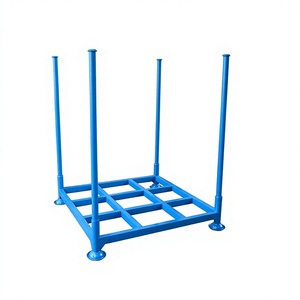
Stackable Heavy Duty Steel Roll Storage Rack with Corrosion for Fabric Carpet Leather Warehouse
- Capacity: 1,000 – 2,500 kg/tier
- Corrosion-resistant powder barrier
- Direct cradle stack modularity
Factory Price Wire Shelving & Display Rack Units 5-Layer 200kg 300kg 500kg Steel Material for Warehouse Storage
- 200kg – 500kg level payload
- High ventilation wire mesh
- Anti-dust retail & dry storage
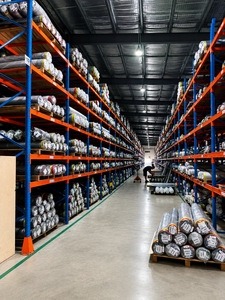
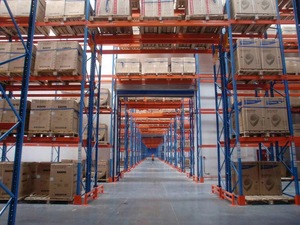
Multi Level Warehouse Racking Heavy Duty Rack System Stack Warehouse Storage Steel Pallet Racks for Sale
- Beam loads up to 4,500 kg/pair
- Mobile carriage track compatible
- Structural cold-rolled Q355B
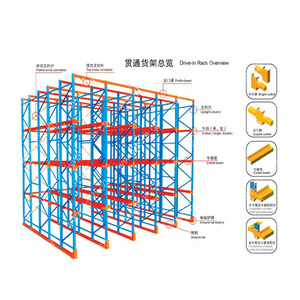
Customized Drive in Rack Steel Heavy Duty Pallet Rack Corrosion Protection Metal Storage Warehouse Rack
- LIFO / FILO bulk optimization
- Continuous guide rail channels
- Zero-aisle space compression
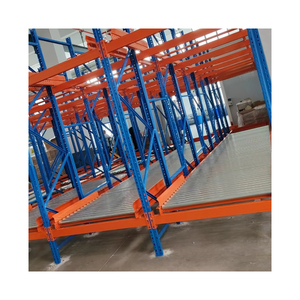
High Quality FIFO Gravity Carton Flow Rack Pallet Rack System Pallet Flow Racking Warehouse Equipment
- Automated gravity brake rollers
- Strict FIFO expiration turnover
- Rapid case picking efficiency
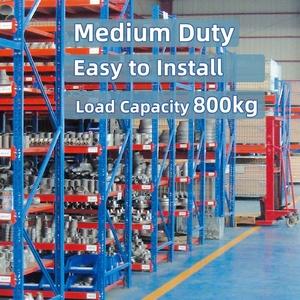
Medium Duty Adjustable Racking Bolted Shelving Wholesale 300-800kg Per Level Cold Rolled Steel for Industrial Storage System
- 300kg – 800kg load tier span
- 50mm pitch height adjustments
- Steel panel or plywood deck
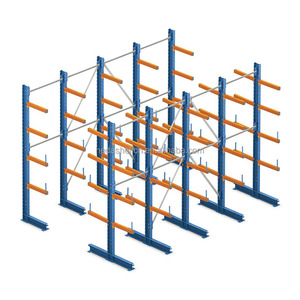
Heavy Duty Cantilever Racks Double Sided Galvanizing Warehouse Cantilever Rack Storage Rack for Lumber
- Pipe, timber & extrusion storage
- Hot-dip galvanized or epoxy finish
- Mobile carriage mobile-cantilever ready
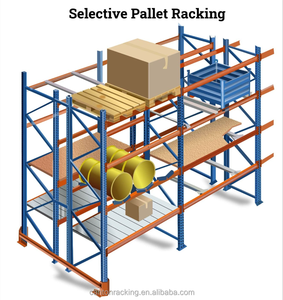
Double Deep Pallet Racking System Are Essential for Optimizing Warehouse Space and Providing Easy Access to Each Pallet
- 50% reduction in aisle count
- Deep-reach pantograph forklift setup
- Up to 3,000 kg pallet bays
Engineering Pallet Racks On Tracks (Mobile Racking Systems)
Pallet racks on tracks—internationally classified as Motorized Mobile Pallet Racking or Powered Mobile Racks—mount industrial heavy-duty racking superstructures onto electronically synchronized, wheel-driven steel carriages that travel on embedded structural floor tracks.
Sub-Floor Precision Guide Rails
The foundation of every tracked racking system is precision-milled structural steel rails anchored within recessed floor trenches or poured monolithically with the slab. We engineer double-flanged guide rails to absorb transverse lateral loads and flat running rails to distribute point loads up to 180 kN per wheel set, complying with DIN 18202 Class 2 floor tolerances.
Synchronized Carriage Powertrain
Each movable block is propelled by decentralized three-phase helical gear-motors connected via splined drive shafts directly to ductile iron wheels (QT500-7). Integrated Variable Frequency Drives (VFD) provide micro-smooth acceleration and S-curve deceleration profiles, eliminating pallet tipping, product chatter, and mechanical shock loads across 500-ton mobile trains.
Active Optoelectronic Safety Field
Compliance with EN 15095 safety architecture requires triple-tier redundancy: multi-beam safety light curtains at aisle portals, continuous full-length optical bumper sweeps along carriage bases, and manual emergency e-stops every 15 meters. Any beam interruption immediately trips zero-inertia dynamic motor brakes within 12 milliseconds.
In standard warehouse topologies, static selective pallet racking dedicates between 60% and 68% of total slab footprint purely to vehicular forklift access aisles. This geometric waste translates directly to inflated real estate leases, heightened property taxes, and enormous thermal losses in temperature-controlled cold facilities.
By placing racking blocks on engineered floor tracks, the warehouse collapses multiple fixed corridors into a single dynamic, on-demand working aisle. When a forklift operator requires access to Pallet Row 07, an RF wireless remote command, barcode scan, or automated Warehouse Management System (WMS) handshake commands the adjacent carriages to traverse smoothly along the floor tracks, opening a 3.2m to 4.5m reach-truck aisle in approximately 25 to 40 seconds.
Pallet Racks On Tracks vs. Alternative High-Density Systems
Compare mechanical efficiency, volumetric utilization, initial capital expenditure, and operational throughput characteristics against common industrial alternatives.
| System Architecture | Space Efficiency | SKU Selectivity | Cold Chain Energy Cost | Forklift Compatibility | CapEx / Pallet Position |
|---|---|---|---|---|---|
| Pallet Racks on Tracks (Mobile) | Highest (85–92%) | 100% Direct Access | Lowest (-40% Refrigeration) | Standard Reach / Counterbalance | Moderate (3–5 Year ROI) |
| Standard Selective Racking | Low (35–45%) | 100% Direct Access | High (Excessive Air Space) | Any Standard Forklift | Low Initial Cost |
| Drive-In Pallet Racking | High (65–75%) | Poor (FILO Only) | Moderate | Narrow Forklifts / Risk of Impact | Low to Moderate |
| Gravity Pallet Flow (FIFO) | High (70–80%) | Sequential FIFO Only | Moderate | Standard Counterbalance | High (Roller Beds & Brakes) |
| Automated AS/RS Crane System | Highest (90–95%) | 100% Computerized | Lowest (Dark Warehouse) | Automated Stacker Crane | Extremely High (Extended ROI) |
Thermal Optimization in Cold Chain Distribution
Refrigerated air follows thermodynamic convection paths. In cold storage facilities across Santiago, São Paulo, Hamburg, and Melbourne, up to 45% of total power utility bills stem from cooling cavernous empty forklift aisles. By compacting the pallet array into a continuous thermal cube on floor tracks, thermal loss rates plummet, shrinking the required chiller compressor tonnage and buffering stock during peak electrical grid tariff hours.
Seismic Damping & Dynamic Base Isolation
Operating in active seismic zones (e.g., Chile NCh 2369, Peru E.030, Colombia NSR-10, and US IBC/UBC) requires advanced mechanical decoupling. The friction profile between our ductile iron wheel carriages and machined track profiles provides horizontal mechanical damping. Upright base connections, high-tensile anchor studs, and specialized cross-aisle diagonal portal bracings ensure that ground accelerations do not trigger harmonic resonance or structural failure.
Future Procurement Trends for Track-Mounted Racking Systems
How intelligent automation, edge computing, smart logistics robotics, and carbon-neutral manufacturing are transforming mobile warehouse infrastructure.
1. Native Interoperability with Autonomous Mobile Robots (AMRs)
Traditional mobile racks depended exclusively on human-driven reach trucks. Next-generation procurement specifications demand PLC-to-WCS API interfaces capable of communicating directly with vision-guided AMRs and automated reach forklifts. As an AMR approaches a tracked block, ultra-wideband (UWB) beacons or Wi-Fi 6 mesh controllers automatically traverse the racks, ensuring zero queuing delay for robotic order fulfillment.
2. Predictive IoT Vibration & Wheel Load Diagnostics
Unplanned downtime inside high-throughput logistics hubs carries catastrophic financial penalties. Future-proof procurement mandates sensor-instrumented carriages equipped with multi-axis accelerometers and infrared bearing thermal monitors. Real-time edge diagnostics detect track misalignment, wheel bearing friction, or structural load imbalances before mechanical failure occurs.
3. Regenerative Braking & Microgrid Energy Harvesting
Decarbonization mandates across European, North American, and Asian industrial parks are redefining kinetic energy recovery. High-tonnage mobile carriages decelerating under heavy loads generate considerable back-EMF. Modern Variable Frequency Drives route this regenerative braking energy into localized capacitor banks or lithium-ion microgrids, powering ancillary LED aisle illumination and auxiliary PLCs.
4. Hybrid High-Tensile Metallurgy (Q355B & Zinc-Al-Mg Alloys)
Supply chain resilience prioritizes longer operational lifespans under corrosive environments (e.g., seafood cold stores, chemical fertilizer plants, coastal logistics terminals). Leading Chinese manufacturers are replacing conventional electro-spraying with continuous pre-galvanized Zinc-Aluminum-Magnesium (ZAM) sheet forming and Q355B micro-alloyed structural steels, offering 4x superior sacrificial galvanic corrosion resistance.
Critical Specifications for Sourcing Pallet Racks on Tracks
Avoid costly retrofitting and operational disputes by verifying these foundational structural, civil, and electrical prerequisites prior to manufacturing contract sign-off.
1. Civil Concrete Slab Tolerances
Tracked carriages demand rigorous sub-base stability. Slabs must support dynamic point wheel loads up to 150–200 kN with zero differential settling across the track span. Floor flatness must satisfy DIN 18202 Table 3, Line 4 or ASTM E1155 F-min 75 standards. Rail slots can be pre-cast with rebar cages or diamond-sawn into existing cured slabs using non-shrink epoxy grout (compressive strength ≥ 70 MPa).
2. Electrical Ingress & Drive Power
Power feeds to moving carriages operate via overhead suspended festoon cable trolleys, articulated cable-carrier chains (energy chains) located below track grade, or continuous busbar conductor rails. In low-temperature cold rooms (-25°C to -30°C), all power cabling must feature specialized silicone or polyurethane low-temp flexibility ratings, internal enclosure condensation heaters, and IP65-sealed PLC cabinets.
3. Pallet Integrity & Unit Loads
Because mobile racks compress into a continuous solid mass, pallet overhangs must be rigorously governed. Ensure unit pallet dimensioning conforms to GMA (48×40 in), Euro (1200×800 mm), or ISO standards. Pallet bottom boards, stringer deflection, and load wrap consistency must be vetted to prevent overhang interference that could breach safety light corridors during carriage movement.
Guangzhou HEDA Shelves Co., Ltd. — Your Trusted China Partner
Founded in 2001, Guangzhou Heda Shelves Co., Ltd. is a recognized pioneer and global manufacturing authority in automated warehouse storage solutions, heavy-duty pallet racking, and motorized track systems. Operating an expansive 30,000 m² state-of-the-art production base supported by more than 300 experienced engineers, structural designers, and fabrication technicians, we deliver end-to-end industrial racking solutions to over 120 nations worldwide.
Precision Roll-Forming Lines
Multi-stage continuous cold roll-forming with automated CNC hole punching ensures sub-millimeter upright column hole accuracy and beam interlocking precision.
Automated Surface Treatment
Full 9-stage immersion pickling, phosphating, and German Wagner electrostatic epoxy powder coating lines provide unmatched scratch and corrosion durability.
Global Engineering Support
From South America (Brazil, Chile, Peru, Colombia) to Europe, Australia, and Africa: comprehensive container loading optimization, numbered assembly drawings, and remote video guidance.
Frequently Asked Questions: Pallet Racks On Tracks
Detailed, engineer-reviewed answers addressing installation feasibility, safety controls, electrical power requirements, and lifecycle ROI.
Can motorized pallet racks on tracks be installed in existing warehouses without repouring the slab?
Yes. Retrofitting existing concrete slabs is a standard engineering procedure. If the warehouse slab possesses adequate compressive strength (typically ≥ 25–30 MPa) and sufficient thickness (≥ 180–200 mm), narrow trenches (approx. 100–120 mm wide by 80–100 mm deep) are diamond saw-cut into the concrete. Precision guide and flat running rails are positioned, leveled with leveling bolts to sub-millimeter tolerances (±1 mm over 10 meters), and embedded using high-strength non-shrink epoxy grout. Low-profile surface-mounted ramped track systems are also available for lightweight installations where trenching is prohibited.
How do pallet racks on tracks maintain safety when personnel or forklifts are inside an open aisle?
Safety is governed by rigorous international standards, notably EN 15095 (Power-operated mobile racking, shelving, and carousel safety). HEDA Shelves integrates a redundant three-tier fail-safe safety architecture:
1. Aisle Entry Light Curtains: Optical infrared safety barriers span the entrance of every aisle. Crossing the light curtain immediately inhibits carriage traversal.
2. Continuous Carriage Foot Sweeps: Optical photoelectric sensors or mechanical pressure bumpers run along the bottom exterior edge of every mobile base, halting motion within milliseconds if any foreign object or pallet corner is contacted.
3. Aisle Clearance Verification: Reset buttons require forklift operators to physically visually clear the aisle before closing or re-opening corridors.
What happens during a municipal electrical grid power outage? Can pallets still be accessed?
Our heavy-duty mobile carriages feature multiple power redundancy fail-safes. First, all carriage gearboxes include manual clutch release levers and mechanical hand-crank adapters, enabling personnel to manually open an aisle during prolonged emergencies. Second, most commercial distribution centers integrate an auxiliary diesel generator or an uninterrupted power supply (UPS) inverter system. Because our dual-drive helical motors use Variable Frequency Drives with soft-start low inrush current, a standard standby 15–30 kVA facility generator can easily drive mobile carriage trains sequentially.
What is the typical aisle opening speed and cycle time for a mobile racking block?
Our standard motorized carriages travel at a regulated horizontal speed of 4.0 to 5.0 meters per minute. To open a typical 3.5-meter wide forklift aisle, the adjacent mobile carriages take approximately 25 to 40 seconds. While the carriages are traversing, forklift operators staged in the main transfer aisle have sufficient time to retrieve or position the next pallet batch, resulting in virtually zero operational wait times under planned batch-picking or FIFO rotation schedules.
How do tracked mobile pallet racks perform in low-temperature cold rooms and blast freezers?
Mobile pallet racking delivers its highest return on investment (ROI) inside refrigerated and blast-freezer warehouses (-20°C to -35°C). Because chilled air volume is condensed by up to 50%, refrigeration compressor electricity usage drops by 35% to 40%. For cold chain operations, HEDA Shelves builds specialized low-temperature configurations featuring: synthetic food-grade low-temperature lubricants, internal silicone anti-condensation heating elements inside all electrical junction and PLC cabinets, IP65-sealed components, and low-temperature ductile ductile iron wheels engineered to prevent cold brittleness.
What is the structural steel grade and engineering design standard utilized?
We utilize prime cold-rolled structural steel, primarily Chinese standard Q355B (equivalent to European S355JR or ASTM A572 Grade 50) for critical uprights and load-bearing beams, which provides high yield strength (minimum yield 355 MPa) and superior elongation under dynamic seismic cycles. Engineering calculations conform strictly to European Rack Design Codes EN 15512, RMI (Rack Manufacturers Institute) guidelines in the United States, and local seismic standards such as Chile NCh 433/2369 and Peru E.030.
What documentation and technical information do you require to design a customized warehouse layout?
To produce a comprehensive, complimentary 3D CAD layout, load capacity calculation, and detailed quotation within 24 hours, our engineering department requests:
• Architectural CAD floor plan showing building columns, clear ceiling height, slab thickness, and door/dock locations.
• Pallet parameters: Dimensions (Width × Depth × Overall Height including goods) and maximum Gross Weight per pallet.
• Forklift specifications: Mast lift height, collapsed mast clearance, and turning radius (AST).
• Facility environment: Ambient temperature (dry warehouse vs. cold chain freezer) and geographic project site for seismic zone acceleration parameters.
Request Your Free 3D Layout & Factory-Direct Quotation
Connect directly with HEDA Shelves' Senior Structural Engineering Team. Send us your warehouse floor plan and SKU profile to receive a full Finite Element Analysis (FEA) structural calculation, 3D visualization, and detailed CIF/FOB pricing within 24 business hours.
Send an Inquiry