Engineered Heavy-Duty Slotted Pallet Racking Systems
In modern warehousing, logistics hubs, and cold-chain distribution centers, slotted pallet racking represents the foundational infrastructure for maximizing vertical cubic volume and ensuring structural safety under dynamic forklift loads. This technical whitepaper analyzes engineering standards, steel metallurgy, roll-forming precision, and global procurement trends for enterprise buyers.
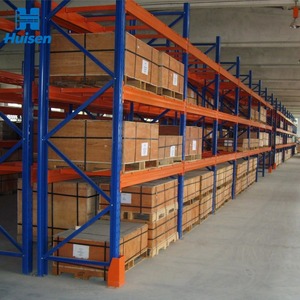
Industrial Heavy Duty Steel Pallet Racking System Multi-Level Rack
- Load Capacity: 1,000 - 4,500 kg/level
- Steel Grade: Q235B / Q355B Hot-Rolled
- Pitch Adjustment: 50mm / 75mm / 76.2mm
- Surface Finish: Electrostatic Powder Coat
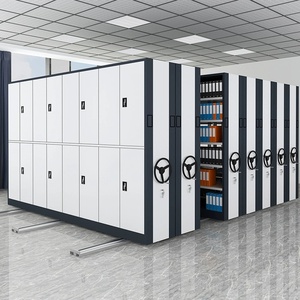
Space Saving Mobile Storage Rack High Density Compact Shelving
- Aisle Utilization: Up to 85% Floor Space
- Drive Mechanism: PLC Electric / Rail Guided
- Safety Controls: Photoelectric Sensors
- Application: Cold Storage & Pharma
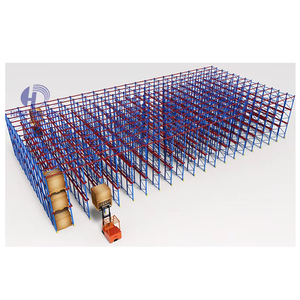
Heavy Duty Steel Drive-In Racking System Deep Lane Storage
- Pallet Depth: Up to 10 Pallets Deep
- Support Rails: One-Piece Roll-Formed
- Upright Section: 90x68 to 120x95 mm
- Optimized For: Bulk Uniform SKUs
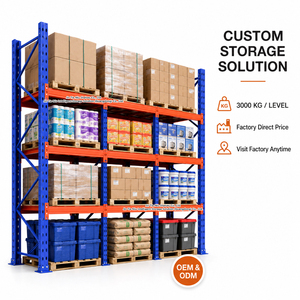
1000KG-3000KG Heavy Duty Selective Industrial Pallet Rack
- Beam Profile: Box Beam 80x50 - 160x50
- Connector: 3/4/5 Claw Hook Riveted
- Deflection Limit: L / 200 Max Loading
- Safety Lock: Spring-Loaded Pins
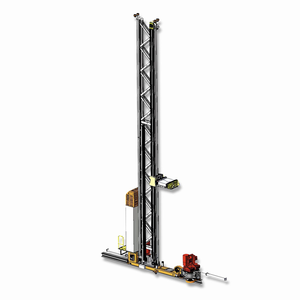
Pteris Miniload-Single Column ASRS Automated Shuttle Rack
- Operating Speed: Up to 240 m/min
- Vertical Height: Up to 30 Meters
- Positioning: Laser Telemetry ±1mm
- Software: WCS & WMS Compatible
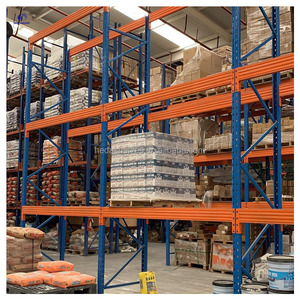
Commercial Warehouse Material Handling Racking Systems
- Frame Depths: 600mm to 1,500mm
- Decking Type: Wire Mesh / Steel / Timber
- Corrosion Proof: Pre-Galvanized Available
- Certification: ISO 9001, CE, AS4084
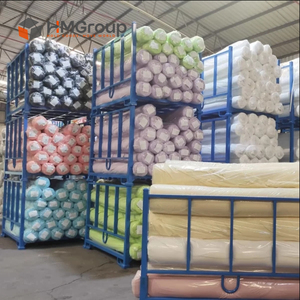
Vertical 4-6 High Portable Mild Steel Q235 Textile Storage Racks
- Stacking Height: 4 to 6 Units High
- Portability: Forklift 4-Way Entry
- Tare Weight: Reinforced Base Stamping
- Modular: Demountable Posts
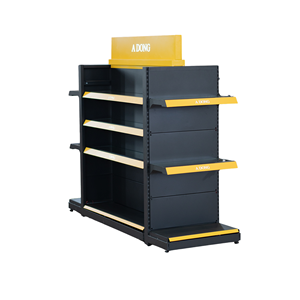
Vertical Glass Supermarket Shelves & Retail Display Stands
- Structure: Slotted Upright Column
- Shelving Option: Tempered Glass / Steel
- Back Panel: Perforated Pegboard / Flat
- OEM Capability: Custom RAL Colors & Wood
Mechanical Mechanics & Cold-Rolling Integrity of Slotted Uprights
Slotted pallet racking systems—frequently designated as adjustable teardrop or omega-slotted racking—rely on precision cold-formed open steel shapes punched with repeating diamond, teardrop, or trapezoidal patterns. The fundamental engineering challenge in slotted column design lies in the structural compromise between punching geometry (which enables boltless, rapid beam elevation adjustability) and residual column buckling resistance under axial compressive stress combined with bending moments.
Metallurgical Characteristics of Chinese Cold-Rolled Q235B vs. Q355B Steel
A primary failure point in non-compliant pallet racking imports is the procurement of sub-grade commercial commercial-quality hot-rolled coils lacking certified mechanical test reports (MTR). Top Chinese manufacturers like Guangzhou Heda Shelves utilize high-yield structural coiled strip steel sourced exclusively from tier-one steelmakers (such as Baosteel, Shougang, or Ansteel). The minimum yield strength ($f_y$) of Q235B is certified at 235 MPa with an elongation at break exceeding 26%, providing critical post-yield ductility during low-cycle seismic excitation. For high-bay, double-deep, or ASRS applications exceeding 12 meters in height, high-strength low-alloy Q355B steel ($f_y \ge 355 \text{ MPa}$) is roll-formed into 11-fold to 13-fold omega profiles, providing superior section modulus ($W_x, W_y$) without excessive self-weight.
| Structural Parameter | Standard Slotted Pallet Rack | High-Density Drive-In System | Automated Shuttle / ASRS Rack |
|---|---|---|---|
| Direct Pallet Selectivity | 100% Immediate Forklift Access | Low (Last-In, First-Out / LIFO) | High (Computer-Controlled WMS) |
| Upright Section Modulus | Omega Profile: 80x60 to 120x95 mm | Heavy Omega: 90x68 to 140x105 mm | Precision Omega: Up to 160x120 mm |
| Beam Connection Type | 3-4 Pin Integral Connector Hooks | Cantilever Top Support Brackets | Precision Bolted & Hook Hybrid |
| Deflection Limits ($L/d$) | $L / 200$ (Serviceability State) | $L / 250$ (To Prevent Rail Dislodgement) | $L / 350$ to $L / 500$ (Sensor Clearance) |
| Seismic Ductility Reduction ($R$) | $R = 4.0$ to $6.0$ (Semi-Rigid Moment Frame) | $R = 2.0$ to $3.5$ (Requires Top Bracing) | $R = 4.5$ to $6.5$ (Fully Braced High-Bay) |
| Floor Area Utilization | 35% - 45% (Wide Aisle Setup) | 65% - 75% (Eliminates Cross Aisles) | 80% - 90% (Maximum Vertical Cube) |
Continuous Roll-Forming Tolerances vs. Press-Braked Fabrications
Precision manufacturing defines pallet rack longevity. While tier-3 workshops utilize hydraulic press brakes with manual feed lines—introducing cumulative linear tolerances up to ±3.0mm over a 6-meter column—advanced Chinese export facilities employ continuous cold roll-forming lines featuring 18 to 26 progressive roller stations. High-speed CNC punching heads stamp slot configurations prior to forming at ambient temperature, ensuring cold work hardening is distributed uniformly across the profile bends. Pitch spacing consistency is maintained within ±0.5mm across the entire 12-meter continuous span, eliminating beam binding or forced pin alignment during on-site installation.
Future Sourcing & Procurement Trends for Industrial Racking
Procuring industrial racking from China has transformed from a pure material-arbitrage exercise into a strategic engineering partnership. International logistics directors, third-party logistics (3PL) executives, and cold-storage developers are shifting their procurement frameworks based on these critical market movements:
1. Seismic-Aware Finite Element Design
Global project sites across the Pacific Rim, the Andes, and Mediterranean basins enforce rigid seismic mandates (such as Chilean NCh 2369, Peruvian E.030, or American ASCE 7). Enterprise buyers now reject standard catalog capacities, requiring individualized FEA modeling that accounts for soil profile, spectral response acceleration ($S_s, S_1$), and live product interaction.
2. Container Freight Cube Optimization
With volatile maritime container shipping indices, slotted pallet rack designs must maximize 40ft High Cube (40HC) container packing coefficients. High-efficiency nested beam profiles, demountable bolted frame trusses, and engineered stacking bundles allow certified factories to pack over 26,000 kg and 62 cubic meters of product without damaging the finished powder coating.
3. Eco-Finishing & Low-VOC Pretreatments
European and North American sustainability audits now scrutinize upstream production emissions. Modern Tier-1 Chinese exporters have transitioned to automated multi-stage non-phosphate silane nanotechnology conversion coatings paired with heavy-metal-free, zero-VOC electrostatic powder curing, ensuring 1,000+ hour salt-spray compliance without environmental degradation.
The Evolution of Slotted Racking: From Angle Iron to Smart High-Bay Infrastructure
Industrial storage has undergone three generations of structural evolution. Understanding this historical progression helps procurement officers avoid obsolete inventory types:
First-Generation Bolted Angles (1970s–1980s): Characterized by punched slotted angle iron bolted manually with standard carbon fasteners. These early systems exhibited extreme joint flexibility, minimal rotational stiffness ($K_b$), and required labor-intensive installation. Loosening bolts under forklift vibration caused operational drift and frequent rack collapse.
Second-Generation Hook & Slot Teardrop (1990s–2010s): The development of continuous roll-formed columns featuring teardrop or keyhole slots paired with welded 3-claw or 4-claw beam end connectors. This iteration solved assembly speed and introduced mechanical safety locking pins. However, reliance on standard Q235 steel limited vertical heights to under 9 meters before column profiles became impractically thick.
Third-Generation Precision Omega & IoT-Integrated Systems (Present–2030): State-of-the-art slotted racking integrates high-yield micro-alloyed steel (Q355B and automotive-grade high-strength strip), complex 13-fold profile cross-sections, and laser-slotted tolerance control. Furthermore, modern installations incorporate strain-gauge sensors embedded directly into critical slotted uprights, feeding real-time deflection and impact-stress telemetry into warehouse maintenance software.
Guangzhou Heda Shelves: 25+ Years of Engineered Reliability
Founded in 2001, Guangzhou Heda Shelves Co., Ltd. has developed into an internationally certified powerhouse in heavy-duty logistics equipment manufacturing. Operating an expansive 30,000 square meter automated facility backed by over 300 experienced engineers, CNC technicians, and structural designers, Heda combines massive scale with strict quality assurance.
Direct Factory Integration
Zero intermediary margins. Complete control over slitting, roll-forming, automated robotic welding, electrostatic coating, and export shipping logistics directly from Guangzhou.
Full Structural Compliance
Certified to international quality and safety benchmarks including CE (EN 15512), ISO 9001:2015 quality management systems, AS4084 steel storage standards, and RoHS compliant finishes.
Complimentary 3D & FEA Layouts
Our engineering division prepares comprehensive AutoCAD floor plans, 3D realistic project renders, and finite element stress verification models within 24 hours of receiving site blueprints.
Harsh Climate Finishes
Engineered for high-humidity, marine, and cold-chain conditions. Choose between zinc electroplating, hot-dip galvanization (HDG), or heavy-duty powder coatings rated for -30°C walk-in freezers.
Frequently Asked Engineering & Sourcing Questions
Straight answers to complex technical, shipping, and installation questions encountered by international racking procurement officers.
What is the structural distinction between teardrop slots and 50mm/75mm diamond pitch slots? +
How does beam deflection affect safety and warehouse throughput? +
What parameters are required to calculate seismic base plates and chemical anchors? +
How are heavy-duty slotted racks protected against transit damage in container shipments? +
What is the typical production timeline for custom warehouse projects? +
Can Chinese slotted racking be manufactured to integrate with existing European or US racks? +
Request a Structural Engineering Quote & 3D Warehouse Layout
Send our senior engineering team your warehouse architectural floor plans, slab specifications, pallet load matrices, and forklift equipment models. Receive a complete AutoCAD storage layout, finite element stress analysis, and itemized factory-direct export quotation within 24 hours.