25+ Years
Structural Engineering & Global Export
30,000 t
Monthly In-House Production Capacity
CE & ISO
Rigorous Dual International Certifications
10,000+
Deployments Across 120+ Countries
High-Density Smart Warehousing & Engineered Systems
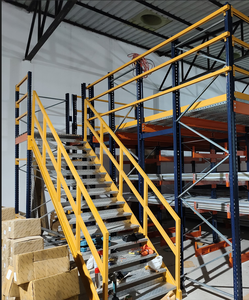
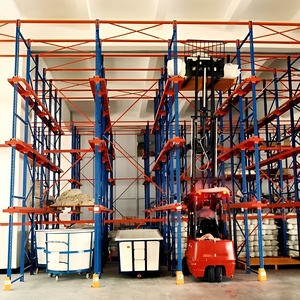
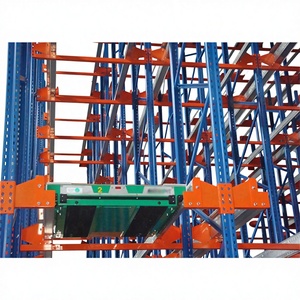
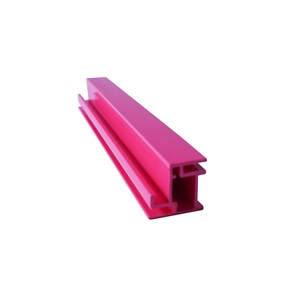
Explore field-proven heavy-duty profiles, autonomous shuttle systems, and space-multiplying mezzanine solutions fabricated direct from source manufacturing lines.
The Shift to Intelligent Warehousing: Technical Procurement Perspectives
Modern supply chain resilience relies heavily on high-density cubic optimization, automated logistics integration, and certified structural stability.
Global logistics infrastructures are navigating a structural paradigm shift. Escalating real estate valuations, regional land scarcity, and higher operational overhead have rendered single-deep selective racking inefficient for high-throughput distribution hubs. Modern tier-1 operators are transforming floor space from static cubic storage into high-velocity, automated throughput assets. China's top smart warehouse racking factories have evolved far beyond standard cold-rolled steel punchers; they function as precision manufacturing and industrial research partners driving automated material handling integrations globally.
Engineering Insight: True automation efficiency is governed by structural deflection tolerances under peak dynamic loads. In high-bay AS/RS and deep-lane shuttle installations, cumulative vertical beam deflections must maintain strict European FEM 10.2.02 or American RMI ANSI MH16.1 thresholds (commonly L/200 down to L/300) to eliminate autonomous carrier guidance faults.
Procurement Trends Defining 2026–2030 Infrastructure
High-Bay AS/RS & Shuttle Synergies
Purchasers are shifting capital expenditures toward four-way radio shuttle grids and automated stacker cranes. Integrating deep-lane shuttle systems cuts forklift lane counts by up to 60%, multiplying pallet positions inside identical facility envelopes while minimizing recurring labor dependency.
Seismic & Cold-Chain Resilience
With massive cold-chain expansion in agribusiness, seafood, and bio-pharmaceuticals, demand for specialized low-temperature profiles (tested to -30°C Charpy V-notch impact values) and customized base plates calculating local spectral acceleration values (e.g., Chilean NCh 2369, US IBC codes) has become standard.
Digital Twin & IoT Racking Safety
Procurement teams require embedded sensor channels and automated load monitoring brackets. Optical and strain-gauge sensors along primary upright columns detect structural overloads and forklift impact deflections in real-time before structural failure cascades occur.
Technological Evolutions in Steel Roll-Forming & Surface Treatment
High-Strength Micro-Alloyed Steels
Transitioning from standard Q235B steel to high-yield Q355B and specialized micro-alloyed cold-rolled coils allows thinner profiles with increased load ratings, directly decreasing shipping tonnage and lowering landed container costs per pallet location.
Continuous Multi-Stage Pre-Treatment
Modern powder finishing integrates automatic 7-stage acid pickling, silane passivation, and zirconium-based phosphating. This electrostatic curing standard easily guarantees over 500-1,000 hours of continuous salt-spray corrosion resistance under ASTM B117 standards.
Modular Rack-Clad Building Systems
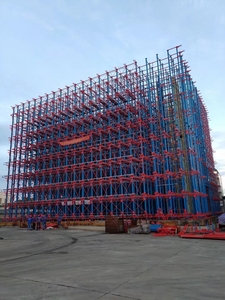
Rack-supported buildings (silo racking) bypass external structural steel skeletons. The racking framework directly anchors building facades and roof trusses, compressing warehouse delivery timelines by months and reducing civil engineering costs substantially.
Manufacturing Authority: Guangzhou HEDA Shelves Co., Ltd.
Established in 2001, Guangzhou Heda Shelves Co., Ltd. maintains a massive 30,000 m² advanced manufacturing facility staffed by 300+ precision engineers, designers, and certified roll-forming operators. Operating at an industrial scale of 30,000 metric tons monthly output, Heda controls the entire supply chain internally, ensuring zero subcontracting delays and meticulous QA oversight.
Global Dual Certifications
Full CE compliance (Certificate No. 2435-CPR-8605159) and certified ISO 9001:2015 quality management ensure all load calculations and fabrication match audit expectations worldwide.
Free 3D & CAD Layouts
Engineering consultations include dynamic 3D virtual layouts, structural stress simulations, and pallet lane calculations within 24 to 48 hours without engineering fees.
Automated CNC Punching
Integrated continuous cold-roll lines and 50-point precision CNC punching guarantee uniform upright slot pitch, eliminating joint stress concentration and speeding up field erection.
Containerization Planning
Proprietary software optimizes bundle packing for 40ft HQ ocean containers, preventing bundle friction damage and cutting ocean freight expenses per cubic metric ton.
Smart Warehouse Procurement: Frequently Asked Questions
Technical clarity regarding production scheduling, structural testing, international shipping, and seismic code engineering.
What specific structural parameters are needed to generate an engineered racking quotation?
To deliver an accurate FEM/RMI-compliant engineering proposal, we require: clear interior warehouse height (underside of joists/sprinklers), slab thickness and concrete compressive strength (psi/MPa), detailed pallet dimensions (Width × Depth × Height including load overhang), gross weight per pallet, pallet bottom runner orientation, forklift turn radius (Aisle Width Minimums), temperature operating range, and regional seismic zone coefficient (Ss, S1 values).
How does HEDA Shelves accommodate complex international seismic building codes?
Our structural design team uses finite element calculation software to model dead, live, and seismic drift loads according to international building codes, such as Chilean NCh 433/2369, Colombian NSR-10, European EN 16681, and US RMI MH16.1. We adjust upright cross-sections, increase gauge thickness, upgrade anchor bolt embedment depths, and add specialized spine and plan bracings to guarantee structural safety under ground accelerations.
What is your production lead time for utility and large-scale warehouse orders?
Backed by an internal monthly production run of 30,000 tons, standard pallet racking orders (2-5 containers) typically finish fabrication in 14-25 days post-drawing signoff. Multi-tier structural mezzanines or large radio shuttle high-bay installations are scheduled in phased production batches matching your project's general contracting timeline.
How are components protected against marine humidity and surface corrosion during transit?
Every profile undergoes continuous chemical pickling, surface phosphating, and automatic electrostatic polyester powder baking (60-80 microns dry film thickness). Components are packaged in wood-cradled strapped bundles with anti-abrasive corner wraps, desiccants, and water-resistant protective wrapping to withstand cross-ocean journeys and humid coastal storage.
Can on-site assembly supervision or layout support be provided overseas?
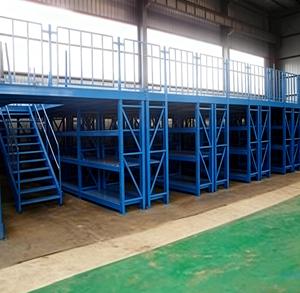
Yes. Every container load contains an itemized packing list with color-coded component numbering corresponding directly to 3D CAD step-by-step assembly diagrams. In addition to 24/7 video engineering support, senior installation supervisors can deploy directly to your facility site for complex high-bay mezzanines or automation shuttle alignments.
Design Your Smart Warehouse Storage System Today
Submit your warehouse floor plans to our engineering department. Our senior structural designers will provide an FEM-compliant CAD layout, load-capacity profile, and complete FOB/CIF price schedule within 24 hours.
Get a Quote