Certified Heavy-Duty Pallet Racking Portfolios
Explore our precision roll-formed racking architectures built with premium Q235B/Q355B structural steel. Engineered to handle unit pallet loads up to 4,500 kg per level with rigorous structural safety coefficients.
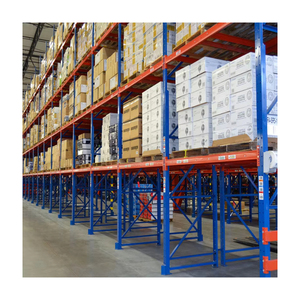
Heavy Duty Warehouse Selective Pallet Storage Rack
- Capacity: 1,000 - 4,500 kg / beam level
- Steel Grade: Certified Q235B Cold-Rolled
- 100% Immediate Selectivity for High SKUs
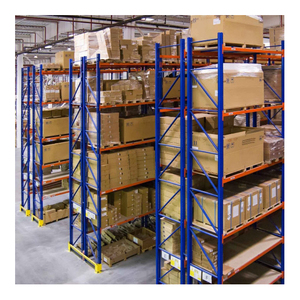
Peterack CE Certified Heavy Duty Selective System
- Certification: CE No. 2435-CPR-8605159
- Adjustable Upright Pitch: 50mm / 75mm
- Safety Locks & Epoxy-Polyester Finish
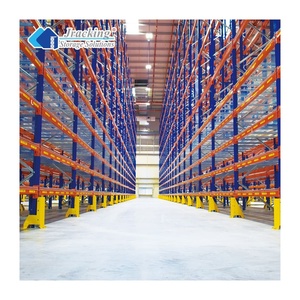
Jracking Euro Standard Vertical Heavy Duty Rack
- Design Code: EN 15512 & FEM 10.2.02
- High-Bay Clearance: Up to 15 Meters
- Heavy Upright Column Profiles (Omega)
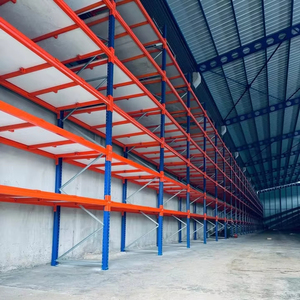
Peterack Multi-Tier Industrial Stacking Shelf
- Configuration: Modular Multi-Level Shelving
- Shelf Decks: Steel Panel / Wire Mesh / Wood
- Optimized for Manual Picking & Pallets
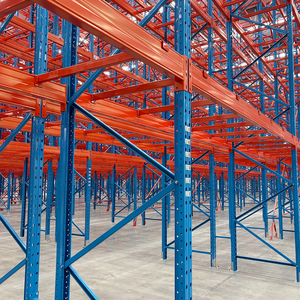
Cold Storage Modular Pallet Racking Solution
- Thermal Tolerance: Rated to -35°C Cold Room
- Finish: Hot-Dip Galvanized / Anti-Condensation
- Dense Footprint to Reduce Cubic Energy Cost
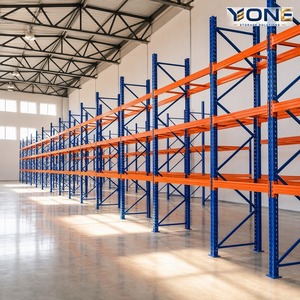
Industrial Q235B Selective Pallet Storage Rack
- Beam Profiles: 80-160mm Interlocking Box
- Corrosion Protection: Automatic Phosphating
- Custom Span Dimensions for Euro & US Pallets
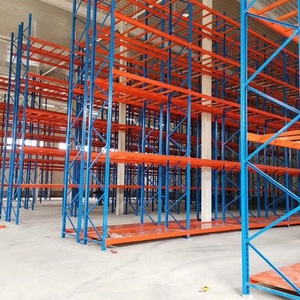
OEM / ODM Custom Engineered Heavy Pallet Rack
- Fully Customizable Column Gauge (1.8-3.0mm)
- Specialist Baseplates for Seismic Anchoring
- Tailored RAL Color Powder Coatings
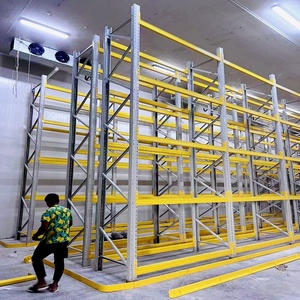
Very Narrow Aisle (VNA) High-Density System
- Aisle Width: Squeezed to 1.6 - 1.9 Meters
- Space Utilization: Increases Capacity by 45%
- Integrated Floor Guide Rails / Wire Guidance
Engineering Standards, Metallurgical Integrity & Seismic Design
A technical examination of industrial racking design parameters, load deflection thresholds, and global structural certification frameworks essential for engineering consultancies and procurement directors.
In modern high-velocity logistics infrastructure, selecting a pallet racking supplier transcends comparing steel weight and unit costs. Racking structures are static steel buildings operating under continuous dynamic loading, subjected to cyclic forklift impacts, seismic lateral accelerations, and environmental stresses. China has established itself as the world’s definitive hub for cold-formed steel manufacturing; however, navigating export-grade tier-1 manufacturers requires a rigorous understanding of structural engineering design codes, metallurgical yield strengths, and finite element verification.
A premier Chinese manufacturer and exporter maintains direct alignment with international codes rather than relying solely on domestic non-seismic specifications. Our engineering protocol models every frame against EN 15512:2020 (European Steel Static Storage Systems), FEM 10.2.02, the American Rack Manufacturers Institute standard ANSI MH16.1 (RMI), and Australian AS 4084-2023. By applying strict limit state design principles, the structural engineer accounts for second-order effects (P-Delta effects), frame sway stiffness, torsional column buckling, and beam-to-column semi-rigid connector stiffness.
Metallurgical Chemistry: Q235B vs. Q355B
We source prime cold-rolled coils from top-tier Chinese mills (Baosteel, Shougang). Yield strengths are verified: Q235B (≥ 235 MPa) for standard ambient racking and micro-alloyed high-strength Q355B (≥ 355 MPa) for high-bay uprights and deep-freeze facilities. Mechanical testing confirms elongation exceeding 20%, ensuring ductile response under shock loading.
Seismic Dissipation & Dynamic Modeling
For installations situated in global seismic hotspots (such as Chile's NCh 433/2369, Peru's E.030, and Colombia's NSR-10), calculations incorporate response spectrum analyses. Uprights receive oversized gusseted baseplates, dual-expansion mechanical chemical anchors, and engineered horizontal/vertical cross-bracing to prevent dynamic collapse.
Deflection Limits & Safety Factors
Every beam pair conforms to the strict deflection limit of L/200 under maximum design load (or L/300 in precision automated environments). Interlocking welded safety tabs and four-claw end-connectors prevent beam dislodgement under abrupt upward forklift snagging forces exceeding 5 kN.
Warehouse Storage Systems: Architectural Comparison
Balancing volumetric efficiency, direct pallet selectivity, and operational throughput. Use this engineering trade-off matrix to determine the optimal configuration for your distribution facility.
| Racking Architecture | Space Utilization | Selectivity Level | Forklift Compatibility | Rotation Strategy | Structural Complexity |
|---|---|---|---|---|---|
| Selective Pallet Racking | Moderate (40%) | 100% Immediate | Counterbalance / Reach Truck | FIFO / LIFO Flexible | Standard (Low CAPEX) |
| Very Narrow Aisle (VNA) | High (65%) | 100% Immediate | Turret Truck / Order Picker | FIFO Strict | Requires Guide Rails & Flat Slab |
| Drive-In / Drive-Through | Ultra-High (75%) | Low (Batch SKU) | Standard Counterbalance | LIFO (Drive-In) / FIFO | High Column Protection Demanded |
| Radio Shuttle System | Maximum (85%) | Channel Selective | Standard Forklift (Outside Lane) | Semi-Automated FIFO/LIFO | Integrated Electronic Shuttles |
| Push-Back Racking | High (70%) | Medium (By Lane) | Standard Reach Truck | LIFO via Nested Carts | Inclined Rail Gravity Tolerances |
| AS/RS High-Bay Structure | Extreme (>90%) | 100% Automated | Stacker Cranes / Shuttles | Automated WMS Driven | Millimeter-Tolerance Fabrication |
Modern mega-hubs rarely rely on a single system. In an omnichannel FMCG warehouse, an optimized layout deploys Selective Racking or VNA in the front bays for fast pick operations with extreme SKU variations, while utilizing Radio Shuttle or Deep Drive-In lanes in the rear for reserve bulk pallets. For cold storage operations where power consumption is directly proportional to air volume, semi-automated radio shuttle systems drop refrigeration electrical costs per pallet position by up to 40% compared to broad-aisle selective installations.
Emerging Procurement Trends & Next-Gen Storage Technology
Navigating the transformation from static metal shelving to autonomous, digitally monitored, and low-carbon warehouse structural systems.
IoT Structural Health Monitoring (SHM)
The integration of optical fiber sensors and wireless tri-axial strain gauges within critical upright base connections is becoming standard in critical logistics hubs. Racking systems now stream real-time deflection and impact data to WMS dashboards, flagging micro-fractures and accidental forklift collisions long before mechanical failure occurs.
AMR & AGV Geometric Compatibility
Forklift-free automated warehouses demand tighter dimensional tolerances (±1.0mm over 12-meter heights). Next-generation upright columns feature custom continuous punch profiles tailored for docking Autonomous Mobile Robots (AMRs), robotic reach trucks, and high-speed vertical reciprocating conveyors (VRC).
Decarbonization & Green Steel Mandates
Multinational 3PLs and corporate procurement policies now prioritize Low-Carbon Lifecycle steel (Scope 1, 2, and 3 accounting). Chinese tier-1 fabricators are transitioning to Electric Arc Furnace (EAF) steel billets powered by renewable energy, coupled with non-toxic, TGIC-free electrostatic powder coatings that eliminate VOC discharge.
Another major trend is the widespread adoption of Total Cost of Ownership (TCO) evaluation models over baseline initial CAPEX. Procurement leaders have recognized that a low initial rack purchase price is quickly erased if the steel components deform under sub-standard column gauges, require constant beam replacement due to poor end-connector welding, or rust prematurely in humid oceanic environments. Selecting heavy-duty Q235B roll-formed steel with certified multi-stage chemical pretreatment delivers a maintenance-free lifespan exceeding 20 years.
10-Stage Precision Manufacturing & Quality Control
Every component manufactured in our Guangzhou production facility passes rigorous metallurgical, robotic, and chemical surface protection protocols before containerization.
Raw Steel Verification
Spectrometric chemical analysis and tensile yield testing of every incoming hot-rolled and cold-rolled steel batch to ensure conformity to certified standards.
CNC Slitting & Uncoiling
High-speed slitting lines cut wide master coils into exact ribbon widths with laser-guided edge trimming to prevent edge micro-tears during roll-forming.
Continuous Punching
Multi-ton automatic mechanical punch presses punch tear-drop or 50mm/75mm diamond pitch patterns with center-distance tolerance kept strictly within ±0.1mm.
Multi-Roll Cold Forming
Upright columns pass through up to 24 progressive roll-forming stations, creating engineered multi-flange Omega profiles for exceptional moment resistance.
Box Beam Interlock Welding
Two complementary C-profiles are interlocked and welded continuously via dual-wire robotic CO2 submerged arc welders, creating torsion-resistant tubular beams.
Connector Robot Welding
Multi-axis robotic arms weld heavy stamped end-connectors to beam bodies, ensuring continuous weld penetration and zero cold-lap defects.
Chemical Pre-Treatment
Components undergo an automated multi-stage wash: alkaline degreasing, clean water rinse, acid pickling, surface conditioning, and zinc phosphating.
Electrostatic Powder Coat
Automated Swiss Gema reciprocator spray booths apply epoxy-polyester powder uniformly, creating an 80-120μm durable protective coating.
Curing & Cross-Linking
A 200-meter curing oven bakes components at an even 180°C - 200°C for 25 minutes, achieving optimal film hardness (≥2H) and impact resistance (≥50 kg·cm).
Export Load Packaging
Finished goods are bundled with steel strapping, corrugated cardboard protectors, and waterproof stretch-wrapping, optimized for damage-free FCL maritime transport.
Why Global Importers Partner with Us
Combining immense manufacturing scale with specialized engineering consultation to de-risk high-capital international warehouse projects.
25+ Years of Dedicated Expertise
Established in 2001, we operate an advanced 30,000 m² production complex staffed by over 300 technical specialists, delivering complete warehouse installations worldwide without middleman markups.
Audited International Certifications
Full CE certification compliance under Certificate No. 2435-CPR-8605159, coupled with ISO 9001:2015 quality assurance protocols. Every project file includes traceable mill certificates and third-party inspection reports.
Free 24-Hour 3D CAD & BIM Layout
Our in-house structural engineering department generates full 3D CAD visualizations, forklift corridor clearance models, and structural load calculations within 24 hours of receiving site floor plans.
Seismic Site-Specific Engineering
We tailor frame column gauges, footplate surface areas, and anchor bolt diameters to project-specific geotechnical parameters, meeting stringent building codes across South America, North America, and Europe.
Landed-Cost FCL Load Optimization
Custom loading algorithms nest beams and uprights efficiently inside 40ft High Cube containers, increasing volume utilization by up to 22% and reducing per-pallet maritime shipping costs significantly.
Turnkey Installation Supervision
Every export shipment is backed by step-by-step CAD isometric manuals, component numbering tags, remote high-definition video guidance, and available on-site supervisor dispatch for complex mezzanine and AS/RS builds.
Frequently Asked Questions by Industrial Buyers
Direct technical answers regarding structural safety codes, export logistics, surface finishing, and on-site engineering verification.
Ready to Optimize Your Warehouse Capacity?
Submit your architectural layout or pallet specifications today. Our senior structural storage engineers will review your operational requirements and deliver a free 3D CAD proposal, load calculations, and competitive factory-direct pricing within 24 hours.