Featured Warehouse Racking & Industrial Storage Assemblies
From structural heavy-duty cantilever racks engineered for continuous lateral loading to precision automated shuttle high-bays, explore our factory-direct industrial installations certified to EN 15512, AS4084, and RMI standards.
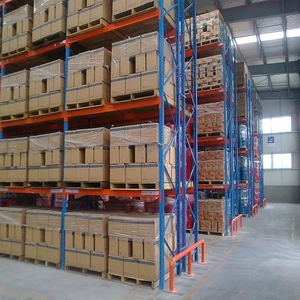
Heavy Duty 5-Layer High-Capacity Drive-In Selective Pallet Rack Adjustable Steel Durable Metal Anti-Rust ISO
Feature: Multi-layer adjustable beam connector with anti-rust phosphating.
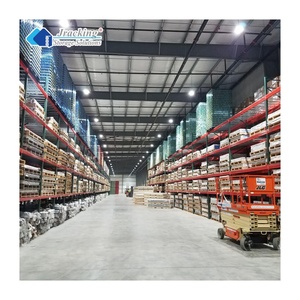
Jracking US Standard Steel Warehouse Storage Racks In Stocks Heavy Duty Teardrop Pallet Racking System
Application: Fast boltless configuration, direct compatibility with North American bays.
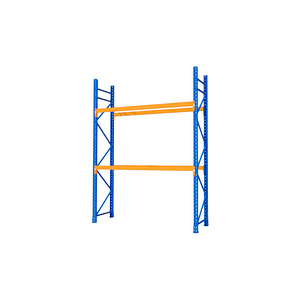
Light Duty Wire Shelving Standard High Quality Storage Rack System Use Steel Racks for Warehouse
Ventilation: Open-mesh air flow, fire-sprinkler penetration compliant.
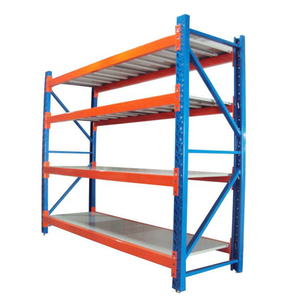
Heda Manufacture Factory Heavy Duty Industrial Warehouse Storage Rack Shelf Steel Racking System for Stacking
Design: High-yield box beams with mechanical 3/4-prong connector clips.
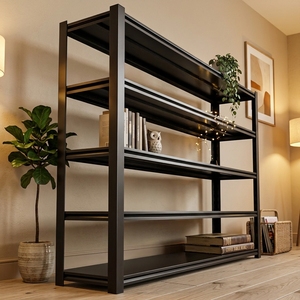
Multi Layer Steel Storage Shelf Boltless Assembly Metal Shelving Rack for Garage Home Kitchen Furniture
Payload: 150–350 kg UDL per tier, rapid knock-down packaging for low freight.
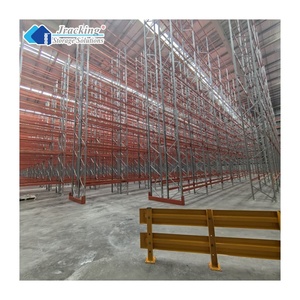
Jracking Heavy Duty Steel Warehouse Storage Rack System Customized AU Standard Pallet Racking For Factory Workshops
Safety Factor: High torsional resistance uprights optimized for Australian logistics.
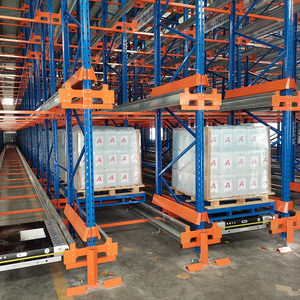
Automatic Warehouse Mobile Storage Heavy Duty Pallet Shuttle Racking Mobile Pallet Racking Systems
Density: High-density deep-lane storage with automated battery-powered carriers.
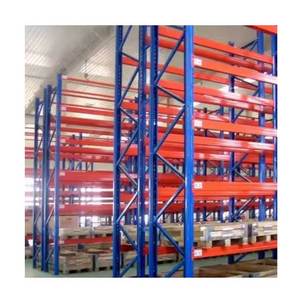
Industrial Heavy Duty Racks Pallet Racks Heavy Duty Warehouse Pallet Racking Manufacturing Companies OEM
Service: Direct China factory supply, customized column punches and beam tooling.
Structural Mechanics of Cantilever Storage Systems for Irregular & Long Loads
Unlike standard selective pallet racks restricted by front vertical uprights, cantilever racking is engineered specifically to eliminate front column obstructions. This whitepaper analyzes column moment distribution, arm deflection mechanics, and metallurgical selection for industrial procurement teams.
In modern industrial logistics, the management of non-palletized, elongated, and geometrically awkward profiles—such as structural steel tubes, PVC conduit pipes, aluminum extrusions, timber packs, engineered lumber, and sheet metals—presents unique mechanical challenges. Conventional front-column selective racking creates rigid bay boundaries that result in unacceptable volumetric dead space and severe risk of collision during side-loading operations. Industrial cantilever racking systems resolve this spatial bottleneck by anchoring horizontal cantilevered arms onto rigid central or perimeter vertical masts.
Crucial Structural Principle: The load on a cantilever arm induces an eccentricity-driven overturning moment \( M = \sum (P_i \times L_i) \) transmitted directly through the arm-to-column connector into the vertical mast, which is anchored as a vertical cantilever beam to the reinforced concrete floor slab. Calculating this moment connection requires rigorous adherence to international structural codes, specifically EN 1993-1-1 (Eurocode 3), RMI MH16.3, and AS4084.
1. Roll-Formed vs. Hot-Rolled Structural I-Beam Cantilever: Comparative Material Mechanics
When selecting a cantilever racking manufacturer from China, overseas procurement directors frequently encounter two fundamental manufacturing topologies: cold roll-formed sheet steel profiles and hot-rolled structural steel profiles (universal beams / I-sections). Understanding their physical yield points, torsional rigidity, and stress dispersion factors is critical for balancing safety factor targets against the landed cost per ton.
| Engineering Attribute | Roll-Formed Cantilever (C-Channel / Omega) | Hot-Rolled Structural I-Beam Cantilever (IPE / HEA / WF) |
|---|---|---|
| Steel Grade & Yield Strength | Q235B Cold-Coiled Steel (\( f_y \approx 235 \text{ MPa} \)) | Q355B (equivalent to S355JR / ASTM A572 Gr. 50, \( f_y \approx 355 \text{ MPa} \)) |
| Payload Profile | Light-to-Medium Duty: 250 kg to 800 kg per arm | Heavy-to-Extra-Heavy Duty: 1,000 kg to 3,500+ kg per arm |
| Impact & Torsional Resilience | Moderate; prone to local web buckling under heavy forklift collision | Superior; high moment of inertia (\( I_x, I_y \)) resisting dynamic side-impact forces |
| Arm-to-Mast Connection | Mechanical wedge hooks or shear pins with safety locking pins | High-strength Grade 8.8 / 10.9 structural bolts or heavy hinge pins |
| Deflection Limits (Arm) | Elastic limit controlled to \( \delta \le L / 200 \) under uniform load | Rigid control up to \( \delta \le L / 250 \) to \( L / 300 \) based on FEM 10.2.09 |
| Optimal Logistics Application | Retail home centers, conduit pipes, retail packaging, light lumber | Heavy steel coil storage, rebar bundles, structural tubing, heavy naval machinery |
2. Deflection Tolerance, Load Distribution & Pin-Hinged Safety Architecture
A frequent root cause of structural failure in long-span material handling is the assumption of a purely Uniformly Distributed Load (UDL). In practical warehouse environments, operators occasionally position uneven point loads or set bundles down off-center. China's top tier cantilever factories deploy specific mechanical safeguards against this vulnerability:
Articulated Pin-Joint Connectors vs. Rigid Bolted Joints: While rigid bolted arm brackets provide zero-play connectivity, accidental vertical collisions from rising forklift carriages can transmit massive uplifting forces into the main column web, causing progressive tearing of the flange. Premier Chinese exporters utilize pivot pin connections. When a forklift carriage inadvertently strikes the arm from below, the arm swings freely upward without transferring catastrophic shear stress to the vertical mast, settling back into place under gravity once cleared.
Calculated Tip Pre-Cambrage: Under working payload, every cantilever arm naturally deflects downward. To prevent goods from sliding off toward forklift travel aisles, our engineering department fabricates cantilever arms with an engineered upward camber (typically 1° to 2.5°). Under maximum rated payload, the arm deflects downward to absolute horizontal, preserving horizontal clearances and preventing load roll-off.
Global Procurement Trends Reshaping Cantilever Racking Investments
Industrial supply chain directors are upgrading from static storage toward dynamic, space-optimized, and sustainable storage frameworks. These key procurement trends govern capital expenditure through 2030.
1. Pre-Engineered Rack-Clad Building (RCB) Systems
Global warehouse real estate premiums have catalyzed the adoption of rack-clad cantilever structures. Rather than constructing a standalone steel portal warehouse and assembling racks inside, the heavy-duty cantilever columns serve as the primary structural frame supporting the roof purlins, side wall cladding, and wind bracing. This reduces civil engineering expenses by up to 32% and slashes construction lead times.
2. Total Landed Cost (TLC) Optimization
Sophisticated buyers look beyond ex-factory (EXW) rates to evaluate landed cost efficiency. Leading Chinese manufacturers now optimize modular nesting ratios. By engineering detachable column-to-base flange connections and removable arm stoppers, shipping container cubic volume utilization increases from 65% to nearly 94%, sharply mitigating per-ton ocean freight volatility across transatlantic and transpacific trade lanes.
3. Dual-Spec Galvanized & Hybrid Outdoor Sourcing
Outdoor lumber yards, portside piping depots, and coastal distribution hubs require aggressive corrosion resistance against C4/C5 marine environments. Procuring hot-dip galvanized cantilever components according to ISO 1461 (minimum 75–85 μm zinc layer) or thermoset architectural outdoor powder coatings ensures 25-year service life without maintenance-driven repainting downtime.
4. Rigorous Seismic & Geotechnical Engineering
Tender specifications across seismic active markets (e.g., Chile, Peru, New Zealand, California, Japan) mandate project-specific structural simulations. Buyers now demand certified engineering packages detailing soil-structure interaction, base plate anchor pull-out stresses, and column drift calculations that adhere strictly to local standards such as NCh 2369, Eurocode 8, or ASCE 7-22.
Technology Horizons: Automation & Digital Twin Cantilever Warehousing
The storage of long goods is crossing the threshold from traditional forklift handling to lights-out automated warehousing. Discover the innovations engineered in our advanced fabrication lines.
AS/RS Cantilever Stacker Cranes & Satellite Systems
Eliminating aisle human error, high-bay automated cantilever racking systems reaching 24+ meters in vertical height now operate with specialized bi-directional or telescopic fork stacker cranes. Integrating WCS (Warehouse Control Systems) with rack structures enables continuous 24/7 handling of bar cassettes with zero impact risks on the cantilever arms.
Mobile Powered Cantilever Bases (Density Optimization)
By mounting heavy-duty structural cantilever uprights on electrically driven floor-embedded tracks, multiple fixed access aisles are consolidated into a single floating aisle. This mobile cantilever configuration recovers up to 80% of floor surface area, creating extraordinary ROI in temperature-controlled spaces or premium urban industrial real estate.
IoT Structural Health & Deflection Strain Gauges
Tomorrow's smart racks incorporate integrated fiber-optic and piezoelectric strain sensors situated at critical column-base moment weldments. Real-time telemetry alerts operations managers if an irregular payload exceeds allowable deflection thresholds or if seismic micro-shifts have degraded anchor pre-tension, enabling predictive maintenance before failure occurs.
Guangzhou HEDA Shelves Co., Ltd.: 25 Years of Precision Racking Excellence
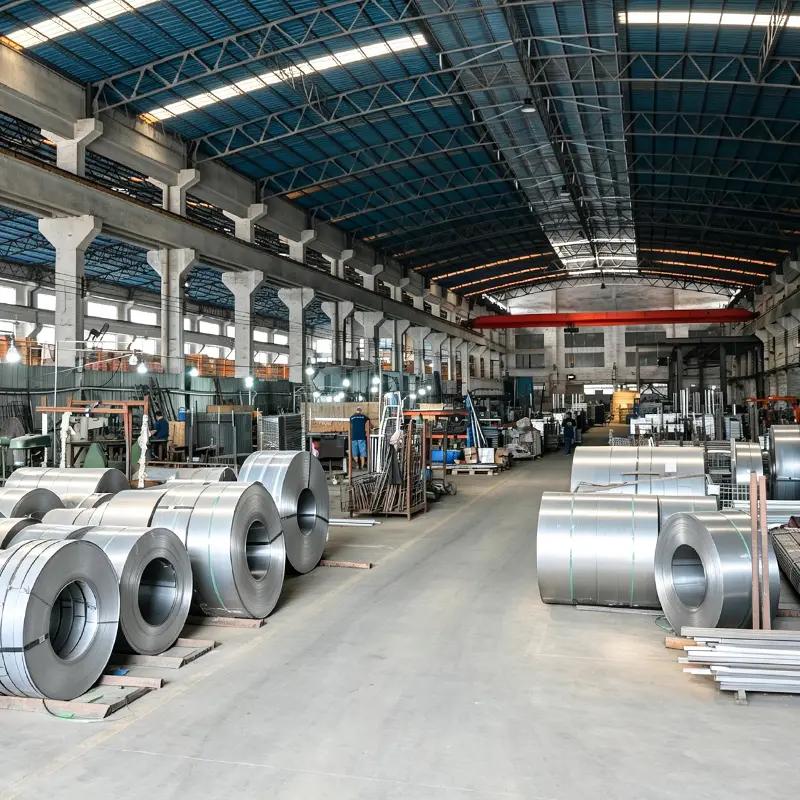
Founded in 2001, Guangzhou Heda Shelves Co., Ltd. has established itself as an authoritative global leader in the design, structural calculation, and manufacturing of premier warehouse racking and logistics equipment. Operating a modernized 30,000 m² manufacturing facility equipped with fully automated continuous roll-forming lines, 3D laser tube cutters, CNC punching centers, and robotic welding cells, our monthly production capacity exceeds 30,000 metric tons.
We serve as the OEM/ODM backbone for prestigious logistics systems across 120+ countries, delivering tailored configurations that meet stringent international regulatory frameworks. With an engineering staff of over 300 experienced technical experts, we transform complex architectural drawings into optimized, zero-waste storage installations.
Full Structural Customization
Custom column heights up to 15 meters, arm lengths from 500mm to 2500mm, and individual arm capacities configured strictly to customer load centers.
Complimentary 3D & CAD Design
Submit your architectural layout. Our engineering team delivers full structural CAD plans, 3D parametric simulations, and seismic checks within 24 hours.
In-House Mechanical Surface Finishing
Automated 9-stage pickling, iron-phosphating pre-treatment, and high-polymer electrostatic powder coating lines yielding robust scratch-resistant finishes.
End-to-End Export Logistics
Expert packing systems with protective foam wrap and steel strapping, maximizing sea container stowage while protecting finishes during ocean transit.
On-Site & Remote Installation Guidance
Every shipment contains full component numbering, detailed assembly blueprints, torque requirements, and access to on-site engineering supervisors.
Frequently Asked Procurement & Structural Engineering Questions
Rigorous engineering answers addressing load factors, seismic zoning, installation procedures, and supply chain logistics for overseas procurement authorities.