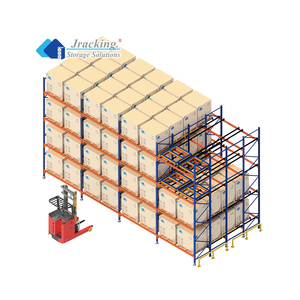
System SKU: J-PB-01
Jracking Push Back Racking Push-in Racking Pallet Racking Warehouse Storage System
Multi-cart nested gravity channel
Eliminates dedicated fork truck lanes
Factory-direct cold-formed structural steel racking, engineered to integrate seamlessly into back-to-back warehouse runs, dynamic cart lines, and high-density distribution layouts.
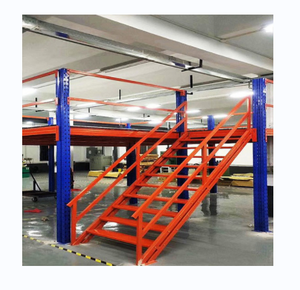
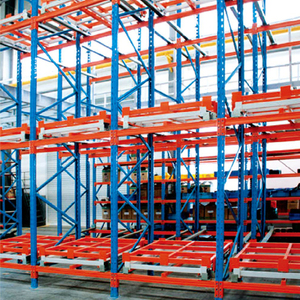
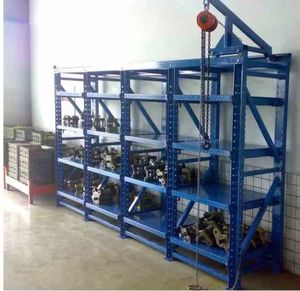
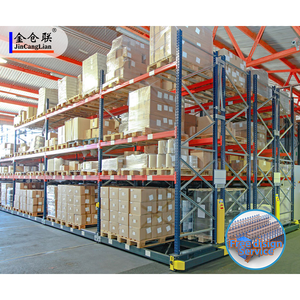
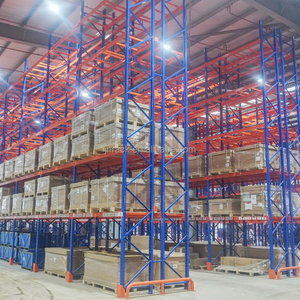
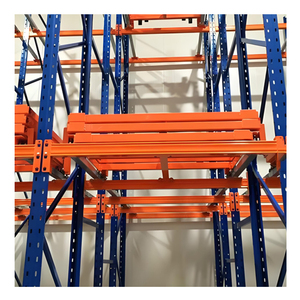
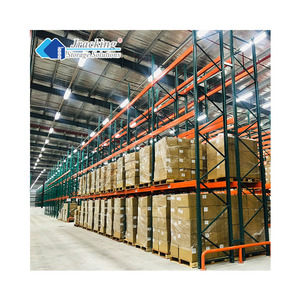
Back-to-back pallet racking represents the foundational core of modern logistics distribution centers. By pairing two single-entry selective racking runs and securing them with rigid structural row spacers, operators double pallet capacity while sharing central structural bracing planes.
Traditional single-row pallet racks consume substantial floor footprint because every run demands an access aisle. Placing racks back-to-back creates twin-rack islands accessed from adjacent operating corridors. This halves dedicated aisle access overhead, achieving volumetric cube storage efficiency exceeding 62% in conventional counterbalanced forklift configurations and upward of 78% in Very Narrow Aisle (VNA) designs.
Structural row spacers are vital load-distributing bridges, not passive connectors. By transferring horizontal down-aisle and cross-aisle impact forces across twin upright frames, row spacers create a unified structural box moment. Properly positioned at node elevations matching beam connections, row spacers inhibit frame torsional twisting and prevent unbraced length buckling under asymmetric dynamic load scenarios.
Under seismic excitation conforming to FEM 10.2.02 and RMI MH16.1 specifications, back-to-back rack runs exhibit superior structural damping compared to freestanding single runs. The shared mass of the dual frame array increases natural resonant frequencies, suppressing harmonic amplification during ground accelerations and mitigating premature anchor pull-out along perimeter base plates.
| Storage Topology | Direct Selectivity | Floor Footprint Efficiency | Handling Equipment Compatibility | Seismic Resistance Rating | Capital Cost Index |
|---|---|---|---|---|---|
| Back-to-Back Selective (Engineered) | 100% Immediate | Optimal (60-75%) | Universal (Counterbalance, Reach, VNA) | Class IV Seismic Rated | Baseline (1.0x) |
| Double-Deep Pallet Rack | 50% FILO Access | High (70-80%) | Specialized Pantograph / Deep-Reach | Moderate to High | 1.25x - 1.35x |
| Push-Back Gravity Cart System | LIFO per Lane | Superior (75-85%) | Standard Forklift Fleet | High (Reinforced Base) | 2.2x - 2.8x |
| Drive-In / Drive-Through System | Strict LIFO/FIFO | Maximum (80-90%) | Cab-protected narrow reach only | Requires Top & Back Bracing | 1.6x - 1.9x |
Headquartered in Guangzhou, Guangdong, our 30,000 m² state-of-the-art facility integrates automated high-speed roll forming, continuous robotic punching, and closed-loop electrostatic powder coating.
We source certified prime structural carbon steel exclusively from domestic Tier-1 mills (Baosteel, Shougang). Mill test certificates (MTC) accompany every batch, ensuring minimum yield strengths of 235 to 355 MPa and strict ductility limits to eliminate brittle stress fractures in cold-formed profiles.
From computerized continuous roll-forming lines to 600-ton CNC automated punching presses, our Guangzhou production center executes continuous dimensional verification. Upright pitch tolerances are tightly held within ±0.5 mm over entire 12-meter continuous vertical sections.
Every component undergoes an automated multi-stage chemical pretreatment line featuring immersion degreasing, acid pickling, zinc phosphating, and deionized water rinsing prior to electrostatic thermoset polyester powder coating, passing rigorous 500-hour ASTM B117 salt spray tests.
Our quality management ecosystem holds CE Certificate No. 2435-CPR-8605159 and ISO 9001:2015 registration No. 18624Q00169R0M. We conduct third-party certified destructive weld testing and finite element analysis (FEA) to confirm complete structural reliability.
The global warehousing market is shifting rapidly from static storage assets to dynamic, automated, and digitally integrated supply nodes. Procurement directors should track these key structural shifts.
Traditional back-to-back selective racking is undergoing extensive mechanical retrofitting to support autonomous mobile robots (AMRs) and automated storage and retrieval system (ASRS) cranes. Forward-thinking procurement specifications mandate tightened fabrication tolerances (EN 15620 Class 300) to ensure rail alignments, sensor retro-reflectors, and automated extraction interfaces operate without mechanical collisions.
Next-generation mega-distribution hubs are piloting integrated telemetry. By embedding passive strain gauges and high-sensitivity impact sensors inside lower-tier upright profiles, facility managers gain real-time visibility into fork-truck collisions, dynamic beam deflection overloads, and structural balance shifts following minor seismic events.
With international carbon border adjustment mechanisms (such as CBAM in the EU) taking effect, global buyers are evaluating racking exporters on embodied carbon. Our facility has implemented energy-efficient recycling wash tanks, zero-VOC powder recycling recovery lines, and sustainable coil packaging that reduces shipping tare weights while safeguarding coated finishes.
Direct answers on international freight packaging, seismic calculations, steel grades, and installation best practices for high-bay warehouse developments.
Collaborate with our senior structural engineering team. Submit your warehouse floor plan, clear ceiling heights, pallet load weights, and handling specifications for a comprehensive technical proposal within 24 hours.