Engineered Industrial Racking & Warehouse Infrastructure
Explore our export-grade back-to-back configurations, selective frames, cantilever systems, and column impact accessories manufactured under certified quality control.
Architectural Deep-Dive: Back To Back Pallet Racking Mechanics & Volumetric Densification
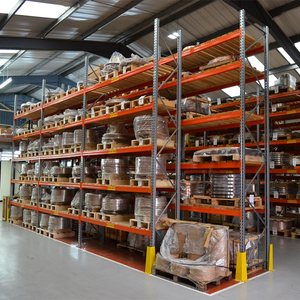
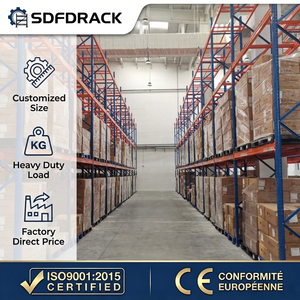
In modern supply chain engineering, warehouse footprint utilization dictates overall business margins. Back to back racking—formed by installing two parallel single runs of selective pallet racking tied securely by rigid structural row spacers—stands as the global baseline for high-density, multi-SKU storage. By consolidating two aisle footprints into a shared center spine, this architecture eliminates redundant reach corridors, boosting volumetric utilization by 35% to 42% over standalone rows while retaining direct 100% SKU selectivity.
As China’s foremost tier-1 steel storage manufacturer, our automated continuous roll-forming lines process Q235B and Q355B structural steel to exacting European (FEM 10.2.02 / EN 15512) and American (ANSI MH16.1 / RMI) load thresholds. The integrity of a back to back configuration lies directly within the rigidity of its cross-aisle ties. Our dynamic row spacers are engineered not merely as horizontal links, but as shear trusses capable of dampening seismic sway, neutralizing asymmetric loading impacts, and preserving aisle widths against dynamic reach-truck deflection.
| Storage System Type | Floor Space Utilization | SKU Selectivity | Handling Equipment Required | Seismic Resistance Class |
|---|---|---|---|---|
| Standard Back-to-Back | 55% – 65% Footprint Efficiency | 100% (Instant Direct Access) | Standard Counterbalance / Reach Truck | Class I & II (Reinforced Spacers) |
| Double Deep Racking | 65% – 75% High Density | 50% (Requires Pantograph Reach) | Deep-Reach Pantograph Forklift | Class II Structural Sway Anchoring |
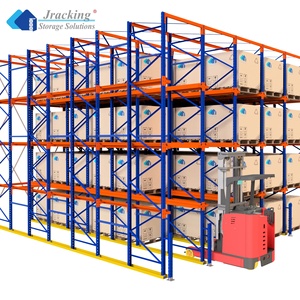
| Drive-In / Drive-Through | 75% – 85% Maximum Volumetric | LIFO / FIFO Bulk Only | Standard Counterbalance entering bay | Class III Dynamic Portal Ties |
| Radio Shuttle Cart Rows | 80% – 90% Semi-Automated | Channel Selective (High Throughput) | Automated Carrier + Standard Lift | Seismic Heavy Baseplate Anchoring |
To prevent localized stress concentration caused by sub-floor settling or non-uniform floor slab deflection, every upright frame fabricated in our 30,000 square meter facility features custom cold-formed omega profiles with variable web thickness. Combined with three-prong or four-prong bolted beam connectors equipped with high-visibility safety spring locks, our structures resist rotational torsion, ensuring safe operation under heavy static loads up to 5,000 kg per level.
Strategic Procurement Trends: The Next Horizon in Racking Procurement
Procurement directors and 3PL facility planners are facing macroeconomic shifts. Discover how strategic procurement models are shifting toward structural versatility, automated compatibility, and cold chain localization.
Hybrid AMR / AGV Synergy
Procurement strategies no longer treat racking as static infrastructure. Forward-looking distributors in North America, Europe, and South America specify wide-aisle and VNA back to back layouts designed with laser-guided automated mobile robot (AMR) base plates, floor guidance wire channels, and optical reflective targets for round-the-clock driverless pallet replenishment.
Mill-Direct Steel Hedging
Volatile raw material costs and ocean freight spikes have popularized long-term supply frame contracts directly with scaled Chinese manufacturers. By leveraging our 30,000-ton monthly capacity, multi-facility enterprises lock in cold-rolled coil indices (Q235B/Q355B) months in advance, buffering capital expansion against localized steel inflation.
Total Carbon Accounting (CBAM)
International procurement frameworks are integrating Scope 3 carbon compliance. Back to back racking supply lines now favor automated pre-treatment and low-VOC powder electrostatic curing. Our 10-step finishing lines utilize heavy-metal-free zirconium pickling, meeting stringent EU RoHS standards while providing superior salt-spray corrosion life.
Technological & Engineering Evolution of Heavy Industrial Racks
Explore the metallurgical improvements, automated robotic welding standards, and simulation-backed finite element analysis defining the future of industrial logistics.
Finite Element Analysis (FEA) Simulation
Modern pallet rack structural integrity has evolved past static deadweight formulas. Our engineering teams apply multi-axis ANSYS dynamic simulation to model progressive collapse, beam deflection ratios (L/200 standard), and transient seismic resonance across specific fault classifications (such as NCh 433 in Chile or NSR-10 in Colombia), optimizing steel distribution without surplus tonnage.
Continuous Roll-Forming Tolerances
Legacy multi-step press brakes are replaced by precision 24-station inline roll-forming tracks. This guarantees column profile straightness deviations of under 1/1000 across upright spans reaching 15 meters in height, eliminating cumulative assembly twist and drastically improving installation speed on large distribution center builds.
Micro-Textured High-Adhesion Finishing
In high-throughput facilities, cosmetic scuffs lead to steel oxidation. Our multi-stage pickling and phosphating pre-treatment followed by electrostatic powder deposition yields a hardened coating thickness of 60–90µm. This provides extreme scratch resistance, moisture barrier durability for cold rooms, and flame spread indices approved for NFPA safety audits.
Why Enterprise Warehouse Operators Choose Our Manufacturing Ecosystem
Founded in 2001, Guangzhou Heda Shelves Co., Ltd. has grown from a specialized metal fabrication workshop into a multi-national logistics engineering supplier. Our manufacturing base covers over 30,000 square meters, housing 300+ seasoned fabrication technicians, certified structural engineers, and international logistics planners. We deliver complete, turnkey warehouse storage systems to Brazil, Chile, Peru, Colombia, Argentina, Ecuador, Europe, and over 120 countries worldwide.
What sets our manufacturing supply chain apart is direct accountability. Rather than outsourcing secondary operations, we control the entire production pipeline under our ISO 9001:2015 quality assurance system:
Frequently Asked Questions: Global Industrial Racking Procurement
Authoritative technical answers to common questions regarding structural calculations, logistics, international standards, and commissioning.
Q1: How does back to back racking compare against double deep systems for warehouse throughput?
Back to back racking consists of two single rows connected via row spacers, offering 100% direct pallet selectivity. Every single SKU can be picked without moving adjacent loads, making it optimal for operations using standard reach or counterbalance trucks. Double deep racking stores pallets two-deep per lane, which increases floor storage density by roughly 25-30% but drops immediate selectivity to 50%, requiring specialized pantograph reach trucks and strict inventory sequencing to prevent stock honeycombing.
Q2: What structural steel standards and mill test reports (MTR) do you provide?
Our uprights, beams, and structural components are cold-rolled from certified Q235B and Q355B prime hot-rolled coils sourced directly from top-tier Chinese steel mills. We supply full metallurgical chemical analysis and tensile yield test reports (MTRs) with each batch. Our systems comply with CE Certificate No. 2435-CPR-8605159, ISO 9001:2015 certification, and meet European FEM 10.2.02 and US RMI MH16.1 deflections under full load testing.
Q3: How do you ensure racking structures comply with seismic codes in seismically active regions?
When designing systems for regions like Chile (NCh 433 / NCh 2369), Peru (E.030), Colombia (NSR-10), Mexico, or California, our engineers run structural calculations based on project site coordinates, soil factors, and peak ground acceleration (PGA). We reinforce upright column base plates, use high-grade Hilti or chemical epoxy anchors, increase upright steel gauges, and integrate heavy tubular cross-aisle bracing to safely absorb lateral earthquake dynamics.
Q4: What parameters are required to generate an accurate 3D warehouse layout and quote?
To produce an optimized CAD proposal, our engineering team requires: (1) Warehouse architectural drawings showing clear heights, column grids, fire exit doors, and slab load capacities; (2) Pallet specifications including width, depth, height, and gross pallet weight; (3) Forklift model, turning radius, and maximum mast lift reach; (4) Desired rotation method (FIFO or LIFO) and operating environment (ambient dry storage, cold room, or coastal high-humidity zone).
Q5: What surface pre-treatment is used to prevent rust in maritime and high-humidity areas?
All steel components go through an automated 10-step surface preparation line that includes industrial degreasing, acid pickling, ultrasonic rinsing, and phosphating. We then apply electrostatic epoxy-polyester hybrid powder coating baked at 180°C–200°C. For aggressive environments—such as marine ports, fertilizer facilities, or blast freezers (-30°C)—we provide hot-dip galvanizing (HDG) per ASTM A123 standards, providing decades of rust-free performance.
Q6: How are export components packaged to prevent damage during long-distance shipping?
Beams, uprights, and accessories are packaged using custom industrial methods: uprights are nested in bundled steel strapping on wooden runners with protective corner boards; beam hook-connectors are encased in impact-resistant bubble sleeves; and smaller accessories (row spacers, baseplates, shims, and safety locking pins) are crate-packed in heavy-duty wooden boxes. Every container is systematically modeled in 3D load software to maximize space and prevent transit shifting.