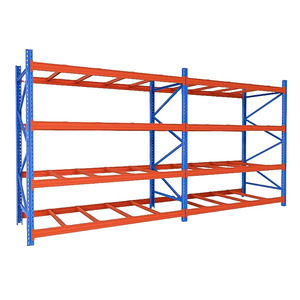
Engineered Systems
Industrial-Grade Beam Pallet Racking & Heavy-Duty Storage Configurations
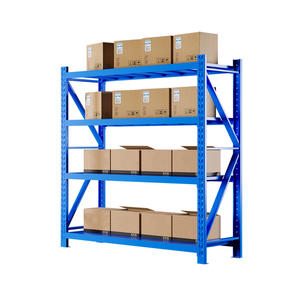
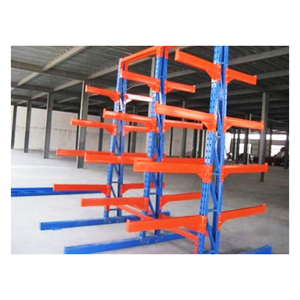
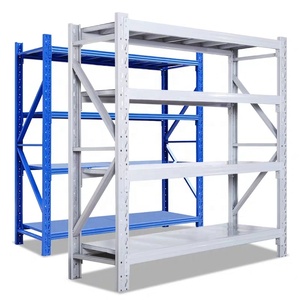
Custom-engineered structural steel profiles fabricated from premium Q235B/Q355B cold-rolled steel, designed for maximum volume density, pallet stability, and rapid retrieval cycles.
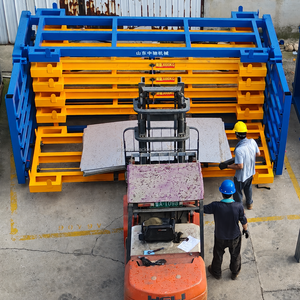
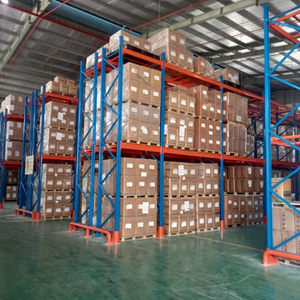
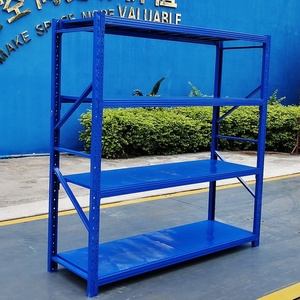
Manufacturer Integrity
Engineering Authority: Guangzhou HEDA Shelves Co., Ltd.
Operating from our expansive 30,000-square-meter manufacturing campus in Guangzhou, China, HEDA Shelves combines over 25 years of specialized mechanical and structural engineering experience. Our advanced fabrication lines manage complete vertical processing: from high-precision roll forming, computer-controlled punching, and multi-axis robotic welding to an automated 10-stage pre-treatment and electrostatic powder-coating corridor. With a sustained monthly production throughput surpassing 30,000 metric tons, we bridge the gap between large-scale industrial manufacturing and bespoke logistics engineering.
"Every layout generated by our engineering department integrates rigorous Finite Element Analysis (FEA), calculating deflection limits, seismic damping, and floor slab load distributions long before steel uncoiling begins."
Certified Quality Compliance
Certified under ISO 9001:2015 (Certificate No. 18624Q00169R0M) and European CE Standard (EN 15512 / CE No. 2435-CPR-8605159). Fully audited mechanical strength profiles guarantee verifiable safety margins for global logistics tenders.
Full CAD & 3D Modeling Support
Our internal technical team of over 300 professionals develops custom 2D warehouse schematics and fully rendered 3D spatial simulations, accounting for forklift turn radiuses, mast clearances, and NFPA-compliant in-rack sprinkler apertures.
Optimized Export Packaging
Global sea-freight requires rigorous damp-proof wrapping, bundled nesting configurations, and pre-calculated container loading software to protect powder coatings while reducing landed logistics costs by up to 22% per cubic meter.
Technical Whitepaper
Structural Engineering Criteria: Selective Beam Racking Architecture
Modern pallet rack design hinges on balancing steel ductility with dynamic torsional resistance. As one of China's primary beam pallet racking factories, our upright frames utilize omega-profile cold-formed columns paired with box beams or interlocking step beams. The structural safety factor follows the strict FEM 10.2.02 and RMI (Rack Manufacturers Institute) deflection limits, maintaining an allowable maximum deflection of L/200 under nominal static service loads.
| Component Specification | Standard Dimension / Profile Range | Material Grade & Yield Strength | Engineering Compliance Standards |
|---|---|---|---|
| Upright Columns (Omega Profile) | 80×60, 90×70, 100×70, 120×95 mm (Thk: 1.5 - 2.5 mm) | Q235B / Q355B (Fy ≥ 235 - 355 N/mm²) | EN 15512, RMI MH16.1, AS 4084 |
| Box Beams (Twin C-Profile Seam) | 80×50 to 160×50 mm (Thk: 1.5 - 2.0 mm) | High-Tensile Cold Rolled Steel | FEM 10.2.02 (Deflection Limit ≤ L/200) |
| Beam Connectors (Claw Brackets) | 3, 4, or 5-Lug Robotic Welded Brackets with Safety Lock Pins | Hot-Rolled Punching Plate Q235B | Automatic Safety Pin Disengagement Prevention |
| Surface Pretreatment & Coating | Phosphating + Electrostatic Epoxy-Polyester Powder | 60 - 90 μm Thickness (RoHS compliant) | ASTM B117 Salt Spray ≥ 500 Hours Testing |
| Seismic Footplates & Anchors | Reinforced 6.0 mm - 12.0 mm Stiffened Heavy Baseplates | Grade 8.8 / Grade 10.9 Mechanical Anchors | Seismic Design: NCh 433, E.030, NSR-10, Eurocode 8 |
Proper beam-to-column engagement relies on high-shear multi-lug connection brackets. Each connector is fitted with custom-engineered spring safety locks to prevent accidental dislodgement from lift-truck driver upright impact, securing storage integrity across multi-tiered high-bay bays up to 14 meters in unsupported vertical clearance.
Strategic Procurement
Future Sourcing & Technological Trends in Warehouse Intralogistics
Industrial racking is transitioning from static, commoditized steel frames to smart, modular structural infrastructure. Warehouse operators and procurement executives must account for five pivotal evolutions over the upcoming strategic procurement horizon:
1. Steel Volatility & Carbon Footprint
Procurement teams are moving away from spot-market buying to long-term index-linked contracts with Chinese producers who utilize low-carbon electric arc furnace (EAF) steel and dry-powder coating reclaim systems that comply with Scope 3 supply chain mandates.
2. Hybrid Automation Integration
Traditional selective racking is increasingly adapted for AMR (Autonomous Mobile Robots) and semi-automated four-way radio shuttles. Floor slab tolerance (DIN 18202 Class 3) and millimeter-precise beam deflection tolerances are now core prerequisites in purchasing specs.
3. Rigorous Regional Seismic Compliance
Global logistics hubs situated along the Pacific Rim (including Latin America's seismic corridors) require dynamic structural engineering verifications. Factory structural engineers now calculate site-specific spectral acceleration (Ss/S1) values rather than relying on generic static tables.
Additionally, modular pallet-supported mezzanines and deep-lane dynamic storage are becoming standard solutions for optimizing existing real estate footprints. Rather than expanding horizontal square footage under surging industrial real estate costs, supply chain directors are engineering multi-tier pick towers and high-density gravity flow systems to capture vertical cubic volume.
Knowledge Base
Frequently Asked Questions on Importing & Engineering Pallet Racking
Comprehensive technical guidance for procurement directors, distribution architects, and project engineering leads.
What primary parameters are required to calculate structural load capacity?
To produce certified calculations, our engineers require: (1) Total pallet dimensions including cargo overhang (W×D×H), (2) Gross load per pallet position, (3) Number of beam levels per bay, (4) First beam elevation height, (5) Forklift model, mast height, and minimum right-angle aisle clearance, and (6) Warehouse slab concrete depth and geotechnical seismic coefficient.
How does Chinese Q235B steel compare with European S235JR and American ASTM A36?
Q235B is metallurgical equivalent to European EN 10025 S235JR and American ASTM A36 in chemical composition and yield strength (≥ 235 MPa for thicknesses up to 16mm). For high-load cold storage or high-bay installations, we utilize Q355B (equivalent to S355JR / ASTM A572 Grade 50), offering higher yield strength (≥ 355 MPa) and enhanced impact ductility under low ambient temperatures.
What quality assurance steps are taken to prevent shipping damage and rust?
Components undergo an automated multi-stage pre-treatment (degreasing, acid pickling, phosphating) prior to electrostatic powder deposition. Finished components are bundled with custom wood dunnage, protective foam cushioning, corrugated side guards, and high-tensile steel strapping. Upright frames and beams are nested to prevent micro-fretting corrosion during 30 to 45-day ocean transit.
Can your factory accommodate third-party pre-shipment inspections?
Yes. We regularly host independent inspection agencies such as SGS, Bureau Veritas, and TÜV Rheinland at our Guangzhou production facilities. Audits commonly encompass dimensional verification, zinc coating or powder-film dry film thickness (DFT) testing, weld non-destructive testing (NDT), and tensile coupon tests on raw coil stock.
How do you support on-site installation and mechanical anchorage abroad?
Every shipment is delivered with comprehensive 3D isometric assembly blueprints, numbered component manifests, and torque-specification datasheets. For large-scale projects, we provide remote video engineering support or dispatch qualified installation supervisors to coordinate and certify local rigging teams.
What is the typical manufacturing turnaround time for project orders?
With our monthly throughput exceeding 30,000 tons across multi-shift automated cold-forming lines, standard selective rack orders of 5 to 20 container loads (FCL) are typically produced within 14 to 28 business days following finalized CAD drawing sign-off and color code approval.
Plan Your High-Density Warehouse Racking Project
Submit your facility floor plan, clear ceiling heights, and pallet specifications. Our senior structural logistics engineers will deliver an optimized CAD layout, 3D visualization, and detailed pricing within 24 hours.