Engineered Heavy-Duty Cantilever & Warehouse Storage Lineup
Custom cold-rolled & structural steel systems configured for maximum volumetric efficiency, irregular payloads, high cycle counts, and automated material flow.
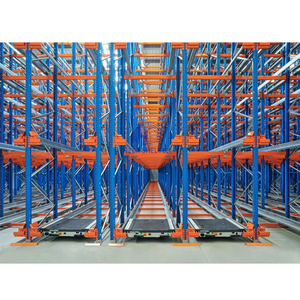
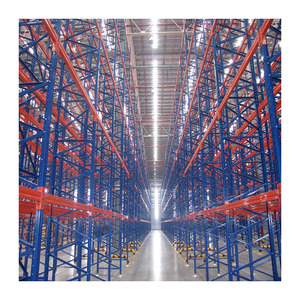
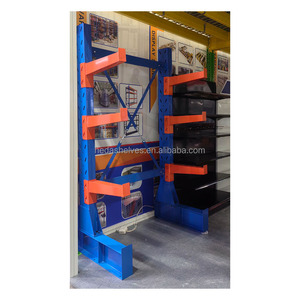
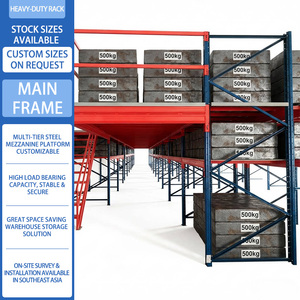
Why Global Supply Chains Trust Our Cantilever Racking
Since 2001, our 30,000 m² state-of-the-art facility has provided engineering validation, robotic roll-forming, and seismic safety for over 10,000 industrial facilities worldwide.
Q235B & Q355B Certified Steel
Every cantilever column and load arm utilizes certified prime carbon structural steel, tested rigorously for yield strength, elongation limits, and Charpy impact resilience under heavy payloads.
FEA Load & Seismic Engineering
Custom Finite Element Analysis (FEA) simulating static dead loads, dynamic seismic cycles, and wind shear to meet NCh 433, NSR-10, RMI, and EN 15512 safety directives without structural compromise.
Automated 10-Stage Finishing
Automated continuous shot-blasting, pickling, phosphating, and electrostatic powder coating or hot-dip galvanization (ISO 1461) to eliminate rust across humid, sub-zero, or outdoor environments.
Optimized Container Load Plans
Factory-direct nesting algorithms maximize cubic ocean container fill rates up to 98%, utilizing custom timber-free steel dunnage to eliminate transit vibration abrasion and bend damage.
Cantilever Racking: Structural Mechanics & Sizing Matrix
A complete engineering guide to managing moments of inertia, column deflection limits, and long-load storage physics.
1. The Physics of Cantilever Systems: Overcoming Torsional Deflection
Unlike standard selective pallet racks that transfer vertical compressive loads directly through dual uprights, cantilever storage structures rely on single vertical columns connected to a robust, anchored base, where horizontal arms act as independent load-bearing beams. The critical failure mode in improper cantilever design is not yield tensile collapse, but torsional buckling and column overturning moments.
When long products such as structural pipes, timber packs, aluminum extrusions, or steel rebar coils rest across the arms, the center of gravity (CG) of the load generates a continuous cantilever moment ($M = W \times L/2$, where $W$ is load weight and $L$ is arm length). Our factory incorporates cold-formed variable section profiles or hot-rolled structural I-beams (IPE/UB series) welded with automated continuous robotic seam welders to ensure dynamic load transfer without localized flange buckling.
| Profile Type | Standard Yield Strength | Max Arm Length | Typical Load Capacity / Arm | Primary Application Profile |
|---|---|---|---|---|
| Roll-Formed C/U Profile | 235 – 345 MPa | 600 mm – 1,200 mm | 250 kg – 800 kg | Plastic PVC conduit, carpet rolls, furniture, light wood trim |
| Hot-Rolled Structural H/I-Beam | 345 – 460 MPa | 1,000 mm – 2,200 mm | 1,000 kg – 4,500 kg | Structural steel tubes, heavy machinery parts, raw timber balks |
| Custom Pivot-Pin Retaining Arm | 355 MPa | 800 mm – 1,800 mm | 500 kg – 2,000 kg | Forklift-impact safe zones; arm deflects upward during mishits |
2. Deflection Limits and Forklift Clearance Geometries
According to ANSI MH16.3 and EN 15620 guidelines, the structural deflection of cantilever arms under full rated load must not exceed $L/180$. Excessive deflection creates sloping planes, shifting products forward and drastically elevating tip-over hazards. We manufacture cantilever arms with a built-in upward incline of 2° to 3.5°. Under full design load, this initial camber settles to a completely level horizontal plane, preserving crucial vertical clearance between storage tiers for sideloaders, standard counterbalance trucks, or multidirectional narrow-aisle (VNA) forklifts.
Future Procurement & Technological Trends (2026–2030)
How changing warehouse dynamics, robotics integration, and geopolitical supply chain standards are transforming cantilever asset investments.
Automated AS/RS Cantilever Integration
Traditional manually operated cantilever aisles are rapidly evolving into automated crane-guided or 4-way profile shuttle systems. High-density storage yards now demand precision mill tolerances (±1.0mm) to allow laser-guided cranes to extract varying bundle dimensions without human intervention.
IoT Deflection & Overload Sensors
Procurement directors are shifting toward "smart racks." Embedded strain-gauge telemetry and fiber-optic tilt sensors installed inside high-bay cantilever uprights transmit real-time deflection alerts to warehouse management software (WMS), preventing catastrophic structural over-stressing.
Galvanized Outdoor High-Bay Shelters
With real estate costs soaring globally, enterprise distribution centers are abandoning enclosed warehouses for bulky goods. The future lies in rack-supported clad buildings: hot-dip galvanized cantilever uprights double as primary roof and siding purlins, reducing total capital expenditures by 35%.
Carbon-Footprint Auditing & Green Steel
International environmental directives mandate documented carbon transparency. Our facility is actively integrating electric arc furnace (EAF) low-carbon steel coils, recycled-zinc coatings, and eco-friendly powder finishes to ensure turnkey ESG compliance for European and American importers.
Frequently Asked Questions on Cantilever Rack Sourcing
Direct technical, financial, and logistical insights straight from our lead structural engineering department.
How do I calculate the required column height, base length, and arm capacity? +
What is the key structural difference between Roll-Formed and Hot-Rolled Cantilever Racks? +
Can cantilever racks be customized for outdoor storage in corrosive, high-salinity zones? +
How does your factory handle seismic structural certifications for international projects? +
What packaging methods are implemented to prevent container transit damage? +
What are your manufacturing turnaround times and prototype validation services? +
Ready to Optimize Your Storage Density & Safety?
Submit your facility dimensions, SKU profiles, and material handling criteria. Our senior logistics engineers will provide a complete 3D warehouse layout, FEA structural calculation, and factory-direct quote within 24 hours.