High-Capacity Structural Cantilever Systems
Manufactured from high-tensile Q235B and Q355B structural steel, our heavy-duty cantilever systems eliminate front column obstructions, maximizing lateral handling speed and vertical cube utilization.
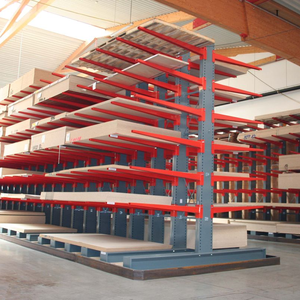
Heavy Duty Cantilever Racking Q235 Steel Upright Construction Timber Lumber Storage
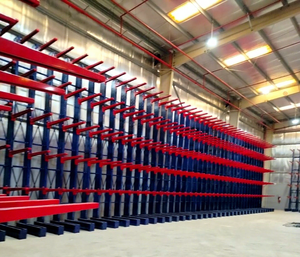
OEM Freight Warehousing Storage Rack Shelving Heavy Duty Cantilever System
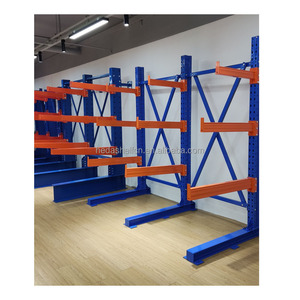
Single Sided Cantilever Rack Industrial Heavy Duty System for Perimeter Walls
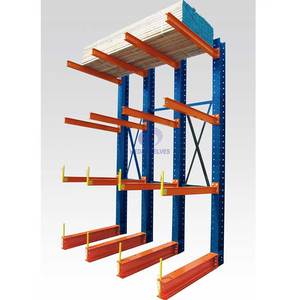
Heavy Duty Cantilever Racking Shelving System with Roof Carport & Deck Options
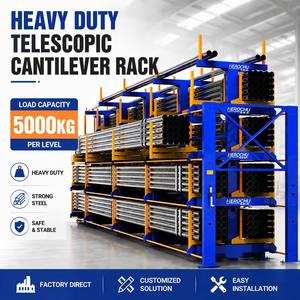
Heavy Duty Steel Telescopic Cantilever Rack System for Overhead Crane Hoisting
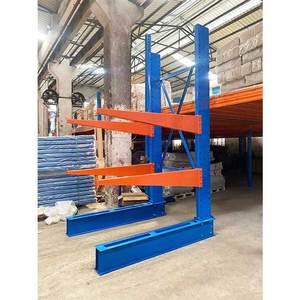
Heavy Duty Storage Cantilever Shelving for Chassis, Tubing & Irregular Frames
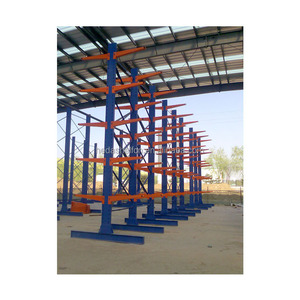
Double Sided Heavy Duty Cantilever Racking System for Central Aisle Layouts
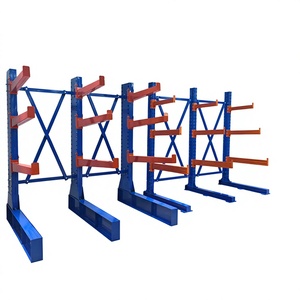
Universal Warehouse Cantilever System for Long Pipes, Steel Rebar & Plate Packs
25+ Years Industrial Racking Engineering & Export Scale
Combining state-of-the-art roll forming and structural welding technologies with end-to-end quality governance certified to international benchmarks.
Parametric finite element analysis (FEA) validating arm deflections, seismic shear forces, and overturning moments prior to metal cutting.
Automated upright slot punching at exact 100mm/140mm intervals and precision roll-forming of high-strength structural profiles.
9-stage automated acid pickling and phosphating followed by polymer powder baking for maximum salt spray and scratch resistance.
Batch mill certificates, coating thickness gauges (DFT > 70μm), and anti-chafing container nesting minimizing transit friction.
Structural Integrity, Load Deflection & Seismic Rigor
Heavy-duty cantilever racks are unconstrained by front column uprights, transforming load mechanics into pure cantilever moment forces acting directly against the column base.
Unlike standard selective pallet racks where vertical compressive loads predominate, cantilever systems demand specialized mechanical calculations. Every arm acts as an unsupported structural lever where beam deflection, column torsion, and base overturning moment dictate operational safety. China's top exporters engineer cantilever systems with high-yield hot-rolled H-beams (Q235B/Q355B) or roll-formed double-C profiles welded back-to-back.
Deflection Ratio Controls (L/200 vs L/300)
Arm deflection limits adhere strictly to FEM 10.2.02 and ANSI MH16.3 standards. Loaded arms maintain a positive upward camber of 1°–2° when empty to prevent tip slippage when reaching peak loading.
Articulated Arm-to-Column Pinning
Arms are anchored using high-tensile grade 8.8 structural pins or high-strength bolts. In telescopic or pin designs, accidental impact from side-loaders allows the arm to deflect upward without buckling the column web.
High-Capacity Heavy Base Flanges
Thick-gauge hot-rolled plates anchored via chemical or expansion shear studs counteract overturning force moments (M = Force × Distance), stabilizing long bar stock, rebar, and lumber bundles.
| Structural Factor | Roll-Formed Cantilever | Hot-Rolled Structural (H-Beam) |
|---|---|---|
| Steel Grade | Q235B / Cold-Rolled Strip | Q355B (ASTM A572 Gr 50 Equivalent) |
| Max Arm Capacity | 300 kg – 1,000 kg per arm | 1,000 kg – 5,000 kg per arm |
| Impact Resilience | Moderate; ideal for indoor light logistics | Extremely high; withstands forklift collisions |
| Upright Height | Up to 6,000 mm | Up to 12,000 mm (High-Bay Capable) |
| Corrosion Resistance | Electrostatic Polyester Powder Coating | Hot-Dip Galvanizing (ISO 1461: ≥85μm) |
| Primary Goods Stored | PVC pipes, furniture, plastic profiles | Steel billets, coils, rebar, structural timber |
Macro Trends Transforming Global Cantilever Sourcing
Purchasing directors and warehouse engineers face transforming supply chains. Strategic sourcing from premier Chinese manufacturers now extends far beyond FOB price considerations.
High-Yield Steel Upgrades (Q355B & S355JR)
Global supply chain volatility has pushed buyers toward higher strength-to-weight structural grades. By leveraging Q355B micro-alloyed steel, structural engineers reduce upright deadweight while preserving ultimate load ratings.
- Reduces freight charges through optimized container payload mass
- Yield strength of 355 MPa guarantees higher seismic safety margins
- Resists low-temperature brittleness in cold storage applications
Duplex Corrosion Defense (C3 to C5-M Zones)
Raw steel storage increasingly migrates to open outdoor lumber yards and coastal ports. Modern procurement teams specify double-layer protection combining automated zinc-rich primers with fluoropolymer or hot-dip zinc baths.
- Exceeds 1,000+ hours in ASTM B117 salt fog corrosion tests
- Eliminates maintenance touch-ups in tropical or coastal air
- Avoids catastrophic rust peeling around welded arm connector pockets
Intelligent Container Load Factoring
With ocean freight representing up to 25% of landed equipment expense, Tier-1 Chinese exporters deploy proprietary 3D nesting algorithms that interlock irregular cantilever arms, base profiles, and column frames.
- Maximizes 40ft High Cube container volumetric capacity up to 98%
- Custom wooden bundling saddles prevent paint scarring in sea transit
- Staged, sequence-marked tagging accelerates jobsite unload speed
Engineering Advances: Telescopic Arms & Automated Stacking
The convergence of material handling robotics and structural racking is driving radical efficiency jumps in pipe, bar, and sheet metal storage facilities.
Motorized Telescopic Cantilever Arms
Traditional static cantilever racks require broad operating aisles (4 to 6 meters) to allow forklifts to maneuver long loads. Telescopic cantilever systems extend arms outward mechanically or via motorized remote controls, allowing direct vertical overhead hoisting by bridge cranes.
- Saves up to 60% of floor space by compressing aisle clearances
- Allows a single overhead gantry operator to load and pick bundles
- Equipped with auto-locking safety ratchets preventing arm movement under load
AS/RS Stacker Crane Cantilever Integrations
Automated Storage and Retrieval Systems (AS/RS) are no longer restricted to standardized pallets. Modern cantilever high-bay facilities in steel service centers utilize automated telescopic crane forks traveling along floor tracks.
- Vertical storage heights exceeding 20 meters with tight tolerances
- WMS integration with continuous laser optical alignment
- Real-time inventory tracking for varied lengths, alloys, and lot numbers
Digital Twins & IoT Structural Deflection Sensors
Smart racking installations embed fiber-optic strain gauges and tilt inclinometers directly into the base plate and highest cantilever arms. These send real-time structural health alerts to warehouse management software.
- Instantaneous alert if an arm exceeds maximum rated deflection limits
- Detection of foundation settling or anchor bolt shearing before failure
- Automated preventative maintenance scheduling based on loading cycles
Frequently Asked Questions by Industrial Importers
Authoritative technical clarifications on engineering standards, arm calculations, seismic anchoring, and export logistics.
How is load capacity calculated on a heavy-duty cantilever arm?
What is the structural difference between roll-formed and hot-rolled cantilever racking?
Can your cantilever racking systems be engineered for seismic zones?
What coating options do you provide for outdoor open-yard storage?
How do you optimize container packing to prevent damage and minimize ocean freight?
What documentation and certifications are provided for customs clearance and engineering sign-off?
Consult with Certified Structural Racking Engineers
Send your building dimensions, stored material specifications, and loading requirements. Our engineering department will generate a comprehensive structural proposal, including 3D rendering, CAD floor plan, deflection analysis, and factory-direct pricing within 24 business hours.