Engineered Heavy-Duty Racking & High-Density Storage Solutions
Manufactured directly in our certified 30,000 m² facility. Sized, cold-formed, and powder-coated to handle static, dynamic, and seismic operational loads.
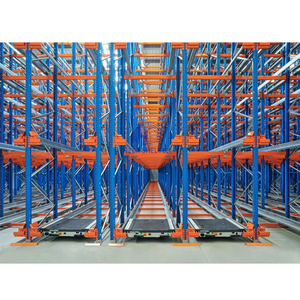
Warehouse High-Density Shuttle Rack System Asrs 4-Way Shuttle Racking Four Way for Cold Storage Shuttle Rack FIFO & LIFO
Sub-zero tolerance box beams, multi-directional shuttle tracks, optimized for high throughput down to -30°C.
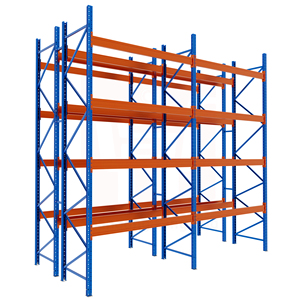
Customized Industrial Pallet Racks Beams Adjustable Steel Metal Heavy Duty Selective Pallet Racking System For Warehouse Storage
Heavy-duty roll-formed step and box beams with welded 3/4-claw connectors and spring safety lock pins.
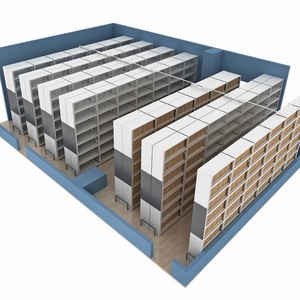
Steel Large Archives Mobile Shelving Metal Movable Compactor Filing Cabinet Mass Compactor Full Space Warehouse Rack
High-density tracked floor shelving system designed to condense floor space consumption by up to 70%.
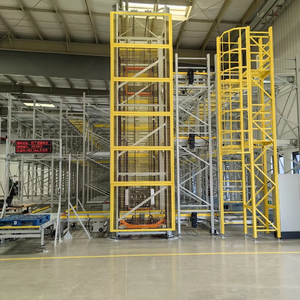
Advanced Intelligent Library Selective Pallet Rack With Efficient Conveying System High Efficiency Stacking Racks & Shelves
Integrated structural steel profiles matched to automated pallet conveyors and continuous sorting systems.
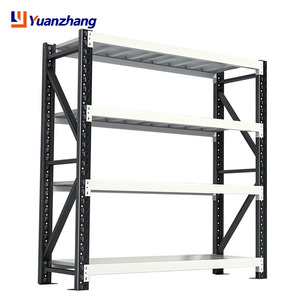
Light Duty Adjustable Metal Shelves, Bolted Structure for Parts & Carton Storage, Small Racks for Workshop & Warehouse
Modular step-beam light storage bays with 50mm vertical pitch adjustment for rapid, boltless reconfigurations.
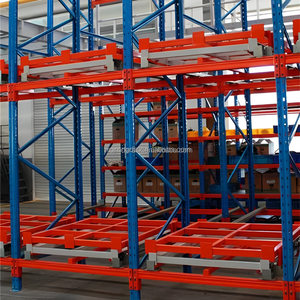
Warehouse Storage Adjustable Push Back Pallet Racking Manufacturer Steel Rack
Nested cart nesting beams with integrated incline geometry, enabling 2–6 pallet depth LIFO staging.
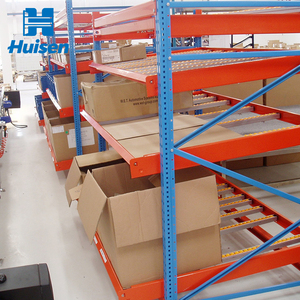
Anti-Rust Durable Steel Gravity Racks Pallet Flow Racking System Carton Shelving Warehouse OEM ODM Heavy Duty Metal Shelf
High-rigidity structural support beams integrated with speed controller brakes and durable zinc roller tracks.
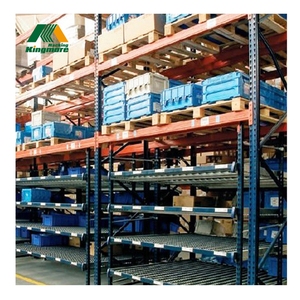
Fabric Roll Pallet Carton Flow Racking for Stacking Racks & Shelves
Specialized cradle cross beams engineered for non-standard cylindrical rolled cargo and textile rolls.
Engineering Guide: Industrial Pallet Rack Beam Types & Load Deflection Standards
Choosing the right rack beam geometry defines the stability, compliance, and seismic resilience of your storage operations. We evaluate the core engineering profiles supplied from China to global distribution centers.
Box Beams (Continuous Seam Welded)
Constructed from two interlocking cold-rolled C-channels seam-welded by industrial robots. Provides exceptional torsional resistance and maximum vertical bending moment. Standard choice for standard selective pallet racks and high-bay dynamic shuttle installations carrying up to 4,500 kg per level.
Step Beams (Recessed Edge)
Engineered with an inward L-shaped step (commonly 20mm or 50mm flange) designed for drop-in accessories like steel wire mesh decks, timber shelving, or galvanized panels flush with the beam top. Eliminates pallet snags and increases safety in multi-SKU retail and carton pick facilities.
Structural C/I-Beams (Hot-Rolled)
Heavy-duty hot-rolled structural steel profiles built for the harshest industrial applications. Highly resistant to repeated forklift impacts, outdoor humidity, and intense thermal extremes. Commonly deployed in heavy equipment parts depots, coastal lumber yards, and deep freezer hubs.
| Beam Section Profile | Material Standard | Standard Depths (mm) | Rated Load Range (kg/pair) | Deflection Limit Standard | Recommended Applications |
|---|---|---|---|---|---|
| Box Beam (50mm Pitch) | Q235B / Q355B (SS400) | 80 × 50 to 160 × 50 | 1,000 – 4,800 kg | L/200 (FEM 10.2.02 / RMI) | Selective, VNA, Double-Deep, Radio Shuttle |
| Step Beam (Drop-In) | Q235B Cold-Rolled | 80 × 50 × 20 to 140 × 50 × 20 | 800 – 3,500 kg | L/200 (ANSI MH16.1) | E-commerce fulfillment, mesh decking, manual pick |
| Hot-Rolled Structural Channel | ASTM A36 / Q235B | Channel 8# to 14# | 2,500 – 6,000+ kg | L/240 Strict Seismic | Cold storage, steel coils, outdoor, heavy machinery |
| Tube Beam (Light/Medium) | Cold Formed Strip Steel | 50 × 30 to 80 × 40 | 300 – 1,200 kg | L/180 Commercial | Archive storage, longspan shelving, light workshop |
Future Procurement & Technological Trends in Pallet Rack Manufacturing
How evolving supply chains, automated handling, and sustainability targets are redefining warehouse rack engineering across international supply lines.
1. Micro-Alloy High-Tensile Steel Integration
Procurement is migrating rapidly from conventional Q235B structural carbon steel to micro-alloyed, cold-formed high-strength steels (such as Q355B and Q460). This allows a 15–22% gauge thickness reduction while maintaining rated moment capacities, significantly lowering international ocean freight per pallet position.
2. Tight-Tolerance Beams for ASRS & AMRs
Automated Storage and Retrieval Systems (ASRS) and Autonomous Mobile Robots (AMRs) require precise beam manufacturing tolerances within ±0.5mm across spans exceeding 2,700mm. Modern production lines now integrate real-time optical scanning to eliminate beam camber variance that disrupts robotic optical sensors.
3. Seismic Performance Codes (NCh 2369, NSR-10, Eurocode)
Major procurement projects across the Pacific Rim, South America (Chile, Peru, Colombia), and Europe mandate dynamic FEA structural calculation verifying beam-to-column connector semi-rigidity. Modern beams incorporate thickened 4-to-5 connector teeth and heavy-gage ductile lockpins to absorb horizontal seismic drift.
Why Global Importers Partner with Guangzhou Heda Shelves
Established in 2001, we deliver complete turnkey warehouse systems backed by structural engineering and in-house manufacturing control.
Complimentary 3D CAD & Static Calculations
Before you commit a single dollar, our licensed structural engineers calculate your warehouse's specific spatial footprint, forklift turning radius, and clear ceiling height to provide 3D CAD engineering designs and structural load charts free of charge.
Certified Quality: CE & ISO 9001:2015
Every batch of cold-formed beam steel undergo tensile rupture testing, automated continuous welding inspection, and 10-step pickling/phosphating electrostatic powder coating to ensure scratch-resistant resilience across damp marine transit and humid distribution hubs.
Turnkey Container Optimization
Steel profiles are loaded with high-density nesting techniques using heavy-gauge protective strapping, moisture desiccant packs, and sequence-coded bundles. This maximizes shipping container cubic meter utility and prevents transit warping or surface abrasions.
Frequently Asked Questions: Global Pallet Rack Procurement
Answers to common structural, testing, shipping, and installation questions from procurement managers.
What causes pallet rack beam deflection, and what is the acceptable safety threshold?
Beam deflection is the natural downward bending when loaded. Under both FEM 10.2.02 and RMI/ANSI MH16.1 specifications, maximum acceptable vertical deflection under uniformly distributed load (UDL) cannot exceed L/200 (length of the beam divided by 200). For a 2,700mm beam, maximum allowable center deflection is 13.5mm. Once unloaded, the beam must return to zero without plastic deformation.
How are cold-formed box beams connected to the upright columns safely?
Our beams feature heavy-gauge cold-stamped end connectors (3, 4, or 5-claw hooks) robotically welded to both ends. When seated into teardrop or diamond upright slots, gravity wedge action locks the frame securely. As mandated by international standards, every connector includes an independent steel safety lock pin rated to withstand an upward forklift impact of 5,000 N.
Can Chinese pallet rack beam dimensions integrate with existing European or US racks?
Yes. We provide complete OEM/ODM dimensional matching. For North American sites, we produce standard 2-inch vertical pitch teardrop beams. For European, Middle Eastern, and South American projects, we supply 50mm, 75mm, and 76.2mm pitch connectors configured to existing profile inventories.
What surface finishing is applied to stop corrosion during ocean shipping?
All steel components pass through a 10-step pre-treatment cycle including chemical de-greasing, rust acid-pickling, and nano-ceramic phosphating before receiving electrostatic thermosetting polyester powder coating baked at 180°C–200°C. For sub-zero cold stores or humid coastal facilities, hot-dip galvanized finishes (HDG to ISO 1461) are available.
Need Engineered Racking Built to Exact Warehouse Specifications?
Connect directly with our senior structural engineering team. Receive CAD drawings, beam load stress diagrams, and comprehensive landed FOB/CIF quotes within 24 hours.