Precision-Engineered Pallet Rack Frames & Systems
Our structural cold-formed profiles utilize Q235B and Q355B structural steel, processed through 10-stage continuous multi-roll forming lines to achieve millimeter-grade dimensional consistency for distribution centers worldwide.
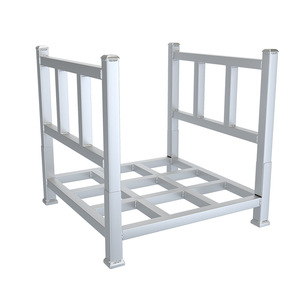
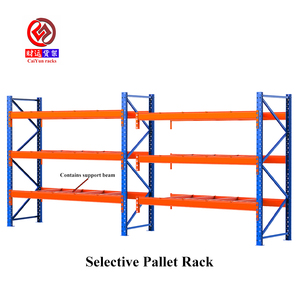
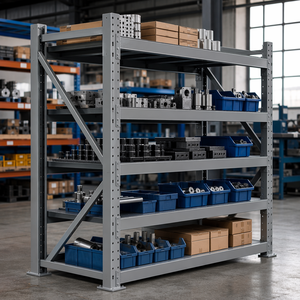
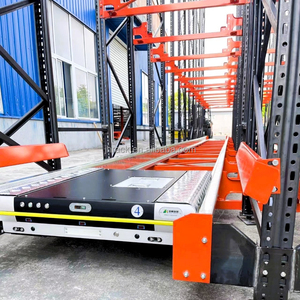
Structural Mechanics of Pallet Rack Frames: Cross-Sectional Integrity & Seismic Design
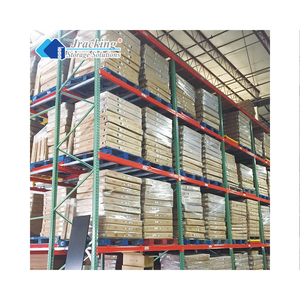
In modern supply chain engineering, a pallet rack frame is not merely a static steel skeleton; it is an active load-bearing structural matrix subject to static dead loads, dynamic seismic wave accelerations, and eccentric torsional moments caused by high-reach mast oscillations. As a leading manufacturer based in China, we integrate structural calculations governed by international codes including RMI (ANSI MH16.1), EN 15512, and AS 4084-2012.
The primary failure mode in high-bay pallet racking involves global flexural-torsional buckling of the upright upright columns and local distortional buckling around cold-punched perforations (such as standard teardrop patterns, 50mm metric pitch, or 75mm European pitch). To counteract these physical stresses, our cold-forming line deploys up to 24 continuous forming stages, introducing reinforcing intermediate ribs along the column web and stiffened inward lips on the flange profile.
| Upright Profile (mm) | Material Grade | Material Thickness | Max Section Load (kg) | Compatible Standards | Common Applications |
|---|---|---|---|---|---|
| Omega 80 × 60 | Q235B / SS400 | 1.8mm – 2.0mm | Up to 8,500 kg | EN 15512, FEM 10.2.02 | Medium-bay retail logistics, multi-tier manual pick towers |
| Omega 90 × 70 | Q235B / Q355B | 2.0mm – 2.3mm | Up to 14,000 kg | ANSI MH16.1, RMI Standard | US Standard Teardrop distribution hubs, FMCG operations |
| Heavy Omega 100 × 70 | Q355B High-Yield | 2.3mm – 2.5mm | Up to 18,500 kg | AS 4084, Seismic NCh 2369 | Seismic zone distribution, high-density drive-in storage |
| Industrial 120 × 95 | Q355B / S355JR | 2.5mm – 3.0mm | Up to 26,000 kg | ASME / FEM / ISO 9001 | Automated Shuttle (ASRS), 14m+ clad-rack warehouses |
Next-Generation Sourcing Trends for Warehouse Frames
How international procurement directors and logistics EPCs are mitigating volatility, supply risk, and operational carbon in pallet rack acquisition.
Shift to High-Tensile Steel Profiles
Global logistics facilities are migrating from standard mild steel to micro-alloyed Q355B and S355 structural steels. This enables a 15-20% deadweight reduction while sustaining superior sectional modulus and seismic ductility.
Hybrid Automated Shuttle Integration
Procurement contracts are transitioning from purely static selective frames to hybrid frames pre-punched for automated radio shuttle tracks, continuous busbar conduits, and sensor safety brackets for future AS/RS retrofits.
Anti-Corrosion Duplex Coating Systems
Cold storage facilities and tropical coastal logistics centers demand duplex corrosion protection: hot-dip galvanizing conforming to ISO 1461 combined with architectural-grade electrostatic polyester powder coating exceeding 1,000-hour salt spray testing.
Full Structural Traceability & BIM Models
Tier-1 procurement teams now demand mill certs with heat numbers traced to raw billet coils alongside Revit BIM families to simulate warehouse clash detection with MEP and fire suppression systems prior to container dispatch.
End-to-End Manufacturing Advantages
Why international warehouse operators across North America, Europe, Australia, and South America choose our direct production infrastructure.
In-House 10-Stage Precision Forming
We execute roll-forming, automated CNC mechanical hole punching, robotic portal welding, chemical phosphating, and electrostatic powder coating on our own proprietary lines, eliminating third-party sub-contracting variances.
Seismic Engineering & PE Calculations
Our dedicated engineering department models dynamic spectral accelerations according to local seismic codes such as Chile NCh 2369, Peru E.030, and US UBC/IBC criteria, calculating enlarged baseplates and heavy seismic bracings.
Optimized Container Pack & Marking
Using 3D shipping container space optimization software, bundled upright profiles and nested horizontal/diagonal bracings are packed with heavy-duty steel bands and wooden cribbing to prevent transit warping, maximizing TEU utilization.
Frequently Asked Questions for Industrial Procurement
Critical technical, logistics, and compliance inquiries answered directly by our senior structural engineers.