Engineered Warehouse Racking & High-Density Storage Systems
Certified industrial storage configurations fabricated using high-tensile Q235B and Q355B structural steel, finished with high-adhesion electrostatic powder coating for maximum operational lifecycle.
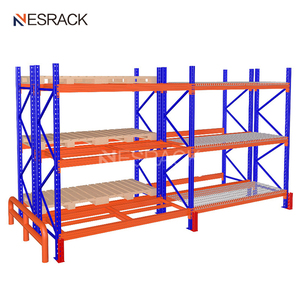
Adjustable Boltless Steel Pallet Rack 500-3000kg Warehouse Rack
View Specifications →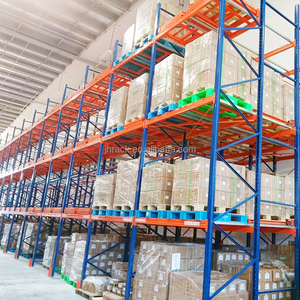
Industrial Push-Back Pallet Racks: Heavy-Duty Steel Storage System
View Specifications →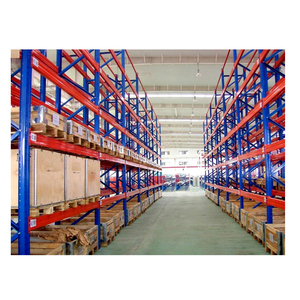
HEDA Steel Pallet Racking System Warehouse Heavy Duty Shelves
View Specifications →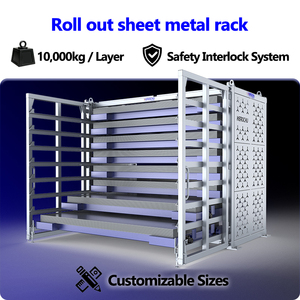
CE Certified Industrial Warehouse Steel Pallet Cargo Shelving
View Specifications →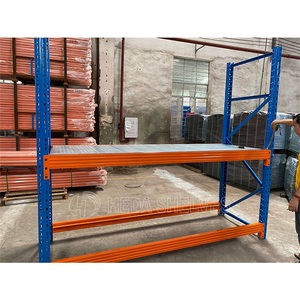
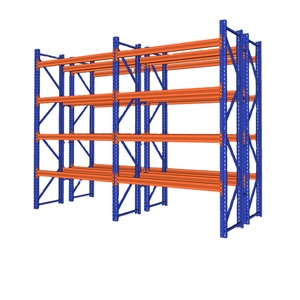
Heavy Duty Storage Rack Pallet System Shelf for Industrial Logistics
View Specifications →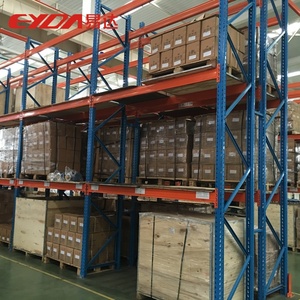
Heavy Duty Warehouse Pallet Racking for Bulk Cargo Logistics
View Specifications →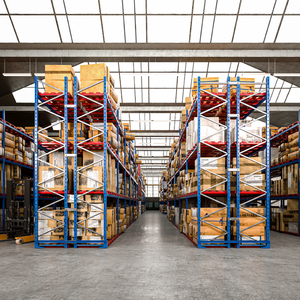
Heavy Duty Pallet Racking 4000kg 5-Tier Adjustable Industrial Racks
View Specifications →Structural Metallurgy, Safety Coefficients & Seismic Design Criteria
Modern pallet racking systems function as load-bearing structural frameworks inside distribution facilities. Compliance with European (FEM 10.2.02, EN 15512), American (RMI ANSI MH16.1), and Australian (AS 4084-2012) engineering benchmarks is critical for risk management.
When selecting a manufacturing partner in China, warehouse operations managers and logistics real estate developers must assess steel tensile dynamics. Commercial racking components fabricated from sub-grade coils often exhibit micro-cracking during cold profile roll-forming. At our automated Guangzhou facility, raw coils undergo spectrometric carbon-equivalent testing before entering continuous roll-forming lines. The upright posts are punched with an automated 50mm or 75mm pitch pattern, designed to optimize cross-sectional moments of inertia (Ix and Iy bending axis values), preventing premature buckling during asymmetric dynamic forklift impacts.
Furthermore, safety pins engineered from high-shear zinc-plated alloy steel guarantee that connector beams withstand upward accidental forces of not less than 5,000 N per hook without vertical dislodgement. Base plates are precision laser-cut and welded utilizing dual-shield robotic gas metal arc welding (GMAW), ensuring that vertical compressive stresses are uniformly transferred into the warehouse concrete slab without point-load shear failures.
| Racking Typology | Standard Load Limit | Aisle Clearance Requirement | Inventory Rotation | Primary Application Profile |
|---|---|---|---|---|
| Selective Pallet Racking | 1,000 – 4,500 kg / level | 3.0m – 3.8m (Standard Counterbalance) | 100% Direct Access (FIFO) | FMCG, 3PL Distribution, High-SKU E-Commerce |
| Drive-In / Drive-Through | 800 – 2,000 kg / pallet | Forklift enters rack lane | LIFO (Drive-In) / FIFO (Drive-Thru) | Cold Storage, Agricultural Bulk, Seasonal Batches |
| Push-Back Nested Trolley | 1,000 – 1,500 kg / pallet (2-6 deep) | Standard Forklift Aisle | LIFO (Gravity Nested Carts) | Intermediate SKU Density, Dry Food, Beverage |
| Automated Radio Shuttle | 1,500 – 2,500 kg / pallet (Up to 40m deep) | Aisle for Lift Mast Only | Dynamic FIFO & LIFO Programmed | Pharmaceutical Cold Chain, Automated Deep Stacking |
| Very Narrow Aisle (VNA) | 1,000 – 3,000 kg / level | 1.5m – 1.8m (Turret Truck / Wire Guided) | 100% Selective High-Bay | High-Cube Urban Fulfillment Hubs (Up to 18m High) |
Future Procurement Trends in Industrial Warehouse Storage
Global supply chain friction, rising warehouse land rents, and labor deficits are reshaping how global procurement leaders tender heavy-duty racking systems.
High-Cube Vertical Expansion
With industrial lease rates escalating in port zones and metropolitan gateways, procurement teams are transitioning from horizontal footprints to vertical high-bay structures exceeding 14 to 22 meters. Systems must integrate ultra-rigid tolerances to support high-reach articulated trucks and crane shuttles.
Seismic Verification Compliance
Global buyers in earthquake-active belts (Chile NCh 2369, Peru E.030, US IBC/RMI, New Zealand NZS) now reject uncertified rack configurations. Finite Element Analysis (FEA) computer modeling is now mandatory prior to cutting steel to calculate structural plasticity under dynamic seismic acceleration.
Modular Automation Readiness
Procurement contracts require hybrid racks engineered to support future automation. Warehouses initially deployed as standard selective or drive-in structures are configured with pre-drilled runner supports, enabling painless transition into semi-automated 4-way shuttle or AGV guidance pathways.
Anti-Corrosive Thermal Surface Tech
Expansion of cold-chain pharmaceutical and deep-frozen logistics requires superior surface engineering. Standard epoxy coatings crack under extreme cryogenic shifts (-30°C). Demand has pivoted toward pre-galvanized roll-formed profiles and heavy-duty hot-dip galvanizing exceeding 85μm zinc thickness.
Technological & Engineering Evolution in Warehouse Racking
The convergence of Industry 4.0 IoT sensors, cold roll-forming precision, and structural engineering is redefining structural racking resilience.
Continuous Roll-Forming Real-Time Gauging
State-of-the-art manufacturing incorporates multi-station cold roll-forming lines integrated with inline laser dimensional sensors. These scanners detect micro-variations down to 0.05mm in beam profile thickness and column perforation spacing, eliminating rack assembly misalignments during global onsite erection.
Smart IoT Deflection & Impact Monitoring
Next-generation rack systems integrate wireless tri-axial accelerometers and fiber optic strain gauges directly within structural base columns and load beams. The system provides real-time telemetry into the facility Warehouse Management System (WMS), issuing instant alarms if structural deflection exceeds 1/200th of span length.
Eco-Friendly Nano-Ceramic Pretreatment
Traditional hazardous phosphate pickling is being supplanted across top Chinese manufacturing plants by eco-friendly nano-zirconium conversion coatings. This produces superior surface cross-linking adhesion for electrostatic powder curing, elevating salt-spray corrosion resistance beyond 1,000 continuous hours.
Guangzhou HEDA Shelves: Engineering Integrity Built Since 2001
Operating a modern 30,000 square meter factory base equipped with automated robotic welding cells, continuous roll-forming mills, and dedicated export logistics teams.
Free 3D Architectural CAD Layouts
Our in-house design engineering team formulates full 3D spatial models and structural calculation sheets within 24 to 48 hours. We calculate load distribution, turning radii for reach trucks, and egress pathways before procurement contracts are finalized.
Rigorous CE & ISO 9001:2015 Certifications
Our production protocols conform rigorously to CE Certificate No. 2435-CPR-8605159 and ISO 9001:2015 standards. Every production run undergoes yield strength destructive testing, beam deflection load benchmarks, and dry-film coating thickness testing.
Turnkey OEM & ODM Custom Manufacturing
From custom beam connectors compatible with existing international racking profiles to bespoke column cross-sections and specialized color palettes, we provide full-scope contract engineering for global distributors and large retail operators.
Optimized Container Pack & Landed Cost
Steel freight economics can undermine project budgets. We deploy specialized 3D packing simulation algorithms that interlock upright posts and nested beams, maximizing 40HQ container cube utilization up to 98% while avoiding transit scratch damages.
Rapid 2 to 4-Week Manufacturing Turnaround
Backed by our 30,000-ton monthly throughput and massive direct raw steel coil partnerships with tier-1 steel mills, standard pallet racking runs are completed within 14 to 28 days post-drawing approval, keeping warehouse handover schedules on track.
Lifetime Technical Support & Field Guides
Every shipment is packaged with numbered piece parts, detailed structural schematics, bolt torque requirements, and high-definition video walkthroughs. We offer live remote engineering support or on-site project management across major global ports.
Frequently Asked Questions on Pallet Racking Procurement
Direct technical answers from our senior warehouse engineering team to assist in risk mitigation and tender preparation.
What specific technical data is required to obtain an engineered CAD layout and quote?
- Warehouse Architectural DWG/PDF: Showing overall length, width, clear height beneath ceiling sprinklers, and locations of structural building columns and dock doors.
- Unit Load Parameters: Pallet dimension (Width x Depth x Height, including product overhang) and maximum gross weight per pallet.
- Handling Equipment Data: Forklift make and model, mast maximum lift height, collapsed mast height, and minimum aisle turning radius (AST).
- Environmental Parameters: Operating temperatures (dry ambient vs cold frozen storage) and local seismic ground acceleration values.
How does your factory ensure compliance with international seismic design codes?
What are the key differences between standard Q235B and high-strength Q355B steel in racking?
What pre-treatment and powder coating steps are performed to prevent rust in coastal or humid ports?
How are container loading plans handled to avoid damages and maximize freight efficiency?
What third-party testing reports and quality certificates accompany shipments?
- Mill Test Certificates (MTC) tracking chemical composition and tensile elongation of steel coils.
- CE Factory Production Control Certificates (EN 1090-1 / EN 15512).
- ISO 9001:2015 Quality Management System verification documents.
- Destructive weld penetration macro-etch reports and coating adhesion cross-hatch test reports.
- SGS, TÜV Rheinland, or Intertek pre-shipment container inspection reports upon client request.
Ready to Engineer Your Optimal Warehouse Storage Footprint?
Connect directly with our structural engineering department. We will analyze your warehouse floor dimensions, pallet load matrix, and handling equipment to deliver a free 3D CAD system design and factory-direct price quotation.