Featured Industrial Pallet Racking & Automated Shuttle Systems
Discover our flagship warehouse storage configurations. Every unit undergoes rigorous finite element structural analysis, automated roll forming, and specialized surface treatment to guarantee unyielding structural integrity under dynamic warehouse conditions.
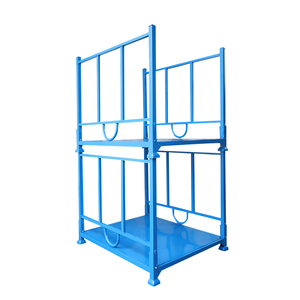
Warehouse Storage Metal Stackable Heavy Duty Pallet Stacking Frames
Engineered for dynamic seasonal buffer zones, bulk commodity storage, and cross-docking facilities where fixed racking isn't practical.
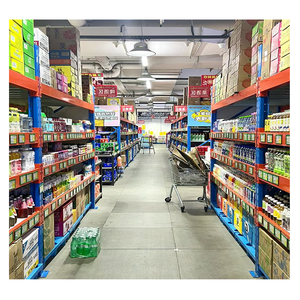
Gravity Carton & Pallet Flow Dynamic Live Storage Racking System
Equipped with centrifugal brake rollers and speed dampeners for reliable zero-energy first-in first-out storage in perishable food and FMCG picking aisles.
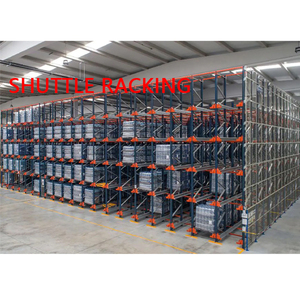
High-Density 4-Way Radio Shuttle Pallet Racking ASRS System
Cutting-edge multi-directional robot carrier system interfacing seamlessly with vertical lifters, WMS, and fleet schedulers for maximum spatial exploitation.
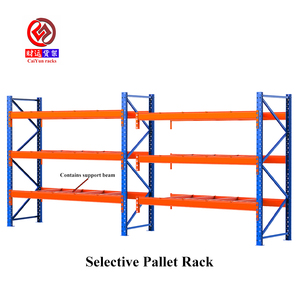
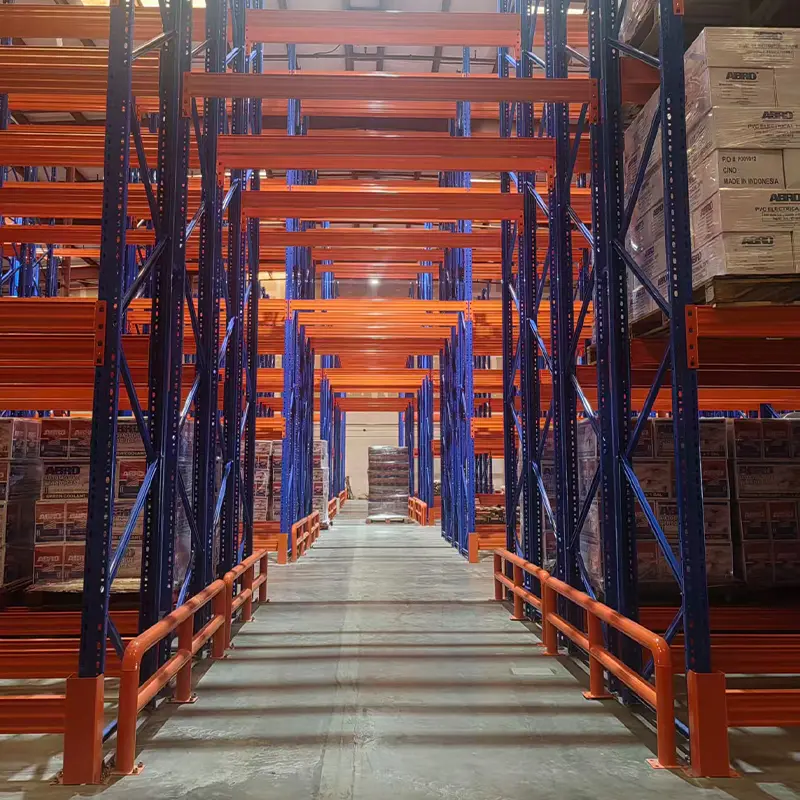
1500-4500kg Heavy Duty Adjustable Beam Steel Warehouse Pallet Rack
Precision cold-rolled upright columns featuring 75mm teardrop or butterfly adjustability, electrostatic epoxy finish, and certified high-moment safety pins.
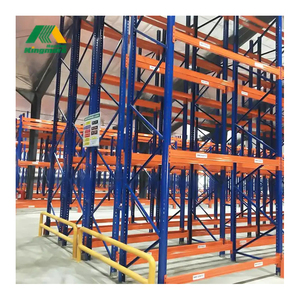
Industrial Massive Plate Type Multi-Tier Heavy Duty Pallet Rack
Equipped with reinforced corrugated or ribbed steel decks for heavy equipment dies, raw industrial castings, and un-palletized metal container storage.
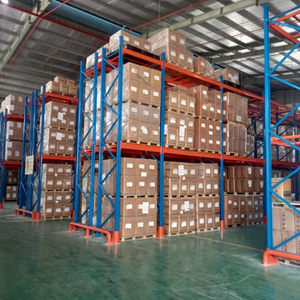
Heavy Duty Cold Storage Selective & Shuttle Interface Pallet Racks
Designed specifically for deep refrigeration blast freezers and cold storage distribution centers, featuring embrittlement-resistant steel metallurgy.
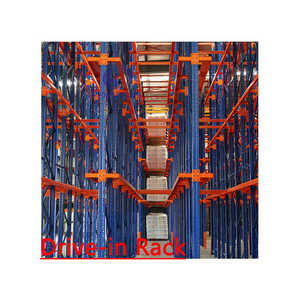
Direct Factory 2000kg Drive-In & Continuous Tunnel Pallet Rack
Single-aisle entry profile utilizing structural cantilever support arms for bulk homogenous SKU blocks, engineered with robust column base protection.
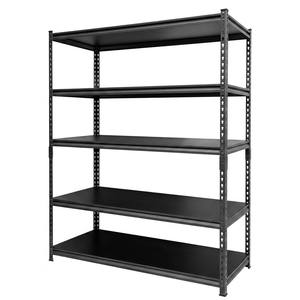
Modular 5-Shelf Steel Light-to-Medium Manual Picking & Display Rack
Burst silver electrostatic coated finish with high-density composite decking. Versatile for e-commerce sortation tiers, parts rooms, and light goods staging.
Shuttle Racking Engineering: Kinematics, Power & Spatial Yield
Shuttle racking replaces conventional forklift operating aisles with autonomous shuttle carriers that travel inside dedicated storage channels. Dive into the fundamental structural differences, mechanical tolerances, and thermal dynamics that separate world-class shuttle racking from rudimentary steel framing.
High-Precision Galvanized Rails
A radio shuttle carrier is only as reliable as the profile upon which it glides. Our cold-formed galvanized rails maintain a continuous linear straightness tolerance under 1.5mm per 12-meter span, preventing shuttle wheel skew, sensor displacement, and premature poly-wheel wear.
- Profile Material:Q355 Hot-Dip Strip
- Standard Thickness:2.5mm / 3.0mm Rolled
- Wheel Surface Match:95 Shore A Polyurethane
- Vertical Deflection:< 1/400 at Full Load
Sub-Zero Lithium Thermodynamics
Standard lithium-ion batteries lose up to 60% capacity below -15°C due to increased internal electrolytic impedance. Our cold-storage shuttle units utilize custom LiFePO4 cells with integrated silicone heating jackets and insulated casing, allowing non-stop 8-hour duty cycles at -30°C.
- Operating Cell Temp:-30°C to +45°C
- Recharge Time:2.5 - 3.0 Hours Fast Dock
- Battery Chemistry:Grade A LiFePO4 / LTO Opt.
- Cycle Durability:> 3,500 Full Cycles
Dual Optical & Laser Sensing
Shuttle location accuracy inside dark high-bay tunnels is governed by redundant photoelectric sensors paired with magnetic rotary encoders. The shuttle automatically calculates stopping distances based on live pallet payload weight, preventing pallet-to-pallet impact shock.
- Positioning Accuracy:± 2.0 mm Repeatable
- Obstacle Detection:Triple-Zone Time-of-Flight
- Communication Link:Industrial 5GHz Wi-Fi / RF
- Safety Standard:EN ISO 13849-1 (PLd)
Engineering Benchmark: Radio Shuttle vs. Traditional High-Density Configurations
A transparent breakdown of volumetric storage efficiency, operational cycle throughput, forklift damage rates, and overall operational expenditure.
| Technical Parameter | 2-Way Radio Shuttle | 4-Way Shuttle ASRS | Drive-In Pallet Racking | Selective Pallet Racking |
|---|---|---|---|---|
| Spatial Footprint Utilization | Up to 85% Density | Up to 92% Maximum | 65% - 75% Density | 40% - 45% (Aisle Heavy) |
| Pallet Access Cycle Speed | High (35-50 pallets/hr/lane) | Ultra-High (Continuous ASRS) | Slow (Forklift enters rack) | Fast (Direct reach only) |
| Inventory Rotation Logic | Configurable FIFO or LIFO | Dynamic Multi-Level FIFO | Strict LIFO Only | 100% Random Access |
| Forklift Structural Impact Risk | Near Zero (External only) | Zero (Fully Automated) | Severe (Daily internal drives) | Low (Standard aisles) |
| Cold Room Thermal Conservation | Outstanding (Compact mass) | Superior (Minimal volume) | Moderate | Poor (Excess air cubic volume) |
| Seismic Stress Resiliency | High (Rigid internal tie-ins) | Ultra-High (ASRS tied frame) | Fragile (Lacks middle bracing) | Standard (Planar braced) |
Future Procurement Trends in High-Density Pallet Warehousing
Procurement directors and supply chain VPs are no longer just buying steel tonnage. The landscape is shifting rapidly toward energy-optimized automation, flexible structural footprints, and end-to-end WMS/WCS synchronization. Here is how modern storage infrastructure is evolving.
From Forklift Dependent to 4-Way Shuttle ASRS
While semi-automated 2-way radio shuttles still dominate retrofitted warehouses, new tier-1 logistics facilities are shifting CapEx toward 4-way shuttle automated storage and retrieval systems (ASRS). By decoupling vertical movement (via dedicated pallet lifts) from horizontal navigation (via multi-directional shuttles), warehouse operators eliminate manual forklift labor entirely, achieving 24/7 dark-warehouse operation with zero operator collisions.
Deep Thermal Efficiency & Cold Storage Expansion
With power tariffs climbing globally, cold store operators in agribusiness, seafood, and biopharma are under intense pressure to minimize refrigeration kilowatt-hours per pallet position. Shuttle racking allows continuous ceiling-to-floor and wall-to-wall loading, compressing building thermal mass by up to 40% compared to traditional reach-truck layouts, resulting in direct payback on cooling equipment within 24 months.
Rigorous Seismic Engineering (Chile, Peru, USA Codes)
Cross-border procurement now demands localized structural calculation packages. Leading Chinese manufacturers are investing heavily in specialized engineering tools that model non-linear dynamic seismic responses under international codes—such as NCh 433 / NCh 2369 (Chile), E.030 (Peru), NSR-10 (Colombia), and RMI MH16.1 (USA)—employing oversized baseplates, high-ductility anchor studs, and heavier bracing cross-sections.
Standardized Open API & Fleet Management Telematics
Proprietary, closed shuttle architectures are giving way to open-API fleet dispatch protocols. Procurement teams actively select manufacturers that offer RESTful interfaces, MQTT diagnostic telemetry, and direct ERP/WMS plug-ins. Real-time battery status, individual motor torque telemetry, and predictive rail friction analysis are now standard operational requirements for enterprise facilities.
Guangzhou HEDA Shelves Co., Ltd. — 25 Years of Precision Engineering
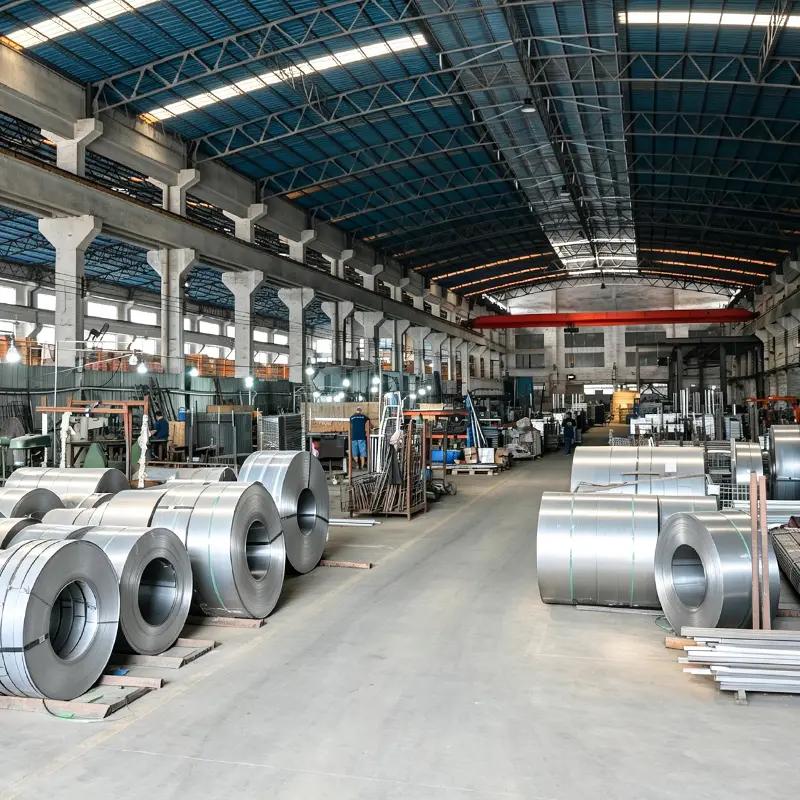
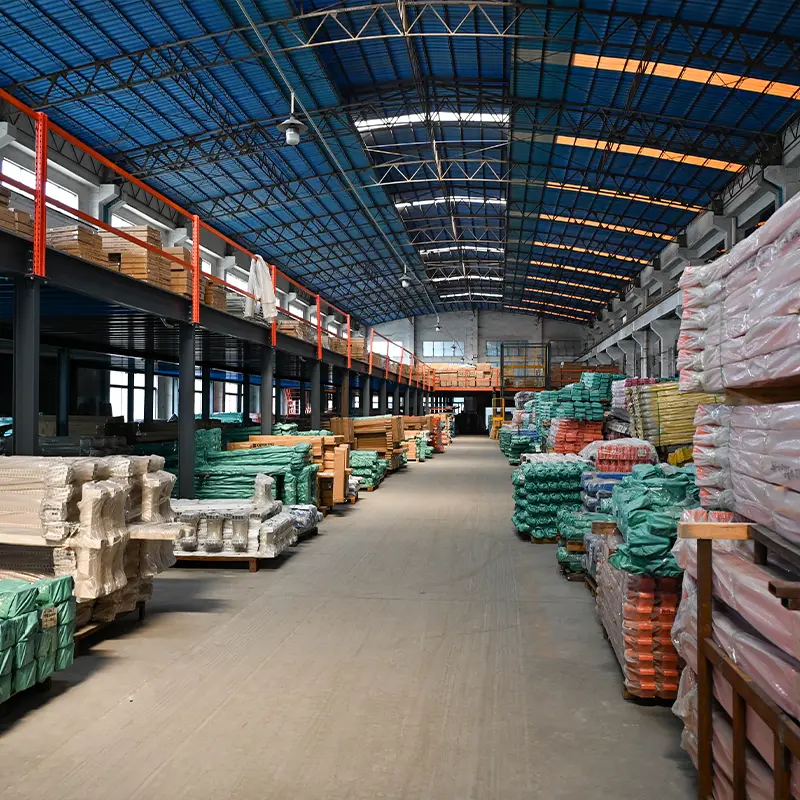
Founded in 2001, Guangzhou HEDA Shelves Co., Ltd. operates a state-of-the-art 30,000 square meter manufacturing center with over 300 experienced engineers, CNC tooling specialists, and structural design experts.
With an in-house monthly fabrication capacity surpassing 30,000 metric tons, we bridge the gap between heavy structural engineering and precision robotic automation. Every pallet rack, shuttle rail profile, and vertical support frame is produced directly in our Guangzhou workshops, eliminating intermediary markup while guaranteeing flawless quality control from cold steel uncoiling to final export crating.
The 10-Stage Precision Manufacturing Workflow
Every millimeter of profile is strictly monitored under our ISO 9001 QA protocols to prevent field installation misalignment.
Frequently Asked Questions by Industrial Racking Buyers
Detailed answers addressing load dynamics, international seismic safety compliance, sub-zero battery performance, landed shipping costs, and layout design prerequisites.
How does radio shuttle racking compare with drive-in racking regarding Total Cost of Ownership (TCO)?
While standard drive-in racking carries a lower upfront initial capital cost (primarily purchasing passive structural steel), its total operating expenditure is significantly higher. In drive-in systems, forklifts must physically drive inside the racking tunnels to deposit and retrieve pallets. This causes constant slow navigation speeds and frequent structural impacts to upright frames, requiring expensive ongoing maintenance and downtime.
Radio shuttle racking positions the forklift exclusively at the end of the aisle; the high-speed autonomous shuttle performs all internal channel travel. This doubles or triples operational pallet turnover rates, reduces forklift operator labor by 40-50%, drastically cuts vehicle fuel/battery consumption, and virtually eliminates frame collision damage. In medium to high-throughput operations, the initial CapEx delta of a shuttle system is typically amortized within 12 to 18 months.
Can HEDA Shelves engineer racking systems for high-intensity seismic zones in Chile, Peru, Colombia, and the Pacific Rim?
Yes. We have an extensive track record engineering structural racking across seismically active zones. Our engineering department computes dead load, live load, seismic acceleration coefficients (PGA), and dynamic soil classifications based on national standards such as NCh 433 / NCh 2369 (Chile), Norma Técnica E.030 (Peru), and NSR-10 (Colombia).
To resist intense cyclic lateral and torsional forces, we customize our installations with oversized welded baseplates, deep dual chemical/mechanical anchor systems, thick-walled diagonal and horizontal portal bracing towers, and specialized connector clips that resist dynamic dislodgement. Full structural design calculations and finite element stress analysis reports are provided for verification by your local civil engineer of record.
How do your shuttle systems and steel finishes perform in humid tropical or cold-room condensation environments?
Corrosion mitigation depends heavily on surface chemical preparation. Every steel element manufactured at HEDA Shelves undergoes a continuous 7-stage pre-treatment cycle consisting of hot alkali degreasing, twin acid pickling, rust removal, surface conditioning, and zinc-iron phosphating prior to powder application. We utilize premium exterior-grade polyester resin powders cured at 200°C to guarantee an unbroken, pinhole-free barrier coating exceeding 60-80 microns thickness.
For extreme condensation environments, coastal humidity, or blast freezers (-30°C), we supply components hot-dip galvanized in accordance with ISO 1461, yielding a zinc layer of 65-100 microns that achieves electrochemical sacrificial self-healing protection. Shuttle electronic boards are conformal-coated to IP65 standards to prevent condensation shorts during temperature transitions.
What exact parameters and floor plan data are required to generate a customized 3D layout and formal quote?
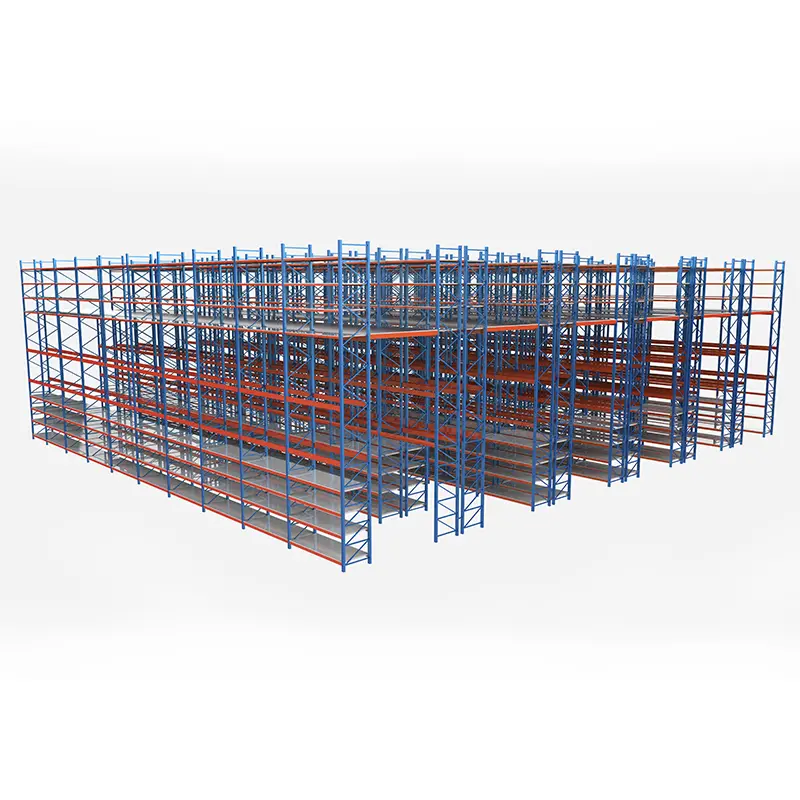
To enable our engineering team to provide an optimized CAD floor plan, 3D rendering, and finite element quotation within 24 hours, please supply the following site parameters:
- Warehouse Architectural Drawing: Length, width, clear ceiling height under roof trusses, and locations of structural building columns, docks, and egress doors.
- Pallet Characteristics: Pallet dimensions (W x D x H including cargo overhang) and gross loaded weight per pallet.
- Material Handling Equipment: Forklift model, mast collapsed height, maximum lift height, and minimum right-angle turning aisle radius.
- Logistics Throughput: Total active SKUs, daily in/out pallet turnover, and preference for FIFO (First-In, First-Out) or LIFO (Last-In, First-Out).
- Site Ambient Conditions: Operating temperature range and local seismic design zone parameters.
What are your production lead times and how do you optimize ocean container freight costs?
Supported by our 30,000 metric ton monthly capacity, standard pallet racking and shuttle orders are manufactured and ready for export dispatch within 2 to 4 weeks following architectural drawing sign-off. High-volume multi-tier mezzanine or complex 4-way shuttle high-bay installations are scheduled in phased production batches aligned with your jobsite civil construction timeline.
To minimize landed ocean freight expenses, our shipping department utilizes dedicated 3D packing simulation software to calculate container nesting profiles. Beams, upright columns, and rail sections are banded into rigid, protective bundles that maximize both container cubic volume and maximum allowable container payload weight limits, preventing transit scratching while eliminating empty shipping air.
How is equipment installation, commissioning, and after-sales shuttle maintenance executed internationally?
Every shipment is accompanied by comprehensive, component-numbered 3D exploded assembly drawings, anchor bolt torque charts, and step-by-step engineering installation manuals. We offer three flexible execution pathways: 1) Full remote video commissioning and engineering support for your local rigging crew; 2) Dispatch of an experienced HEDA installation supervisor to oversee local contractor assembly; or 3) Complete turnkey installation by our regional certified partner teams.
Each radio shuttle carrier is supplied with a comprehensive maintenance toolkit, critical spare parts kit (spare sensors, drive wheels, electronic relays, control boards), and modular plug-and-play components. Shuttle firmware supports remote cloud diagnostic checks via standard diagnostic interfaces.
Ready to Triple Your Warehouse Pallet Storage Density?
Submit your warehouse dimensions and cargo specifications today. Our senior intralogistics structural engineers will provide a complimentary 3D layout simulation, seismic structural calculation, and factory-direct price quotation within 24 hours.