Precision Warehouse Racking & High-Density Stacking Systems
Manufactured from certified Q235B/Q355B structural cold-rolled steel. Verified under ISO 9001:2015 and CE standards for heavy-payload logistics operations worldwide.
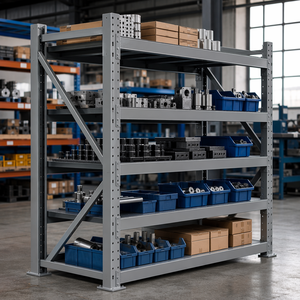
Custom OEM Storage Rack Frame | Heavy Duty Steel Welded Fabrication for Warehouse Pallet Racking
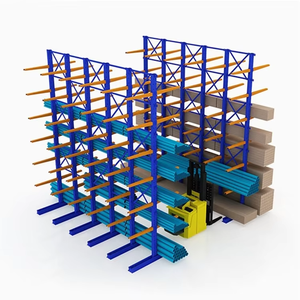
Heavy-Duty Steel Warehouse Racks 5-Layer Corrosion Protected Cantilever Storage Shelf
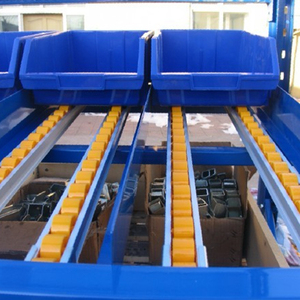
Carton Flow Rack Sliding Roller Shelf System Slide Warehouse Rack
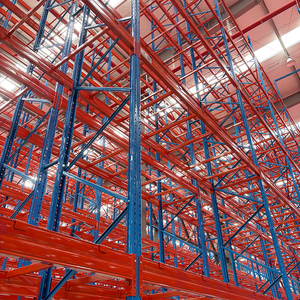
Jracking EURO Standard Industrial Vertical Warehouse Storage Shelves Heavy Duty Pallet Racking System for Logistic Hubs
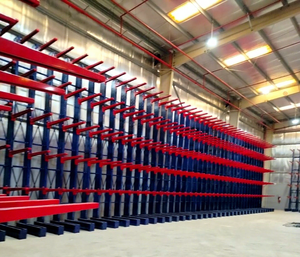
OEM Freight Warehousing Storage Rack Shelving Heavy Duty Cantilever Rack System
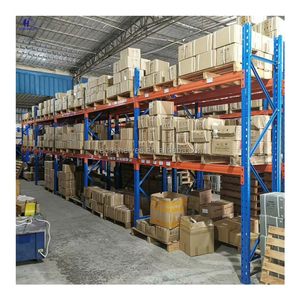
Warehouse Heavy Rack Pallet Rack Industrial Shelf Warehouse Racking System For Racking Rack Shelf Factory Shelf
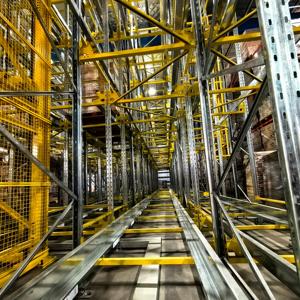
Jracking High-Load Warehouse Storage Rack CE Certified Four-Way Radio Shuttle Rack System for Cold Storage Warehouse Use
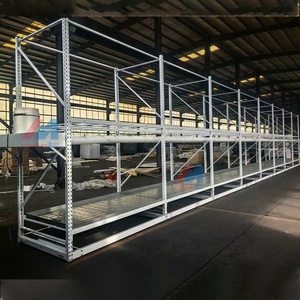
Commercial Grow Rack with Waterproof Shelves
Engineering Fundamentals of Industrial Stack Racks (Post Pallets & Nesting Frames)
In high-throughput, volatile modern supply chains, fixed selective pallet racking often introduces spatial rigidities that restrict agile warehouse footprints. Stack racks (alternatively classified as post pallets, portable stacking frames, or steel stillages) bridge the operational divide between floor block-stacking and structural racking. By combining full dynamic mobile pallet handling with high-capacity static multi-tier vertical storage, stack racks provide zero-footprint storage densification without the permanent concrete anchor drilling, floor damage, or fixed aisle geometry dictated by standard industrial systems.
As premier Chinese stack rack manufacturers, engineering compliance requires adherence to strict cold-formed and structural steel design standards, primarily EN 15512, ANSI MH16.1, and AS4084. The performance of a portable stack rack rests entirely upon structural geometry: inverted cup-and-cone locator pins, post socket weldment fatigue strength, and the base frame's elastic modulus under localized dynamic forklift impact.
Metallurgical Integrity: Steel Grade Selection and Structural Yield Strength
High-integrity Chinese stack rack fabrication begins with rigorous raw steel material verification. Our automated roll-forming and robotic welding cells utilize strictly certified prime hot-rolled and cold-rolled coils sourced from Tier-1 mills (such as Baosteel, Ansteel, and HBIS Group):
Q235B Carbon Structural Steel
Featuring a yield strength ($f_y$) of $\ge 235 \text{ MPa}$ and tensile strength between $370\text{–}500 \text{ MPa}$. Offers exceptional elongation ductility ($\ge 26\%$), making it the premier choice for ambient-temperature general distribution, roll-formed base framing, and anti-impact post cups.
Q355B Low-Alloy Structural Steel
With an elevated yield limit of $\ge 355 \text{ MPa}$, Q355B delivers superior strength-to-weight ratios for extreme heavy-duty applications (loads $> 2,000 \text{ kg/unit}$), structural high-cube 5-tier stacking, and low-temperature cold-storage installations where steel embrittlement must be engineered out.
Seamless / ERW Structural Tubing
Removable upright posts are engineered using cold-drawn structural steel tubing with wall thicknesses from $2.5\text{mm}$ to $4.5\text{mm}$. Strict ovality tolerances ($\le 0.3\%$) prevent column binding inside base receivers during manual or crane disassembly.
Static Stacking Topology vs. Dynamic Handling Mechanics
A critical engineering failure in low-cost stack rack manufacturing occurs when suppliers calculate static load bearing without modeling the dynamic stresses generated during loaded forklift transit. A stack rack rated for $1,500 \text{ kg}$ static tier capacity experiences peak dynamic shock coefficients between $1.25\text{g}$ and $1.4\text{g}$ during rough transit over expansion joints or uneven warehouse dock levelers.
Our engineering design incorporates full Finite Element Analysis (FEA) verification, applying simultaneous lateral wind load (for outdoor yard use), seismic base-shear reaction, and asymmetrical live load models to calculate elastic deflection limits: limiting column deflection to $< L/250$ to avoid permanent plastic deformation of socket weldments.
| Engineering Attribute | Demountable Post Stillage | Nesting (Nestainer) Stack Rack | Fixed Welded Stack Box | Traditional Pallet Racking |
|---|---|---|---|---|
| Return Freight Ratio | Up to 1:6 (Disassembled) | Up to 1:4 (Inter-nested) | 1:1 (Rigid Non-Collapsible) | Requires Disassembly Crews |
| Static Stack Height | 3 to 5 Tiers High | 3 to 4 Tiers High | 4 to 6 Tiers High | Up to 14 Tiers (Building Clear Height) |
| Handling Equipment | Counterbalance / Reach Truck | Standard Forklift / AGV | Forklift / Overhead Crane | VNA / Reach / Turret Trucks |
| Aisle Agility | Complete Reconfiguration in Hours | Complete Reconfiguration in Hours | Flexible Yard / Bulk Areas | Fixed Permanent Footprint |
| Footprint Density | High (Zero Fixed Flue Spaces) | Dynamic 45° Angle Stacking | Maximum Bulk Solid Block | Medium (Requires Fork Aisle Spaces) |
Guangzhou HEDA Shelves: 25 Years of Global Structural Authority
Originating in 2001, Guangzhou HEDA Shelves Co., Ltd. has grown from a regional structural fabrication workshop into an international logistics equipment enterprise, exporting high-precision warehouse racking systems, structural mezzanines, and stack racks across more than 120 countries.
Independent CE & ISO Quality Audits
Our facility holds validated factory production certifications under CE Certificate No. 2435-CPR-8605159 (EN 1090-1 Structural Steel Fabrication Execution Class EXC2) and ISO 9001:2015 Certificate No. 18624Q00169R0M. Sourcing teams receive complete material traceability certificates (MTRs) and weld inspection reports per batch.
Fully Integrated Production Lifecycle
From high-precision uncoiling, automatic laser blanking, cold-roll profile extrusion to 6-axis robotic welding and environmentally certified multi-stage surface pretreatment. Dual automated electrostatic powder lines guarantee cured film hardness $\ge 2\text{H}$ and cross-cut adhesion ISO Class 0.
Tailored Intermodal Container Loading (FCL)
Shipping bulky structural steel demands sophisticated export stowage modeling. Our logistics engineering team uses customized 3D container stuffing algorithms that achieve up to 98% space efficiency in 40ft HC containers, deploying steel dunnage, protective wrap, and reinforced corner buffers to prevent transit abrasion.
Future Sourcing & Procurement Trends for Industrial Stack Racks (2025–2035)
Procuring warehouse storage infrastructure has transitioned from transactional, price-per-ton bidding into an enterprise asset strategy shaped by automation, geopolitical freight dynamics, and lifecycle sustainability. Global supply chain directors are reevaluating their rack procurement criteria across several macro developments:
1. Direct Integration with Autonomous Mobile Robots (AMRs) & AGVs
The acceleration of robotic material handling requires stack racks to abandon loose dimensional tolerances. Next-generation procurement specifications mandate bottom guide pockets compatible with autonomous pallet jacks and AMR heavy-lifters. Laser optical sensors on autonomous guided vehicles demand pinpoint positioning accuracy: base frame tolerances are now specified within $\pm 1.0\text{mm}$, with low-reflective matte industrial coatings that do not disrupt LiDAR mapping or optical barcode guidance.
2. Elastic Warehousing: Navigating Leased Real Estate Volatility
As Class-A industrial logistics real estate rents continue to climb globally, 3PLs and seasonal consumer goods enterprises increasingly refuse long-term capital investments in fixed pallet racks that forfeit tenant improvement allowances upon lease expiration. Demountable stack racks and nesting stillages represent a zero-loss, 100% salvageable dynamic asset that moves with the tenant, dramatically lowering balance sheet amortization periods.
3. Green Metallurgy & Carbon Footprint Auditing (ESG Compliance)
Global procurement teams across North America, Europe, and South America are demanding documented Environmental Product Declarations (EPDs). China’s steel fabrication sector has responded by transitioning from basic oxygen furnaces (BOF) to scrap-based Electric Arc Furnaces (EAF), reducing embodied carbon by up to 55%. Additionally, environmentally harmful solvent-based paints are completely displaced by lead-free, non-toxic triglycidyl isocyanurate (TGIC)-free polyester powder coatings that emit zero volatile organic compounds (VOCs).
Next-Generation Technological Evolutions in Stack Rack Engineering
How cutting-edge Chinese structural research laboratories are redesigning stackable infrastructure to achieve higher volumetric density and safer operations.
Generative FEA & High-Yield Light-Weighting
By leveraging generative topology optimization algorithms, structural engineers redistribute steel mass toward high-stress joint nodes while reducing non-load-bearing web areas. This lowers tare weight by 14% to 18% without sacrificing the 4-high static stack safety coefficient ($2.0 \times \text{ Working Load}$).
Self-Guiding Inverted Deep-Cone Bases
Forklift operators traditionally lose cycle time aligning post tips into shallow nesting targets. Advanced computer-simulated inverted bell-mouth cups permit angular entry offsets up to 18 degrees, enabling rapid, non-binding placement that boosts stack cycles by 30% while reducing rack collision damage.
Duplex Zinc + Thermal Barrier Treatments
Cold chain logistics (-30°C) coupled with coastal salt-air shipping yards accelerate corrosion. New hybrid thermal coatings integrate a mechanical zinc underlayment sealed with a cross-linked thermosetting polyester topcoat, surviving over 1,000 continuous hours of ASTM B117 salt spray testing.
Frequently Asked Questions on Sourcing Stack Racks from China
Comprehensive technical and commercial insights compiled by our lead logistics structural engineers.
What are the key load deflection limits (L/200 vs L/250) when engineering stack racks?
+
How do you protect stack racks from brittle fracture in -30°C cold storage warehouses?
+
What is the standard production lead time and monthly manufacturing throughput?
+
How do nested stack racks compare with demountable post pallets regarding return freight efficiency?
+
Are stack racks legally classified as building structures requiring seismic engineering anchor permits?
+
What quality control documentation is supplied with an export container shipment?
+
Request a Customized 3D Layout & Structural Load Calculation
Consult directly with our senior racking engineering specialists. Submit your warehouse floor plan, SKU payloads, clear stack height limitations, and operational environment for a free structural CAD package and formal factory quotation within 24 hours.