High-Performance Structural Racking & High-Density Systems
Explore our industrial-grade storage solutions fabricated from premium certified structural steels (ASTM A36, Q235B, and Q355B), designed to withstand rigorous forklift interactions, extreme temperature fluctuations, and severe live-load duty cycles.
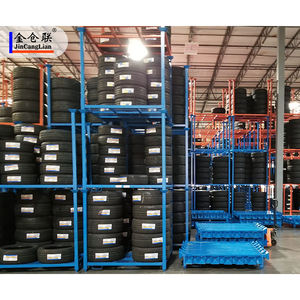
High Standard Steel Tubular Warehouse Racks Stacking Racks
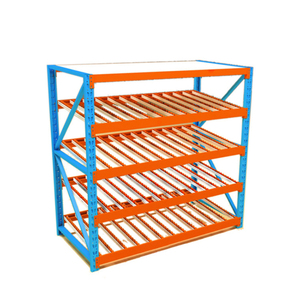
Blue Orange Steel 5-Layer Sliding FIFO Flow-Through Racking
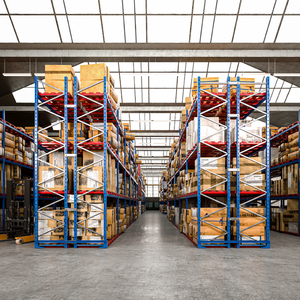
Heavy Duty Pallet Storage Rack System 4000kg Capacity
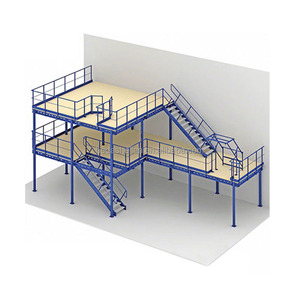
Rack-Supported Structural Mezzanine Floor System
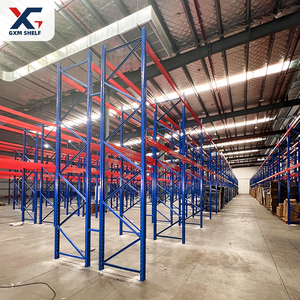
Industrial Selective Structural Pallet Racking
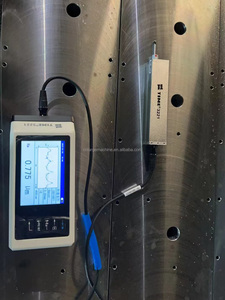
Commercial Sheet Metal Fabricated Rack Components
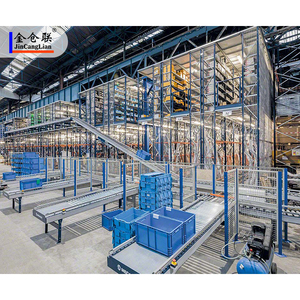
Intelligent Radio Shuttle Robot Pallet Racking
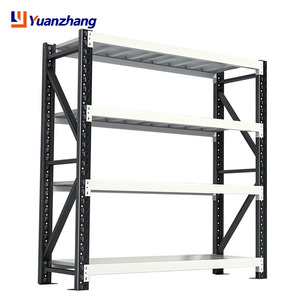
Precision Bolted Workshop & Warehouse Shelving
Structural C-Channel vs. Roll-Formed Steel: The Definitive Technical Comparison
In high-throughput distribution hubs, cold storage distribution facilities, and high-risk seismic environments, structural steel pallet racking delivers structural integrity where roll-formed sheet steel risks catastrophic deformation.
Why Structural C-Channel Dominates Demanding Environments
Structural pallet racks are manufactured using hot-rolled structural steel channels (ASTM A36 / Q235B / Q355B). Unlike thin-gauge roll-formed metal sheet that is coiled, uncoiled, and cold-stamped, hot-rolled steel maintains uniform structural density, superior yield stress reserves, and significantly heavier wall thicknesses (frequently exceeding 4.0mm to 6.0mm).
The primary point of warehouse failure occurs at the lower 1,000mm of the rack upright due to forklift impact dynamics. Structural steel delivers up to 250% higher impact tolerance against accidental frontal and corner collisions. Furthermore, structural racking utilizes bolted heavy-gauge high-tensile fasteners (Grade 5 or Grade 8 bolts) instead of snap-in teardrop pin tabs, eliminating unintended beam dislodgement risks.
| Engineering Attribute | Hot-Rolled Structural Rack | Cold Roll-Formed Rack |
|---|---|---|
| Raw Material Grade | ASTM A36 / Q235B / Q355B Hot C-Channel | Light Cold-Rolled Strip Steel |
| Component Thickness | 3.2mm – 8.0mm Heavy Web | 1.5mm – 2.5mm Thin Gauge |
| Forklift Impact Resistance | Exceptional (High kinetic absorption) | Low (Prone to creasing/twisting) |
| Beam-to-Column Connection | High-Strength Bolted (Grade 5/8) | Teardrop / Slot Clip-in Hook |
| Freezer / Cold Chain Performance | Resilient to thermal embrittlement | High risk of localized buckling |
| Total Cost of Ownership (TCO) | Minimal maintenance & repair cost | Frequent post/beam replacement costs |
| Seismic Shear Rating | Superior moment-resisting capacity | Requires extensive additional bracing |
Enterprise Production Infrastructure: Guangzhou HEDA Shelves Co., Ltd.
Operating a modernized 30,000 square-meter specialized production center with over 300 experienced engineers, structural technicians, and skilled metalworkers, HEDA provides end-to-end manufacturing control from raw steel coils to loaded export containers.
Full In-House Metal Processing
Every fabrication milestone—precision CNC sawing, robotic beam-connector welding, continuous automatic upright punching, and pre-treatment pickling—is operated under unified factory supervision to guarantee sub-millimeter tolerances.
Seismic Structural Engineering
Our engineering design bureau integrates site-specific seismic parameters into structural calculations. We engineer custom base-plate footprints and anchoring schedules compliant with NCh 433/2369 (Chile), E.030 (Peru), and NSR-10 (Colombia).
Severe Environment Coatings
Equipped with advanced 10-stage automated phosphating and thermosetting electrostatic powder coating tunnels. For harsh coastal distribution centers or sub-zero refrigeration units, optional hot-dip galvanizing per ASTM A123 is readily available.
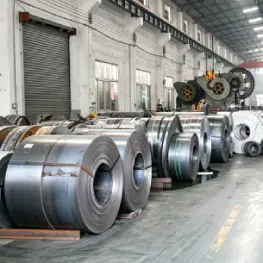
Raw Material Verification
Certified mill test certificates (MTC) verifying yield point, elongation, and carbon chemistry.
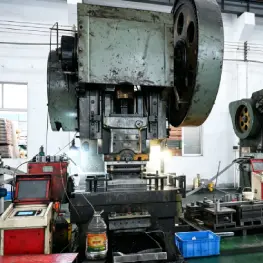
Precision Profile Forming
Automated roll forming ensuring continuous straightness and precise structural cross-sections.
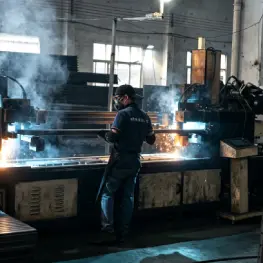
Robotic & Certified Welding
Flawless full-penetration welding on structural beam brackets, base plates, and bracing.
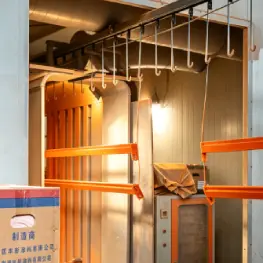
Electrostatic Coating
60-90μm uniform dry film thickness (DFT) delivering superior abrasion and impact resilience.
Future Procurement Trends in Industrial Pallet Storage (2025–2030)
Global logistics directors and enterprise procurement executives are moving away from evaluating racking purely on steel price per kilogram. Discover how shifting supply-chain fundamentals are redefining structural storage specifications.
01. ASRS & Automation Integration
Modern mega-hubs are retrofitting traditional static warehouses with semi-automated 4-way radio shuttles and Automated Storage & Retrieval Systems (ASRS). Structural racking serves as the rigid superstructure capable of maintaining the extremely tight vertical and horizontal deflections required for high-speed robotic extractors.
02. Total Cost of Ownership (TCO) Prioritization
While roll-formed systems offer marginally lower initial CapEx, high-velocity distribution centers incur up to 15% annual component replacement costs due to minor forklift impacts. Forward-thinking procurement teams are standardizing on structural C-channel uprights to reduce maintenance downtime to near zero.
03. Cold Chain & Food Security Surge
Rapid expansion in global agribusiness, pharmaceutical cold chain, and frozen seafood logistics is driving massive demand for ultra-dense push-back and pallet flow racks. Cold-room space is 3x to 5x more costly to operate than ambient space, mandating structural systems that survive -30°C without risk of brittle fracturing.
04. Seismic Micro-Zoning Compliance
Insurance carriers and civil permitting authorities in the Americas and Asia-Pacific now enforce strict independent engineering sign-offs. Structural racking is inherently more ductile and predictable under non-linear dynamic ground acceleration analysis, accelerating warehouse permit approvals.
05. ESG, Embodied Carbon & Recyclability
Corporate sustainability mandates require enterprise supply chains to document the carbon footprint of warehouse fixtures. Structural hot-rolled steel boasts high recycled-scrap content (EAF route) and 100% downstream circularity, simplifying corporate ESG reporting.
06. Standardized Multi-Country Sourcing Protocols
Multinational logistics 3PLs are consolidating suppliers by contracting directly with Chinese Tier-1 original equipment manufacturers (OEMs). Buyers demand factory-direct container load plans that maximize 40HQ cube utilization while delivering numbered parts that match pre-engineered BIM layout models.
Emerging R&D Advancements in Structural Pallet Rack Engineering
Structural racking is transitioning from passive steel framing to dynamically monitored, high-precision industrial asset infrastructure.
High-Precision Finite Element Analysis (FEA)
Advanced computer simulations model buckling modes, torsional warping, and live-load stress distribution down to localized weld points. This computational optimization allows for higher load capacities while eliminating unnecessary dead-weight steel mass.
Smart IoT Collision & Overload Monitoring
Next-generation structural uprights are incorporating wireless tri-axial accelerometers and strain gauge sensors. These connected modules instantly alert warehouse management software (WMS) if a forklift strike exceeds safety impact thresholds or if bay overload limits are reached.
Duplex Corrosion Protection Systems
To combat extreme humidity in coastal and tropical distribution environments, our metallurgical engineers have perfected duplex coating systems: hot-dip zinc galvanizing followed by a thermoset polyester powder barrier coat, extending field operational life beyond 25 years.
Frequently Asked Questions: Sourcing Structural Pallet Racks from China
Essential guidance covering structural certifications, export logistics, seismic considerations, installation, and quality assurance.
Q1: How does structural C-channel racking reduce warehouse maintenance costs?
Structural pallet racking is fabricated from hot-rolled steel channels with heavy web thicknesses (3.2mm to 8.0mm), making it exceptionally resistant to forklift mast impacts. In high-velocity distribution hubs, roll-formed columns often buckle upon impact, requiring costly structural shoring and beam replacement. Structural racks absorb dynamic forklift collisions without losing structural load stability, reducing lifetime maintenance expenses by up to 70%.
Q2: Can your engineering department verify local seismic building codes?
Yes. Our in-house engineering team calculates dead, live, wind, and seismic ground acceleration loads ($S_s$, $S_1$) in compliance with international codes such as US RMI/ANSI MH16.1, Eurocode EN 15512, Chile's NCh 433/NCh 2369, Peru's E.030, and Colombia's NSR-10. We deliver stamped calculation packages, foundation anchor reaction schedules, and 3D CAD/BIM layouts ready for municipal permit review.
Q3: What international quality and factory certifications does HEDA hold?
Guangzhou HEDA Shelves Co., Ltd. holds CE certification (Certificate No. 2435-CPR-8605159), ISO 9001:2015 quality management system certification (No. 18624Q00169R0M), and material compliance under RoHS directives. Mill test certificates (MTC) verifying raw material chemical analysis and yield strengths are issued for each production heat.
Q4: What is the typical manufacturing lead time for full-container export orders?
Backed by our 30,000-ton monthly capacity, standard structural pallet rack orders of 1 to 5 forty-foot high cube containers (40HQ) are produced within 14 to 21 working days after final CAD approval. Large automated mega-projects or complex multi-tier mezzanines are manufactured in phased, numbered batches to match construction schedules.
Q5: What finish is recommended for refrigerated or coastal warehouses?
For sub-zero cold storage facilities (-30°C) with condensation, or coastal warehouses exposed to maritime salt fog, we recommend hot-dip galvanizing conforming to ASTM A123 or a dual-layer zinc-rich epoxy powder coating. These treatments seal raw steel, preventing oxidation and flaking throughout long-term operational use.
Q6: How are structural components packed to prevent ocean freight transit damage?
Upright frames and beams are bundled with steel strapping, heavy corrugated edge-protectors, and heat-shrink plastic wrap. Sensitive contact faces, bolted brackets, and painted surfaces are protected with non-abrasive cushioning. We prepare precise 3D container load plans to maximize container cube utilization without damaging finishes.
Q7: How is overseas installation coordinated?
Every shipment includes component identification tags, 3D exploded assembly diagrams, CAD floor plans, and comprehensive installation manuals. Our project engineers provide remote video guidance and real-time technical consultation. On-site installation supervisors can also be dispatched for high-bay structural projects.
Q8: What project details are required to obtain an engineered layout and quote?
To prepare an accurate structural quotation and layout drawing, please provide: warehouse architectural drawings (clear ceiling height and column grid), pallet footprint and maximum load weight, forklift model and maximum mast reach, SKU rotation method (FIFO or LIFO), and project geographic location for seismic zoning.
Partner with China's Premier Structural Racking Manufacturer
Elevate your storage facility's capacity, structural safety, and operational resilience. Connect directly with our senior racking engineering specialists for technical consultations, customized layout drawings, and competitive direct-factory pricing.