Featured Heavy-Duty Racking Systems & Material Handling Equipment
Explore certified, high-tensile steel storage systems rigorously stress-tested for manufacturing operations, heavy cargo distribution centers, and third-party logistics (3PL) terminals.
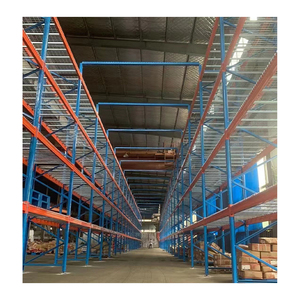
Versatile Storage System Heavy Duty Warehouse Racks Storage Pallet Racking Steel Rack Heavy Duty Pallet Racking By Custom
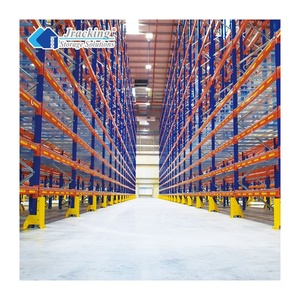
Jracking Durable Adjustable Steel Shelving Storage Rack EURO Pallet Racking And Shelves for Industry Warehouse
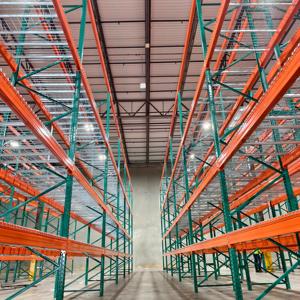
High-Load RMI Certified Industrial US Inventory Warehouse Rack Heavy-Duty Teardrop Pallet Rack System For Heavy Cargo
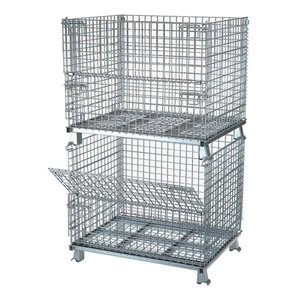
Collapsible Galvanized Wire Mesh Container With Forklift Pocket Heavy Duty Storage Cage Stackable For Warehouse Picking
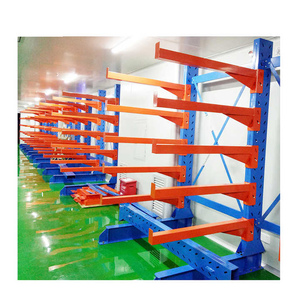
High Quality Heavy Duty Boltless Cantilever Rack Shelf 5 Layer Adjustable Metal Racking for Warehouses with 1000kg Capacity
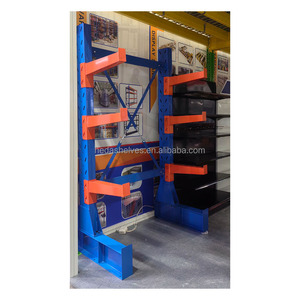
Wholesale Heda Heavy Duty Cantilever Storage Racks Cantilever Racking Systems Solution Selective Racking System
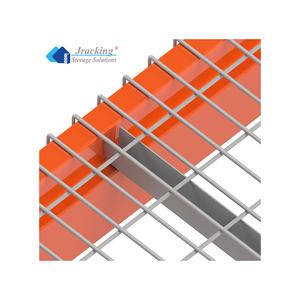
Wholesale Professional Strong Wire Mesh Garage Decking Pallet Board Low Price Selective Pallet Rack with Waterfall Racking
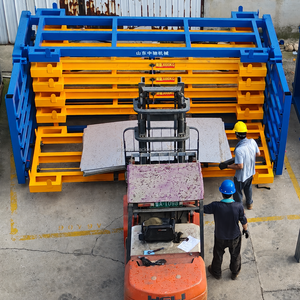
Industrial Use Heavy Duty Steel Pallet Rack Drawer Style Shelving CE Certified Powder Coated for Sheet Metal Organization
25+
Years Manufacturing Experience
30,000 t
Monthly Steel Processing Capacity
120+
Export Destinations Worldwide
10,000+
Completed High-Bay Projects
Engineering Integrity in Modern Heavy-Duty Racking Systems
As global supply chains navigate SKU proliferation, escalating real estate expenses, and stringent workplace safety mandates, warehouse pallet racking has transformed from basic steel framework into highly engineered, seismically calculated structural assets.
Procuring industrial storage systems directly from top-tier Chinese manufacturers grants enterprises direct access to optimized metallurgic formulations, precision roll-forming manufacturing, and deep engineering modifications. Modern smart factories demand racking configurations that seamlessly interface with automated guided vehicles (AGVs), automated storage and retrieval systems (AS/RS), and narrow aisle articulation trucks. To maintain mechanical equilibrium under cyclic stress and massive dynamic loads, upright assemblies and load-bearing beams must be engineered strictly in line with international structural engineering codes such as ANSI MH16.1 (RMI standards), EN 15512, and regional seismic codes including Chile's NCh 2369, Peru's E.030, and Colombia's NSR-10.
Next-Generation Procurement Trends in Industrial Storage
Corporate procurement teams and cross-border supply chain engineers are no longer evaluating racking proposals purely on cost per metric ton. Strategic facility investments are guided by several macro trends:
Total Landed-Cost (TLC) Modeling
Global project managers prioritize volumetric container-loading density. Engineering beam dimensions and modular upright splice configurations directly reduce 40HQ ocean freight charges by up to 28% per installed pallet position.
Parametric Seismic Calculations
Facilities established along active tectonic belts (e.g., Pacific Rim, Latin America, Mediterranean) mandate certified structural finite-element analyses (FEA) to confirm baseplate anchorage, shear-pin tolerances, and braced column integrity under high dynamic acceleration.
Automation-Ready Architecture
Hybrid facilities deploy selective and drive-in racks with millimeter-accurate tolerances that can later transition to semi-automated 4-way radio shuttles or mini-load carton flow tracks without full structural teardowns.
Comparative Analysis: Racking Typologies vs. Operational Velocity
Choosing the correct storage geometry directly dictates warehouse operational expenditure (OPEX) and throughput efficiency. The matrix below contrasts primary racking structures based on structural density, capital investment, selectivity, and target logistical applications:
| Racking System Type | Pallet Selectivity | Volumetric Space Utilization | Inventory Flow | Ideal Sector Profile |
|---|---|---|---|---|
| Selective Pallet Racking | 100% (Instant direct pick) | 40% – 50% | FIFO / LIFO flexible | FMCG, 3PL Distribution, Multi-SKU Auto Parts |
| High-Density Drive-In Racks | Low (Aisle-entry restricted) | 75% – 85% | LIFO (FIFO with Drive-Thru) | Cold Storage, Beverage Bottling, Seasonal Agrochemicals |
| Semi-Automated Radio Shuttle | Medium to High per Lane | 80% – 90% | Configurable FIFO / LIFO | Frozen Food Chains, Pharmaceutical Bulk, Deep Pallet Buffering |
| Heavy Duty Cantilever Systems | 100% Frontal Linear Access | 60% – 70% | Free-form Manual / Crane | Extruded Aluminum, Structural Steel, Timber, PVC Piping |
| Rack-Supported Mezzanines | Tiered Multi-level Access | 150% – 200% Floor Area | Continuous Batch Picking | E-commerce fulfillment centers, Small-parts assembly hubs |
Technological Evolution: Modern Protective Coatings and Steel Metallurgy
A chronic challenge in cross-border warehouse installations is the degradation of structural steel in severe microclimates—including tropical humidity in Southeast Asia and equatorial Latin America, coastal salinity near deep-water ports, and low-temperature condensation in refrigerated blast freezers (-30°C). Advanced Chinese racking exporters have addressed this by transitioning production away from rudimentary dip-painting to 10-stage automated pre-treatment processes comprising acid pickling, zinc phosphating, and nano-ceramic bonding, followed by electrostatic thermosetting polyester powder coating with guaranteed film thicknesses of 60–90μm.
For severe outdoor yard staging or corrosive chemical warehousing, components undergo continuous hot-dip galvanizing conforming to ASTM A123 or ISO 1461. This level of material processing eliminates premature joint flaking, resists abrasive forklift impact, and satisfies international fire-code and occupational hygiene certifications.
Guangzhou HEDA Shelves: Engineered Reliability Since 2001
With over 25 years of specialized manufacturing experience, our 30,000 square meter factory base delivers end-to-end structural storage systems engineered to your building's exact blueprints.
Certified Production Lines
Operating full ISO 9001:2015 quality control systems and European CE conformity (Certificate No. 2435-CPR-8605159). Every component undergoes automated multi-point dimensional validation before packaging.
Complimentary 3D & CAD Layouts
Our team of 300+ technical specialists crafts detailed CAD engineering drawings, finite element structural calculations, and 3D warehouse simulations within 24 hours of receiving your site layout and clear ceiling heights.
Turnkey Global Export Support
From optimized bundle packing designed for tight sea containers to bilingual installation blueprints, video assembly guidance, and OEM/ODM private-label distribution support across North America, Latin America, Europe, and Southeast Asia.
Frequently Asked Questions for Global Racking Buyers
Essential technical insights covering manufacturing lead times, seismic safety engineering, logistics packaging, and custom installation protocols.
What structural parameters are required to calculate an accurate warehouse racking design? +
To produce an authoritative, code-compliant CAD proposal and load calculation, our structural engineers require: (1) Exact warehouse architectural drawings highlighting clear internal height under trusses, slab load capacities, and column obstructions; (2) Pallet specifications including overall dimensions (W × D × H including overhang) and true gross weight per loaded pallet; (3) Operational forklift model specifications, including maximum lift elevation, mast collapsed height, and turning radius; (4) Required SKU rotation protocols (FIFO vs. LIFO); and (5) Project site location to account for localized seismic accelerations.
How does your factory verify compliance with American RMI and European EN standards? +
Our upright profiles and load beams are roll-formed from certified high-tensile structural steel (Q235B and Q355B / SS400 equivalent). Upright columns are perforated on precision automated CNC punching machines to ensure exact pitch uniformity (50mm, 75mm, or 76.2mm teardrop pattern). Welded joints are routinely evaluated using destructive shear-load stress testing and non-destructive weld penetration checks. Detailed mill test certificates (MTC) and independent laboratory load deflection certificates accompany every export lot.
Can racking systems be custom engineered for active seismic risk regions? +
Yes. Warehouses located along high-risk seismic corridors (such as the Pacific coast of South America, Japan, and the western United States) require upgraded base assemblies. Our engineering team incorporates seismic spectral acceleration parameters into dynamic load simulations. Depending on your local building code (e.g., NCh 433/2369, NSR-10, or IBC), we configure enlarged footplates with multiple chemical wedge anchors, heavy-gauge diagonal column bracing, and high-safety-factor locking pins.
What is your typical production timeline, and how is container space optimized? +
With an integrated monthly production capacity of 30,000 metric tons, standard high-volume racking orders are manufactured and finished within 14 to 28 business days following engineering drawing sign-off. Upright frames are either shipped disassembled to maximize sea container cube utilization or pre-welded per buyer preference. Beams are bundled with non-abrasive protective strapping and corner guards to prevent surface scratching during ocean transit.
What after-sales and installation support is provided for remote overseas projects? +
Every shipment is packed with detailed component tagging keyed directly to the assembly blueprints. We provide comprehensive step-by-step CAD drawings, high-definition 3D installation manuals, and pre-recorded instructional assembly videos. For large distribution centers or structural mezzanine builds, our technical engineers provide remote live video guidance to support your local mechanical contracting team.
Request an Engineered Layout & Direct Factory Quotation
Send our senior engineering team your warehouse dimensions and storage requirements today. We will supply a complete 3D layout rendering, seismic capacity analysis, and landed price breakdown within 24 hours.
Inquire Now