Featured Industrial Warehouse Storage & Mezzanine Systems
Precision-manufactured using Q235B and Q355B high-tensile steel, tested according to European EN 15512 and American RMI standards. Designed for high cubic space utilization, heavy pallet capacities, and seamless automated intralogistics integration.
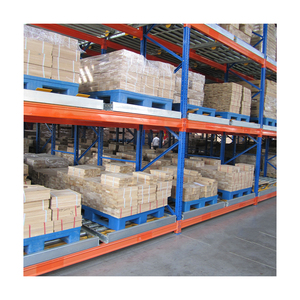
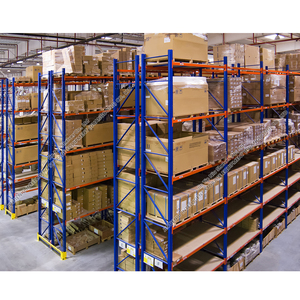
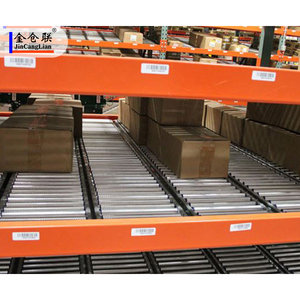
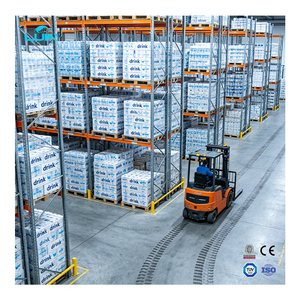
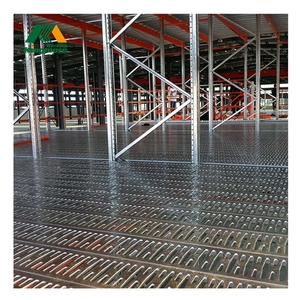
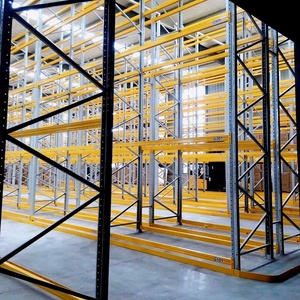
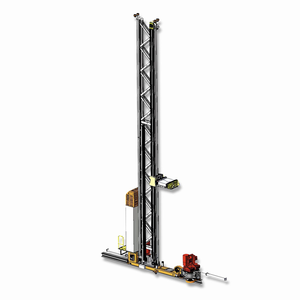
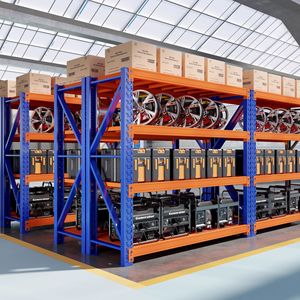
Structural Mezzanines vs. Rack-Supported Mezzanine Systems: Technical Distinction
Choosing the correct multi-tier mezzanine platform requires a deep evaluation of dynamic live loads, column grid span requirements, point load distributions, and future material handling equipment (MHE) integration.
Structural Beam-and-Column Mezzanine
Fabricated from heavy hot-rolled structural steel sections (universal columns and universal beams or square hollow sections with fabricated C-channel purlins). Provides wide open column grids (typically 6m x 6m to 9m x 12m), ideal for ground-level forklift operations, cross-dock sorting lines, office enclosures, or bulk machinery placement.
• Live Load: 300–1,500 kg/m²
• Clear Heights: Up to 6,000mm per deck
Rack-Supported Mezzanine Floor
Utilizes heavy-duty pallet rack or longspan shelving upright frames as the primary vertical load-bearing columns. Primary and secondary steel aisle joists lock into upright slots, supporting catwalks and overhead deck flooring. Eliminates dedicated columns, drastically reducing steel cost while maximizing multi-tier carton picking density.
• Floor Capacities: 300–800 kg/m²
• Tiers: Up to 4 Tiers (Ground + 3 Levels)
Hybrid Automated Mezzanine Platforms
Engineered specifically for Autonomous Mobile Robots (AMRs), Automated Guided Vehicles (AGVs), and automated sortation conveyors. Features ultra-flat floor decking with high localized point-load resistance, electrostatic dissipative (ESD) resin coatings, and reinforced perimeter kick-plates and high-cycle dynamic vibration dampening.
• Flooring: B-Deck with High-Density Resin
• AMR Wheel Load: Up to 1,200kg Dynamic
Engineering Matrix: Warehouse Mezzanine & Heavy Racking Systems
Comparative analysis of structural characteristics, deflection standards, seismic adaptabilities, and economic footprints for warehouse engineers and procurement officers.
| System Classification | Primary Steel Grade | Live Load Capacity | Standard Column Span | Deflection Limit (Span) | Flooring Deck Material | Seismic Code Compliance |
|---|---|---|---|---|---|---|
| Structural Steel Mezzanine | Q355B / ASTM A572 Gr. 50 | 500 – 1,500 kg/m² | 6.0m × 8.0m to 12.0m | L / 360 (Live) | Steel Chequer / Bar Grating / B-Deck | RMI / EN 1993 / NCh 2369 |
| Rack-Supported Mezzanine | Q235B / Cold-Formed Strip | 300 – 800 kg/m² | 1.2m to 2.7m (Rack Aisle Spacing) | L / 250 (Total Load) | Roll-formed Slotted Galvanized Plank | EN 15512 / ANSI MH16.1 |
| Heavy Selective Pallet Rack | Q235B / Q355B Cold Omega | 1,000 – 4,500 kg/tier | 2.3m – 3.9m (Pallet Bays) | L / 200 (Beam Deflection) | Wire Mesh Decking / Steel Pallet Support | ISO 9001 / CE / AS 4084 |
| Very Narrow Aisle (VNA) | Q355B High Tensile Cold-Formed | Up to 4,000 kg/level | Optimized Bay (1.65m Aisle) | L / 300 (High-Bay Upright) | Guide Rails / Induction Wire Channeling | EN 15620 Tolerance Class 100 |
| Automated AS/RS Mini-Load | Structural High-Precision Cold Strip | 50 – 300 kg/bin | Customized Crane Mast Width | L / 500 (Tight Stiffening) | Precision Running Rail / Structural Guide | FEM 9.831 / DIN EN 528 |
Future Procurement & Product Development Trends
How international supply chains, global sustainability mandates, and automated warehouse robotics are transforming the steel racking and mezzanine manufacturing paradigm.
1. Hybrid Mezzanine-to-AMR Automation Integration
The modern distribution center is shifting away from pure manual catwalk picking toward hybrid AMR/AGV mezzanine systems. Procurement teams are specifying ultra-flat floor tolerances that satisfy DIN 15185 and ASTM E1155 standards. Mezzanines must withstand dynamic localized wheel point loads without excessive deflection that disrupts LiDAR navigation or docking calibration.
Flooring substrates have evolved from basic plywood or checker plates to layered structural corrugated B-decks overlaid with composite high-density fiberboard and conductive electrostatic-dissipative (ESD) wear layers.
2. Micro-Alloyed High-Tensile Steel (Decarbonization)
With tightening carbon boundary adjustment mechanisms (such as EU CBAM), industrial warehouse racking manufacturers are migrating from heavy, thick-walled mild steels to advanced high-strength micro-alloyed cold-rolled coils (e.g., Q355B, S355MC, and ASTM A656). This enables a 12% to 18% reduction in total steel deadweight while maintaining identical beam deflection performance and ultimate tensile safety factors.
Lighter structural weight directly translates into lower ocean freight carbon emissions, reduced container shipping charges, and decreased foundation anchor stresses during seismic events.
3. Modular "Flat-Pack" Nested Logistics Engineering
International ocean container shipping volatility has forced racking exporters to abandon oversized pre-welded truss assemblies in favor of fully knock-down, boltless, and nested profile designs. Upright frames are engineered with variable-depth taper nesting so that 40-foot High Cube (40HC) shipping containers achieve over 92% cubic packing efficiency.
This structural packaging design eliminates empty air transit, mitigates transport vibration fatigue on powder-coated surfaces, and reduces total landed equipment cost per pallet location by up to 22%.
4. Dynamic Digital Twin & Smart Sensor Pre-Configuration
Procurement contracts for 2026 onwards increasingly mandate digital twin readiness. Uprights and structural mezzanine columns are pre-punched and tagged with unique QR/RFID identifiers corresponding to 3D Building Information Modeling (BIM) files (Revit/Tekla). Facilities are integrating IoT strain gauge sensors and beam deflection monitors that flag overloaded tiers, structural settling, or accidental forklift impacts before catastrophic buckling occurs.
5. Seismic & Climate-Resilient Material Formulations
Extreme seismic zone procurement (Chile NCh 2369, Peru E.030, California IBC, Japan JIS) demands advanced ductilization engineering. Exporters utilize specialized baseplate energy dissipation dampers and slotted horizontal bracings. For cold chains down to -30°C and coastal marine air, hot-dip continuous galvanizing (EN ISO 1461) and zinc-rich epoxy powder coatings are replacing traditional single-coat enamels.
Seismic Engineering & Global Structural Regulatory Matrix
Exporting engineered steel warehouse mezzanines and pallet racks requires strict structural calculation modeling under localized national building codes. Guangzhou Heda Shelves conducts rigorous FEA (Finite Element Analysis) simulations to verify moment connections, shear buckling, and baseplate uplift resistance across international jurisdictions:
EN 15620: Tolerances, deformations & clearances
EN 15635: Safe maintenance & operation
Eurocode 3 (EN 1993-1-3): Cold-formed thin-gauge steel members
ANSI MH26.2: Welded wire rack decking
NCh 2369 / 433 (Chile): High-hazard seismic design
NSR-10 (Colombia) / E.030 (Peru): Andean earthquake zone base plates
CE Certification: CPR 305/2011 (Cert No. 2435-CPR-8605159)
ISO 9001:2015: Registered quality management (Cert 18624Q00169R0M)
RoHS & REACH: Heavy metal-free electrostatic powder coatings
Precision Manufacturing: The 10-Stage Controlled Quality Protocol
Every beam, upright column, catwalk joist, and deck panel is fabricated across our 30,000 m² automated production facility under strict ISO 9001:2015 quality control tolerances.
Raw Coil Chemical Spectrometry
CNC Slitting & Precision Laser Cutting
Continuous High-Speed Upright Punching
Precision Multi-Stand Roll Forming
Automated Profile Straightening
Shot Blasting & Surface Polishing
Robotic Fixture Welding (MIG/TIG)
7-Stage Acid Pickling & Phosphating
Gema Electrostatic Powder Coating (80-120μm)
Load-Deflection QC & Flat-Pack Bundling
25+ Years Industrial Heritage
Established in 2001, Guangzhou Heda Shelves Co., Ltd. has grown from a specialized roll-forming workshop into a global heavyweight in warehouse storage systems, backed by over 300 experienced engineers, project managers, and logistics technicians.
Free 3D Layout & CAD Design
We provide fully customized, site-specific 3D spatial renderings, AutoCAD floor layouts, and comprehensive load-calculation reports completely free of charge prior to contract finalization, ensuring zero clash between racking, columns, sprinklers, and forklifts.
Verified International Certifications
Holding CE Certificate No. 2435-CPR-8605159 and ISO 9001:2015 No. 18624Q00169R0M. Our products conform to stringent factory audits and third-party inspection agencies (SGS, TÜV Rheinland, Intertek) for structural steel tensile and weld integrity.
Global Port Optimization & OEM/ODM
Exporting across 120+ countries with optimized container stuffing schedules for Santos, Valparaíso, Callao, Buenaventura, Rotterdam, Los Angeles, and Jebel Ali. Full private-label OEM/ODM branding support for regional racking distributors and systems integrators.
Frequently Asked Questions (FAQ) for Global Racking & Mezzanine Importers
Detailed answers addressing engineering validation, shipping logistics, surface longevity, and seismic code compliance for industrial warehouse procurement managers.
Engineering Your High-Density Storage Facility
Connect directly with HEDA Shelves structural engineers. Request custom 3D spatial layouts, structural load calculations, and competitive factory-direct pricing for your next warehouse expansion or distribution center project.