Engineered FIFO Pallet Storage Systems for Global Supply Chains
Direct factory configurations for FMCG distributors, cold-chain operators, pharmaceutical hubs, and automated cross-docking logistics facilities worldwide.
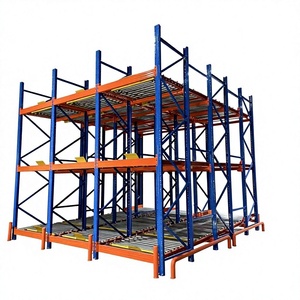
Pallet Flow Racking Gravity Roller Flow Through Rack FIFO High Density Warehouse Pallet Storage System Metal Steel Anti-Rust
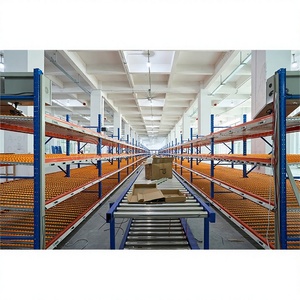
Automated Carton Flow Gravity Racking FIFO Steel Roller Warehouse Storage System Heavy Duty Pallet Live Rack
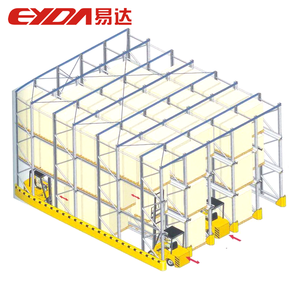
Heavy Duty 5 Layer Drive in Pallet Storage Racking System Drive-Thru Warehouse Pallet Rack LIFO FIFO Method
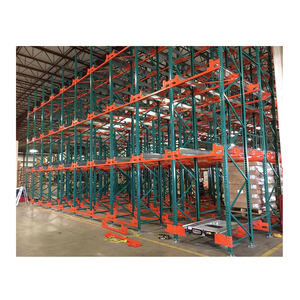
Heavy Duty Automatic Radio Shuttle Rack High Efficiency Automated Pallet Storage Racking System FILO/FIFO
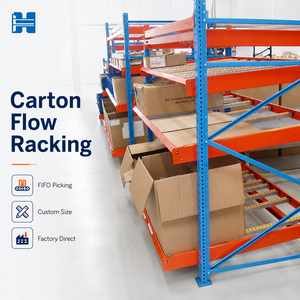
Warehouse Flow Rack Carton Gravity Roller FIFO Storage Racking System Heavy Duty Industrial OEM Custom
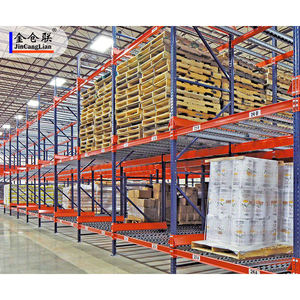
Most Popular Brand Industrial Heavy Duty Gravity Flow FIFO Steel Carton Flow Warehouse Storage Pallet Rack
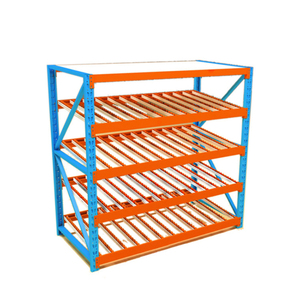
Blue Orange Steel 5 Layer Sliding FIFO Increased Warehouse Density Space-saving Flow-through Racking
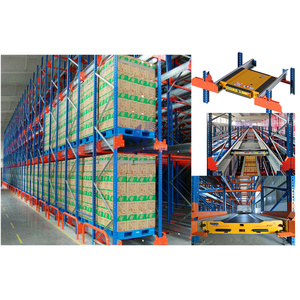
Automated Storage System Semi-Automatic Rack Warehouse Shuttle System Pallet Shuttle Rack FIFO System
The Mechanics of High-Density First-In, First-Out (FIFO) Storage Architectures
An authoritative evaluation of kinematic roller geometry, braking friction thresholds, structural seismic ratings, and throughput optimization for modern B2B logistics engineers.
In contemporary distribution centers managing batch-sensitive inventory, perishables, and rapid-turn consumer goods, the First-In, First-Out (FIFO) pallet racking system is the cornerstone of lean operations. Unlike Last-In, First-Out (LIFO) configurations such as standard drive-in or push-back racks, true FIFO systems guarantee that inventory age is kept strictly chronological. This eliminates batch expiry, avoids costly double-handling, and significantly increases picking velocity by segregating loading aisles from retrieval aisles.
From a mechanical perspective, heavy-duty gravity flow (pallet live storage) racking utilizes an engineered gravitational decline—typically calibrated between 3.0% and 3.5% (roughly 1.7° to 2.0° pitch)—which induces pallets to roll autonomously from the replenishment face to the discharge face. However, unconstrained gravity poses significant kinetic hazards for loads ranging from 500 kg to 1,500 kg. To maintain constant terminal velocity (generally engineered below 0.3 m/s), high-efficiency centrifugal brake rollers are embedded at calculated lane intervals. These magnetic or mechanical internal governor mechanisms exert braking resistance proportional to the square of the pallet's speed, preventing runaway collisions and beam structural shock loads.
At the discharge threshold, mechanical pallet separators physically disengage the leading pallet from the accumulation queue behind it. By relieving line pressure, forklifts can effortlessly extract the front pallet without overcoming accumulated hydrostatic thrust, dramatically reducing mast wear and mast tipping risks. When semi-automated or automated throughput is demanded, Radio Shuttle FIFO systems supplant gravity lanes with powered bidirectional shuttle vehicles that traverse continuous heavy-gauge cold-formed guide rails. This enables continuous FIFO replenishment on one aisle while simultaneous dispatch picking occurs on the opposite aisle, virtually eliminating forklift transit within the deep lanes themselves.
Key Structural Engineering Parameters
- Primary Steel AlloySS400 / Q235B / Q355B Hot-Rolled Coil
- Dynamic Friction Coefficientμ = 0.035 – 0.050 (Standard Rollers)
- Gradient Tolerance Window±0.15% Across Flow Lane Span
- Upright Section ProfileOmega 11-Bend Cold-Formed Section
- Design Compliance CodesEN 15512, FEM 10.2.02, RMI MH16.1
- Surface Pre-Treatment10-Stage Zinc-Phosphating Immersion
- Electrostatic Powder Thickness60 – 90 μm Thermo-Hardened Finish
- Beam Deflection Limit1/200th to 1/300th Clear Span (L/200)
| Storage System Type | Stock Rotation Strategy | Space Density Rating | Forklift Aisle Dependency | Throughput Speed (Cycles/Hr) | Capital Cost vs ROI Window |
|---|---|---|---|---|---|
| Pallet Flow (Gravity Roller) | Strict 100% FIFO | Very High (85%+ Footprint) | Separate Inbound & Outbound Aisles | High (Continuous Flow) | Moderate / 18-24 Month ROI |
| Radio Shuttle FIFO System | Dynamic FIFO & LIFO | Ultra High (90%+ Footprint) | External Loading/Retrieval Faces | Very High (Automated Carrier) | Moderate-High / Fast Scalability |
| Drive-Through Pallet Rack | FIFO Capable | High (75% Footprint) | Forklift Enters Rack Structure | Low to Moderate (Driver Transit) | Low Initial Capex / Longer Cycle |
| Standard Selective Racking | Manual FIFO Management | Low (40-50% Floor Utilized) | Every Bay Accessible via Dedicated Aisle | Moderate (High Aisle Travel Time) | Lowest Initial Capex / High Land Cost |
Why Global Supply Chains Partner Directly with HEDA Shelves
With 25 years of specialized storage manufacturing in Guangzhou, we deliver certified structural reliability, precision fabrication, and tailored export engineering worldwide.
30,000 m² In-House Production Base
Operating across an expansive 30,000 m² industrial facility equipped with automated roll-forming lines, 12kW fiber laser cutters, high-precision automated CNC punch presses, and robotic welding stations. We comfortably sustain a 30,000-ton monthly output capacity, guaranteeing scalable delivery schedules for international port shipments.
Rigorous Certifications & Seismic Design
Engineered in full compliance with European EN 15512/FEM standards and US RMI guidelines. Backed by factory CE Certificate No. 2435-CPR-8605159, ISO 9001:2015 certification, and RoHS compliant coatings. Baseplates and anchors are structurally engineered to withstand regional seismic accelerations and geotechnical floor loading dynamics.
Full 3D CAD & Structural Consultation
Receive complete complimentary 3D photorealistic renderings, CAD layouts, beam load deflection charts, and aisle clearance optimizations within 24 to 48 hours. Our dedicated team of 300+ technical personnel custom-engineers pallet pitch, upright gauge, and roller brake intervals to match your precise forklift models and pallet footprints.
Advanced 10-Stage Surface Treatment
Every upright frame and load beam undergoes a continuous 10-step pre-treatment cycle including immersion degreasing, ultrasonic rust removal, acid pickling, zinc phosphating, and deionized water rinsing prior to electrostatic epoxy-polyester powder spraying. The result is a scratch-resistant, anti-corrosion finish suitable for high-humidity and sub-zero cold rooms.
Optimized Container Load Engineering
Ocean freight efficiency is factored directly into component design. By nesting cold-formed profiles, bundling upright trusses flat with protective corner brackets, and custom-cradling roller tracks, our export logistics team achieves maximum 40ft High Cube container volumetric utilization, keeping landed per-pallet costs exceptionally competitive.
Global Installation & After-Sales Network
Shipments arrive with clearly indexed, color-coded components, step-by-step CAD installation manuals, and torque specification documentation. We provide comprehensive remote video engineering supervision for local contracting crews or dispatch bilingual field installation supervisors for large-scale multi-tier high-bay warehousing projects.
Future Procurement Trends Transforming FIFO Pallet Racking (2025–2030)
Forward-looking strategic insights for logistics executives, industrial developers, and supply chain managers seeking high ROI capital expenditures.
Hybrid AS/RS & Shuttle Integration
Procurement is rapidly pivoting away from pure manual forklift handling. Modern FIFO specifications increasingly demand dual-mode structural engineering capable of operating with standard forklifts today while integrating autonomous 4-way shuttles or stacker cranes seamlessly tomorrow.
Extreme Energy Density Optimization
As perishable, biologic, and frozen food cold-chain costs escalate, cold storage operators are targeting zero wasted refrigerated volume. High-density FIFO gravity and radio shuttle racks are replacing wide-aisle selective systems to slash refrigeration electricity costs by up to 40%.
High-Tensile Thin-Walled Alloys
Corporate ESG directives are reshaping metal procurement. Demands for lower embedded carbon are driving the adoption of high-strength micro-alloyed steel grades (Q355B and higher) that reduce overall rack steel weight by 15-20% without compromising load deflection thresholds.
Lifecycle Maintenance Contracts
B2B procurement teams are prioritizing Total Cost of Ownership (TCO) over initial sticker price. Suppliers that provide modular roller cartridge replacements, self-lubricating sealed bearings, and bolted upright components that can be repaired without rack dismantling are capturing global market share.
Engineering Advancements in Dynamic Racking Mechanics
How next-generation materials science, telemetry, and kinematics are enhancing safety and pallet handling precision.
The dynamic racking sector is undergoing an unprecedented wave of mechanical refinement. Historically, traditional gravity flow lanes relied exclusively on mechanical friction braking, which was susceptible to pad glazing, seasonal thermal variations, and inconsistent braking force on irregular wooden or plastic pallets. Recent engineering breakthroughs have pioneered non-contact magnetic eddy-current brake rollers. By utilizing permanent rare-earth neodymium magnetic arrays within a rotating copper/aluminum drum, these governors generate counter-electromotive braking torque directly proportional to rotation speed. The result is zero frictional contact, near-zero mechanical wear, and identical braking consistency in temperatures ranging from -30°C in blast freezers to +50°C in tropical distribution centers.
Furthermore, the integration of IoT-enabled pallet flow telemetry is closing the visibility gap between mechanical gravity racks and Enterprise Resource Planning (ERP) systems. Optical laser sensors and weight-deflection strain gauges integrated along the discharge stop plate provide millisecond-level telemetry on lane capacity, dwell time, and inventory throughput speeds. This enables warehouse management systems (WMS) to dynamically assign forklift put-away tasks, balance lane load distribution, and alert safety teams before accumulation line pressure exceeds design parameters.
Key Technological Innovations
- Brake Governor TechMagnetic Eddy-Current (Frictionless)
- Roller Bearing LifeSealed 6204ZZ Precision Ball Bearings
- Impact ResistanceDouble-Reinforced C-Channel Column Guards
- Shuttle NavigationOptical Barcode + Ultra-Wideband (UWB)
- Pallet CompatibilityWood, Stamped Metal, PE/PP Plastic Pallets
- Track Modular DesignDrop-In Quick-Replace Roller Cassettes
- Battery ChemistryFast-Charging LiFePO4 (Shuttle Units)
Frequently Asked Questions on Wholesale FIFO Pallet Racking
In-depth technical, commercial, logistical, and structural answers to simplify cross-border sourcing and project implementation.
What are the key technical differences between FIFO Gravity Flow Racking and Radio Shuttle Racking?
Radio Shuttle Racking utilizes horizontal steel rails and a battery-powered independent robotic carrier cart controlled via RF remote or warehouse management systems. Shuttle systems can operate in either FIFO or LIFO mode, can handle deeper lanes (up to 40+ pallets deep compared to 15-20 pallets in gravity flow), and accommodate slightly irregular or bottom-board defective pallets that might hesitate on passive rollers.