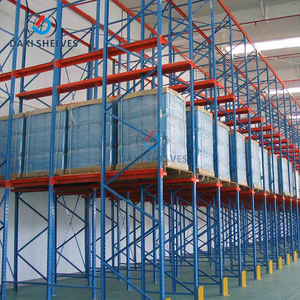
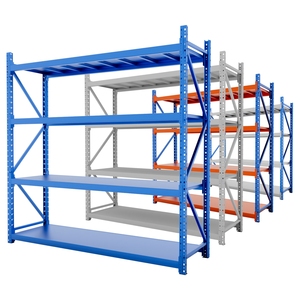
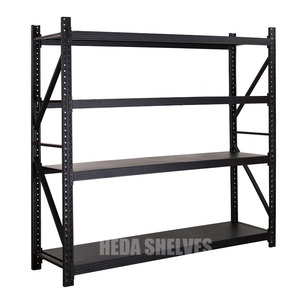
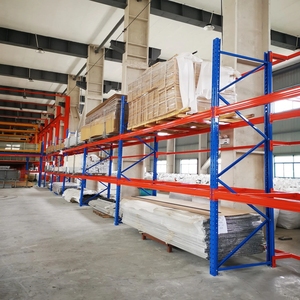
China Wholesale Heavy Duty Rack Storage Suppliers & Exporters
Structural integrity, international compliance standards, and factory-direct supply chain engineering for high-density logistics, distribution centers, and industrial facilities globally.
Modern international supply chain architecture relies fundamentally on structural volumetric efficiency. Sourcing commercial pallet racking and heavy-duty storage configurations from China requires far more than comparing baseline steel tonnage rates. It demands rigorous evaluation of metallurgical certifications, cold-roll beam forming geometries, weld point fatigue thresholds, and international seismic load compliance. As global distribution centers transition toward multi-tier integration and automated guided vehicle (AGV) compatibility, selecting a direct manufacturer with ISO 9001:2015 and CE certification ensures that warehouse assets safely accommodate static and dynamic operational loads throughout multi-decade lifespans.
This technical whitepaper provides industrial procurement managers, logistics developers, and third-party warehouse operators with actionable engineering criteria, emerging procurement models, and an exhaustive product comparative matrix covering eight core heavy-duty storage typologies engineered to global warehouse specifications.
Fabricated using certified Q235B and Q355B structural steel, processed through automated high-precision roll forming lines, and treated with multi-stage electrostatic powder coating.
How macroeconomic pressures, freight rate volatility, and automated warehousing are reshaping the technical specifications required by global procurement departments.
1. Seismic Ductility & Site-Specific Engineering
Global procurement teams are shifting away from generic off-the-shelf static rack calculations. International projects across the Pacific Rim, South America, and Southern Europe now demand rigorous finite element analysis (FEA) compliant with regional seismic building codes (including Chilean NCh 2369, Peruvian E.030, Eurocode 8, and US RMI MH16.1).
Suppliers are required to calculate seismic base shears, specify enlarged high-yield anchorage baseplates, and install dynamic horizontal bracing trusses capable of dissipating lateral seismic acceleration without structural collapse.
2. Cold-Chain & Humidity Corrosion Mitigations
With global cold-chain infrastructure expanding to support international agricultural and pharmaceutical distribution, racking in sub-zero and fluctuating condensation environments faces rapid oxidative decay.
Procurement specifications increasingly mandate hot-dip continuous galvanization (HDG) conforming to ISO 1461 for structural sub-components or marine-grade thermosetting polyester powder coatings applied over microcrystalline phosphating, ensuring minimum 1,000-hour salt spray resistance.
3. Direct Factory CAD/BIM Integration
The traditional disconnect between overseas rack fabricators and general building contractors is closing. Modern enterprise buyers mandate direct engineering integration, requiring suppliers to deliver digital architectural deliverables prior to production sign-off.
This includes full Revit/BIM parametric families, 3D structural clash detection, beam deflection simulations under 100% rated dynamic loads, and floor slab point-load distribution models to verify subfloor integrity before steel extrusion.
Industry Evolution
Technological & Design Evolution in Heavy Racking
Key metallurgical and design transformations transitioning warehouse racking from static iron to high-performance structural systems.
As autonomous reach trucks and four-way shuttle carriers replace human forklift operators, racking manufacturing tolerances have tightened dramatically. Deflection limits under maximum rated loads are now engineered within strict L/300 to L/500 thresholds.
Precision CNC column punching ensures hole pitch consistency within ±0.1mm, eliminating rail misalignments that can trigger optical sensor errors in robotic pallet handling shuttles.
High-Strength Alloy Profiling (Q355B vs. Q235B)
To reduce shipping weight and optimize ocean container stowage while maintaining ultimate safety factors, manufacturers are utilizing high-yield micro-alloyed structural coils. Multi-bend Omega column geometries with up to 12 cold-rolled folding edges deliver exceptionally high moments of inertia.
This structural profile optimization yields up to 20% steel dead-weight reduction without compromising upright axial load-bearing capacity.
Integrated Damage Sensor Telemetry
The newest development in heavy-duty distribution centers involves embedding smart impact sensors directly within base column wrap guards. These Internet-of-Things (IoT) strain gauges detect upright displacement or blunt forklift impact above critical safety thresholds.
Immediate real-time telemetry alerts warehouse supervisors to perform localized non-destructive weld inspections, significantly reducing the catastrophic risk of localized collapse propagation.
2001Year Established
30,000tMonthly Production Capacity
30,000m²Integrated Factory Area
300+Engineers & Technicians
Industrial Manufacturing Prowess
Direct Factory Accountability from Guangzhou to Global Logistics Hubs
Established in 2001, Guangzhou Heda Shelves Co., Ltd. has operated for over 25 years as a premier designer and manufacturer of complete warehouse storage installations, heavy-duty pallet racking, structural steel mezzanines, and industrial logistics hardware. Operating from an integrated 30,000 square meter manufacturing hub supported by over 300 technical personnel, we maintain complete in-house control across every transformation stage: precision coil slit rolling, automated punching, CNC robotic welding, surface passivation, and electrostatic coating.
For international procurement directors, our engineering model eliminates domestic trading intermediaries and minimizes execution risks through comprehensive pre-shipment quality control:
Seismic & Structural Calculations: Uprights, connectors, and base assemblies engineered specifically to match your site's local seismic zone and geotechnical load limits.
Complimentary 3D CAD & BIM Layouts: Comprehensive spatial simulations, aisle width clearance verifications, and forklift turning radius validations provided prior to production.
High-Stow Container Planning: Software-modeled bundling and sequenced component numbering drastically lower ocean freight per ton and expedite on-site erection.
Verified Third-Party Compliance & Standards
CE CertifiedCertificate: 2435-CPR-8605159
ISO 9001:2015Cert No: 18624Q00169R0M
RoHS CompliantLead-Free Powder Finishes
EN 15512 & RMIDesign Code Compliance
Our production operations maintain ongoing third-party traceability, verified through comprehensive material mill certificates and certified weld inspection procedures.
Procurement Due Diligence
Frequently Asked Questions for Overseas Racking Buyers
Direct engineering and logistical solutions to the most critical technical questions encountered during overseas racking procurement.
How do you guarantee load capacity calculations align with overseas safety standards?
Our engineering team performs structural stress verifications using finite element analysis under standards EN 15512 (Europe), RMI ANSI MH16.1 (USA), and AS 4084 (Australia). Structural reports provide exact safety factors (typically 1.5 to 1.65 for structural steel, 1.95 for connection beam locks) based on the client's verified pallet dimensions, clearance envelopes, and local slab specifications.
How does the factory prevent corrosion and physical damage during maritime shipping?
All upright columns and beams receive full pre-treatment involving hot alkaline degreasing, acid pickling, and microcrystalline phosphating before continuous electrostatic epoxy-polyester coating. Components are systematically bundled with corrugated buffer spacers, corner guards, and multi-layer stretch shrink wrap, preventing transit abrasion within high-humidity maritime container environments.
What is the typical production timeline for large volume distribution centers?
With an active monthly manufacturing capacity of 30,000 tons across multi-shift production bays, typical project turnaround for 1 to 5 full container loads (FCL) ranges between 15 to 25 business days following technical CAD approval. Large projects (50+ containers) are scheduled in phased delivery batches to match the client's concrete curing and site construction sequence.
How are remote overseas installations supported by the engineering team?
Every overseas consignment includes numbered sub-assemblies matching a corresponding comprehensive 3D CAD schematic and installation handbook. For mid-to-large installations, our technical team provides interactive remote video guidance, weld point verifications, and anchor torque documentation. On-site structural engineering supervision is available upon request for major logistics distribution centers.
Request a Custom Warehouse Layout & Structural Load Quote
Connect directly with our senior structural racking engineers. Provide your facility floor plans, clear ceiling height, pallet configurations, and forklift models to receive a comprehensive CAD design, 3D visualization, and factory-direct price calculation within 24 business hours.