Enterprise Inventory Systems
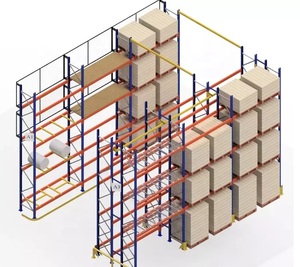
High-Capacity Industrial Racking & Modular Shelving
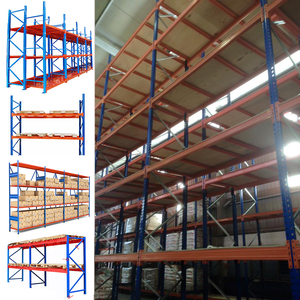
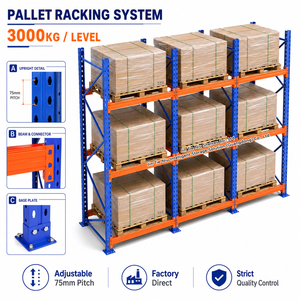
Engineered for maximum load capacity, seismic stability, and warehouse vertical volume optimization. Select from standard configurations or custom engineering.
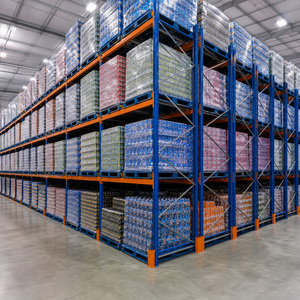
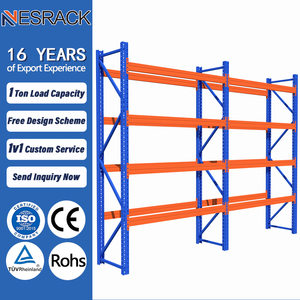
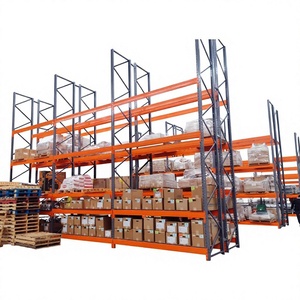
Enterprise Value Proposition
Why Tier-1 Global Logistics Operators Partner with HEDA
Direct mill relationships, automated fabrication lines, and empirical FEA finite element analysis eliminate supply bottlenecks and structural liabilities.
ISO 9001 & CE Certified Steel Integrity
We source prime, mill-traceable Baosteel/Shougang certified coils. Every cold-formed upright, beam, and bracer undergoes automated multi-station profiling, maintaining strict cross-sectional dimensional tolerances compliant with FEM 10.2.02 and EN 15512 safety protocols.
Complimentary 3D CAD & Structural Calculations
Don't gamble on raw tonnage. Our structural engineering group converts floor blueprints into high-precision 3D layout renderings and finite element stress models. We compute live, dead, wind, and seismic loads matching site conditions across South America, the EU, or Australia.
High-Density Container Staging & Global Export
Exporting from our Guangzhou facility via Nansha, Huangpu, and Shenzhen ports guarantees rapid maritime dispatch. We engineer tailored nested packing vectors that protect electrostatic powder coats while ensuring 98%+ volumetric container load efficiency to minimize landing costs.
Strategic Procurement Guide
Engineering Evolution & Future Market Trends in Storage Systems
Comprehensive industry analysis on structural materials, automation integration, and seismic compliance for modern logistics investments.
1. Paradigm Shifts in Heavy-Duty Warehouse Racking Architecture
Global supply chain uncertainty, combined with skyrocketing real estate capital expenditures, has accelerated the transition from conventional, static storage into dynamic vertical optimization. Modern warehousing no longer treats shelving as passive steel racking, but as a critical, load-bearing infrastructure that integrates with cyber-physical systems.
In major global freight junctions, facilities are transitioning from baseline Selective Pallet Systems to high-density semi-automated solutions such as Radio Shuttle Racking and AS/RS (Automated Storage and Retrieval Systems). This strategic evolution compresses required aisle space by over 50%, translating directly into dramatic reductions in refrigeration operational expenditures within cold-chain facilities and cold-storage distribution hubs.
2. Steel Material Science: Q235B vs. Q355B and Anti-Corrosion Chemistry
Selecting industrial shelving requires rigorous evaluation of yield strengths and environmental resilience. While baseline commercial shelving may use generic low-carbon iron, heavy-duty warehouse infrastructure relies on verified carbon-manganese structural steels. At HEDA Shelves, primary frames leverage Q235B (yield strength ≥235 MPa) for balanced ductility, and high-tensile Q355B for tall AS/RS high-bay profiles requiring lean cross-sections with massive vertical modulus properties.
Equally vital is chemical pre-treatment. Standard paint over scale inevitably leads to hidden sub-surface oxidation under heavy cycle stress. Our computerized manufacturing sequence integrates continuous bath pickling, zinc phosphating, and electrostatic deposition of thermo-hardened epoxy-polyester resin coatings cured at 180°C. For agrochemical warehouses and sub-zero blast-freezers, hot-dip galvanization (HDG) delivering 60–85μm zinc thickness serves as the global standard for corrosion-proof durability.
3. Seismic Load Engineering: Mitigating Down-Aisle Structural Failure
Procurement teams operating in tectonically active areas—such as the Pacific Rim, the Andean region (Chile, Peru, Colombia), and parts of Australasia—cannot safely deploy standardized off-the-shelf catalog racks. Seismic accelerations generate dynamic torsional stresses that induce progressive column buckling if baseplates and anchoring depths are calculated solely under static assumptions.
Engineering-grade warehouse shelving accounts for local regulatory standards (including NCh 2369, NSR-10, AS4084, and RMI). Upright column profiling incorporates multi-bend cold-formed stiffener ribs, widened heavy-gauge baseplates with oversized Hilti/chemical anchoring studs, and bespoke X-bracing portal configurations that safely dissipate seismic forces to concrete floor slabs.
| Racking Architecture | Pallet Density Factor | Stock Access (FIFO/LIFO) | Structural Load Rating | Best Practical Application |
|---|---|---|---|---|
| Standard Selective | Moderate (40–45% Volume) | 100% Immediate (FIFO) | 1,000–4,000 kg/level | High SKU variety, fast pick frequency, third-party logistics (3PL) |
| Drive-In / Drive-Thru | High (65–75% Volume) | Strict LIFO (Drive-In) / FIFO | Up to 1,500 kg/pallet | Seasonal inventory, identical SKUs, chilled and blast-freezer holding |
| Gravity Pallet Flow | High (70–80% Volume) | Automatic Pure FIFO | 500–1,800 kg/lane | Perishable food, pharmaceuticals, expiration date-sensitive distribution |
| Radio Shuttle Automation | Ultra-High (80–88% Volume) | Flexible FIFO or LIFO | 500–2,000 kg/pallet | Deep-lane high-throughput, minimized forklift damage, smart DC |
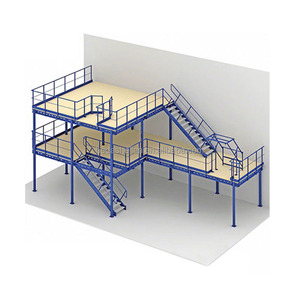
| Rack-Supported Mezzanine | Extreme (200–300% Floor Area) | Multi-Tier Selective Picking | 300–1,000 kg/sqm floor | E-commerce fulfillment centers, automotive parts bins, spare components |
Direct Procurement Answers
Frequently Asked Questions on Importing Warehouse Shelving
Clear, direct technical and commercial answers for project developers, facility managers, and international supply chain purchasers.
How do you verify structural load capacity and cold-formed profile safety? +
Every steel profile manufactured in our Guangzhou factory is designed under FEM 10.2.02 and RMI standards. We employ finite element analysis (FEA) software to simulate beam deflection, torsion, and upright compressive yield under full nominal loads. Physical destructive testing on mechanical press frames ensures our stated safety factor of 1.5 to 1.65 is consistently validated before dispatch.
Can you provide custom engineering for seismic and high-wind environments? +
Yes. Our structural design group utilizes customer-supplied geotechnical data, spectral acceleration coefficients, and facility codes (e.g., AS4084 in Australia, NCh 433/2369 in Chile, Eurocode 3, or US IBC/RMI guidelines). Base plates are widened, bolt embedment depths increased, and heavy-wall bracing patterns added to absorb and transfer lateral dynamic acceleration into the building foundation.
What is the standard production cycle and container shipment turnaround? +
With our 30,000-ton monthly capacity across 30,000 square meters of production facilities, standard heavy-duty selective pallet racking projects typically complete fabrication in 2 to 4 weeks following 3D CAD approval. Large automated AS/RS high-bays or bespoke structural mezzanines can be phased in rolling multi-container batches to match your facility installation schedule.
How is damage prevented during long maritime container transit? +
Components are packaged in engineered modular bundles. Upright frames and beams are nested on structural steel skids with high-tensile PET strapping, protective corrugated interleaving, and corner-edge protectors. High-wear contact points are shrink-wrapped to defend the electrostatic powder finish against salt-mist and condensation across 30 to 45-day ocean passages.
What details are needed to generate an accurate 3D layout and structural quotation? +
To provide a free 3D design and engineering calculation, please share: (1) Warehouse architectural drawings showing clear heights, column grids, and dock doors; (2) Pallet dimensions (W x D x H) including goods overhang and gross weight; (3) Forklift specifications (minimum turning radius, mast lift height); and (4) Site seismic zone and inventory rotation approach (FIFO vs. LIFO).
Accelerate Your Storage Capacity with Factory-Direct Engineering
Connect with HEDA Shelves' technical sales engineers to review your warehouse blueprints, request structural load calculations, and receive a complete turnkey project package.