Engineered Warehouse Racking Portfolio
Direct-from-factory logistics infrastructure manufactured in Guangzhou, China. Every high-density racking unit is fully compliant with EN 15512, RMI, and AS 4084 international seismic and deflection requirements.
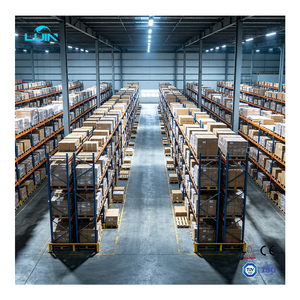
High ROI Warehouse Rack Heavy Duty Industrial Storage Shelving Unit for Export
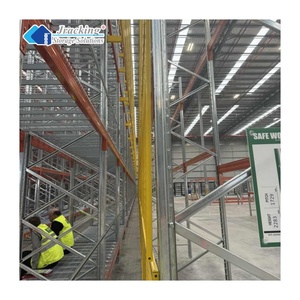
Jracking Industrial Warehouse Shelving CE Certified AU Standard Heavy Duty Pallet Racking For Logistics Center Use
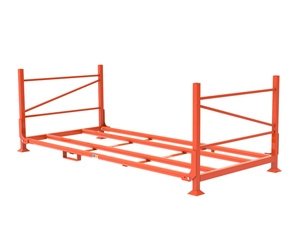
China Factory Direct Steel Pipe Storage Heavy Duty Cantilever Rack for Sale
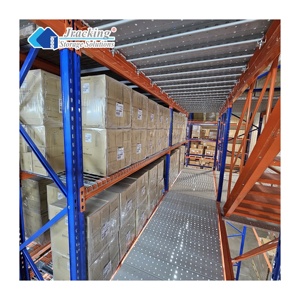
Premium Industrial Storage Stacking Shelves Racks Heavy Duty Steel EU Pallet Racking System for Logistics Warehouses
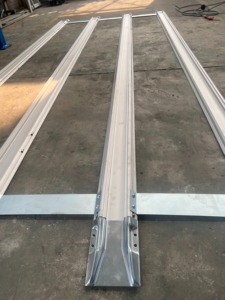
First in First Out Gravity Flow Lane Aluminum FIFO Rack Rail System for Warehouse Picking
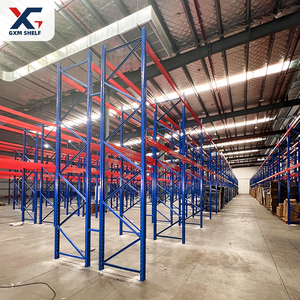
Stacking Racks Shelves Pallet Rack Selective Pallet Racking Warehouse Storage Pallet Racking For Industrial Rack
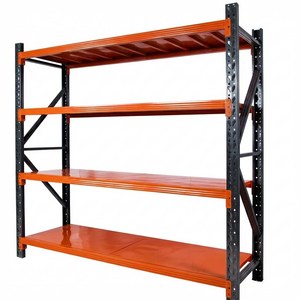
Durable Cold Rolled Steel Heavy Duty Multi-Layer Pallet Rack Warehouse Storage Solution High Loading Capacity Epoxy Racking
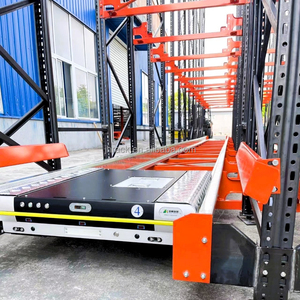
China Automatic Shuttle Rack Manufacturer Factory Warehouse Shuttle System Shelves Storage Racks for FIFO System
Engineering Anatomy of Heavy-Duty Radio Shuttle Racking
A radio shuttle storage system represents a high-density, semi-automated storage breakthrough that bridges conventional static racking with capital-heavy automated storage and retrieval systems (ASRS). By deploying autonomous, battery-powered pallet carts within dedicated deep-storage lanes, the radio shuttle eliminates the need for reach trucks and counterbalanced forklifts to navigate inside racking channels.
Structural Steel Profile & Guide Rail Precision
Our upright columns are roll-formed from premium Q235B and Q355B high-tensile cold-rolled steel, offering continuous slot punching on a 50mm or 75mm pitch. The proprietary galvanized guide rails feature an asymmetric omega geometry that simultaneously provides vertical load support for pallet runners and lateral track steering for the shuttle car's polyurethane wheels, ensuring minimal rolling resistance and zero rail yawing under maximum dynamic loads of up to 2,000 kg.
Autonomous Carrier Powertrain & Sensors
Each shuttle cart incorporates German and Japanese precision core electronics, including brushless DC traction motors, magnetic encoder wheel positioning, and redundant optoelectronic proximity sensors. The carrier achieves an unladen travel velocity of 1.0 m/s to 1.2 m/s and a full-payload translation speed of 0.8 m/s. Integrated laser rangefinders detect pallet boundaries with ±2mm accuracy, preventing load crushing during continuous multi-depth cycles.
Cold-Storage & Harsh Environment Hardening
Standard radio shuttles frequently fail in cold rooms due to condensation, hydraulic freezing, and terminal voltage drops. Heda Shelves manufactures cold-chain radio shuttles equipped with internal PTC thermal heating strips, sealed IP65 electronic enclosures, food-grade synthetic low-temperature lubricants operational to -30°C, and high-discharge-rate Lithium-Iron Phosphate (LiFePO4) battery packs that sustain 8 to 10 hours of continuous shift runtime.
Comparing Radio Shuttle Racking Against Legacy Warehouse Systems
Selecting the optimal pallet storage geometry requires evaluating cubic volumetric utilization, forklift operating efficiency, inventory turnover speeds, and rack collision liabilities. The technical matrix below reveals why modern distribution centers are transitioning from drive-in and selective racking to radio shuttle technology.
| Storage Metric / Operating Parameter | Standard Selective Racking | Drive-In Racking System | Push-Back Cart Racking | Automated Radio Shuttle Racking |
|---|---|---|---|---|
| Floor Surface Utilization (%) | 35% - 40% (Aisle Intensive) | 60% - 65% (Aisle Eliminated) | 55% - 60% (Depth Constrained) | 75% - 85%+ (Ultra-Dense Matrix) |
| Pallet Access Principle | 100% Immediate Selectivity | Strict LIFO Only | LIFO (2 to 6 Pallets Deep) | Configurable FIFO & LIFO |
| Average Pallet Cycle Time (Seconds) | 120 - 150 Seconds | 180 - 240 Seconds | 130 - 160 Seconds | 45 - 60 Seconds (Shuttle Transfer) |
| Forklift Mast Collision Risk | Low (External Aisle Only) | Extremely High (Drive-Inside Channels) | Low to Moderate | Zero (Forklifts Remain Outside Bays) |
| Cold Storage Operating Efficiency | Poor (Wasted Cubic Volume) | Moderate (Slow Forklift Speeds) | Moderate (Gravity Pitch Limitations) | Optimal (Maximum Cold Cube Density) |
| Operator Labor Requirement | 1.0 Baseline Multiplier | 1.3x High Forklift Travel Time | 0.9x Batch Push Travel | 0.4x to 0.5x Significant Labor Reduction |
| Structural Upright Fatigue Rate | Standard Wear | Accelerated by Channel Impacts | Standard Component Stress | Extremely Low Rack Structural Wear |
Future Sourcing & Technological Trends in Radio Shuttle Systems
As global supply chains navigate supply volatility, nearshoring, and rising real estate costs, industrial procurement directors must anticipate how warehouse shuttle automation is evolving over the next five years to preserve capital asset longevity.
Evolution from 2-Way Carriers to 4-Way Multi-Directional Systems
While traditional 2-way radio shuttles execute linear movements down a single longitudinal rail, the market is aggressively pivoting toward 4-way multi-directional shuttles. Fitted with dual orthogonal drive gearboxes, 4-way shuttles autonomously switch between cross-aisles and storage lanes without forklift intervention. Paired with vertical pallet reciprocating lifts, 4-way systems transform standard high-bay racks into modular, fully lights-out ASRS solutions at half the capital outlay of traditional stacker cranes.
Supercapacitor Fast-Charging vs. Lithium-Iron Phosphate (LiFePO4)
Procurement teams are transitioning away from bulky lead-acid battery packs toward high-density LiFePO4 cells and onboard supercapacitors. Supercapacitor-integrated shuttles recharge in under 15 seconds while waiting at the lane entry face or through inductive rail pick-up pins, eliminating manual battery swaps entirely. This continuous 24/7 charging architecture dramatically lowers maintenance cycles and removes dedicated battery room footprint from distribution blueprints.
Open API Architecture, Edge WCS & Cloud Fleet Telematics
Standalone handheld RF remotes are becoming legacy backups. Modern radio shuttle systems integrate directly with Warehouse Management Systems (WMS) and Warehouse Control Systems (WCS) via standard MQTT and RESTful API protocols over industrial 5.8 GHz Wi-Fi or private 5G networks. Operators monitor real-time battery thermal signatures, wheel wear analytics, cycle count metrics, and predictive component failures via visual cloud dashboards.
High-Ductility Seismic Bracing & Dynamic Pushover Analysis
Industrial development in high-seismic active territories (such as Chile, Peru, Colombia, Japan, and the American Pacific rim) demands rigorous structural engineering. Racking exporters must deliver dynamic response spectrum and non-linear pushover simulations compliant with RMI MH16.1, Eurocode 3, and Chilean NCh 2369 codes. Shuttle guide rails require oversized bolted gussets, specialized shock-absorbing buffer stops, and engineered baseplate anchors to prevent rack resonance collapse during ground acceleration events.
Cold-Formed High-Yield Steel & Zero-Emission Coating
Enterprise ESG targets are dictating international procurement criteria. Exporters are shifting to high-strength micro-alloyed structural steels that decrease total steel mass per pallet location without compromising structural deflection standards (L/200). Concurrently, manufacturing lines are adopting closed-loop heavy metal-free zirconium pre-treatments and VOC-free TGIC polyester electrostatic powder coatings cured at lower thermal thresholds to curb embedded cradle-to-gate carbon footprints.
Autonomous Mobile Robot (AMR) Mother-Child Shuttling
The boundary between autonomous mobile robots and high-density racking is vanishing. Advanced supply chain hubs now integrate counterbalanced autonomous reach trucks (AMRs) that automatically retrieve the radio shuttle cart from a mezzanine charging station, insert it into the designated rack elevation lane, deliver the pallet payload, and trigger the deep-lane cycle autonomously. This unifies horizontal transport with vertical deep storage in an unattended operating ecosystem.
Why Enterprise Importers Partner with Heda Shelves
Headquartered in Guangzhou, China, Guangzhou Heda Shelves Co., Ltd. has stood at the forefront of international warehouse logistics equipment fabrication since 2001. Operating a massive 30,000 m² production complex with over 300 experienced engineers and skilled technicians, we provide factory-direct certainty across high-bay racking and automated warehouse hardware.
Equipped with 24 continuous roll-forming production lines, automated CNC punching towers, and robotic welding stations, our workshop reliably handles major international port orders within 2 to 4 weeks of engineering drawing approval.
Our senior structural engineers produce complete 3D DWG/BIM warehouse layout renderings and structural load-bearing calculation packages at zero upfront cost, matching your building envelope, slab capacity, and SKU turnover.
Fully certified under CE Certificate No. 2435-CPR-8605159 and ISO 9001:2015 Quality Management System No. 18624Q00169R0M. Every production batch undergoes strict tensile, weld ultrasound, and coating adhesion testing.
Deep experience in ocean freight consolidation to South America (Santos, Paranaguá, Callao, San Antonio, Guayaquil, Cartagena), Europe, North America, and Australia. Heavy steel frames are bundled with protective spacers to eliminate transit damage.
Frequently Asked Questions on Radio Shuttle Racking Sourcing
Clear, unvarnished technical answers to the most common engineering, operational, and commercial questions raised by warehouse logistics managers, civil contractors, and procurement executives.
Q1. What warehouse slab tolerances are required for radio shuttle racking?
Because forklifts do not enter the storage lanes, floor levelness tolerances inside the racking grid are less critical than in Very Narrow Aisle (VNA) wire-guided systems. However, to guarantee accurate shuttle cart seating and avoid rail binding, floor slabs should meet DIN 18202 Table 3 Group 3 or ACI 117 F-min 50 standards. Slab deflection under maximum dead and live load must not exceed 1/500 of the bay span to prevent rail slope variations along deep storage channels.
Q2. How many radio shuttle carts do I need per warehouse project?
The required shuttle-to-lane ratio depends on your peak pallet turnover per hour rather than total pallet capacity. As an engineering benchmark, one radio shuttle cart comfortably services between 200 and 350 pallet positions in medium-velocity operations, handling 35 to 45 pallet movements per hour. High-velocity cross-dock operations or cold stores with rapid turn rates may assign 1 shuttle per 100 pallet locations or allocate dedicated carts per structural tier.
Q3. Can a radio shuttle system handle non-standard or damaged wooden pallets?
Radio shuttles require consistent bottom pallet skids to ensure stable transport. Pallets with missing bottom deckboards, severe bow deflection exceeding 20mm, or loose nails can trigger laser safety interlocks or jam the shuttle lifting mechanism. Systems can be engineered for standard Euro (800x1200mm), Industrial (1000x1200mm), and American GMA (40x48") pallets, but slave boards or metallic runner trays are recommended for low-grade disposable skids.
Q4. How does battery autonomy perform under deep-freeze conditions (-25°C)?
Standard lead-acid or standard ternary lithium cells lose up to 50% capacity below zero. Heda Shelves uses cold-storage-specific LiFePO4 chemistry integrated with closed-cell thermal insulation jackets and internal self-heating pads. This preserves 80-85% nominal energy capacity at -25°C, providing 8 to 10 hours of continuous heavy-duty cycling. Rapid-swap battery compartments allow operators to change packs in under 90 seconds without specialized tooling.
Q5. How are structural seismic forces calculated for export projects?
Export orders for seismically vulnerable regions (e.g., Chile, Peru, New Zealand, California) undergo finite element analysis (FEA) factoring in site-specific peak ground acceleration ($a_g$), soil profile class, and structural ductility factors ($q$). We increase baseplate thickness to 15-20mm, utilize dual high-strength floor anchors (M16/M20), incorporate heavy-duty horizontal back-bracing trusses, and reinforce beam-end connector hooks to prevent unseating during dynamic shear waves.
Q6. What is the typical lead time and installation workflow for overseas projects?
From final CAD layout sign-off and structural approval, steel fabrication takes 2 to 4 weeks at our Guangzhou factory. Ocean transit to primary Latin American, North American, or European ports ranges from 25 to 40 days. Every container shipment includes color-coded, numbered structural components, comprehensive installation blueprints, and torque specifications. We provide real-time remote engineer video supervision or dispatch on-site assembly supervisors upon project request.
Upgrade Your Logistics Facility with High-Density Shuttle Automation
Send your warehouse architectural drawings, pallet specifications, and desired SKU rotation method today. Our technical engineering team will return a customized 3D CAD layout, storage capacity calculation, and turnkey factory-direct quotation within 24 hours.