Engineered Heavy-Duty Warehouse Racking & Shelving Systems
Factory-fabricated from structural Q235B cold-rolled steel, engineered for rigorous load deflection thresholds (L/200), high inventory velocity, and harsh environmental tolerances.
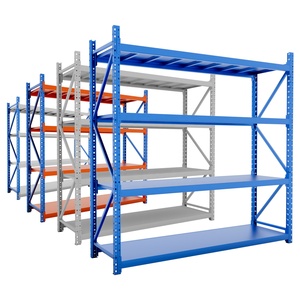
Factory Direct 4-Layer 800kg Medium Heavy Duty Pallet Racking System Steel Adjustable Longspan Warehouse Storage Pallet Racks
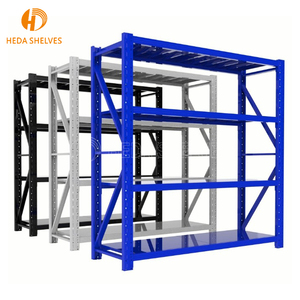
Wholesale Heavy-Duty Industrial Shelves Steel Multi-Layer Thickened Medium-Duty Rack for Warehouse Storage Light-Duty
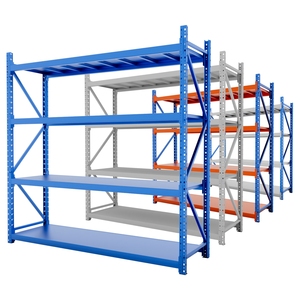
Factory Direct Steel 4Layer/500kg Load Heavy Duty Pallet Rack Bolt Metal Long Span Shelving Industrial Warehouse Storage Racking
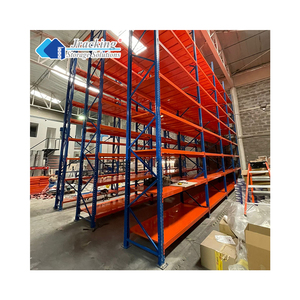
Jracking Dexion Style Warehouse Shelving Heavy Duty Pallet Rack
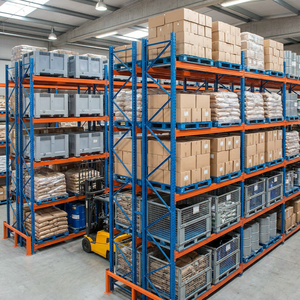
Selective Rack Warehouse Storage Rack System Heavy Duty Pallet Racking Industrial Q235B Steel For Freight Distribution
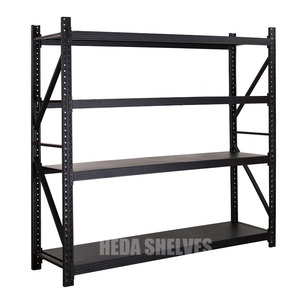
Customizable Black Warehouse Medium Duty Steel Shelving for Warehouse Storage Racks Wholesale Company
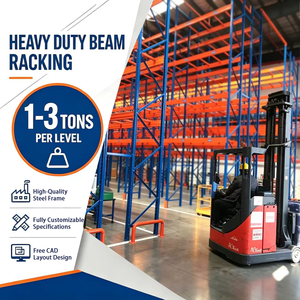
Custom Heavy Duty Steel Pallet Rack Industrial Storage Rack System for Warehouse Warehousing
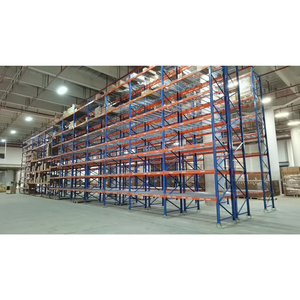
Robust Longspan Shelving Systems Warehouse Organization Heavy Duty Shelves Competitive Price Stock Ready
Direct Factory Competence & Engineering Rigor Since 2001
We eliminate trading layer markups, mitigate seismic vulnerability risks, and enforce strict metallurgical quality standards from cold-coil uncoiling to final international container export packing.
25+ Years Industrial Track Record
Established in 2001, Guangzhou Heda Shelves Co., Ltd. has engineered and delivered over 10,000 logistics, cold-chain, and retail distribution projects across more than 120 countries.
30,000 m² Modern Production Base
Our automated workshop houses precision roll-forming lines, automated punch presses, laser cutting cells, robotic welding stations, and a high-capacity electrostatic powder coating line.
CE & ISO 9001:2015 Verified
Compliant with CE Certificate No. 2435-CPR-8605159, ISO 9001:2015 No. 18624Q00169R0M, and RoHS standards. Fully auditable quality management protocols protect your operational safety.
Free 3D & CAD Layout Engineering
Our dedicated team of 300+ technical professionals provides complimentary 3D rendering, seismic calculation, and warehouse floor optimization typically within 24 hours of receiving site drawings.
Industrial Whitepaper: Engineering Criteria for Warehouse Racking Procurement
Procuring industrial warehouse racking and shelving directly from Chinese manufacturing facilities requires deep structural literacy beyond comparing basic unit prices per ton. Modern supply chain fulfillment facilities operate at higher clear heights, faster forklift cycles, and denser SKU concentration than ever before. Choosing an improperly calculated structural profile or inferior steel grade risks catastrophic progressive bay collapse, expensive downtime, and liability breaches under international building codes.
1. Metallurgical Integrity: Q235B vs. Q355B Cold-Rolled Structural Profiles
At HEDA Shelves, structural members are manufactured from certified prime carbon structural steel coils sourced directly from top-tier domestic mills. Upright columns and load beams undergo continuous multi-station cold roll-forming to ensure uniform grain structure, tight corner radii, and zero micro-fissuring along the bends.
- Q235B Cold-Rolled Steel: Delivers minimum yield strength of 235 MPa and ultimate tensile strength of 370–500 MPa with an elongation of ≥26%. Ideal for standard ambient distribution facilities, selective pallet racking, and medium-duty longspan shelving units.
- Q355B High-Tensile Steel: Offers minimum yield strength of 355 MPa, designed specifically for seismic-zone uprights, high-bay automated warehouse structures over 12 meters, and high-density radio shuttle racking channels where moment loads on columns are intense.
- Deflection Engineering Thresholds: In strict compliance with FEM 10.2.02 and RMI MH16.1 specifications, our horizontal load beams are calculated so that maximum deflection under full uniform static design load never exceeds L/200 (one two-hundredth of the unsupported beam span), safeguarding clearance for automated guided vehicles (AGVs) and standard reach trucks.
| Racking Type | Standard Steel Grade | Bay Load Capacity (Max) | Handling Mechanism | Typical Deflection Ratio |
|---|---|---|---|---|
| Selective Pallet Racking | Q235B Cold-Formed | 1,000 – 4,000 kg / Tier | Counterbalance, Reach Forklifts | ≤ L/200 |
| Heavy Longspan Shelving | Q235B High-Grade Sheet | 300 – 800 kg / Shelf | Manual Picking, Totes, Bins | ≤ L/250 |
| Drive-In / Shuttle Racking | Q355B Reinforced | 1,500 kg / Pallet Lane | Radio Pallet Shuttle / Forklift | ≤ L/300 |
| Structural Steel Mezzanine | Q235B / Q355B H-Beams | 300 – 1,200 kg / m² | Pallet Jack, Personnel, Carts | ≤ L/300 to L/400 |
| Cantilever Rack (Heavy Duty) | Q235B Rolled H-Steel | 1,000 – 3,000 kg / Arm | Side-loader, Forklift | Deflection ≤ L/180 |
2. Surface Pre-Treatment: 10-Stage Electrostatic Anti-Corrosion Protection
Durability under coastal marine transport and humid operating climates depends fundamentally on chemical pre-treatment prior to powder curing. Unlike non-compliant suppliers who simply degrease and paint, our automated 10-stage finishing process ensures complete chemical bonding:
Raw Steel Inspection → Automated Laser/Saw Cutting → Precision CNC Punching → Multi-Stage Roll Forming → Surface Polishing → Robotic Welding → Hot Alkaline Degreasing → Acid Pickling & Phosphating (rust stripping and microscopic crystalline surface preparation) → Pure Electrostatic Powder Deposition (epoxy-polyester hybrid at 60–80 μm dry film thickness) → Continuous 200°C Curing Tunnel.
This stringent finishing protects components against scratching, industrial flaking, chemical vapor exposure, and coastal salt condensation, exceeding 500-hour ASTM B117 neutral salt spray testing without rust encroachment.
3. Seismic Load Engineering for Global Compliance
A frequent issue encountered by procurement managers importing racking into earthquake-prone regions (such as the Pacific Rim, Chile, Peru, Colombia, Japan, and the Western United States) is structural inadequacy during horizontal ground acceleration. Our engineering department uses sophisticated FEA (Finite Element Analysis) software to customize base plate thicknesses, anchor bolt arrays, upright depth profiles, and cross-bay portal bracing:
- Chile (NCh 2369 / NCh 433): Upgraded baseplate thickness (up to 16mm–20mm) and high-ductility anchor studs designed for high seismic response coefficients.
- Peru (Norma E.030) & Colombia (NSR-10): Customized column perforation profiles and horizontal-to-diagonal bracing cross-ratios to prevent torsional twisting under dynamic floor shear.
- Safety Locking Pins: Every beam-to-column connector features a minimum 3-hook welded bracket fitted with an automated spring safety lock capable of resisting an upward dislodgement shear force of over 5.0 kN.
Future Procurement Trends in Warehouse Racking & Shelving
How international supply chain leaders, warehouse contractors, and system integrators are optimizing spatial economics and lifecycle CAPEX over the next decade.
Transition from Static to Semi-Automated Shuttle Systems
Escalating industrial land costs in metropolitan distribution nodes are rendering standard wide-aisle static racking uneconomical. Procuring radio shuttle racks increases storage density by up to 200% over selective racking, cutting forklift travel distance, saving fuel/battery usage, and minimizing collision impacts on upright frames.
Modular Hybrid Mezzanine-Supported Micro-Fulfillment
With fast-moving e-commerce SKU proliferation, multi-tier rack-supported mezzanine floors and multi-level shelving platforms are surpassing single-tier structures in global RFP volumes. Modern procurement demands boltless, modular configurations capable of being dismantled, expanded, or relocated without hot structural welding on site.
Corrosion-Resistant Zinc & Galvanized Substrates for Cold Chains
Global expansion of deep-freeze food logistics and pharmaceutical cold chains (-30°C) has made standard paint coatings obsolete in high-condensation environments. Procurement is shifting towards pre-galvanized coils and continuous hot-dip galvanized uprights that eliminate brittle surface micro-fracturing at sub-zero temperatures.
Digital Engineering Integration: BIM & IFC Interoperability
General contractors increasingly require warehouse racking suppliers to provide native 3D BIM (Building Information Modeling) objects and IFC-compliant CAD models during bidding. This eliminates spatial clashes between rack uprights, fire protection ESFR sprinkler heads, HVAC ducting, and structural warehouse building columns before container departure.
Container Cube Optimization & Knock-Down (KD) Logistics
With international ocean freight volatility, procurement managers look closely at KD (knock-down) packaging efficiencies. Uprights shipped unbolted with nestable bracing bundles allow up to 26–28 metric tons to fit cleanly into a single 40ft High Cube container, slashing landed shipping cost per pallet position by 35% compared to pre-assembled frames.
Sensorized Structural Monitoring & Collision Protection
Modern high-bay racking systems are adopting smart load cells, upright impact sensors, and heavy polyurethane-wrapped steel column guards. Forward-thinking suppliers design upright profiles with pre-engineered mounting brackets for telemetry devices, preventing unchecked impact damage from causing progressive rack collapse.
Frequently Asked Questions by Industrial Sourcing Directors
Everything you need to know regarding structural design checks, customs clearances, loading container economics, and international installation execution.
What parameters are required to generate an accurate 3D CAD layout and quotation? +
Can your engineering team certify compliance with national seismic codes (e.g., Chile, Peru, Colombia, USA)? +
How do you protect warehouse racking against corrosion during ocean shipping and tropical humidity? +
What is your factory lead time and monthly production capacity? +
How is on-site installation managed for international overseas projects? +
What third-party certifications and mill test reports (MTR) do you provide? +
Accelerate Your Warehouse Capacity with Direct Factory Pricing
Contact our senior logistics engineering team today. Send over your warehouse CAD drawings or rough layout sketch, and we will return a comprehensive 3D layout, structural load analysis, and container-optimized FOB/CIF cost breakdown within 24 hours.