Featured Heavy-Duty Racking & High-Density Storage Systems
Custom OEM/ODM structural solutions engineered for maximum volumetric efficiency, certified under CE & ISO 9001:2015 specifications.
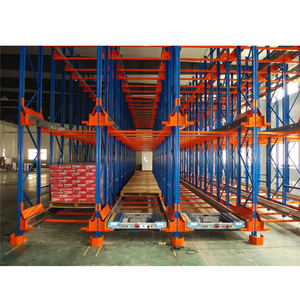
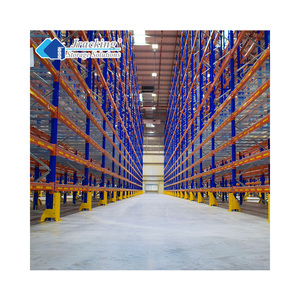
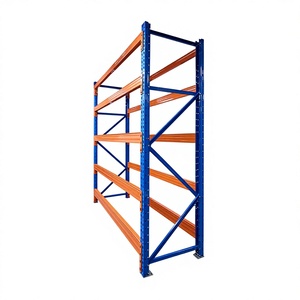
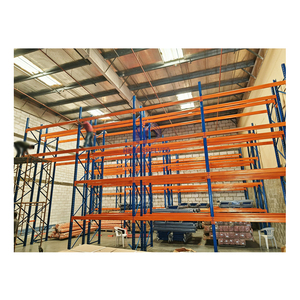
High-Throughput Carton Flow Shelving: Mechanical Principles & Operational Dynamics
A comprehensive analysis of gravity-fed live storage architecture for logistics engineers, distribution architects, and supply chain managers.
In modern supply chain infrastructure, the order picking process accounts for more than 55% of total warehousing operational expenditures. As fast-moving consumer goods (FMCG), third-party logistics (3PL), automotive spare parts, and e-commerce fulfillment hubs face surging SKU proliferation and expedited delivery SLAs, conventional static shelving creates crippling throughput bottlenecks. Carton flow shelving (also designated as carton live storage or gravity flow picking racks) directly solves this operational constraint by converting static shelf space into dynamic, gravity-actuated feed lines.
Operating on the strict First-In, First-Out (FIFO) stock rotation inventory model, carton flow systems incorporate sloped roller tracks or skate-wheel beds integrated into structural steel frames. Totes, corrugated cartons, and split-case containers are loaded from the rear loading aisle (replenishment face) and glide smoothly downward along an inclined plane—typically calibrated between 2.5 to 4.5 degrees depending on carton weight and base morphology—toward the front discharge aisle (picking face). This clean physical separation of restocking and picking workflows eliminates traffic congestion, mitigates human-forklift collision risks, and reduces travel distances for picker personnel by up to 75%.
Roller Bed vs. Wheel Track Geometry
Full-width steel or plastic roller beds deliver universal container adaptability without requiring lane re-profiling. In contrast, multi-lane wheel tracks provide dedicated guide rails, precision drop-in lane dividers, and optimized pitch calibration for uniform totes.
Gravitational Physics & Braking
Carefully engineered gradient profiles maintain consistent run speeds without runaway acceleration. For deep-lane flow beds extending beyond 3 meters, integrated centrifugal mechanical brake rollers prevent product impact crush and package deformation.
Integrated Pick-to-Light Interface
Custom OEM flow shelf profiles feature dedicated mounting channels for digital light-directed picking hardware, RF-directed antennas, and electronic shelf labels (ESL), reducing pick error margins down to near-zero levels (<0.02%).
Structural Parameters & Material Standards
Comprehensive standard engineering matrix for Guangzhou Heda Shelves custom carton flow manufacturing runs.
| Structural Parameter | Standard Specification | Heavy-Duty Industrial Grade | Compliance / Standards |
|---|---|---|---|
| Steel Formulation | Certified Q235B Cold-Rolled Carbon Steel | High-Yield Q355B Hot-Rolled Structural Alloy | GB/T 700-2006 / EN 10025 |
| Upright Frame Pitch | 50mm Adjustable Incremental Pitch | 75mm Reinforced Omega Pitch Profile | ISO 9001:2015 Precision Punching |
| Lane Weight Capacity | 30 kg - 150 kg per Linear Meter | Up to 350 kg per Flow Shelf Level | FEM 10.2.02 / SEMA Certified |
| Roller Track Materials | High-Density Polyethylene (HDPE) / ABS | Zinc-Plated Steel with Precision Ball Bearings | RoHS Compliant Anti-Static Compounds |
| Surface Pre-Treatment | Acid Pickling, Degreasing, Phosphating | Automated Multi-Stage Shot-Blasting | ASTM Surface Cleanliness Standards |
| Finish Protection | Electrostatic Thermoset Powder (60-80μm) | Hot-Dip Galvanized Coating for Cold Storage | EN ISO 12944 Corrosivity Class C3/C4 |
Emerging Procurement Trends in Carton Flow Racking Systems
How global procurement directors and EPC contractors are reshaping warehouse equipment specifications for 2026-2030.
1. Hybrid Automated Mobile Robot (AMR) Integration
Procurement teams are no longer sourcing carton flow shelving as standalone manual racking. Modern supply contracts demand dual-interface engineering: the rear face remains optimized for ergonomic pallet-to-shelf human restocking, while the front discharge tray is geometrically profiled for automated robotic arm picking or Autonomous Mobile Robot (AMR) tote exchange. This hybrid architecture protects capital investments against sudden warehouse automation upgrades.
2. Severe Climate & Seismic Structural Modeling
With the rapid expansion of international cold chains in coastal and seismically active belts (such as Latin America's Pacific rim and Southeast Asian corridors), generic catalog orders have ceased. Procurement directors require verified finite element analysis (FEA) compliant with regional codes such as Chile's NCh 2369, Peru's E.030, and European EN 15512, demanding upgraded seismic baseplates and specialized cold-room epoxy coatings resilient down to -30°C.
3. Factory-Direct Container Utilization Engineering
Volatile international ocean freight rates have elevated "Landed Cost Efficiency" to a top-tier procurement criterion. Enterprise buyers are bypassing domestic middle-tier distributors to partner directly with tier-1 Chinese manufacturers capable of providing customized nesting profiles, knocked-down modular packaging, and 3D container packing diagrams that maximize 40ft High Cube container volumetric fills up to 96%.
4. Demand for End-to-End Traceability & Material Auditing
Regulatory pressures regarding environmental sustainability and workplace health & safety (OSHA / EN 15635) require audited steel mill certificates (MTC 3.1) and certified non-toxic electrostatic finishes. Purchasing mandates now require pre-shipment quality verification, full load-deflection test reports, and non-destructive weld inspection certificates directly bound to factory production batches.
Future Development Trends in Gravity Flow Storage Engineering
The transformation of static gravity shelving into intelligent, dynamic material handling nodes.
The design trajectory of industrial carton flow shelving is rapidly moving beyond simple sheet metal fabrication. Three principal technological shifts define next-generation product development:
Dynamic Modularity
Traditional flow lanes required tools and significant downtime to adjust track widths and tilt angles for SKU dimension variations. Emerging designs feature tool-free clip-in roller beds, universal drop-in guide rails, and variable tilt brackets that allow warehouse staff to reconfigure bay layouts in seconds.
Smart IoT Gravity Sensing
By embedding low-cost piezoelectric pressure sensors along roller tracks, modern flow systems directly track inventory movement in real time. As cartons glide forward, inventory depletion is automatically logged into the warehouse management system (WMS), triggering predictive restocking cycles.
Acoustic & Wear Optimization
In high-density distribution centers operating 24/7, ambient roller noise can exceed safe acoustic thresholds. Next-generation designs leverage dual-durometer polymer wheels with elastomeric running surfaces and low-friction polymer bushings, dropping operating noise emissions below 58 dB.
Why Tier-1 Global Distributors Partner with Guangzhou Heda Shelves
Direct manufacturer capabilities, full structural control, and reliable project execution since 2001.
30,000 m² Modern Workshop
Established in 2001, Guangzhou Heda Shelves Co., Ltd. operates state-of-the-art production lines equipped with automated CNC roll-forming machinery, high-precision punching presses, and robotic welding stations with a 30,000-ton monthly capacity.
Free 3D Layout & Structural Engineering
Our in-house technical department of over 300 experienced engineers provides rapid 24-hour CAD floor plans, full 3D visual renderings, and structural deflection checks considering building constraints, forklift sweeps, and seismic load variables.
Verified International Compliance
All Heda warehouse racking and shelving systems strictly adhere to CE Certificate No. 2435-CPR-8605159 and ISO 9001:2015 Quality Management standards. Every production batch undergoes stringent loading, weld integrity, and coating thickness verification.
Frequently Asked Questions on Carton Flow Shelving Sourcing
Essential technical answers addressing load ratings, slope geometry, installation, and global export shipping.
What is the standard incline angle for smooth carton flow operation?
The recommended slope is typically between 2.5° and 4.5° (a drop of approximately 45mm to 75mm per linear meter). Firmer plastic totes require a shallower pitch (around 2.5°–3.0°), whereas corrugated boxes with softer or uneven bottoms benefit from a slightly steeper incline (3.5°–4.5°) to ensure steady gravity-assisted descent.
Can carton flow levels be integrated into existing pallet racking?
Yes. Our custom OEM carton flow tracks and roller beds can be retrofitted directly into your existing selective pallet rack upright frames via specialized step-beam mounting brackets. This enables pallet reserve storage on upper tiers while dedicating lower levels to high-speed carton picking.
What surface finishes are available for corrosive or sub-zero environments?
Standard components receive a multi-stage pre-treatment (pickling, degreasing, phosphating) and an electrostatic powder-coated finish (60–80 microns). For cold storage down to -30°C or high-humidity coastal distribution hubs, we supply fully hot-dip galvanized steel frames and stainless-steel axle roller assemblies.
What is the standard manufacturing lead time for full-container export orders?
Supported by our 30,000-ton monthly capacity, standard carton flow shelving orders are fabricated and packaged within 2 to 4 weeks following final CAD approval. Phased batch deliveries can be scheduled to match the civil engineering and general contracting timelines of large-scale logistics developments.
How does Guangzhou Heda support overseas assembly and installation?
Every export shipment includes systematically numbered components, CAD erection drawings, step-by-step assembly manuals, and video installation guides. For multi-tier mezzanine or high-density rack configurations, our engineering team provides real-time remote technical supervision or on-site project management.
What project parameters are required to generate an engineered layout quote?
Please provide your warehouse architectural floor plan, clear ceiling height, tote/carton dimensions (Length × Width × Height), gross unit weight, daily SKU turnover volumes, and your regional seismic zone. Our engineering team will supply a customized 3D CAD layout and quotation within 24 hours.
Accelerate Your Order Picking Throughput with Custom Flow Shelving
Connect directly with our senior structural racking engineers to receive a free 3D CAD warehouse layout, seismic structural calculation, and factory-direct price quotation.
Get Catalog