Standard & Custom High Bay Storage Systems
Precision-fabricated utilizing automated roll-forming and robotic welding. Every system is built to comply with EN 15512, ANSI MH16.1, and international seismic parameters.
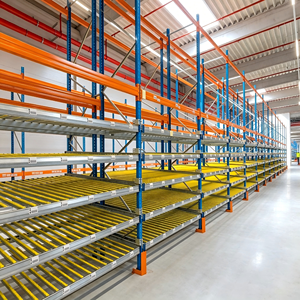
Gravity Carton Flow Racking FIFO for E-commerce Order Fulfillment
- Track Pitch: Adjustable Rollers
- Picking Method: Strict FIFO Logic
- Application: Split-Case E-Com
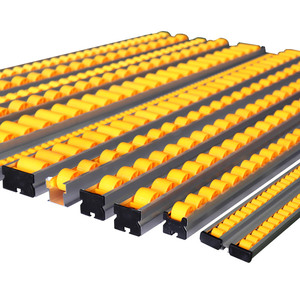
Gravity Flow Rail Roller Track PE/ABS Wheels (200kg Load Shelf)
- Wheel Material: High-Impact PE/ABS
- Frame Capacity: 200 kg / Level
- Modularity: Drop-In Track Mount
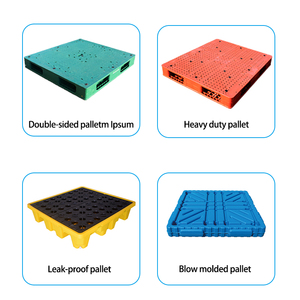
Heavy Load Euro Pallet 1200x1000 Single-Faced Solid Surface
- Dimension: 1200 × 1000 mm
- Racking Load: Up to 1,500 kg
- Deck Type: Solid Flat Top Hygiene
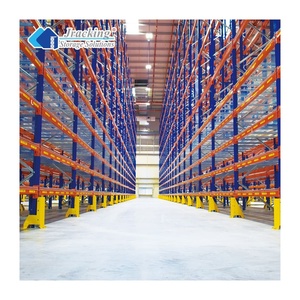
Heavy Duty Selective Pallet Racking Vertical Warehouse Storage
- Direct Access: 100% Individual Pallet
- Beam Section: Box / Step Beam
- Upright Pitch: 50mm / 75mm / 76.2mm
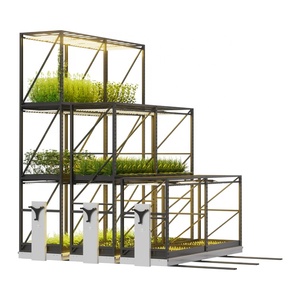
Metal Mobile Compactor High-Density Vertical Grow Racking System
- Aisle Control: Mechanized / Electric
- Space Gain: +80% Floor Volume
- Finish: Anti-Microbial Epoxy
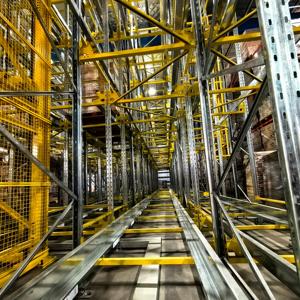
CE Certified Four-Way Radio Shuttle Rack for Cold Storage Facilities
- Operating Temp: -30°C to +45°C
- Travel Speed: Up to 1.2 m/s Laden
- Shuttle Power: Lithium LiFePO4
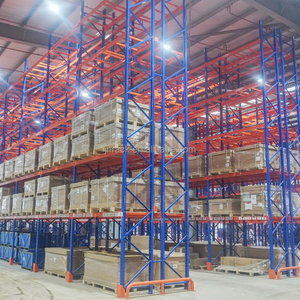
Corrosion-Protected Pallet Racking for Extreme Humidity & Coastal Sites
- Pretreatment: 9-Stage Phosphating
- Coating: Hot-Dip Galv / 90μm Epox
- Testing: 1000h Salt Spray Passed
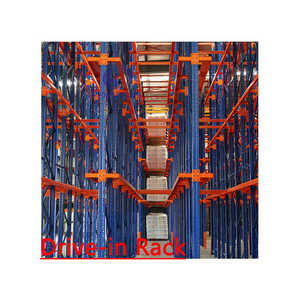
Direct Factory 2000kg Capacity Drive-In Pallet Storage Rack
- Bay Capacity: 2000 kg / Pallet Position
- Rails: Rolled Unilateral Guides
- Floor Usage: Up to 85% Volumetric
Structural Integrity of Modern High Bay Storage Racks: Engineering Physics, Steel Grades, and Tolerances
In high-throughput distribution hubs, manufacturing plants, and cross-dock logistics centers, high bay storage racks represent the structural backbone of physical supply chains. Operating at elevations typically ranging from 12 meters to upwards of 40 meters in automated clad-rack installations, high bay systems diverge drastically from conventional, low-profile industrial shelving. The design calculation of these tall structures must account not only for static deadweight and live gravity loads, but also for dynamic acceleration, forklift mast impact, seismic wave interactions, floor slab micro-deflection, and high-rack wind vortex actions in self-supporting structures.
The Physics of Elastic Buckling & Second-Order P-Delta Effects
As rack upright frames extend beyond 15 meters under high vertical load, axial compression triggers second-order elastoplastic deformations known as the P-Delta ($P\text{-}\Delta$) effect. Standard first-order elastic analysis becomes insufficient. Structural engineers at HEDA Shelves employ non-linear finite element modeling (FEM) to analyze bifurcation buckling modes, semi-rigid beam-to-column joint rotational spring stiffness ($C_i$), and torsional-flexural buckling of cold-formed perforated open sections under multi-directional lateral loads.
Metallurgical Substrate Selection: Q235B vs. Q355B (EN 10025 S235JR vs. S355JR)
The structural efficacy of an industrial high bay system depends strictly on the chemistry and mechanical properties of the cold-rolled coiled steel. Guangzhou Heda Shelves Co., Ltd. specifies high-grade structural alloys sourced from tier-one mills, executing strict batch-level tensile yield and charpy V-notch impact validation:
1. Q235B (Yield Strength $f_y \ge 235\text{ MPa}$, Ultimate Tensile $370\text{--}500\text{ MPa}$): Standard for beam profiles, horizontal braces, and light-to-medium-duty uprights. Provides superior elongation characteristics ($\delta_5 \ge 26\%$), ensuring gradual ductile yield rather than catastrophic sudden shear failure under unforeseen overload stresses.
2. Q355B / Q355D (Yield Strength $f_y \ge 355\text{ MPa}$, Ultimate Tensile $470\text{--}630\text{ MPa}$): Compulsory for heavy-duty automated high-bay uprights exceeding 14 meters. The enhanced yield stress allows for reduced steel thickness while maintaining high Euler critical buckling thresholds. For sub-zero cold chain deployments down to -30°C, grade Q355D is mandated due to its verified Charpy impact energy absorption ($A_v \ge 34\text{ J}$ at -20°C), preventing low-temperature embrittlement.
Comparative Architecture: High Bay Storage Systems Performance Matrix
| Storage Architecture | Vertical Clear Height | Volumetric Density | Pallet Selectivity | Deflection Tolerance | Handling Mechanism |
|---|---|---|---|---|---|
| Selective Pallet Racking | Up to 14 m | Standard (40-50%) | 100% Direct Immediate | $L/200$ Beam Midspan | Reach Truck / Counterbalance |
| VNA (Very Narrow Aisle) | 12 m to 18 m | High (65-75%) | 100% Direct Immediate | $L/300$ High Precision | Wire/Rail Guided VNA Turret |
| Drive-In / Drive-Through | Up to 12 m | Very High (75-85%) | LIFO / Batch FIFO | $L/250$ Cantilever Rail | Forklift Enters Rack Lane |
| Four-Way Radio Shuttle | 12 m to 25 m | Ultra-High (80-90%) | FIFO or LIFO Matrix | $L/350$ Shuttle Track | Semi-Auto Carrier + Lifter |
| AS/RS Clad-Rack High Bay | 20 m to 45 m | Maximum (>90%) | Automated Dynamic Matrix | $L/500$ FEM 9.831 Rigid | Automated Stacker Crane (SRM) |
Deflection Limits & Floor Slab Integration (DIN 18202 & ASTM E1155)
In high bay installations, particularly those utilizing VNA turret trucks or automated stacker cranes (AS/RS), floor slab flatness is inextricably linked to racking safety. A 2 mm tilt at ground level translates into a dangerous 40 mm to 60 mm mast deviation at a 16-meter pick height. Consequently, HEDA Shelves engineers review concrete slab compressive ratings ($f'_c \ge 30\text{--}40\text{ MPa}$) and verify adherence to DIN 18202 Table 3 (Group 4) or ASTM E1155 $F_{min}$ / $F_F / F_L$ flatness and levelness specifications before anchoring footplates with torque-controlled mechanical or chemical wedge anchors.
Future Procurement Trends Shaping Industrial High Bay Systems
Global supply chains are modernizing vertical storage. Procurement leaders and warehouse operators must align their CapEx investments with next-generation automation, microclimate resiliency, and circular sustainability.
Clad-Rack Building Transition
Shift from conventional building-then-racking to rack-supported clad buildings. The racking serves as the civil structural frame carrying the roof and side cladding, reducing total project build time by up to 25% and dramatically cutting civil CapEx.
Dynamic Sub-Zero Resiliency
Accelerated demand for cold-chain pharmaceutical and food export storage. Buyers are shifting to continuous galvanized pre-treated steel and cryogenic low-temperature alloys capable of resisting condensation corrosion and cyclical thermal shock.
Digital Twin & Sensorization
Procurement contracts now frequently mandate digital twin layout models compatible with BIM Level 2. High bay racks are progressively equipped with fiber-optic strain gauges and tilt-sensors for real-time load and seismic deflection monitoring.
Algorithmic Ocean Freight Stacking
With global maritime freight fluctuations, tier-one manufacturers use proprietary 3D nesting algorithms for 40' High Cube shipping containers, packing up to 26 metric tons without surface paint chafing, cutting landed shipping costs per pallet position.
Technological Innovations in High Bay Rack Cold-Forming and Surface Finishing
The manufacturing threshold for high bay racking exceeds standard metal fabrication. Upright columns carrying 20-ton frame loads at 18 meters cannot tolerate punching pitch inaccuracies, residual roll-forming stress, or uneven coating thicknesses. At HEDA Shelves, technological upgrades over the past decade have centered on computer-integrated manufacturing (CIM) and surface chemistry passivation.
Continuous Automated Roll-Forming Lines with Online Punching
Traditional racking fabrication often relies on manual sheet punching followed by mechanical press brake bending—an outdated methodology that introduces cumulative pitch errors and micro-fissures along bend radii. Modern production at HEDA utilizes continuous 24-station automated roll-forming lines integrated with servo-controlled hydraulic punch presses. High-strength steel coil is punched flat with laser positioning tolerances within $\pm0.1\text{ mm}$, followed by progressive gradual cold forming through 24 sets of hardened alloy roll dies. This ensures that the upright profile's omega ($\Omega$) shape exhibits zero twist, minimal camber, and near-zero residual stress across its 12-meter continuous span.
Automated Robotic Gas Metal Arc Welding (GMAW)
Beam end connectors (claws) carry the dynamic shear and bending moments transmitted from loaded pallets to vertical upright columns. Our facility employs multi-axis Panasonic robotic GMAW welding cells operating under a shield gas mixture of 80% Argon and 20% $\text{CO}_2$. Robotic automation guarantees uniform weld throat thickness, complete joint penetration (CJP), and elimination of cold-lapping or porosity, ensuring that beam-connector moment resistance meets or exceeds the strict cyclic testing requirements of EN 15512 Annex A.
9-Stage Pre-Treatment & Electrostatic Powder Coating
Corrosion protection dictates the operational lifespan of industrial steel racking, particularly in tropical climates such as Brazil, Colombia, and coastal Southeast Asia. HEDA Shelves utilizes an automated overhead monorail surface conversion line incorporating: (1) Hot alkaline degreasing, (2) Dual industrial water rinse, (3) Surface acid pickling for mill-scale removal, (4) Nanoceramic or zinc-phosphate conversion coating, (5) Deionized water rinse, (6) Thermal dry-off oven at 140°C, (7) Automated electrostatic spray deposition of high-durability epoxy-polyester powder (60–90 $\mu\text{m}$ dry film thickness), and (8) Polymer curing in an indirect gas-fired convection oven at 200°C for 20 minutes. The resulting surface finish exhibits a cross-hatch adhesion score of Class 0 (ISO 2409) and successfully withstands 1,000 hours of neutral salt spray testing (ASTM B117).
25 Years of Factory-Direct Engineering Excellence
Established in 2001, Guangzhou Heda Shelves Co., Ltd. operates as a vertically integrated manufacturer, providing complete engineering design, custom OEM/ODM fabrication, and turnkey export delivery.
Comprehensive OEM & ODM Customization Parameters
As an international OEM supplier to regional racking brands, distributors, and logistics integrators, HEDA Shelves provides extensive design flexibility across all component geometries:
Upright Frame Profiles: Column web widths from 80mm to 140mm, material thicknesses from 1.5mm to 3.5mm, with custom hole-punching patterns including British 76.2mm pitch, European 50mm pitch, and American teardrop 50.8mm pitch. All uprights feature continuous vertical slotting to allow beam level adjustability in 50mm or 75mm increments without mechanical cutting.
Load Beam Configurations: Interlocking twin-C box beams (up to 160mm depth) and step beams designed to seat wire mesh decking or drop-in galvanized steel panels flush with the beam flange. Beam connectors feature 3, 4, or 5-finger forged hooks engineered with self-locking steel safety pins to prevent accidental dislodgement from upward forklift mast impact.
Seismic Design Engineering: Our structural team routinely develops calculation reports for high-risk seismic regions across South America, the Pacific Rim, and the Mediterranean. By integrating site-specific spectral acceleration coefficients ($S_s, S_1$), soil class types, and importance factors ($I_p$), we size heavy-duty footplates (12mm–20mm thick), upgrade base anchors to high-shear chemical capsule systems, and engineer cross-aisle and down-aisle vertical K-bracing or X-bracing towers conforming to Chilean NCh 2369, Peruvian E.030, Colombian NSR-10, and US RMI/ANSI MH16.1 codes.
Frequently Asked Questions by Industrial Sourcing Teams
Detailed answers covering structural calculations, international standards compliance, shipping packing logistics, and lead times.
What international structural design codes do your racking calculations conform to?
What concrete floor slab specifications are required for high bay storage racks?
What is your typical production lead time for full-container export orders?
How do you protect high bay racking against corrosion in humid or coastal environments?
Can your engineering team integrate ESFR in-rack fire sprinkler systems into the design?
How are components packaged to prevent damage during long ocean voyages?
What information is needed to receive an engineered 3D layout and formal quotation?
Can you supply OEM components compatible with our existing racking systems?
How do you handle site installation and assembly for international projects?
What QA/QC documentation and factory acceptance testing (FAT) are provided?
Plan Your High Bay Warehouse Project with Factory Engineers
Eliminate middleman markups. Gain direct factory pricing, certified structural calculations, and a turnkey 3D layout optimized for your specific pallet footprint and forklift fleet.