High-Capacity Industrial Racking & Modular Shelving Systems
Direct factory-engineered configurations conforming strictly to ISO 9001:2015, CE (EN 15512), and international FEM structural design standards.
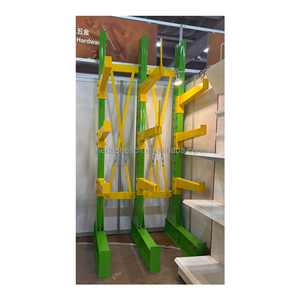
Warehouse Cantilever Racking and Heavy Duty Long Material Storage System
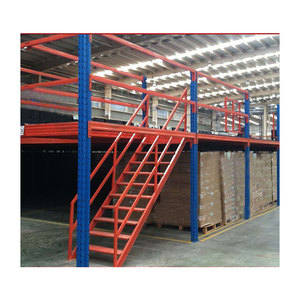
Heavy Duty Multi Tier Steel Grating Floor Rack-Supported Mezzanine Platform
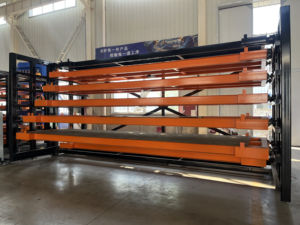
Multi-Tier Powder Coated Anti-Rust Industrial Warehouse Storage Rack System
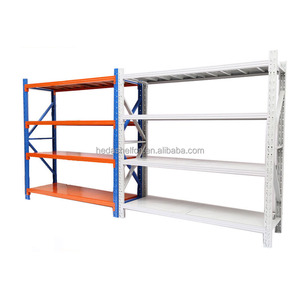
Industrial Heavy Duty Boltless Longspan Steel Shelving Units & Stacking Racks
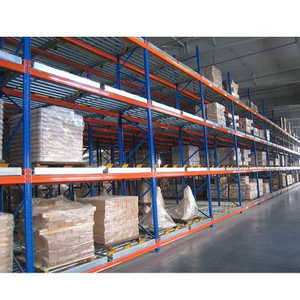
Dynamic Warehouse FIFO Pallet Flow-Through Gravity Roller Racking System
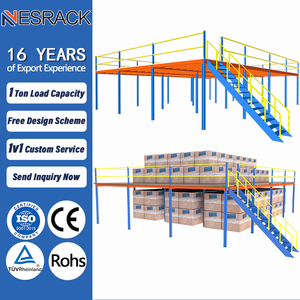
Warehouse Heavy Duty Loft Platform & Integrated Shelving Attic Floor Rack

Customized Collapsible Stacking Steel Pallet Racks & Longspan Post Pallets

Custom Selective Beam Racking System & Heavy-Duty Longspan Master Shelving
Structural Engineering Fundamentals: Mechanics of Industrial Longspan Systems
Longspan shelving serves as the foundational structural bridge between light-duty commercial boltless shelving and multi-tier heavy-duty pallet racking infrastructure. Engineered specifically for manual order selection, intermediate consolidation tiers, and non-palletized inventory picking, longspan systems demand exact mechanical tolerances to preclude beam buckling, deflection-induced fatigue, and catastrophic lateral sway under dynamic warehouse handling.
At Guangzhou Heda Shelves Co., Ltd., our OEM engineering paradigm calculates load metrics using rigorous finite element modeling (FEM) based on European Standards EN 15512 and RMI Specification MH16.1. The load-bearing capacity of a longspan shelf is fundamentally constrained by the section modulus ($Z$) of the horizontal beam profiles, the moment of inertia ($I$), and the unbraced length ($L$). For industrial distribution operations, the standard allowable elastic deflection limit is conservatively set between $L/200$ and $L/250$ under Uniformly Distributed Loads (UDL). This ensures that secondary deformations do not impart unintended eccentric moments into the vertical upright frames.
| Profile Design Type | Standard Clear Span | Upright Column Pitch | UDL Deflection Limit | Primary Decking Selection | Standard Safety Factor |
|---|---|---|---|---|---|
| Light-Duty Longspan | 1,000mm – 1,500mm | 50mm Slotted Pierced | 1:200 Elastic | Solid Steel / MDF Particle Board | 1.65 (Static Yield) |
| Medium-Duty OEM Spec | 1,500mm – 2,300mm | 50mm Butterfly Pitch | 1:220 Controlled | Flush Steel Panels / Wire Mesh | 1.80 (FEM Compliant) |
| Heavy-Duty Longspan / Z-Beam | 2,000mm – 2,700mm | 75mm Teardrop / Hexagonal | 1:250 Heavy Load | Galvanized Ribbed Drop-In Decks | 1.95 (Industrial Seismic) |
| Multi-Tier Mezzanine Base | Up to 3,000mm Span | Custom Welded / Post-Formed | 1:300 Structural | Heavy Grating / 38mm P5 Flooring | 2.10 (Live Load Rating) |
Upright column frames undergo continuous precision roll-forming from high-tensile cold-rolled Q235B or structural-grade Q355B carbon steel coil. Piercing dies maintain micron-level positional accuracy over continuous lengths up to 12 meters, ensuring instantaneous beam connector seating with zero vertical play. Integral 3-claw or 4-claw safety connector brackets lock securely into the uprights via spring-steel engagement safety pins, mitigating accidental beam dislodgement caused by forklift impact or human handling vibration during high-density batch picking operations.
Future Procurement Trends in Industrial Longspan & Warehouse Racking
Analyzing the seismic macro-shifts in global supply chain logistics, cross-border procurement dynamics, and the operational demands reshaping industrial shelving specifications for 2026-2030.
Modular Omnichannel Retrofitting
Global fulfillment centers are departing from monolithic storage configurations. Modern B2B procurement focuses on hybrid systems where longspan tiers can be instantly modified into carton flow, hanging garment rails, or automated mobile picking modules without requiring hot works or structural re-welding.
Stringent Seismic Site Engineering
International procurement frameworks (particularly in earthquake-active zones throughout the Pacific Rim, Western Americas, and Southern Europe) now mandate full site-specific engineering certifications (NCh 2369, NSR-10, E.030, EN 16681). Standardized catalog profiles are giving way to custom OEM footplates, dynamic floor anchoring, and reinforced cross-bracing schematics.
Nearshore Container Density Optimization
Ocean freight cost volatility has driven procurement engineers to demand maximum space utilization within standard 40-foot High Cube (40HQ) maritime shipping containers. Exporters must design nested beam geometries, interlocking upright bracing, and knock-down column frames that achieve minimum 26.5 to 28 metric tons net payload per TEU.
Technological Evolution & Manufacturing Innovation in Industrial Storage
The manufacturing of longspan shelving and industrial racking is no longer a rudimentary metal fabrication process. Modern warehouse automation, robotic fleet deployment (such as Autonomous Mobile Robots - AMRs), and environmental sustainability standards have transformed fabrication criteria across three key vectors:
1. High-Tensile Micro-Alloy Cold Forming
Historically, manufacturers relied on standard Q235 (mild carbon steel) with thick cross-sections to achieve structural load thresholds, substantially inflating deadweight and shipping freight costs. Contemporary roll-forming lines leverage advanced micro-alloyed, cold-rolled sheets (such as Q355B and high-yield cold-rolled galvanized grades). By optimizing section geometry through multi-station computer-controlled roll-forming (featuring up to 24 progressive bending stations), we introduce longitudinal stiffening ribs into upright faces and beam step flanges. This achieves superior torsional rigidity and identical UDL ratings with a 14% to 18% reduction in component deadweight.
2. Zero-VOC Multi-Stage Surface Conversion & Hybrid Powder Coatings
Standard solvent coatings and superficial dip paints no longer meet modern warehouse health codes or international anti-corrosion specifications (such as ISO 12944 standard classes C2 through C4). The standard of excellence requires an exhaustive 9-stage pre-treatment line incorporating hot alkaline degreasing, ultrasonic water rinsing, zinc-manganese phosphating, and deionized passivating rinses. This prepares the bare metal surface for automated electrostatic thermoset polyester powder deposition (utilizing high-grade powders such as AkzoNobel). Cured in convective baking tunnels at 180°C - 200°C, the resulting cross-linked polymer matrix delivers a surface thickness exceeding 70-90 microns, verified by 500-hour neutral salt spray tests (ASTM B117) to withstand humid, condensation-heavy, or non-climate-controlled storage hubs.
3. Interoperability with Goods-to-Person (G2P) Automation
Longspan shelving bays are no longer exclusively serviced by human pickers. Warehouses are rapidly introducing Goods-to-Person AMRs, automated guided vehicles (AGVs), and vertical reciprocating conveyors (VRCs). Consequently, rack tolerances must satisfy robotic interaction protocols: deflection envelopes must be predictable to within millimeters, wire mesh decking must feature tight grid pitches (e.g., 50x50mm or 50x100mm with inverted flare channels) to prevent tote tipping, and baseplates must be flush-bolted to eliminate interference with low-clearance mobile robotic navigation sensors.
Why Global Importers Partner with Guangzhou Heda Shelves
Founded in 2001, Guangzhou Heda Shelves Co., Ltd. has grown over a quarter-century into an undisputed leader in structural warehouse storage, longspan shelving systems, and integrated mezzanine platforms. We control every stage of fabrication in our dedicated 30,000 square meter modern manufacturing plant.
-
✓
30,000 Metric Ton Monthly Capacity: Rapid production turnaround backed by continuous automated coil slitters, CNC punching presses, and robotic welding stations.
-
✓
Complete OEM / ODM System Engineering: Tailored beam connector dies, customized hole punches (teardrop, butterfly, diamond), and bespoke component branding for regional distributors.
-
✓
Full-Lifecycle Project Support: Complimentary 3D visual renderings, structural CAD blueprints, seismic base calculations, and verified container loading plans within 24 business hours.
-
✓
Certified Compliance Verification: Certified under ISO 9001:2015 quality frameworks, European CE structural certificate (2435-CPR-8605159), and RoHS compliant surface technologies.
Production & Engineering Specs
Frequently Asked Questions by Industrial Buyers & Importers
Authoritative technical, commercial, and freight logistics guidance formulated directly by our senior structural engineering team.
What is the exact distinction between medium-duty longspan shelving and heavy-duty selective pallet racking?
How does HEDA calculate structural load capacities and verify safety factors?
Can longspan shelving be customized for OEM brand distributors (punch patterns, colors, dimensions)?
What decking options are available for industrial longspan shelving systems?
How do you prevent corrosion and coating degradation during ocean freight transit?
Can longspan shelving be configured into multi-tier rack-supported mezzanines?
What parameters are needed to generate an exact CAD layout and formal quotation?
What is the typical production timeline and container loading optimization process?
Request Custom Longspan Engineering & B2B Export Pricing
Partner directly with an established Tier-1 manufacturer. Send your floor plans or component specifications today to receive a fully calculated CAD layout, structural FEM data sheets, and competitive FOB/CIF container pricing within 24 business hours.
Contact Us