Factory-Customized Industrial Pallet & Heavy-Duty Racking Systems
Constructed from premium high-tensile hot and cold-rolled steel, each system integrates structural FEA calculations, strict ISO 9001:2015 traceability, and modular adaptability for worldwide distribution facilities.
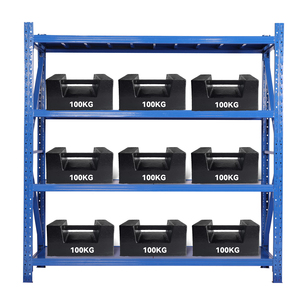
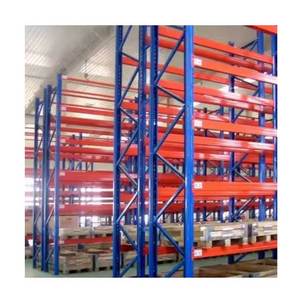
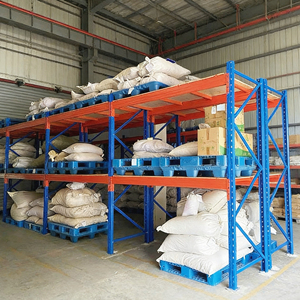
Principles of Push Rack (Push-Back) System Engineering
A Push Rack System represents the apex of high-density dynamic storage, utilizing inclined nested carts operating along low-profile structural steel tracks. By leveraging gravity-assisted LIFO mechanics, operators store pallets between 2 to 6 positions deep without forklifts ever entering the racking bay structure.
Nested Cart Kinematics
Each multi-deep pallet position rests upon heavy-duty flanged-wheel telescoping carts. The first pallet is placed on the top cart. Loading the subsequent pallet gently pushes the front cart backward along precision-milled inclined rails (typically pitched at 1.5% to 2.2%). This eliminates the structural vulnerabilities associated with internal drive-in corridors.
Controlled Inertial Deceleration
When the frontal pallet is picked, hydraulic and gravity-dampened cart linkages regulate the forward roll speed of subsequent pallets. Our custom low-temperature bearings and precision steel flange tracks eliminate cart derailing, violent collisions, and premature roller wear during continuous high-throughput duty cycles in ambient or cold stores.
Metallurgical Rigidity: Q235B vs Q355B
Upright columns and dynamic guide rails are cold roll-formed from certified Q235B and high-yield Q355B micro-alloyed structural steel. Fabricated with continuous automated multi-station roll-forming lines, the resulting omega profiles deliver optimal section modulus and torsional resistance against seismic base reactions and lateral forklift deflection.
| Evaluation Factor | Push-Back Rack System | Drive-In Racking | Selective Pallet Racking | Radio Shuttle Racking |
|---|---|---|---|---|
| Volumetric Footprint Efficiency | Very High (75% - 85%) | High (70% - 80%) | Moderate (40% - 50%) | Ultra High (85% - 90%) |
| SKU Accessibility (Selectivity) | 1 Lane = 1 Unique SKU (High Lane Selectivity) | 1 Full Bay = 1 SKU (Low Selectivity) | 100% Direct Selective Access | 1 Channel = 1 SKU (Automated) |
| Pallet Cycle & Picking Velocity | Rapid (Aisle-Only Operation) | Slow (Forklift Enters Rack) | Rapid (Single Pallet Pick) | Semi-Automated Machine Paced |
| Forklift Structural Impact Risk | Near Zero (Operates external to bay) | Severe (High impact frequency) | Low (Minimal corridor intrusion) | Low (External transfer station) |
| Honeycombing Losses | Minimal (Individual lane rotation) | Severe (Vast air space waste) | Zero Honeycombing | Minimal across single lanes |
| Initial CapEx vs Long-Term ROI | Moderate-High / Rapid 2-Year Payback | Low Initial CapEx / High Maintenance | Lowest Initial CapEx | Highest Initial CapEx & Battery Maint. |
Technological Trajectories Shaping Heavy-Duty Push Rack Systems
Modern distribution facilities require material handling infrastructure capable of seamlessly bridging human-operated material handling equipment with next-generation autonomous intralogistics ecosystems.
1. AMR & AGV Robotic Interface Integration
Global procurement teams are transitioning from standard forklift picking toward Vision-Guided Autonomous Mobile Robots (AMRs) and automated reach trucks. Modern push-back configurations are engineered with wider frontal target entry guides, laser-reflective positioning targets, and reinforced bottom beam stop bumpers to accommodate millimeter-accurate autonomous docking.
2. Ultra-Deep Cold Chain Densification (-30°C)
Refrigerated warehouse space costs up to 4.5 times more to operate than ambient square footage. The industrial push rack market is experiencing exponential demand for 4-deep and 5-deep nested systems utilizing specialized low-temperature cart greases, cryogenic-grade cold-rolled steel, and hot-dip galvanization to mitigate thermal condensation embrittlement.
3. IoT Strain Telemetry & Overload Monitoring
Smart logistics hubs are incorporating integrated piezo-resistive strain gauges along primary load-bearing horizontal beams and upright posts. These digital sensors transmit real-time deflection and lane-occupancy metrics to warehouse management systems (WMS), actively preventing beam yield failure and pinpointing unbalanced load placements.
Guangzhou HEDA Shelves: Enterprise OEM & ODM Infrastructure
Established in 2001, Guangzhou HEDA Shelves Co., Ltd. operates a premier 30,000 square meter industrial manufacturing base. Supported by over 300 experienced technical staff and senior intralogistics engineers, we supply structural pallet racking, dynamic push-back systems, and complex steel mezzanines to industrial leaders across 120+ countries.
Turnkey Engineering & Certified Rigor
We do not produce generic catalog products. Every push rack layout is calculated based on site-specific soil classifications, live pallet dead-loads, seismic spectral accelerations (in conformance with RMI MH16.1, AS 4084, and EN 15512), and forklift mast specifications. Our certified quality assurance framework holds active CE Certificate No. 2435-CPR-8605159 and ISO 9001:2015 Registration No. 18624Q00169R0M.
Seismic Sizing & High-Tolerance Fabrication
For installations situated in high-risk seismic zones across South America, Australia, and the Pacific Rim (including NCh 2369, E.030, and NSR-10 compliance), we engineer oversized baseplates, high-embedment anchor studs, and multi-flange portal frame bracings. Every component is produced with automated robotic welding and high-precision CNC hole-punching for error-free on-site assembly.
The 10-Step Precision Fabrication Lifecycle
Zero-defect tolerances achieved through closed-loop in-house manufacturing control.
Raw Material
Certified mill Q235B/Q355B coils with ultrasonic testing.
Precision Slitting
High-speed laser cutting & automated longitudinal coil slitting.
CNC Punching
Continuous hydraulic piercing for 50/75mm adjustment pitch.
Roll Forming
18-pass cold roll-forming lines shaping high-stiffness columns.
Cart Fabrication
Heavy steel sheet folding for rigid telescoping nested carriages.
Robotic Welding
Gas-shielded robotic arm welding of beam connectors & baseplates.
Surface Polishing
Automated shot-blasting removal of oxide scale and burrs.
Acid Pickling
Multi-stage immersion phosphating & corrosion passivation.
Powder Coating
Electrostatic curing with AkzoNobel powder coating (60–90μm).
Export Packing
Steel strapping, shock protection & container loading optimization.
Frequently Answered Push Rack Procurement Inquiries
Clear, technically sound answers addressing engineering calculations, export shipping logistics, and structural performance parameters.
What is the standard track inclination slope for push rack carts?
Most commercial pallet loads operate reliably along a continuous slope angle between 1.5% and 2.2% (an approximate rise of 15–22mm per meter of lane depth). Lighter or inconsistent wooden pallets require a slightly steeper pitch to maintain forward roll, while heavy pallets (exceeding 1,200kg) utilize friction dampers to modulate gravity-driven return speeds.
How does a nested cart push rack compare to a continuous roller push rack?
Nested cart push racks are considerably more robust and less susceptible to operational jamming than roller-track push racks. If a wooden pallet possesses a damaged bottom plank or missing runner, nested carts support the pallet firmly across steel frames, whereas continuous dynamic roller tracks can snag, lock up, or splinter within the lane.
What structural parameters are required for a customized OEM quotation?
Our engineering team requests the warehouse architectural CAD layout (showing slab columns and overhead clearances), exact pallet dimensions (width, depth, height including overhang), maximum gross pallet weight, forklift model and mast lift capability, operational temperature, and the seismic zone parameter of your building site.
How do you safeguard against maritime corrosion and transit deformation?
Export structural beams and uprights undergo pickling, phosphating, and electrostatically applied thermo-cured powder coating (or hot-dip galvanization for coastal regions). Structural elements are bundled using specialized steel bandings, rubber edge protectors, and damp-proof plastic shrouds to prevent moisture infiltration during 30 to 45-day ocean transit.
What is the standard lead time for an engineered OEM project?
Backed by our 30,000 ton monthly fabrication capacity, standard push-back racking orders are fabricated within 2 to 4 weeks following 3D CAD drawing and structural FEA sign-off. Phased batch deliveries can be scheduled for large-scale multi-thousand-pallet distribution hubs to mirror local construction progress.
Can your engineering team support local installation in South America and beyond?
Every shipment is backed by sequential component numbering, comprehensive exploded assembly schematics, and bilingual installation manuals. Furthermore, our senior structural engineers provide remote video guidance and can deploy on-site technical supervisors for turnkey facility verification and load-testing certifications.
Optimize Your Warehouse Volumetric Storage by Up to 85%
Connect directly with Guangzhou HEDA Shelves' senior intralogistics engineers. Submit your warehouse floor plan today to receive a free, professional 3D layout, CAD drawing, and structural seismic load calculation.
Inquire Now