Featured Industrial Heavy-Duty Storage & OEM Systems
Precision-manufactured in compliance with EN 15512, RMI, and ISO 9001:2015. Explore our certified high-density warehouse solutions engineered for extreme loads and seismic durability.
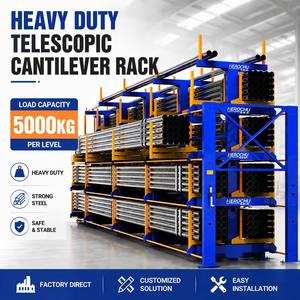
Heavy Duty Steel Telescopic Cantilever Rack System Powder Coated Industrial Racking
- Capacity: 1,000–5,000 kg / arm
- Finish: Anti-Corrosion Electrostatic
- Application: Long Pipes & Profiles
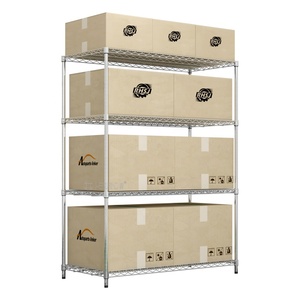
Versatility 4 Tiers NSF Chrome Plated Solid Steel Wire Shelving Storage System
- Finish: Multi-Layer Chrome Plating
- Standard: NSF Commercial Sanitation
- Assembly: Tool-Free Slip-Sleeve
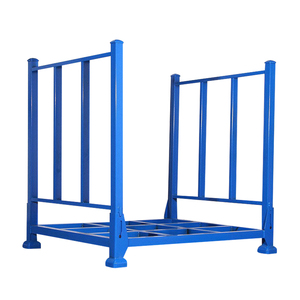
Stacking Heavy Duty High Capacity Moveable Metal Welded Logistics Pallet Rack
- Type: Modular Stacking Post Frame
- Load: 1,500 kg / unit (Stack 4-High)
- Mobility: 4-Way Forklift Entry
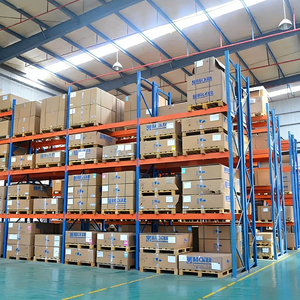
Warehouse Storage Racks Heavy Duty Industrial Storage Rack Garage Shelving
- Steel: Certified Q235B Cold-Rolled
- Pitch: 50mm / 75mm Adjustable
- Safety: Automatic Locking Pins
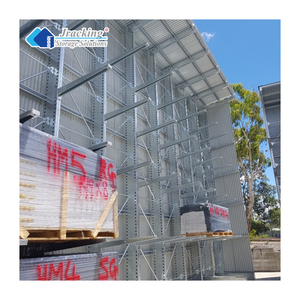
Industrial Storage Shelving Heavy Duty Cantilever Racking for Long Pipe Storage
- Columns: Heavy I-Beam Upright
- Protection: Hot-Dip Galvanized / Epoxied
- Config: Single or Double Sided
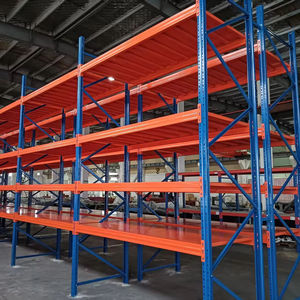
Heavy Duty Pallet Rack with Powder Coated Steel Deck Panels for Retail & Warehouse
- Decking: Solid Rib-Reinforced Steel
- UDL Rating: Up to 4,000 kg / level
- Safety: Retaining Clips Included
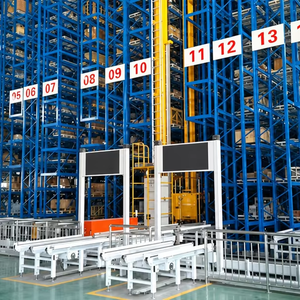
AS/RS High Bay Heavy Duty Pallet Rack for Automated Storage & Retrieval
- Height: Engineered up to 40 Meters
- Tolerance: Sub-millimeter CNC Accuracy
- Interfacing: Stacker Crane Guides
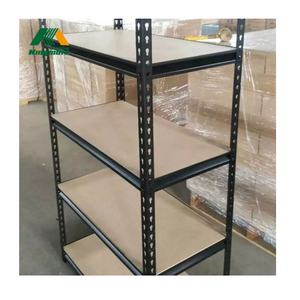
Customized Powder Coating Metal Steel Light Duty Shelving Racking System
- Capacity: 100–300 kg / level
- Application: Manual Pick & E-Commerce
- Custom: Dimensions & RAL Colors
Push Back Rack Engineering: Physics, Nested Carriages & Dynamic Tolerances
A deep architectural evaluation of Last-In, First-Out (LIFO) high-density accumulator systems for enterprise warehouse automation and supply chain optimization.
Push back racking systems represent the engineering pinnacle of gravity-assisted, dynamic high-density pallet storage. Unlike static selective racking or deep drive-in racking that requires lift trucks to physically enter structural bays, push back racking operates through an interconnected series of sloped structural steel carriages nested on inclined longitudinal guide rails. As a forklift inserts a pallet into the front position, it gently pushes the preceding pallet backward along an engineered gradient, typically calibrated between 1.5 degrees and 2.8 degrees (a 2.5% to 4.5% vertical slope). When unloading, gravity drives the trailing carriages forward to the picking face at a controlled terminal velocity, providing immediate single-aisle access.
For industrial design engineers and OEM procurement managers, the structural integrity of a push back system depends entirely on three kinematic principles: cart nesting clearance tolerances, bearing rolling resistance under sub-zero or heavy loads, and deflection resistance of the structural rail assemblies. At Guangzhou Heda Shelves Co., Ltd., our engineering department designs custom OEM cart chassis using CNC laser-cut cold-rolled structural steel (yielding exceeding 355 MPa) and multi-roller flanged bearing assemblies. This guarantees zero binding, low rolling friction, and exceptional lateral stability, even across extreme 2-deep, 3-deep, 4-deep, 5-deep, and 6-deep pallet lane configurations.
| Storage System Type | Volumetric Space Utilization | Selectivity & Access | Pallet Depth Limit | Forklift Impact Risk | Relative Capex vs. Density |
|---|---|---|---|---|---|
| Push Back Racking (HEDA OEM) | 75% – 85% Utilization | 1 SKU Per Lane (LIFO) | 2 to 6 Pallets Deep | Extremely Low (Zero Bay Entry) | Optimal ROI / High Density |
| Standard Selective Racking | 40% – 50% Utilization | 100% Direct Selectivity | 1 Deep (2 Deep for Reach) | Moderate (Frequent Aisle Maneuvers) | Low Initial / High Footprint Cost |
| Drive-In / Drive-Through | 65% – 75% Utilization | 1 SKU Per Bay | Up to 10+ Pallets Deep | High (Trucks Drive Inside Frames) | Moderate / High Maintenance Cost |
| Pallet Flow (Gravity FIFO) | 80% – 90% Utilization | Strict FIFO First-In First-Out | Up to 20 Pallets Deep | Low (Dedicated Load/Unload Aisles) | Very High (Dual Aisles & Full Brake Rollers) |
| Radio Shuttle Cart Racking | 85% – 92% Utilization | Automated Batch FIFO/LIFO | Up to 40 Pallets Deep | Minimal (Automated Cart Kinematics) | High (Cart Electronics & Battery Maintenance) |
Load Distribution & Eccentric Buckling Protection: Standard warehouse uprights encounter severe torsional strain when dynamic loads decelerate against front beam stops. HEDA Shelves addresses this dynamic kinetic energy transfer by manufacturing reinforced heavy-duty box-beam front catchers equipped with high-impact elastomeric polyurethane dampers. The base carriages feature integral anti-lift catches and side-guide tracking tabs, which prohibit the nested trolleys from jumping tracks during abrupt forklift pushbacks or seismic ground acceleration.
Why Tier-1 Distributors & General Contractors Rely on HEDA Shelves
Over 25 years of specialized racking manufacturing, supplying factory-direct storage infrastructure engineered for harsh operating environments, seismic zones, and high-throughput distribution hubs.
Rigorous Structural Certification
Compliant with European CE Standard EN 15512 (Certificate No. 2435-CPR-8605159) and ISO 9001:2015 Quality Management Systems (No. 18624Q00169R0M). Every structural member undergoes comprehensive tensile yield and finite element deflection testing.
Seismic-Zone Engineering
Specialized dynamic calculations calculated for major seismic codes worldwide—including Chile's NCh 433/2369, Peru's E.030, Colombia's NSR-10, and US IBC/RMI criteria. Upgraded baseplates, high-embedment anchor studs, and braced portal trusses resist extreme lateral forces.
In-House Finishing & Galvanizing
Complete pre-treatment including 10-stage acid pickling and phosphating, followed by automated electrostatic epoxy-polyester powder coating. For cold storage (-30°C) and corrosive maritime ports, hot-dip galvanizing prevents hydrogen embrittlement and rust.
Full OEM & ODM Customization
From proprietary punch hole pitches to custom cart-bed geometries matching non-standard wooden skids, steel wire containers, or plastic pallets. Our 300+ technical personnel provide complimentary 3D CAD modeling and dynamic load simulations within 24 hours.
Future Procurement Trends in High-Density Dynamic Storage Systems
Navigating automation convergence, sub-zero cold chain demands, ESG metallurgical compliance, and predictive maintenance in modern distribution centers.
1. AGV/AMR Autonomous Interfacing
Modern fulfillment hubs are transitioning from human-driven reach trucks to autonomous counterbalanced forklifts. Future push back installations require tighter entry funnel tolerances (+/- 3mm), laser-guided optical retro-reflective targets on carriage stops, and continuous torque-profile dampeners to accommodate automated robotic drop-and-push cycles.
Strategic Takeaway: OEM specifiers must demand structural rail rigidity that prevents chassis yaw when high-speed automated guided vehicles engage the front cart.
2. Cryogenic Cold-Chain Kinematics
Refrigerated logistics hubs for meat, seafood, and bio-pharma face extreme energy costs. Storing pallets in sub-zero environments (-25°C to -30°C) demands custom metallurgy: specialized structural steels formulated to prevent ductile-to-brittle transitions, sealed low-viscosity synthetic hydrocarbon lubricants, and food-grade stainless roller bearings.
Strategic Takeaway: HEDA cold-room push back carts utilize micro-sealed bearings certified against thermal contraction binding and ice glaze accumulation.
3. Telemetry & Smart Lane Sensing
IoT telemetry is migrating directly into dynamic gravity racking. Next-generation push back systems incorporate ultra-low-power wireless strain-gauge sensors on carriage bumpers and optical lane-depth occupancy sensors. These feed real-time lane vacancy and dynamic cart velocity data into enterprise Warehouse Management Systems (WMS).
Strategic Takeaway: Prevents over-ramming of carriages, detects jammed pallets instantly, and optimizes dynamic replenishment picking schedules.
Total Cost of Ownership (TCO) vs. Pure Initial Capex: Procurement directors frequently encounter low-cost bids featuring single-angle, roll-formed cart rails and non-shielded carbon steel bearings. In practical multi-shift operations, these cheap alternatives exhibit cart skewing, frame buckling, and bearing seizure within 18 months, triggering prohibitive facility downtime. Investing in certified OEM push back engineering with heavy structural channel rails and CNC-nested welded trolleys lowers life-cycle operational expenses (OPEX) by up to 42% over a 10-year operating horizon.
Frequently Asked Technical & Sourcing Questions
Detailed answers directly from our structural engineering and export logistics departments to guide your procurement evaluation process.
Connect Directly with HEDA Shelves Senior Structural Engineers
Whether you require standard 3-deep push back bays, specialized heavy telescopic cantilever racks, or complete automated AS/RS high-bay infrastructure, our engineering team will provide a free 3D layout, static load calculations, and a competitive factory-direct OEM proposal within 24 hours.