Heavy-Duty Custom Racking & Warehouse Shelving Solutions
Engineered to strict FEM and RMI standards. Every system is custom roll-formed, precision-punched, and high-temperature powder-coated to handle capacities exceeding 4,000 kg per beam level.
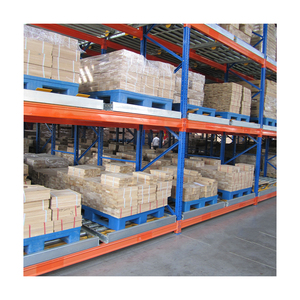
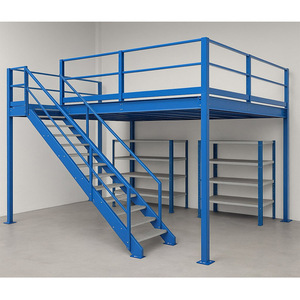
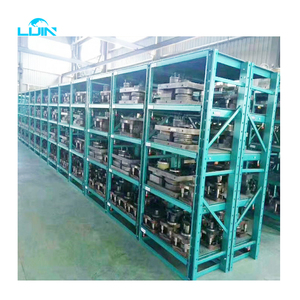
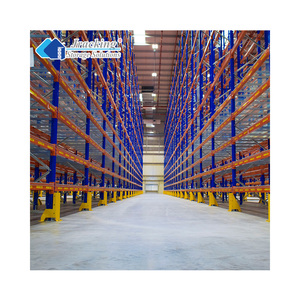
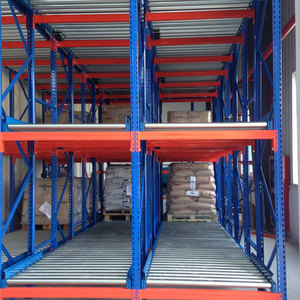
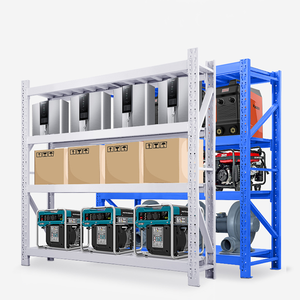
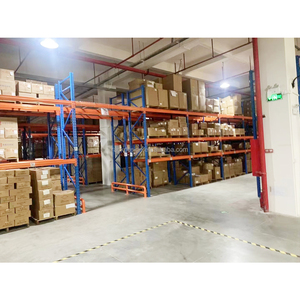
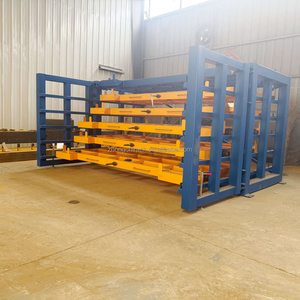
Precision Engineering Principles for Heavy-Duty Pallet Racks
When selecting a qualified manufacturing factory for heavy industrial racking systems, structural integrity directly determines operational security and capital safety. Modern high-bay warehouses require steel structures that handle dynamic seismic vibrations, cyclic forklift impact stresses, and prolonged heavy loads without localized micro-buckling or structural deflection.
True OEM precision manufacturing begins with high-tensile hot-rolled steel strips (specifically Q235B and Q355B structural grades) cold-roll-formed through multi-stage automated rollers. The upright frames feature continuous profile stamping with precision punch matrices (such as standard teardrop, Jracking 76.2mm, or 50mm European Dexion patterns), ensuring that load distributing connector pins engage seamlessly without plastic deformation over decades of rigorous material handling.
Upcoming Trends in B2B Warehouse Racking Procurement
Global warehouse real estate costs have surged by over 38% since 2021, forcing global supply chains, cold storage facilities, and 3PL distribution networks to reconsider how they procure racking assets. The shift away from generic catalog systems toward specialized OEM engineering is accelerating rapidly across four core operational paradigms:
Vertical Volumetric Utilization
Procurement teams are shifting from low-density 5-meter selective systems to 12m-24m high-bay configurations, Very Narrow Aisle (VNA) systems, and multi-tier structural mezzanines that maximize building height rather than expensive land footprints.
Integrated Automation Readiness
Racking systems can no longer remain static steel shelves. OEM buyers demand factory-milled guide rails, sensor mounting channels, and extreme rail parallelism for Automated Storage and Retrieval Systems (AS/RS) and autonomous Radio Shuttles.
Regional Seismic Adaptability
Standardized catalogs fall short in earthquake-prone zones like the Pacific Rim. Modern procurement mandates localized seismic calculations, widened anchor footprints, enhanced structural cross-bracing, and higher ductility beam clamps.
The Evolutionary Trajectory of Warehouse Storage Systems
The manufacturing technologies driving custom OEM racking systems are undergoing rapid transformation. Forward-looking warehouse operations are migrating toward intelligent, corrosion-impermeable, and automated platforms that eliminate single points of operational failure.
Firstly, the chemical surface treatment process has progressed beyond basic solvent paints. Factory-direct systems now utilize an integrated 10-stage preparation cycle: acid pickling, automated phosphating, double-rinse deionization, and continuous electrostatic polymer powder curing at 200°C. For sub-zero cold chains and aggressive coastal maritime ports, hot-dip galvanization (HDG) delivering minimum 85-micron zinc coating shields components from premature micro-corrosion and structural embrittlement.
Secondly, hybrid density architectures—pairing Radio Shuttle semi-automation with selective push-back and pallet gravity flow lanes—are replacing monolithic static racking. These configurations reduce direct forklift travel inside racking bays by over 70%, immediately slashing forklift collision damages and warehouse operating labor costs.
Why Global Importers Partner with Our Manufacturing Base
From raw coil sourcing through high-precision profile roll forming to final oceanic export packaging, we eliminate trading intermediaries and provide complete engineering transparency.
Free 3D Layout & CAD Load Calculation
Provide your warehouse dimensions and forklift specifications. Our licensed structural design team returns full 3D CAD modeling, stress analysis, and volumetric optimization maps within 24 business hours.
Full In-House Industrial Processing
Featuring automated CNC multi-axis punching, robotic plasma cutting, automatic roll-forming lines, and dual electrostatic coating workshops spread across 30,000 square meters of production capacity.
Oceanic Load & Protective Packaging
Components are pre-numbered, strapped with edge protection, and containerized according to computerized load simulation software to prevent shipping scratches and maximize 40HQ container cube volume.
Frequently Asked Questions for OEM Racking Orders
Clear, engineering-focused answers covering design, compliance, maritime logistics, and site installation.
How does an OEM factory verify structural racking capacity?
Can you manufacture racking compatible with existing Dexion or teardrop systems?
What is the standard production timeline for full-container projects?
How are installation and seismic compliance handled for overseas sites?
What surface finishes are recommended for sub-zero cold rooms or high-humidity ports?
What critical site parameters are needed to start an initial OEM racking quotation?
Transform Your Warehouse Through Engineered OEM Racking
Speak directly with our senior industrial racking designers. We analyze your material handling workflow, calculate structural requirements, and deliver a comprehensive factory quotation with complete 3D layouts.
Contact Us